Five Splatoon 3 Habits to Unlearn for Splatoon Raiders
Repurposing your valuable Splatoon experience is the key to success in Raiders

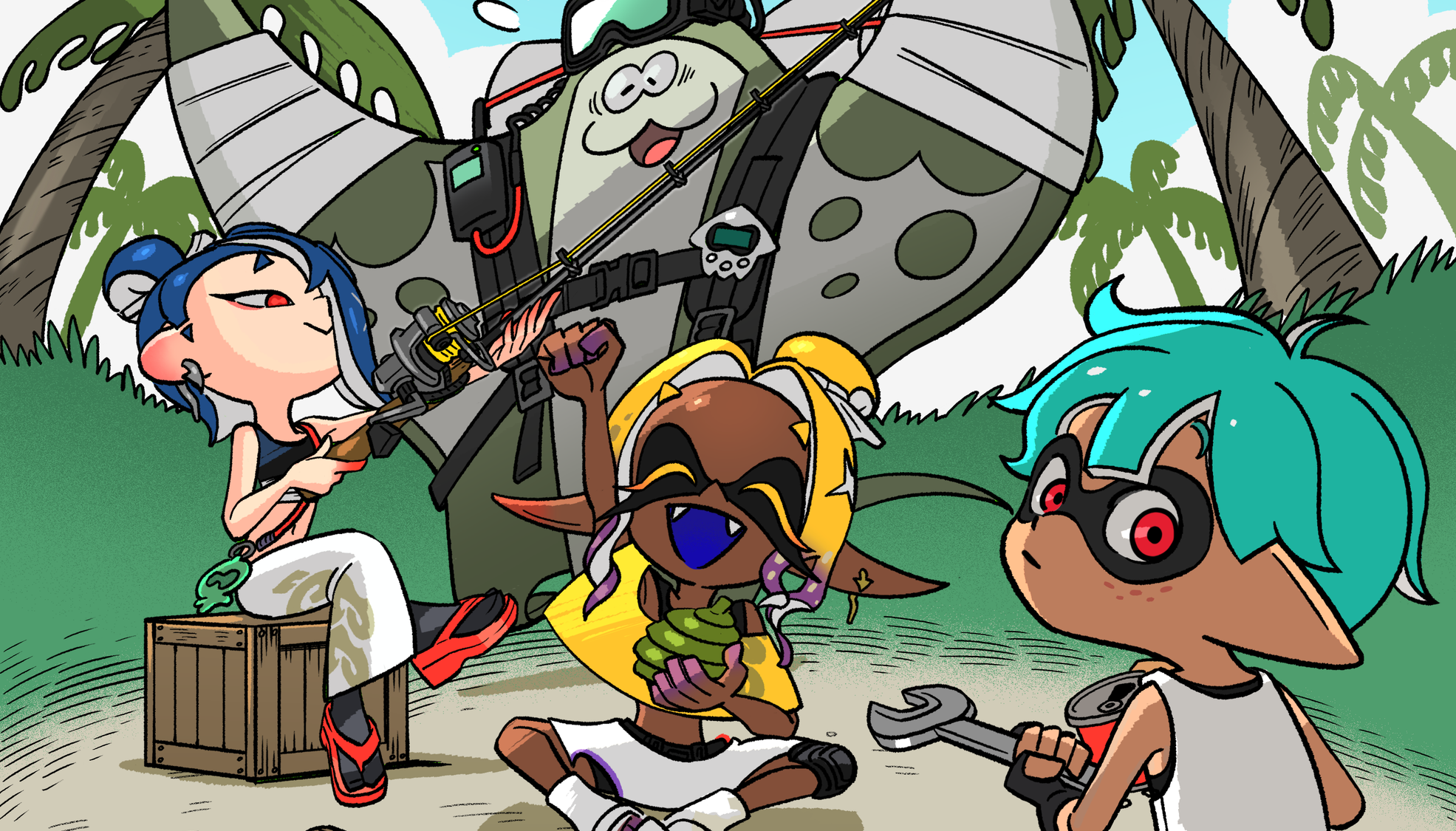
I have been playing Splatoon since the series originally launched on the Wii U. Although I knew in advance that Splatoon Raiders was a different beast, it's taken a few hours of play to truly recognise the scale of that difference. The classic Salmon Run cooperative mode is probably the closest analog to Raiders, but it's a very imperfect comparison; the new game is vastly larger in both scope and depth with a relatively approachable skill floor and tantalisingly high ceiling. It's also built around fundamentally different design goals. This is a wave-based looter-shooter anchored to a surprisingly-robust RPG system that allows for highly-personalised builds. It's still a Splatoon game in that it rests upon the franchise's core gameplay mechanics (which means it retains one of the most elegant and sublimely satisfying player movement systems in video game history), but importantly, the way you're thinking about and leveraging those mechanics can feel quite different here.
This won't be a problem for new players, but if you're a veteran (especially if you haven't yet picked up the game or you're still getting an early feel for it), you'll maximise your enjoyment of Raiders by 'unlearning' some of your Splatoon 3 habits. Here are the top five that have struck me most so far in no particular order.
Stop rationing your sub-weapon
Sub-weapons are one of my favourite elements in the Splatoon series. Each weapon in Splatoon comes with a different sub-weapon (which encourages you to try out different weapons for their unique combinations). Sub-weapons can be incredibly powerful but this power is offset by the fact that they typically use a large amount of ink, which means they can (and should) be used sparingly. The Splatoon Raiders equivalent of sub-weapons are gadgets. But they're really only equivalent in the sense that they complement your main weapon through traits that are less directly-controllable and/or more mechanically passive.
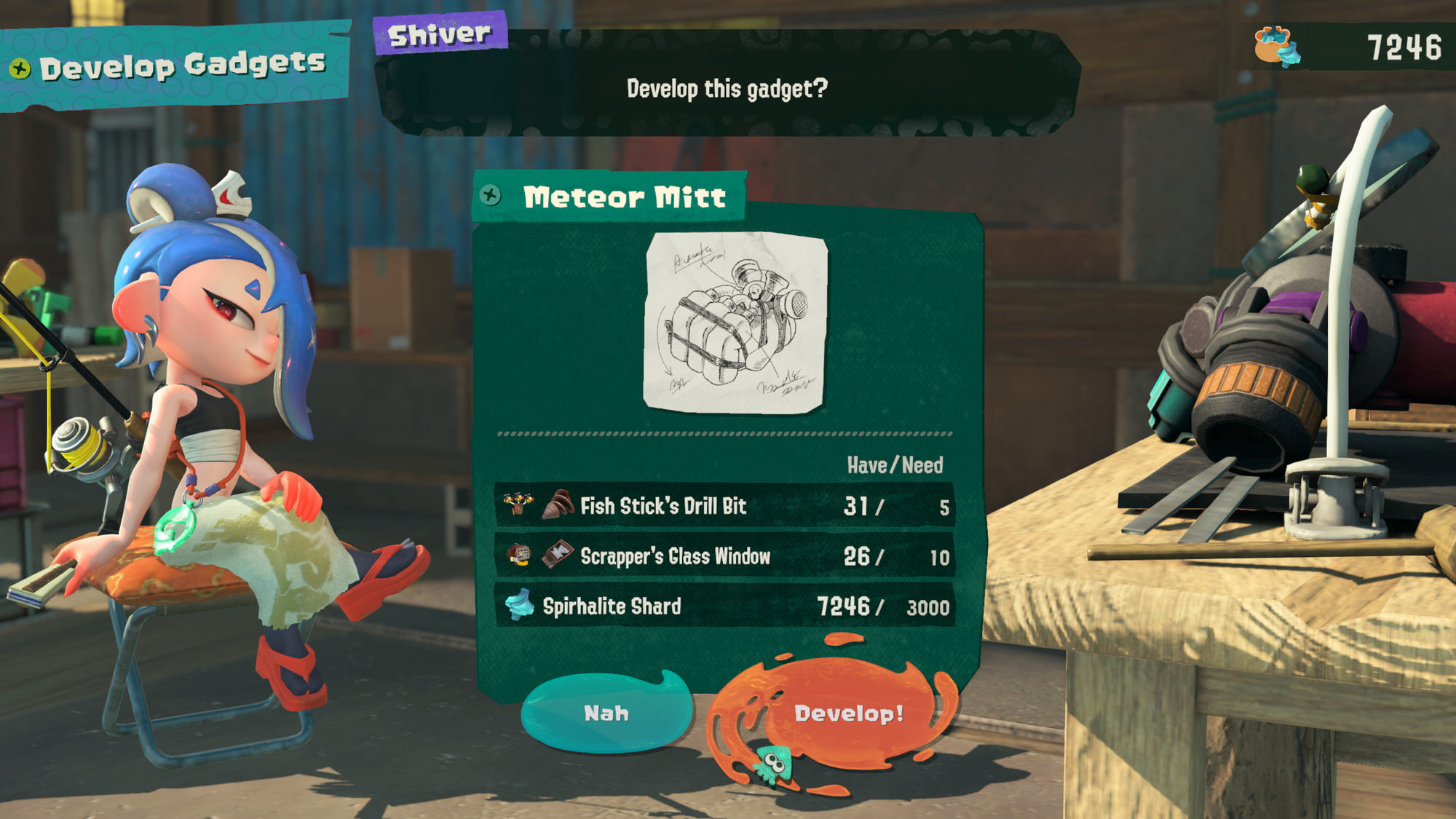
Gadgets are cool. In addition to your weapon, you can equip one of three types of tanks (Speed, Power, or Tactical) and then attach up to two gadgets to it (technically three, but the third is available as a tank upgrade later in the game). Each tank is compatible with its own set of gadgets which are aligned with these three strategic categories. Not only this, but gadgets don't use ink; they operate on cooldown timers. Finally, gadgets themselves can be highly customised with gadget parts, which are more than just stat upgrades: they can fundamentally change the capability of the gadget.
The huge focus on gadgets almost makes them the main focus. In some respects, your weapon actually feels somewhat secondary. It makes sense, too: you'll quickly find yourself surrounded by dozens of different enemies attacking from all directions, and so, your ability to manage the battlespace itself (and not just directly hit enemies with your weapon) becomes essential to success. So, Splatoon veterans: don't be shy about leaning heavily into gadgets here. You should ideally be using them constantly; every second that goes by without both gadgets operating is essentially wasted.
A loss is still a win
In Splatoon 3 you gain almost nothing when you lose a match (you do gain XP but it's far less than what you get if you win). In Splatoon Raiders, you will lose often (likely significantly more than you win), but losses are extremely valuable here in a couple of unique ways.
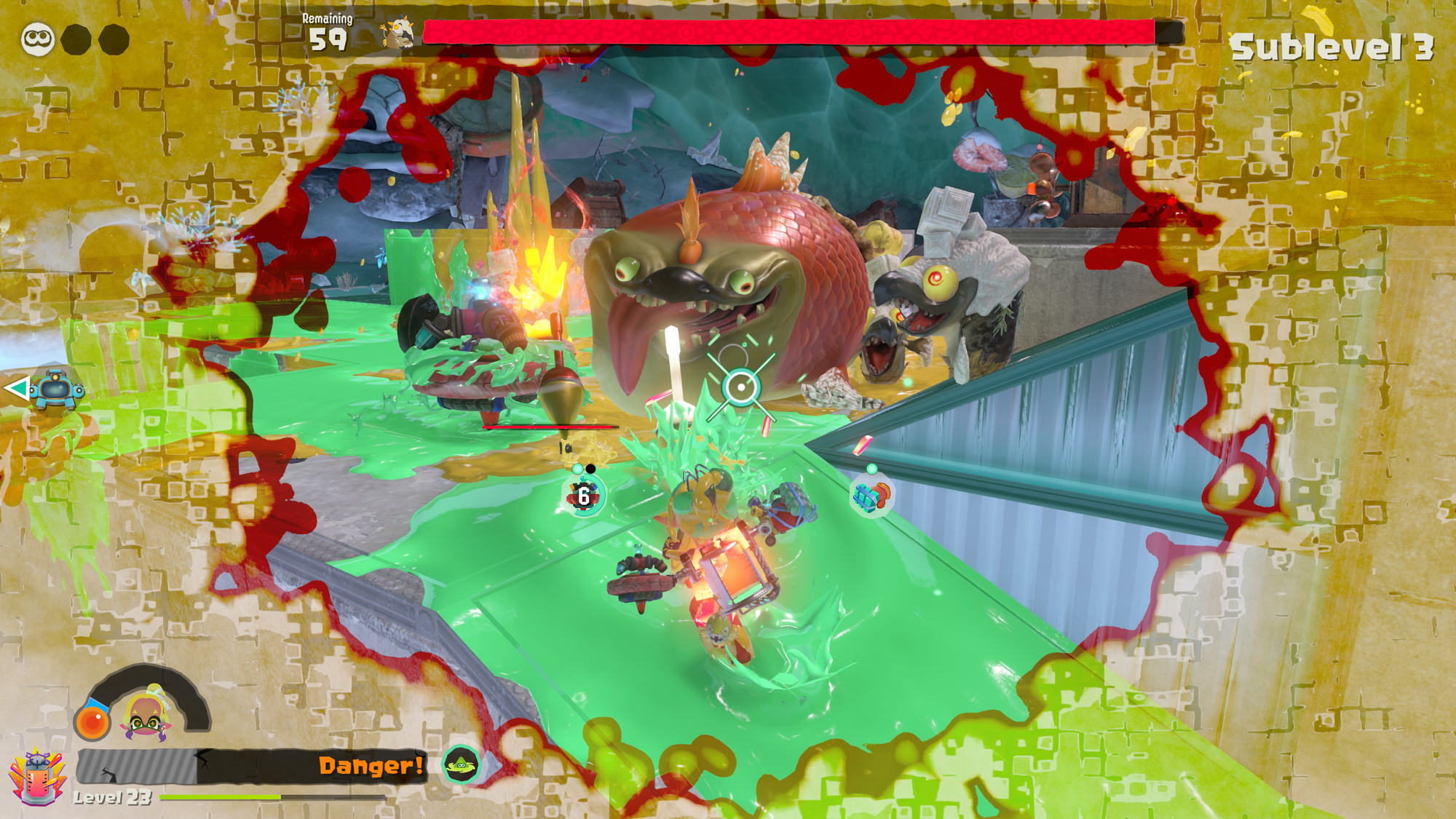
Firstly, every loss means another run. And every run guarantees that you'll come away with some benefit in the form of weapons, currency, upgrades, and treasure: in fact, runs will also sometimes pay differently depending on the tank you have equipped. So, in one way or another, every single run confers some sort of important growth or advancement. In addition, there are several different types of missions/challenges and some of these contain regenerating crystals (crystals are essentially goal points in levels that can only be cracked open once all enemies in the area have been defeated). Some of the regenerating crystals will appear in red, presenting a more difficult challenge and better rewards.
There's another important point here: if you find a particular challenge overwhelming (as you most certainly will at multiple points in your journey), remember that this is deliberate. Splatoon Raiders leverages its difficulty spikes to a) encourage you to re-run for upgrades and b) re-design your build. You will find that some challenges suddenly feel much more doable after you bring a difficult build to the battle. As mentioned in the previous point, Splatoon Raiders is far more about your custom build than any individual weapon, which really separates it from the traditional Splatoon games.
Inking still matters, despite no turf score
Splatoon is most famous for its highly unique traversal system. In all previous Splatoon games, inking everything in sight was only partly about traversal: your fundamental goal (at least in the major Turf War mode) was to ensure your team inked the most territory by the end of the match. There's nothing like a Turf Score in Splatoon Raiders, but don't for a moment think inking isn't just as important here.
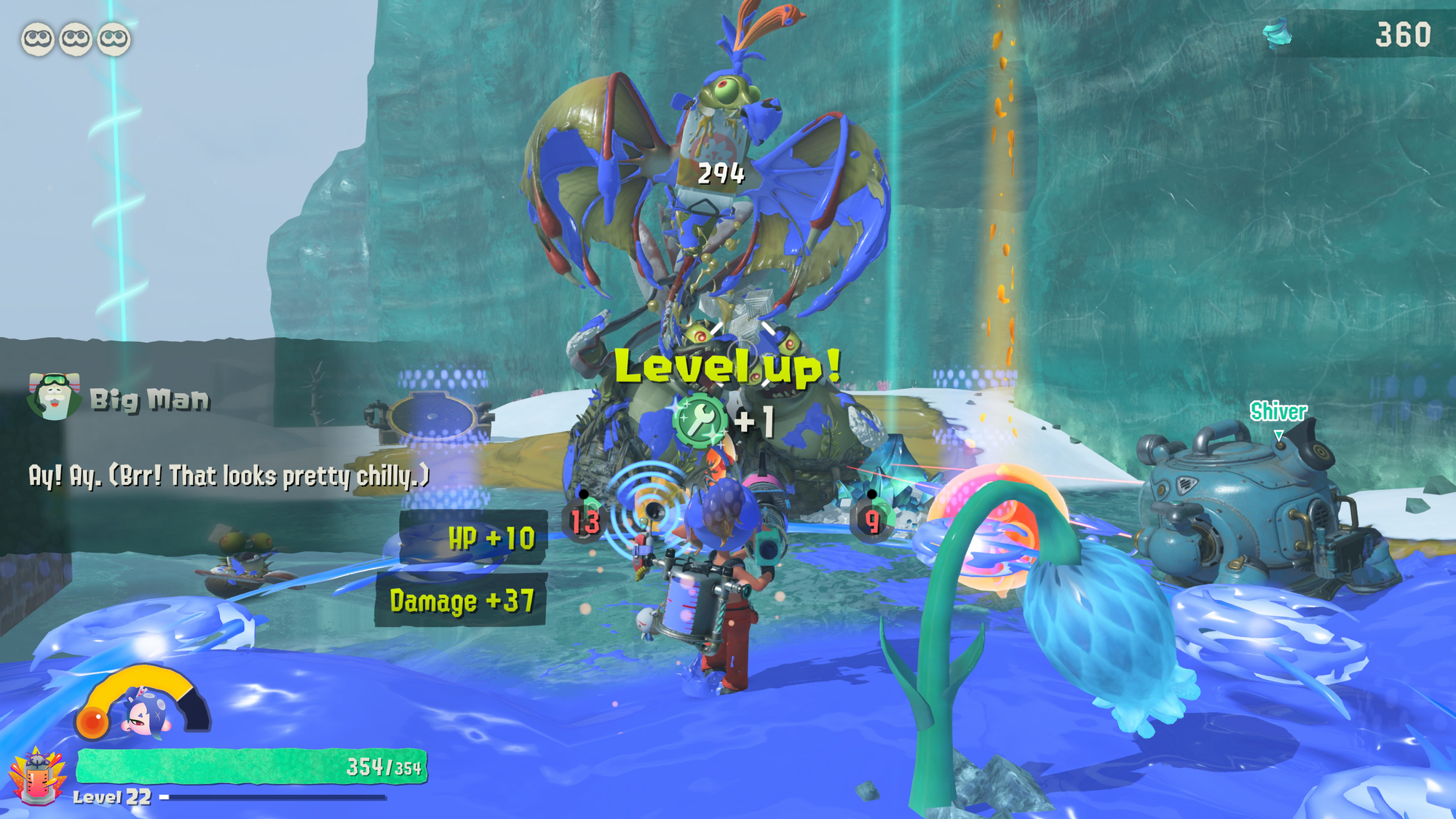
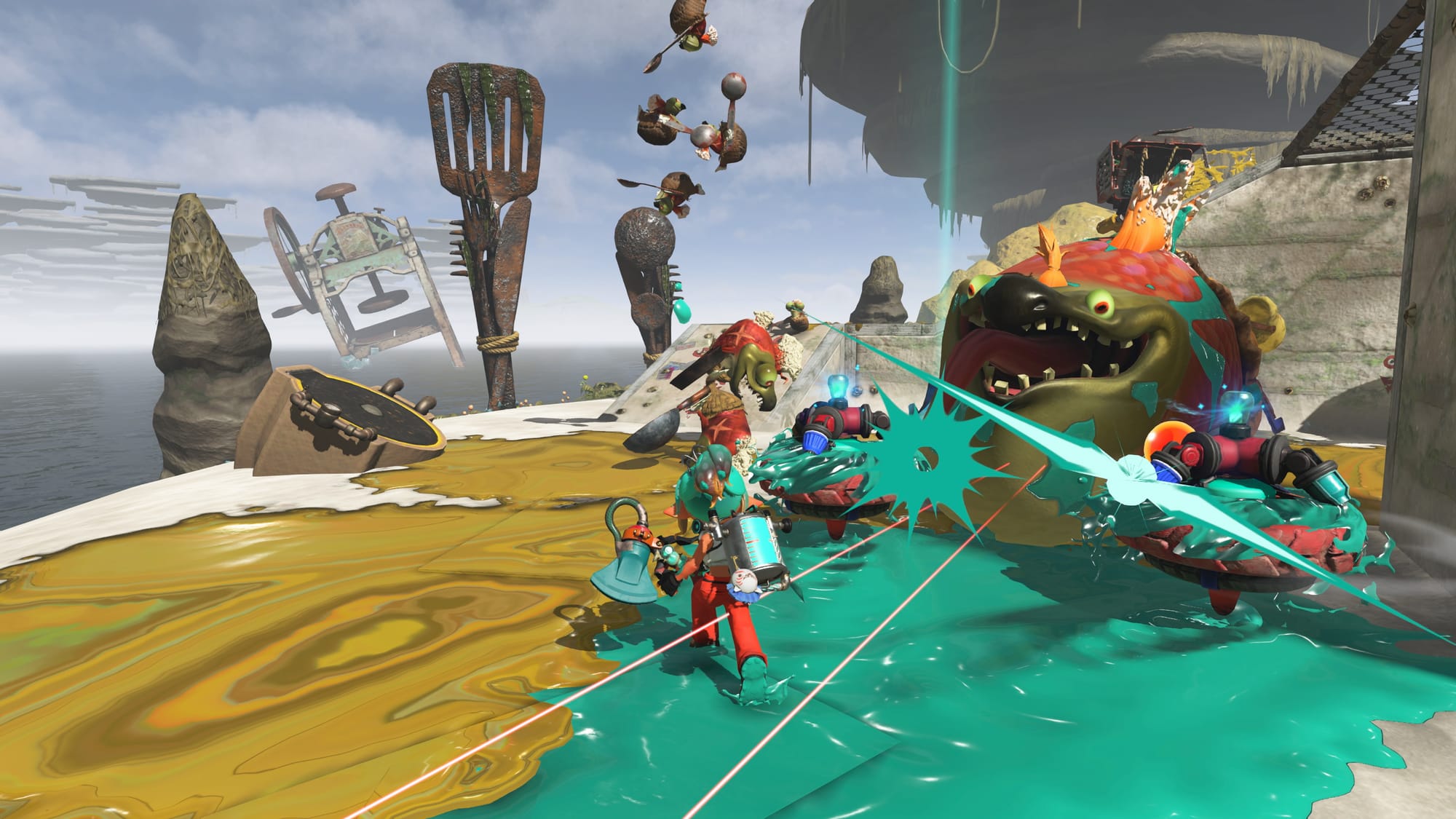
Let me just set the scene here again: in Splatoon Raiders, you're being attacked by waves of enemies approaching from all angles (and elevations). And it quickly becomes relentless. Your success in an intense battle is greatly enhanced by your ability to rapidly move around the environment and that, in turn, requires you to ink territory liberally. The more space you've inked, the more freedom you have to quickly change position and that regularly becomes a life-saving move (allowing yourself to become cornered by Salmonids is almost certainly a death sentence).
But it's not just about inking space in general. In the Splatoon series, you're incentivised to scout out ahead quickly and apply forward pressure with your inking strategy. Doing this restricts enemy team movement and allows you to establish an advantageous foothold early in a match. Conversely, inking in Splatoon Raiders is less about aggressive forward push and more about establishing multiple escape routes. It's possible, of course, to create a more aggressive build that encourages assertive combat strategies. But even in this case, Raiders will quickly punish the over-confident, especially if you fail to ink escape routes. I'd describe ideal combat in Splatoon Raiders as an ebb-and-flow system where you're oscillating between a forward push, a retreat, and tactical flanking.
One habit I've started getting into is doing a lot of inking right at the beginning of an encounter before the Salmonid numbers have the chance to build up. In Splatoon Raiders, there's no opposing team to cover up your ink, so clever use of inking early in a battle can make a significant difference in how the challenge unfolds.
Don't play it like Salmon Run
Yes, I did compare Splatoon Raiders to Salmon Run and it's certainly true that this is the closest analogy that veteran players will immediately understand. However, it's a mistake to think that Raiders is just "more Salmon Run". The flow of gameplay including the way objectives are sequenced is completely different in Raiders and requires different strategies for this reason.
Let's start with the fact that, in Salmon Run, you're fighting a specific set of enemy waves that become progressively more difficult and surface after countdown timers. You collect eggs during the match that you have to ferry back into a basket at the centre of the arena. That elegant flow (the tension between attacking Salmonids and collecting eggs before the match timer runs out, forcing you to do much of this during battle) doesn't exist in Splatoon Raiders. Instead, collecting eggs during an encounter charges up your Showstopper (the ultimate high-power attack that adds yet another offensive layer on top of your weapon and gadgets), but the fundamental rewards (treasures, items, etc...) are only accessed after the level is over. Importantly, there's no predictable break between distinct waves of enemies here: enemies will instead progressively become more numerous all throughout the encounter in a way that feels utterly relentless.
What this means in practice is that combat and collection are sequenced rather than simultaneous. Salmon Run trains you to be a courier under fire; you're constantly weighing up whether you can survive the trip to the basket and back, and the best players are the ones who can keep collecting while everything around them is actively trying to kill them. That instinct simply doesn't make sense in Raiders. Crystals won't crack until an area has been cleared, which means there's no version of this game where you're rewarded for grabbing something mid-fight. You clear, and then you collect.
The lure direction reverses, too. In Salmon Run, you deliberately drag bosses back toward the basket so their eggs drop somewhere convenient. In Raiders, you generally want to be pulling enemies away from wherever you're trying to work. It's the same underlying skill (aggro management) reversed, and it took me an embarrassingly long time to notice I was doing it wrong.
Finally, resist the urge to pace yourself. Salmon Run's wave structure gives you a rhythm to play against: you know roughly when the pressure will lift, so you can afford to hunker down and wait for it. Raiders offers no such reprieve. If you find yourself holding back and waiting for a lull before you commit to something, you'll be waiting a very long time.
Don't ignore your Bot Buddy
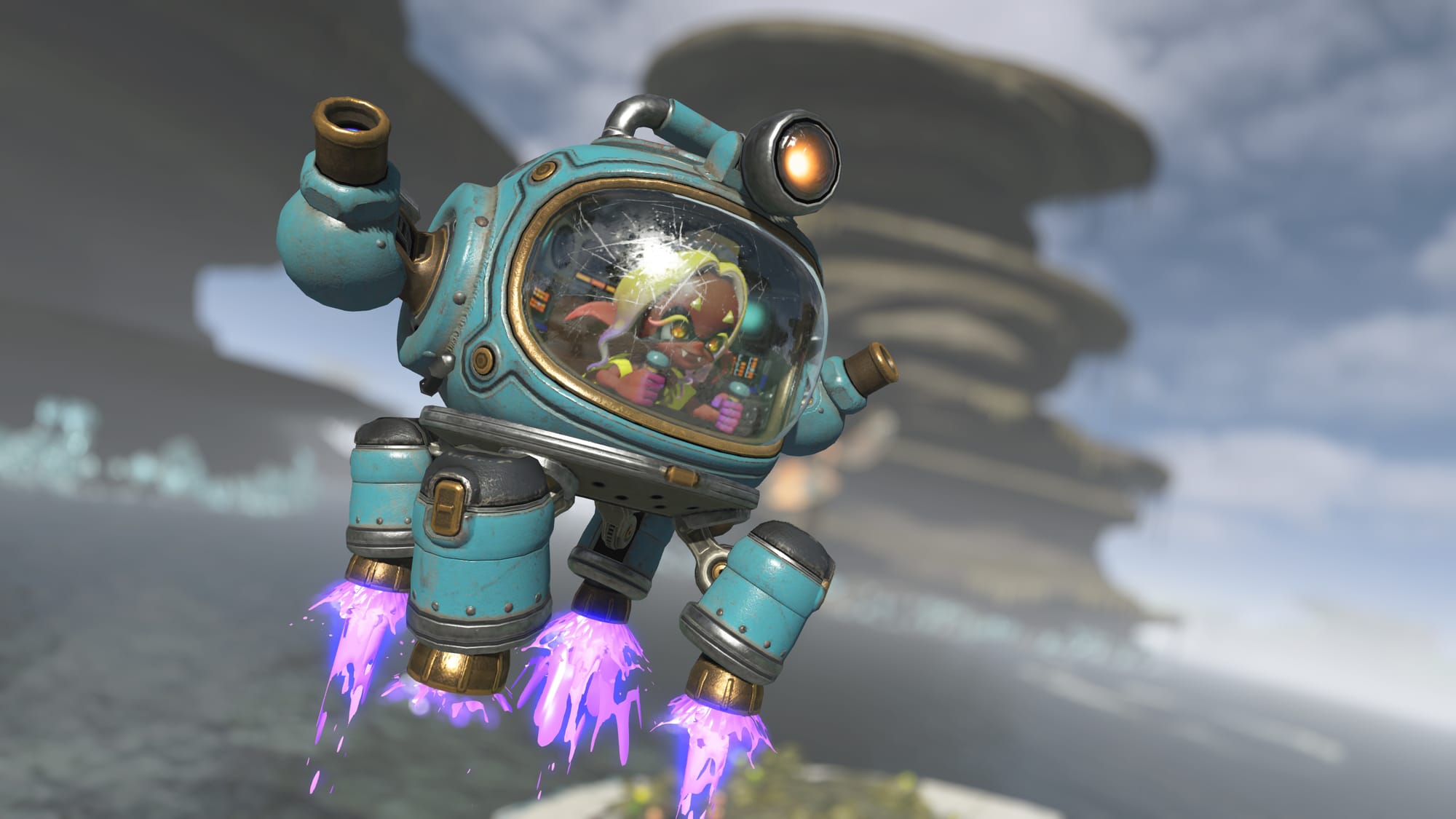
Splatoon 3 gave you companions, but they were largely set-and-forget: Smallfry did its thing in Return of the Mammalians, and the Pearl Drone hovered along in Side Order without demanding much strategic thought from you. The Exploration Bot in Splatoon Raiders looks superficially similar (it's a little four-legged machine that tags along behind you) but it's arguably the single biggest change to the Splatoon formula in the series' history, and treating it as ambient decoration is a mistake.
Firstly, you choose who's piloting it. Shiver, Frye, and Big Man each take turns as your Bot Buddy, selected via the equip menu, and this isn't just a cosmetic preference: taking a particular member out on missions repeatedly builds rapport with them, and there's an upgraded Showstopper waiting at the end of that relationship. So the choice compounds over time in the same way your build does.
Secondly, the bot is a genuine combat tool rather than a companion animation. It shoots ink, it moves toward you when you need it, it drills into the ground to excavate treasure, it locates hidden items, and (crucially) it launches you into the air when you jump onto it. That last one is the Bot Hop, and it's the move veterans are most likely to under-use, because Splatoon has never previously given you a vertical escape option that isn't tied to terrain. Getting swarmed on the ground is one of the most common ways to die in Raiders, and you're carrying an ejector seat around with you the entire time.
The habit to unlearn, then, is a passive one: summon the bot, keep it close, and think of it as a fourth item in your loadout alongside your weapon, tank, and gadgets.
Good luck, matey!
Splatoon Raiders is like nothing else I've played before. I went into it somehow thinking it would be mere spin-off of the main series. But I was pleasantly surprised to discover that Raiders is a stunningly deep single-player experience that will put your knowledge of its mechanics to the test in every encounter. It's a beautiful game - bringing its own version of that super fresh Splatoon style to bear - its characters are full of personality, and just when you think you've mastered it, it throws a completely unique new challenge at you.
Just remember, if you're an old-school Splatoon player, to unlearn some of your longstanding habits. Don't worry though: those skills don't go to waste, they're just used in refreshingly different ways in Splatoon Raiders. And if you've never played a Splatoon game, what are you waiting for?! This series is right up there with Nintendo's very best, and this single-player iteration is a perfect entry point for those of you who aren't interested in the multiplayer element.
Join the conversation
What do you think? Reply below to share your perspective.