Ocarina of Time: Yes, The Wonder Is Still There
A birthday reunion with an old friend


I first met the Great Deku Tree when I was eight years old. It was a school morning. I was racing to discover as much as possible before being pried off the Nintendo 64 and bustled out the door. My time in Hyrule was inevitably cut short, but the forest stayed with me.
But the forest wasn't where my relationship with The Legend of Zelda began. At roughly the age of five, I'd sneak onto my older brother's SNES, sit through the opening sequence of A Link to the Past, and find the nearest Fairy Fountain. This was as far as my five-year-old mind could take me; I didn't yet understand the sheer scale of Hyrule, nor its ancient legends, nor the urgent task of protecting Princess Zelda and restoring order to the great kingdom. But this was a world I wanted to visit over and over again. And so, each time, I'd take myself to the Fairy Fountain and bask in the ethereal calm of Koji Kondo's beautiful melody.
Twenty-eight years after my first experience with The Legend of Zelda: Ocarina of Time, we meet again. This time, it's my birthday. I'm now in my mid-thirties and I have been invited by Nintendo to play a reimagining of one of the most highly acclaimed video games of all time, more than a month before release. This is a very big deal for a self-professed Zelda nerd like me, who often jokes about being raised by the Super Nintendo. Sitting in front of this new title screen, as the finely textured depth of the all-new orchestral soundtrack washes over me, I'm struck by the very same sense of awe I felt decades ago. My childhood friend has returned.
I am here to play The Legend of Zelda: Ocarina of Time for Nintendo Switch 2. This is an in-development build that includes the initial Kokiri Forest sequence (Great Deku Tree and all), Hyrule Field, Castle Town, and the Forest Temple.
Wake up, Link
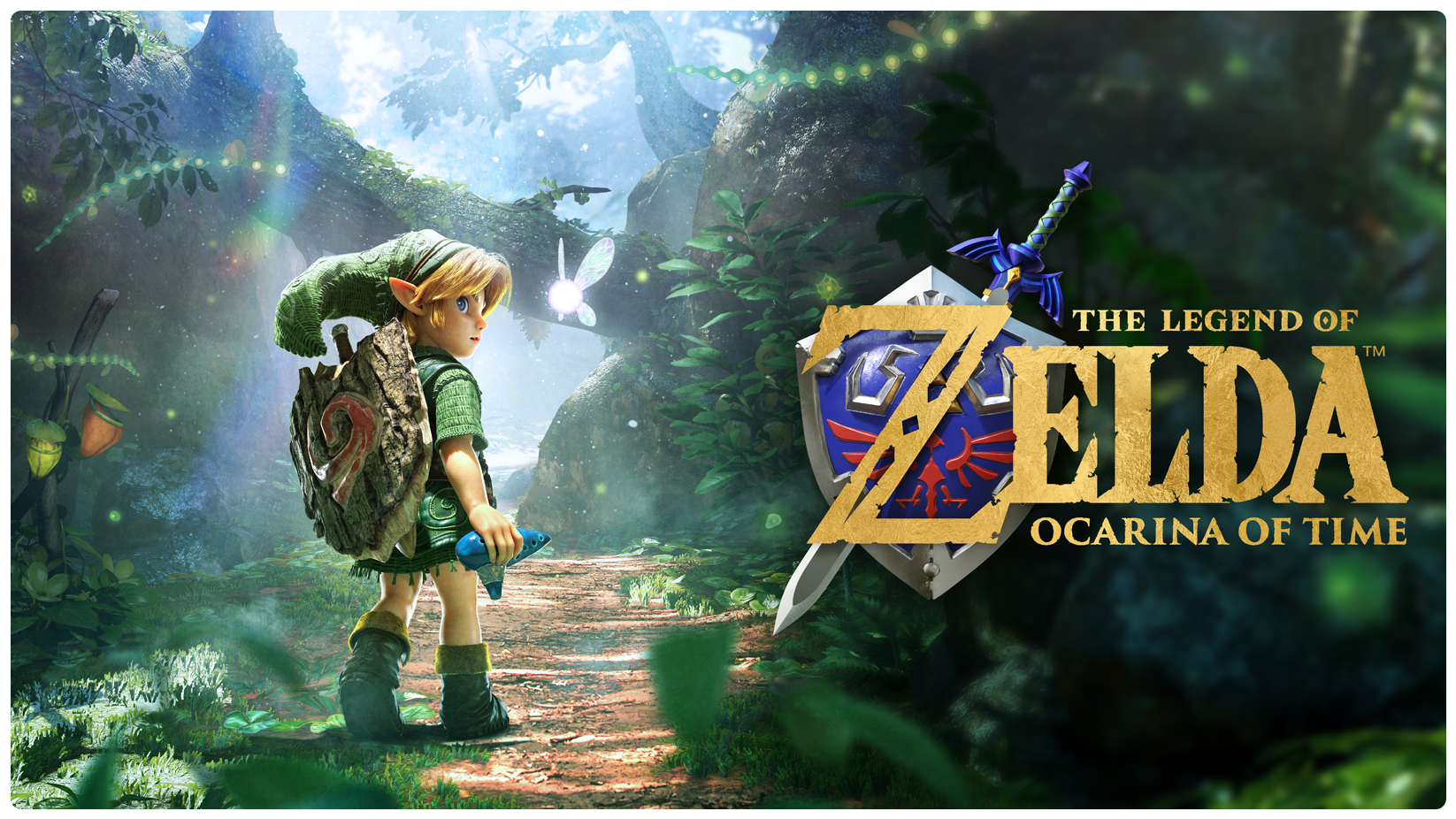
I look upon a Kokiri Forest awash with dappled lighting that ebbs and flows as the dense canopy above gently rustles in the breeze. A stream meanders by, cool and inviting. The children of the forest are still here, too: they never grow old. This is, in some sense, the village as it was always meant to be. It has emerged from the platonic imagination of my childhood and unfurled in crisp high resolution before me.
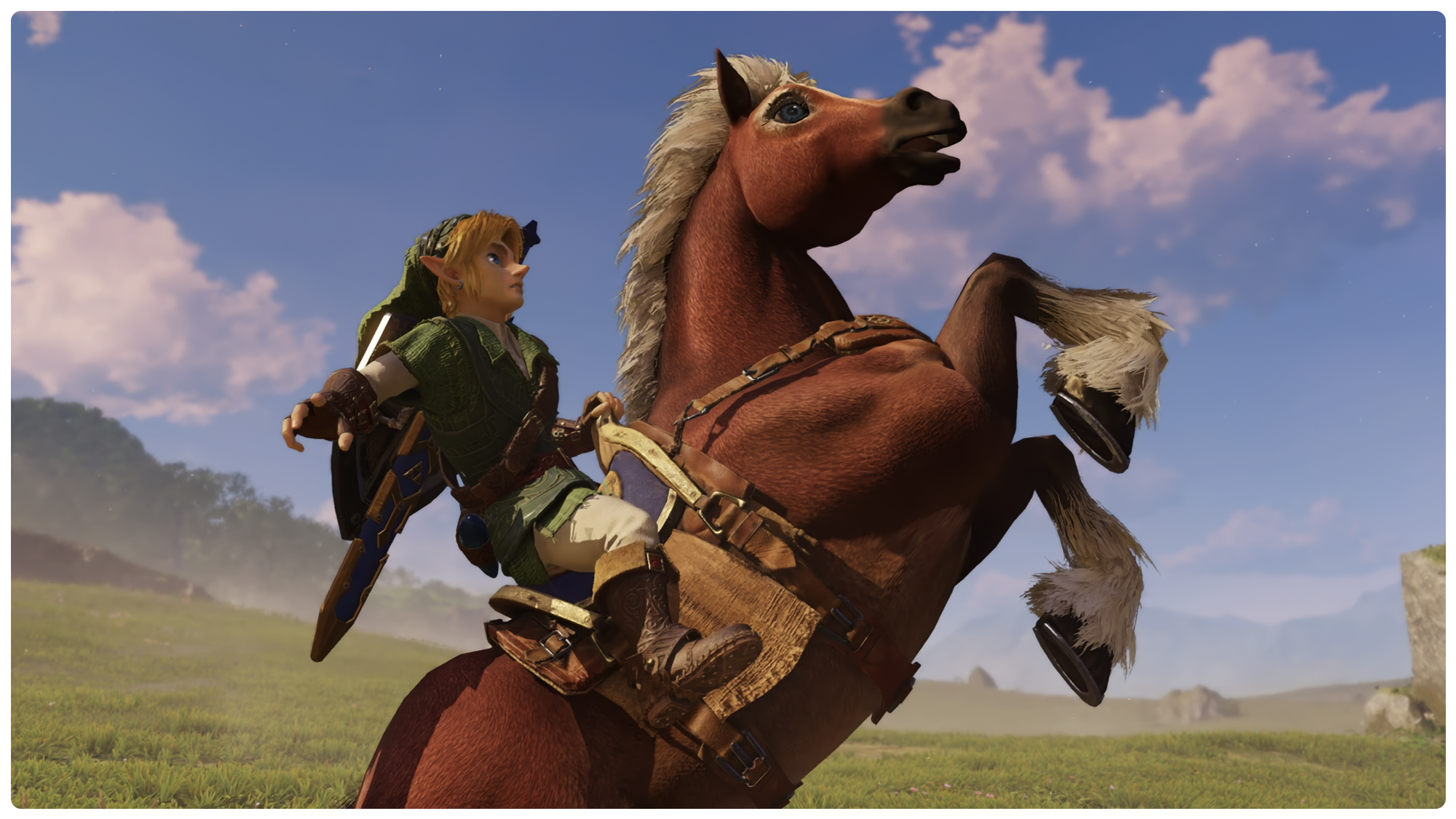
As I tilt the control stick forward, my attention shifts. Link feels a touch lighter on his feet, responding to my inputs with a smoothness the original couldn't quite manage. His tunic carries the hallmarks of having been lovingly hand-stitched, his hair bounces and sways playfully, and his expressive eyes eagerly follow points of interest around him.
Link can now jump on command, too. In the original Nintendo 64 game, Link's jump was context-sensitive: it activated automatically as he ran toward a ledge. This was, in part, because players were not able to freely control the camera (other than targeting specific things or re-centring the view behind Link). Here, I can move the camera in all directions at my whim and jump whenever I like. It feels good, too. These two seemingly minor changes make Ocarina of Time feel noticeably more modern to handle (although I do find myself forgetting to jump here and there, my hands apparently still loyal to 1998).
I spend as long as possible running around Kokiri Forest, chatting with its denizens, taking in all the sights and sounds. But now I have another highly anticipated reunion: a meeting with the wise elder of the forest, the Great Deku Tree. This is the moment. Sombre strings float around my headphones from all directions as the iconic Zelda theme emerges. The outside world disappears. I'm no longer in a room playing a game. My brother, the Nintendo team, our media colleagues...they've faded away. Now I'm here, in the forest, with the Great Deku Tree. Just the two of us.
As I enter the tree, trusty sword and shield in hand, I encounter my first enemies. The freer camera and manual jump pay off here: I'm no longer wrestling with the viewing angle or accidentally leaping off a ledge mid-fight.
Hyrule awaits
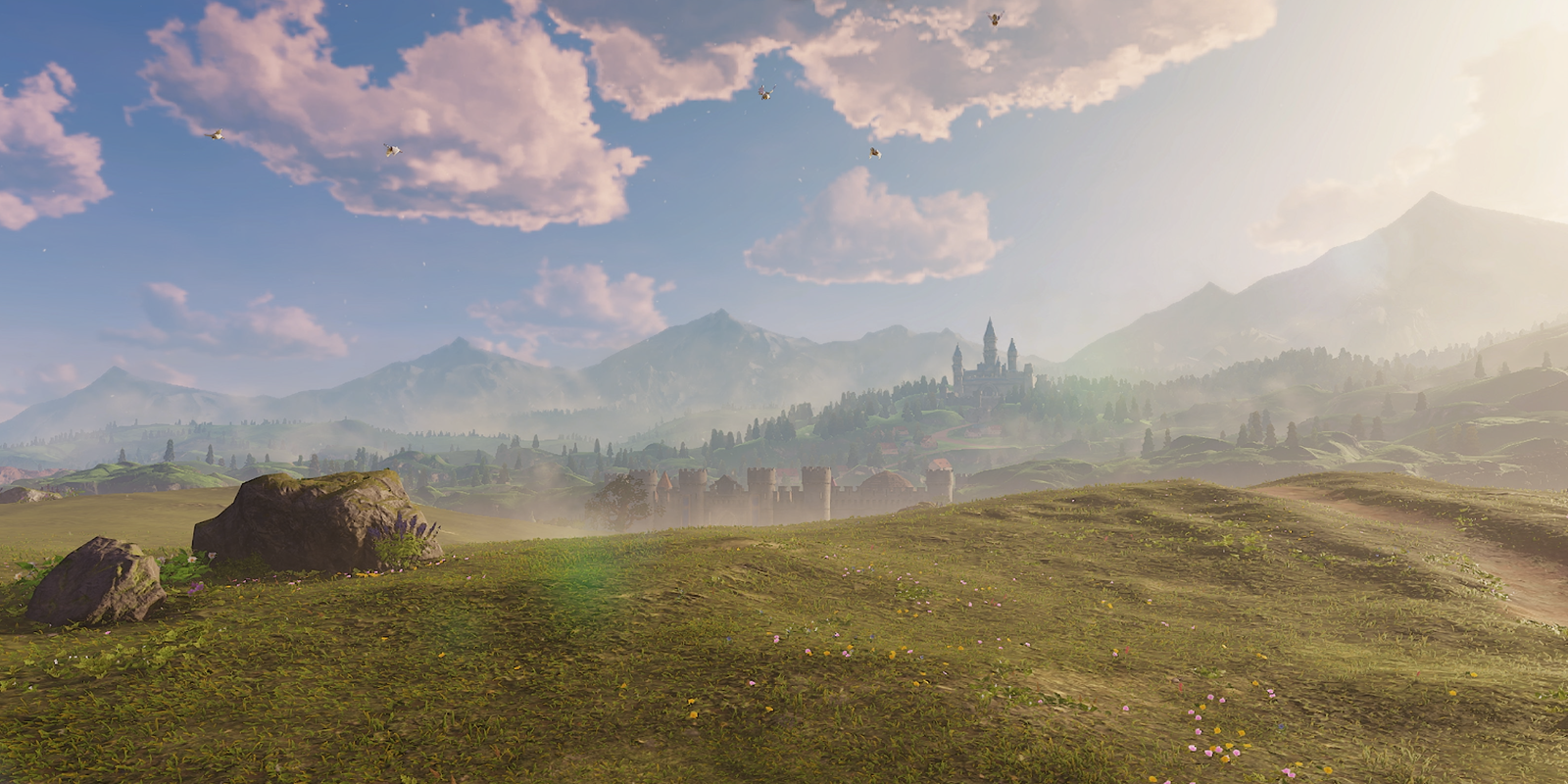
I emerge from the shadows of the forest to the dazzling dreamcore horizons of Hyrule Field. This isn't quite what I expected based on the Nintendo Direct footage, which at first might suggest that Nintendo is simply muscle-flexing with "high-fidelity realism" here. Yes, everything's gorgeously high-resolution, hyper-detailed, and oh so shiny. But there's a very deliberate whimsy woven into this world. Hyrule Field is both sharp and vibrant while also being faded, soft at the edges, slightly oversaturated and overexposed as if from a dream. Enemies are vividly colourful and move with playful, mischievous pantomime.
I am seeing Castle Town from the perspective of a young boy from the forest. It looks so much more imposing now. Rooftops reach into the sky and glisten in the sun. The town square is alive with activity and there are new laneways to explore. There is a genuine sense of this being a place where busy Hylians live, where they go about their business entirely unaware that the little boy in green running around at their feet is the Hero of Time himself. The injection of life here only deepens the foreboding, too. If you've played the original game, you'll know what happens here. The more vibrant the town, the more it has to lose. Then again, isn't that the theme that sits at the heart of this game? Your path begins in childhood with a sense of innocent wonder, but soon, you'll grow up and take on the associated responsibilities (and then some, in Link's case). Castle Town affords me a quiet moment to reflect on this hero's journey.
As far as the demo goes, this is a brief detour: I'm not yet allowed to enter these shops and dig in further. That'll have to wait until I get my hands on the final version.
My next destination is the Forest Temple. I can conjure the deeply mysterious theme music of this place in my mind on command. The updated orchestral score is remarkable and I reflect on the fact that it has clearly been crafted by a team who truly understands the emotional resonance of the original piece.
I think I know the Forest Temple like the back of my hand, but exploring it now feels genuinely novel. Art design, sound design, and those smoother controls fold into each other to become more than the sum of their parts. Beyond these elements, I also notice that the entire inventory management—and menu system in general—has been reworked from the ground up. The inventory interface borrows liberally from Breath of the Wild's scrolling-selection model and it feels snappier.
This new iteration of the Forest Temple proves to be a showcase for the dreamcore aesthetic I referenced earlier. I can't emphasise this enough and I don't think videos actually do it justice either. I walk down a dark stone hallway with a bright white light guiding me to safety at the far end. It renders Link as a silhouette. The glow bounces off damp stone pillars, rolling over mosaics of ancient brickwork. In another chamber, an imposing stained-glass window bathes the space in deep red.
I face my first Stalfos, the tall skeletons who now seem far more intimidating than I remember. Navi, my fairy companion, dutifully hovers over each enemy I target. Her soft blue glow transitions into furious red, lighting up enemy faces in the dark. And as I explore deeper, volumetric fog pools around my feet and seeps down staircases like a slow-moving waterfall.
Ocarina of Time is so much more than a mere demonstration of improved technical specifications. It is an example of what talented artists can do when given a broader canvas and a more capable brush with which to create. This experience is all about being transported to a place that feels highly familiar but also wonderfully alien at the same time. The demo already has my mind racing about what I'll uncover and experience across the vastness of Hyrule. What will Kakariko Village feel like? What about the Shadow Temple? How about the infamous Dead Hand?
Return of an old friend
Immersion is the name of the game here, and based on my extensive time with the demo, I'd say Nintendo has hit the bullseye. Art and sound design—underwritten by a masterfully reimagined score—elegantly dovetail to draw me deep into Hyrule anew. Even with my newfound battle confidence, I'm tested by the greatly improved warning music, which plays as I escape from a Peahat in Hyrule Field.
I cast my mind back to the reunion with the Great Deku Tree, realising that the motivations that guided me as a child haven't really changed: I've always found a sense of calm in Zelda games. Now, decades later, I know what it feels like to return to a familiar world after many years apart, with the wonder well and truly intact.
The Legend of Zelda: Ocarina of Time launches on Nintendo Switch 2 on November 5, 2026. Thank you to the team at Nintendo Australia for the opportunity to hang out with a childhood friend once again.
Join the conversation
What do you think? Reply below to share your perspective.