The History of Portable Tactical RPGs, Part 2: Game Boy Rivals (1989–2006)
More strategy to go

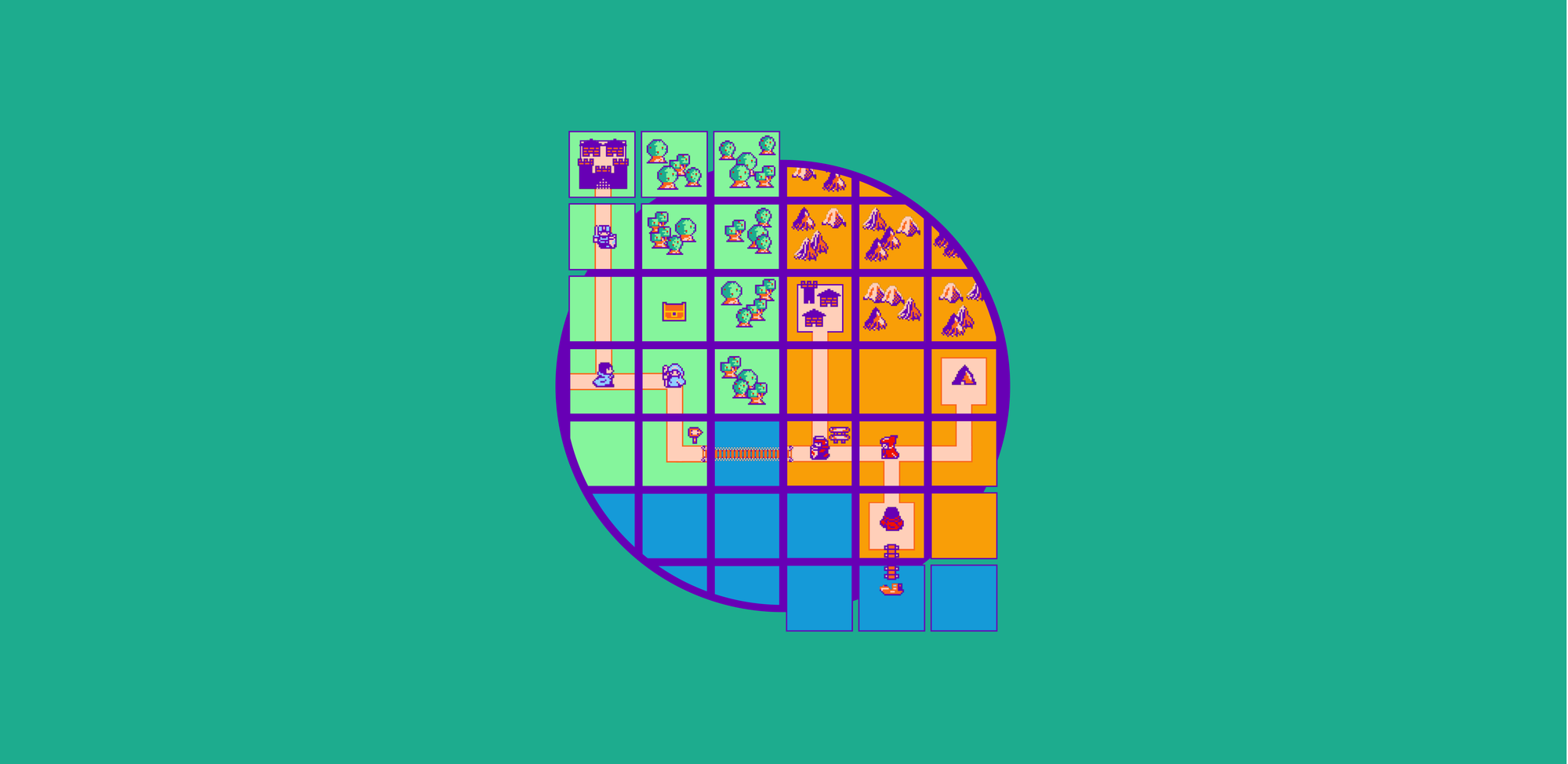
Gunpei Yokoi not only designed the Game Boy, the handheld console that laid the foundation for the portable tactical RPG market, but he also designed its main rival in Japan, the WonderSwan. This and other Game Boy rivals allowed for an expansion of the tactical RPG genre, as well as innovations in level design and audiovisual elements.
This is Part 2 of a series of stories about the history of portable tactical RPGs. Although this story is self-contained, it is recommended that you read Part 1 beforehand so that you are familiar with the tactical RPGs available on the dominant handheld console during roughly the same historical period as the games covered in this Part 2.
Two criteria were used to qualify a video game for this chapter:
- The title was released for an original handheld console that competed with the Game Boy family and sold over one million units, including the Atari Lynx (1989–1995), TurboExpress (1990–1994), Game Gear (1990–2002), Neo Geo Pocket/Neo Geo Pocket Color (1998–2001), WonderSwan/WonderSwan Color/WonderCrystal (1999–2003), and Nokia N-Gage (2003–2006).
- The title is a turn-based RPG whose main gameplay sessions are in grid-based scenarios, in which the player can move the units of a party or battalion. Although in some cases the player can control a single unit, combat primarily takes place against a coordinated party or battalion, not monsters that spawn or inhabit the world with relative independence. This is not a universal definition for tactical RPGs, but rather a functional definition of the genre for Game Boy rivals.
Table of Contents
I. Hardware features
I.i. Game Gear
I.ii. Neo Geo Pocket / Neo Geo Pocket Color
I.iii. WonderSwan / WonderSwan Color / WonderCrystal
II. Major tactical role-playing games
II.i. Shining Force Gaiden
II.ii. Faselei!
II.iii. SD Gundam G Generation GATHER BEAT
II.iv. Digimon Adventure: Anode/Cathode Tamer
II.v. Super Robot Taisen Compact
II.vi. Super Robot Taisen Compact 2, Part 1
III. Minor tactical role-playing games
IV. Chronology
V. Honorable mentions
VI. Generation shift
I. Hardware features
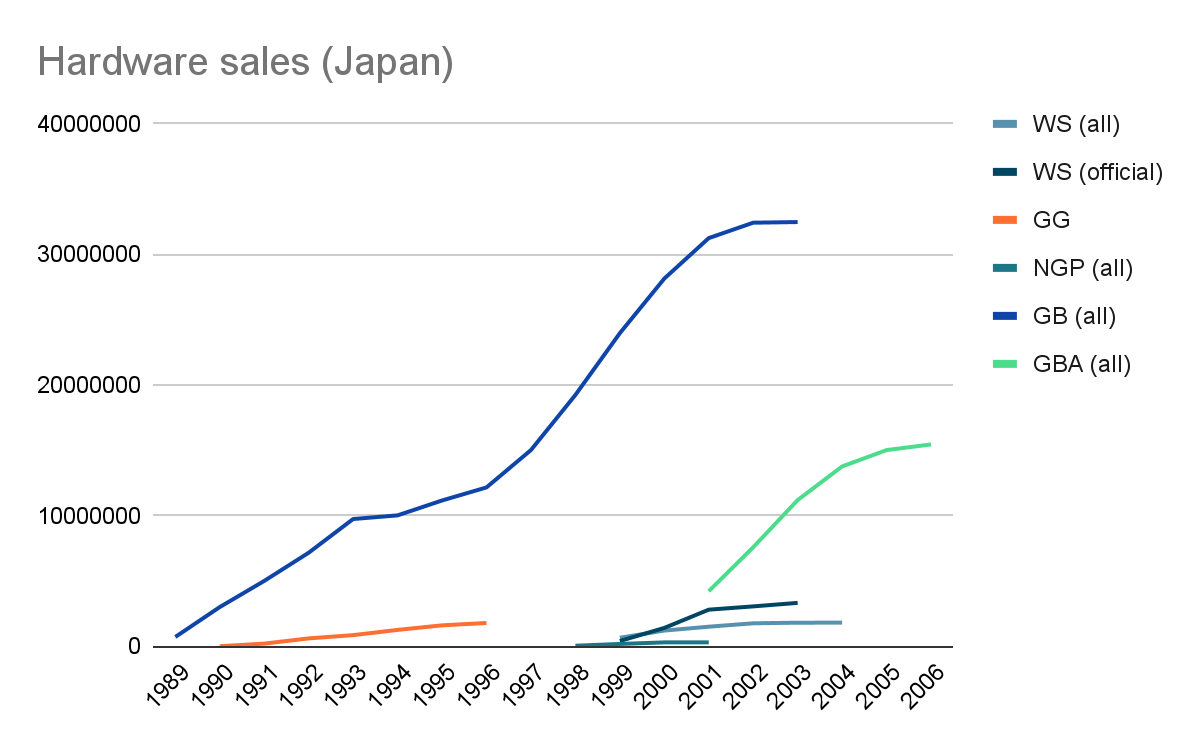
While the Game Boy line can be strictly defined by the Game Boy and its direct variations (Game Boy Pocket, Game Boy Light, and Game Boy Color), the Game Boy family is a concept that can also encompass the Game Boy Advance and its variations, including the Game Boy Advance SP and Game Boy Micro. Since the release of the original Game Boy in 1989, many competing companies have emerged with rival handhelds to the Game Boy family; the last one, the Nokia N-Gage, was discontinued in 2006. Here, we consider rival handhelds, not just any handhelds from competing companies, but those that sold at least 1 million units (Wiki), approximately:
- Atari Lynx (+II) (≈3 million)
- TurboExpress (1.5 million)
- Game Gear (10.6 million)
- WonderSwan (1.55 million)
- Nomad (≈1 million)
- Neo Geo Pocket (<2 million)
- WonderSwan Color (1.95 million)
- N-Gage (+QD) (3 million)
Since Nomad is a portable version of a home console rather than an original handheld console, its games are not considered here. Among the other Game Boy rivals, the only ones that have tactical RPGs in their libraries are the Game Gear, WonderSwan, and Neo Geo Pocket lines. Therefore, these are the only hardware systems we present in this topic.
The first tactical RPG released on a handheld console in the West was Farselei!, in June 2000, in the United Kingdom. Additionally, this was the only tactical RPG released in the West on a Game Boy rival. In terms of the tactical RPG genre, the true battleground on handheld consoles was Japan.
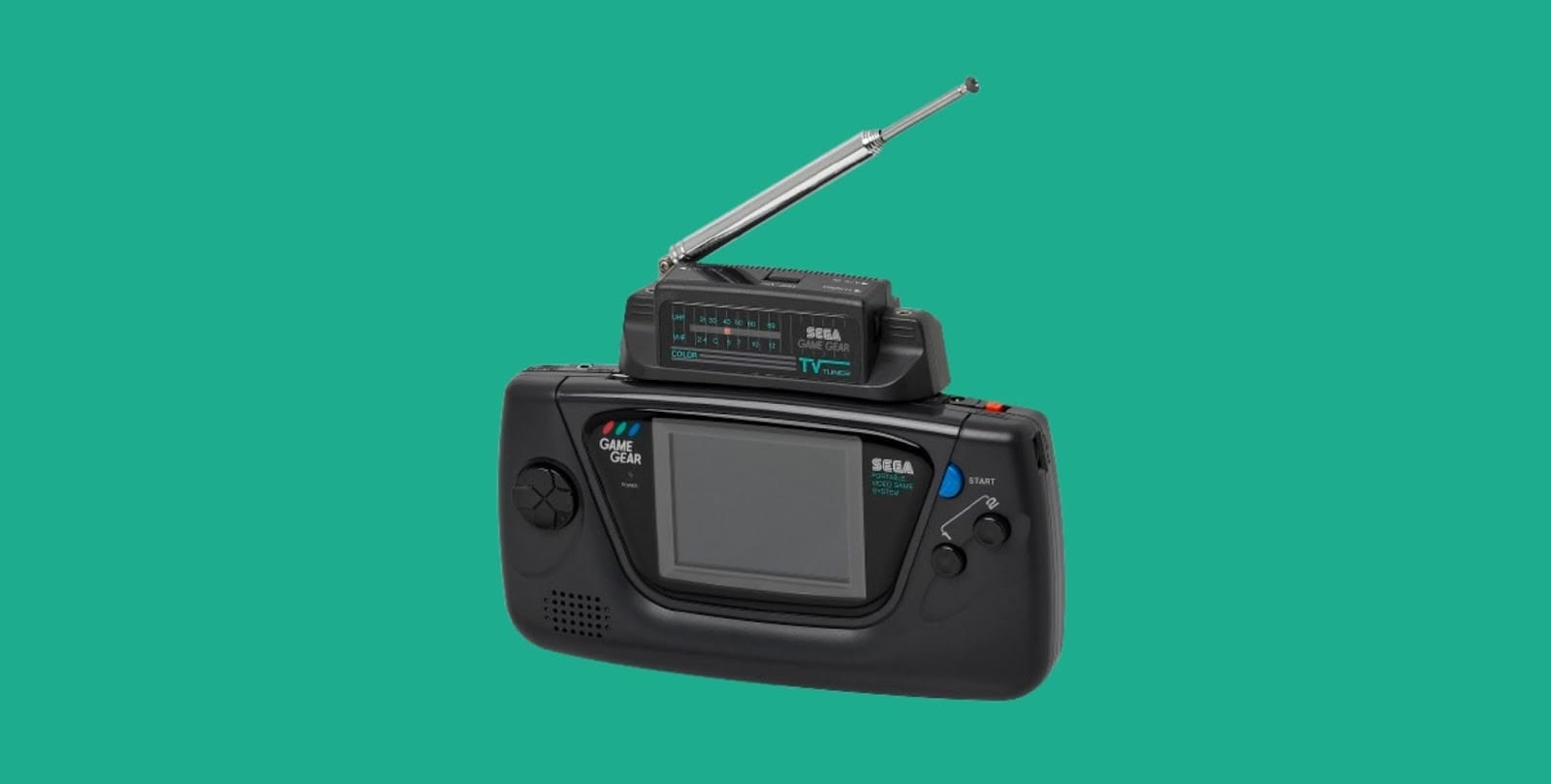
In terms of accessories, the Neo Geo Pocket line also used connection cables with a function similar to the Game Link cable of the Game Boy family. For the Game Gear, there was a more peculiar accessory: the TV Tuner with a whip antenna inserted into the cartridge slot, turning it into a portable television.
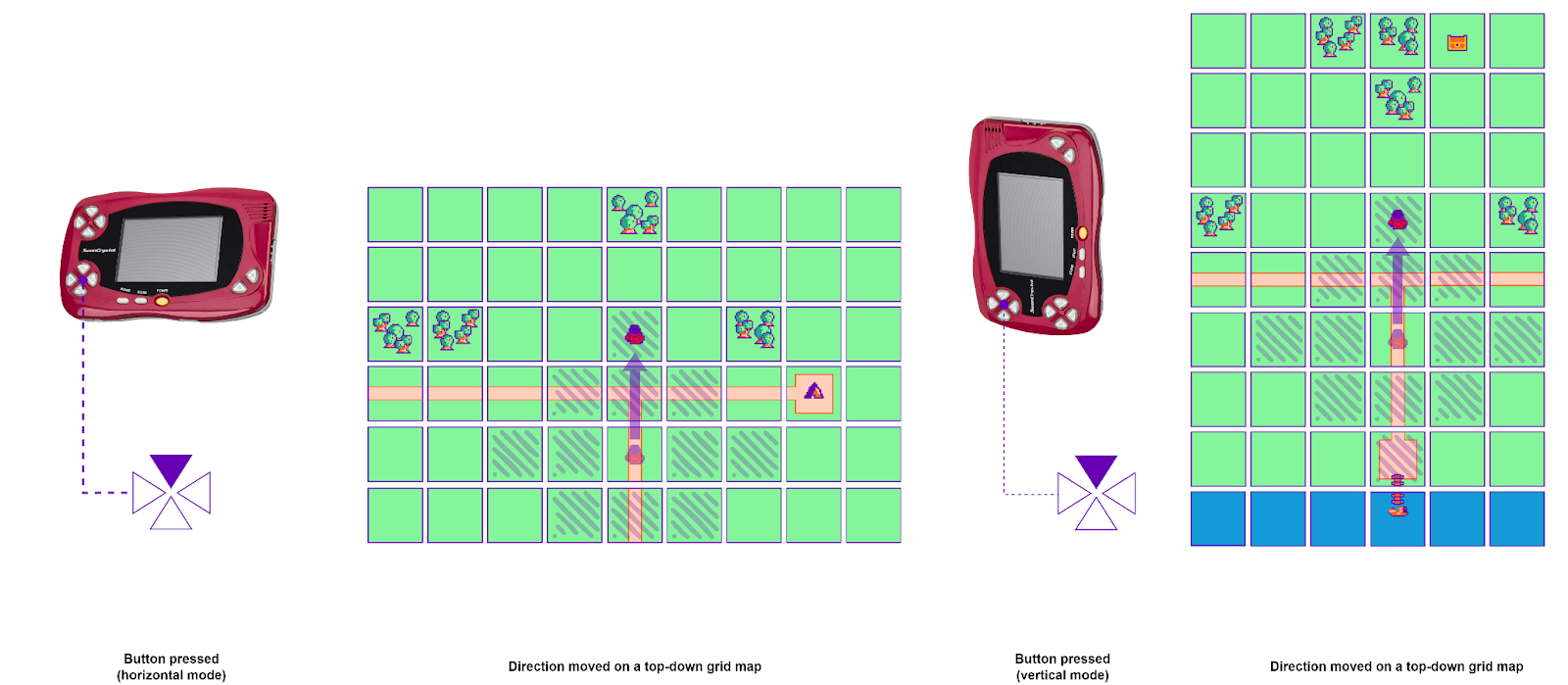
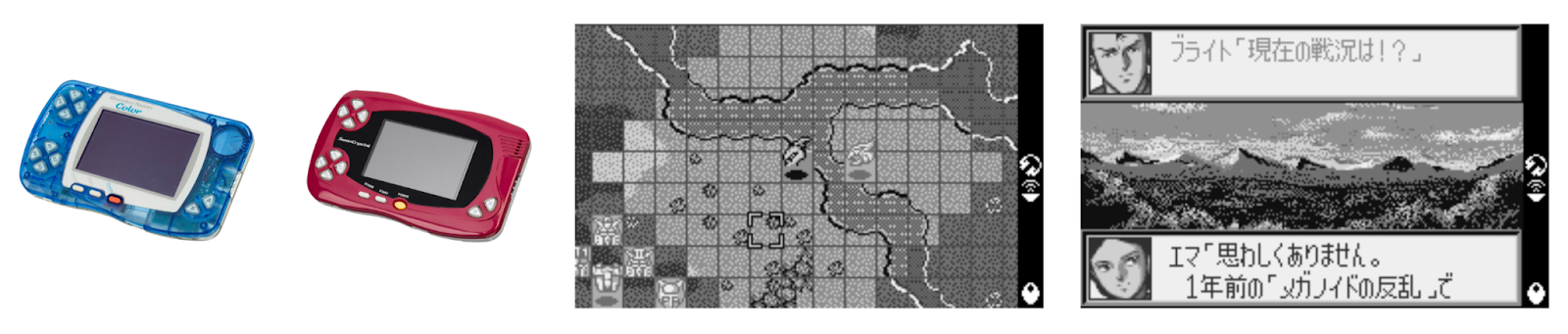
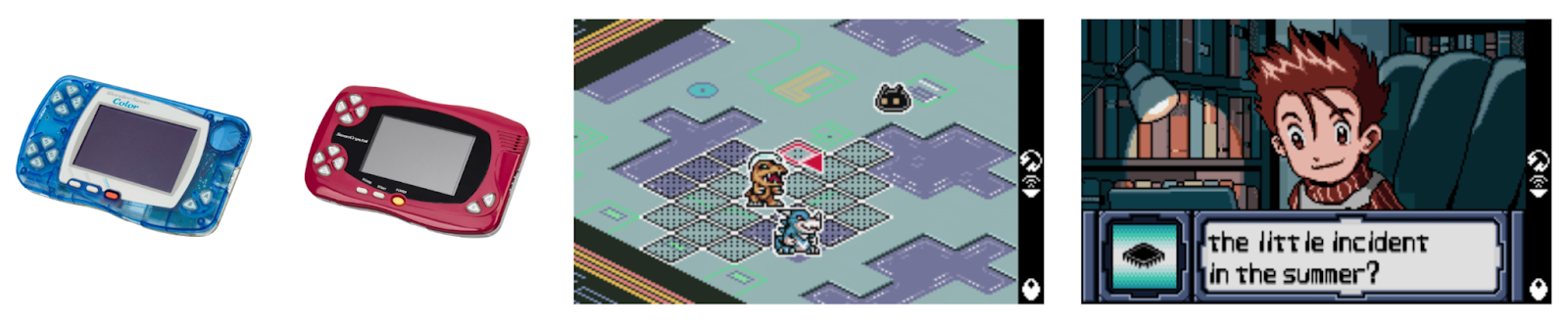
Although the Game Gear and Neo Geo Pocket lines had hardware features that directly influenced tactical RPGs on those platforms, the WonderSwan line had a wider variety of those games in its library. It offered an interesting innovation for the control and viewing experience on a portable console: the ability to play in both horizontal and vertical orientations. In some games, this versatility was explored in unique experiences, but unfortunately, it remained practically unexplored in tactical RPGs.
When it comes to general tendencies in the games, it was notable that most tactical RPGs on the Wonderswan and Game Gear used the same sort of transitions as were common in Super Robot Wars, Shining Force, and Fire Emblem. Unlike the Game Boy, some Wonderswan titles implemented isometric grids, including Dark Eyes: Battle Gate, Digimon Anode/Cathode Tamer, the Front Mission port, and Blue Wing Blitz. On the Neo Geo Pocket, Faselei! had a unique command-based system that made it a beast in its own league, forcing players to understand how to chain multiple actions together for a good outcome once the turn “played out”.
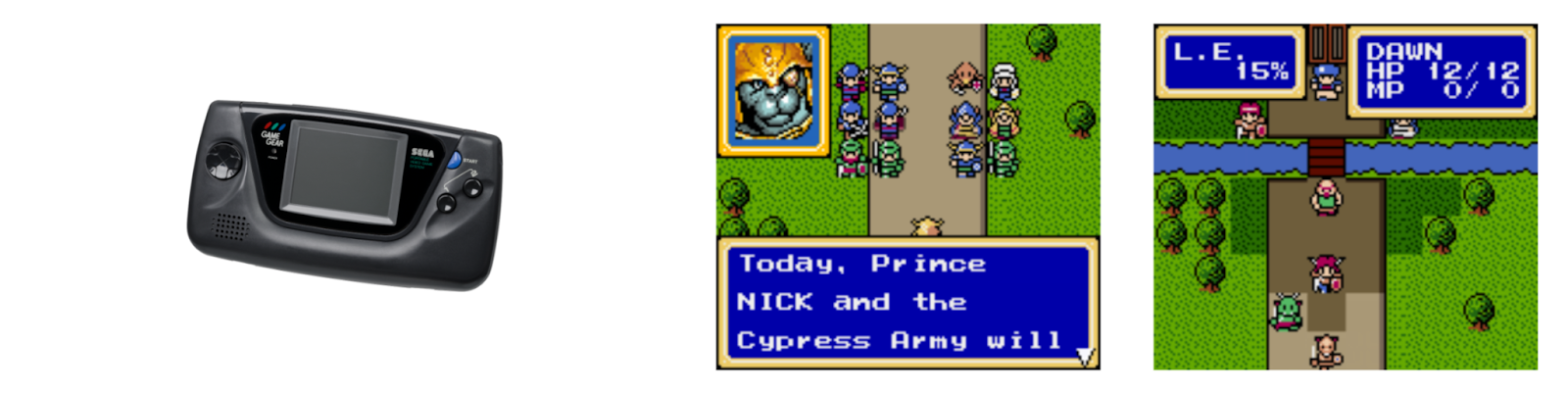
Shining Force: The Sword of Hajya (GG) via Mednafen. Source: Sega/Authors.
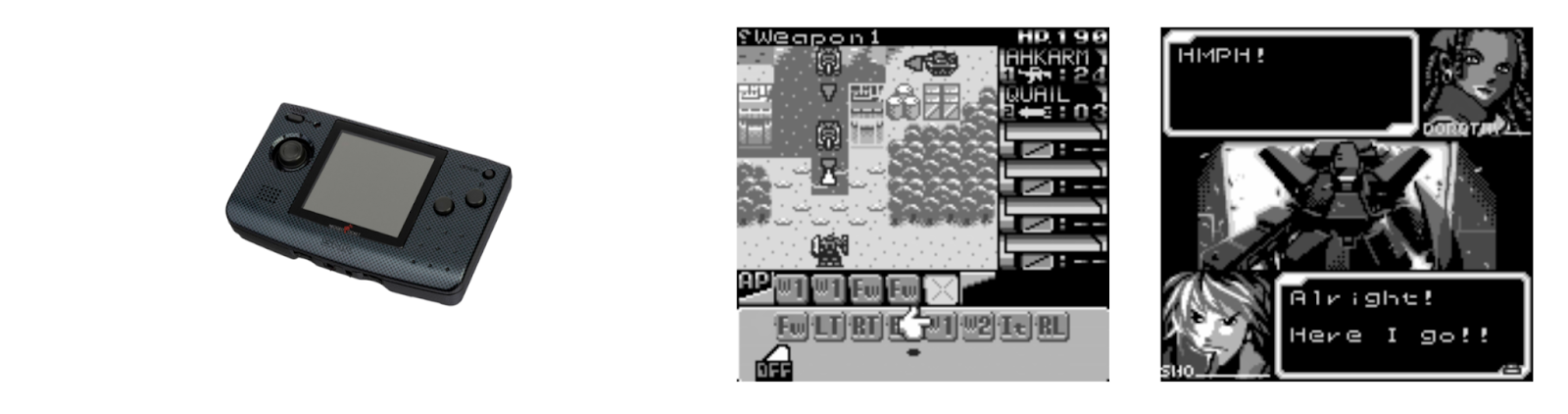
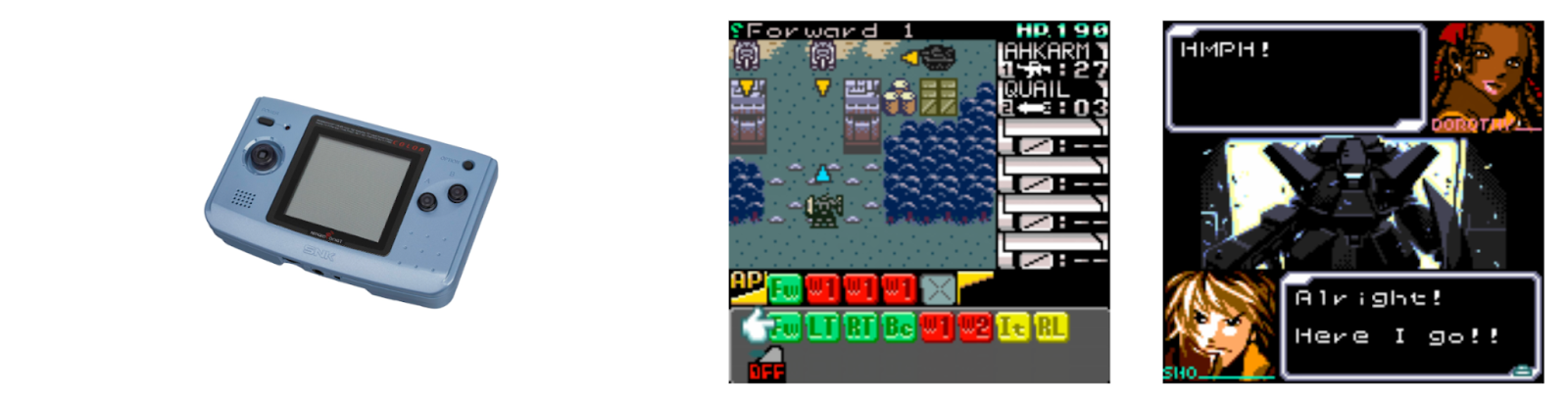
Faselei! (NGPC) via Mednafen. Source: SNK/Authors.
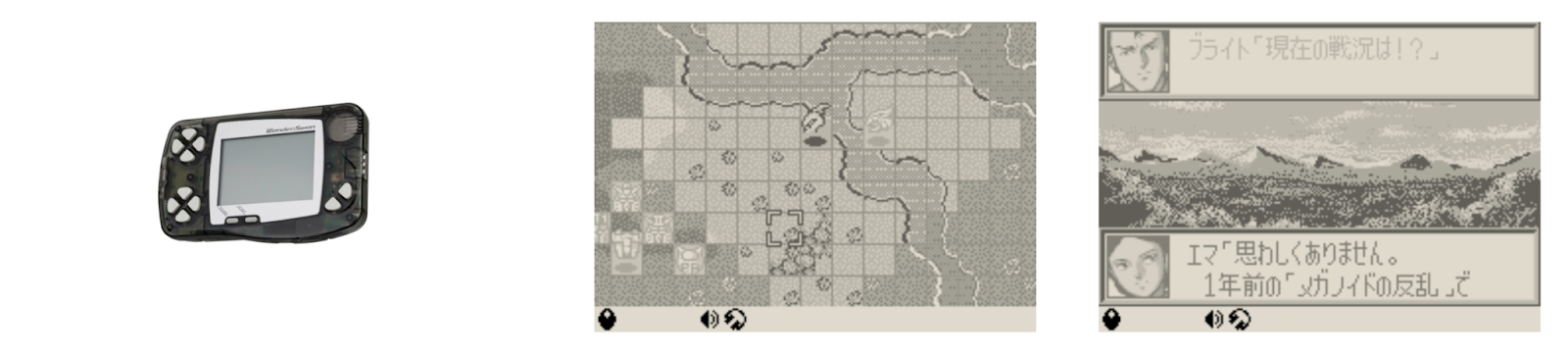
Digimon Anode/Cathode Tamer: Veedramon Version (WSC) emulated via Mednafen. Source: Bandai/Authors.
I.i. Game Gear (1990)
- CPU: Zilog Z80 (8-bit)
- Clock: ~3.58 MHz
- Display: 160 × 144 pixels; 32 simultaneous colors (from a palette of 4,096)
- Graphics Model: Tile-based backgrounds (8 × 8 tiles) with hardware sprites
- RAM: 8 KB system RAM; 16 KB VRAM
- Sound: 4-channel PSG
- Power: 6 × AA batteries
Despite significantly higher color capability than the Game Boy, the Game Gear retained a tile-based graphics model, making it structurally well-suited to grid-based tactical maps. However, high power consumption and a bulky form factor limited long-form, turn-based play, constraining the platform’s viability for sustained tactical RPG sessions despite its architectural compatibility. The Game Gear is known for its short battery life, lasting only 3 to 5 hours with six AA batteries due to its power-hungry fluorescent screen.
I.ii. Neo Geo Pocket (1998) / Neo Geo Pocket Color (1999)
- CPU: Toshiba TLCS-900H (16-bit)
- Clock: ~6.14 MHz
- Display: 160 × 152 pixels; monochrome (NGP) / color (NGPC)
- Color Capability (NGPC): 4,096-color palette; up to 146 colors on screen
- Graphics Model: Tile-based backgrounds with hardware sprites
- RAM: 12 KB system RAM; 16 KB VRAM
- Sound: 6-channel sound system
- Power: 2 × AA batteries
The Neo Geo Pocket family combined efficient tile-based rendering, excellent battery life, and high-contrast displays, creating near-ideal conditions for tactical RPGs. This balance directly supported precise spatial reasoning, readable interfaces, and longer sessions. While it uses two batteries compared to the WonderSwan's single cell, the NGP/NGPC is power-efficient, often providing up to 40 hours of gameplay.

I.iii. WonderSwan (1999) / WonderSwan Color (2000) / WonderCrystal (2002)
- CPU: NEC V30MZ (16-bit, 8086-compatible)
- Clock: ~3.07 MHz
- Display: 224 × 144 pixels; monochrome (WS) / color (WSC)
- Color Capability (WSC): 4,096-color palette; up to 241 colors on screen
- Graphics Model: Tile-based backgrounds with sprites; dual-orientation support
- RAM: 16 KB system RAM; 16 KB VRAM
- Sound: 4-channel audio
- Power: 1 × AA battery
Designed under Gunpei Yokoi’s low-power philosophy, the WonderSwan emphasized clarity, efficiency, and flexibility of orientation. Its tile-based architecture and exceptional battery performance made it particularly suitable for long gaming sessions in tactical RPGs. It used a non-backlit reflective screen, allowing for extraordinary battery life, with some models lasting over 20 hours on a single AA battery.
II. Major tactical role-playing games
As in Part 1, we say that a tactical RPG (TRPG) is "major" when it satisfies at least one of the following criteria:
- The title has an average score of 35/40 or higher on some review aggregator (EGM or Famitsu);
- The title sold more than 100,000 copies
- The title is part of a main series
- The title is the first in a subseries
- The title was significantly influential in the development of later major titles.
In chronological order, this topic presents all the major tactical RPGs from the Game Boy rivals, including narrative introduction, gameplay, and critical and commercial reception. Each game is accompanied by cover art plus 1 to 6 screenshots from the game:
- Tactical battle grid
- In-game dialogue (if any)
- Transition to combat (if any)
- World map (if any)
- Exploration (if any)
- Cutscene without in-game graphics (if any)
II.i. Shining Force Gaiden (GG, JP: 1992)
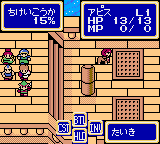
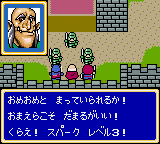
Shining Force Gaiden: Ensei – Jashin no Kuni he (known simply as Shining Force Gaiden) is a 1992 tactical role-playing game developed by Camelot Software Planning and published by Sega exclusively for the Sega Game Gear. It was released on December 25, 1992, as the first portable offshoot of the Shining Force franchise, set 20 years after the events of the original Shining Force and introducing a new generation of characters tied to the legacy of the earlier heroes. The story centers on Nick, a visitor from Guardiana who becomes the leader of a new Shining Force on a mission to save Queen Anri, who has been imprisoned by a dark spell, and rescue kidnapped soldiers, while confronting the Kingdom of Cypress.
In terms of gameplay, Shining Force Gaiden adheres closely to the turn-based tactical RPG formula established by its predecessor, but tailored to the limitations of the handheld Game Gear. Players control a squad of units on grid-based battlefields, moving characters, initiating combat, casting spells, promoting units at higher levels, managing resurrected allies between scenarios, and sometimes buying and selling weapons and healing items.
The battle objectives are quite simple: kill all the enemies or kill the enemy leader. The structure alternates between short cutscenes and discrete battlefield engagements, with limited menu interactions compared to its console counterparts. These design simplifications defined the Shining Force Gaiden sub-series, which opts to sacrifice the world exploration found in the Sega Genesis (or Mega Drive) titles and emphasizes battlefield tactics and party composition.
Shining Force Gaiden emulated via Mednafen. Source: Sega/Authors.
Both Shining Force Gaiden I and II were unified into a remake, Shining Force CD (JP: 1994, NA: 1995), for the Sega CD. There is no officially documented public information regarding the approximate sales figures for Shining Force Gaiden. Critical reviews at the time were mixed in Japan (Famitsu issue 211: 25/40), but the game achieved relative success in its niche, inspiring successors on the same console and laying the groundwork for the first portable versions of Shining Force.
“Although it is scaled down from the 16-Bit big brother version, this one keeps almost all the same elements. There are several hours of game play in this one, with the music and graphics taking first chair.”
Full review: Electronic Gaming Monthly issue 62 (September 1994)
“The major difference between the Gaiden games and the Genesis or Saturn Shining Force games is that in this one you can not visit towns... It may sound weird like this but one quickly gets used to it. Instead you get to enter either your headquarters, a shop or exit town and enter the next battle. [...] The animations are good and look a lot like the first Shining Force. [...] The Game Gear was a machine that had low quality sounds and music. However this game offers enjoyable tunes and the sounds aren't that bad.”
Full retrospective review: Doom_Infinite, GameFAQs (2002)
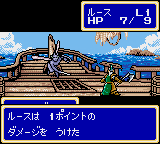
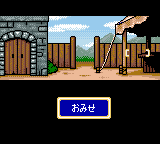
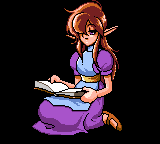
Shining Force Gaiden emulated via Ares. Source: Sega/Authors.
II.ii. Faselei! (NGPC, JP: 1999, UK: 2000)
Faselei! was developed by Sacnoth (later known as Nautilus) and published by SNK for the Neo Geo Pocket Color during the system’s brief but creatively ambitious lifespan. This title was directed and written by Matsuzo Machida, with character designs by Miyako Kato and music by Yoshitaka Hirota. These developers would later be key collaborators on the Shadow Hearts series.
The game presents a post-apocalyptic science-fantasy setting in which factions battle using giant humanoid machines. Following the Third World War, Ishtar, a small country in the Middle East, attempts to restore peace, but is engulfed in civil war after the first king of Ishtar is assassinated by one of his sons, Aerbel. The country split into two rival factions: one supporting Aerbel and the other rebelling against the injustice of his reign. The mercenary group Faselei sympathizes with the Rebel Army's cause. They are hired by Prince Kein to restore order and overthrow his brother's corrupt rule.
From a gameplay perspective, Faselei! is a turn-based tactical RPG where, instead of controlling multiple characters, each with a single action per turn, you control a single character (a giant mech) to perform several actions. The chosen actions form a list of commands that are applied as a counterpoint to the enemy's list. The weapons have varying ranges, limited ammunition, and require manual reloading. Each chosen action is based on a CHIP that you can collect. In turn, the list of commands is based on the fact that your mech (or Toy Soldier, TS) has a CPU with limited memory capacity, which can be upgraded. Initially, the CPU can memorize 5 actions, and can be upgraded to queue 6 and, later, 7 actions.
Faselei! emulated via Mednafen. Source: SNK/Authors.
Critically, Faselei! has come to be regarded as one of the most ambitious titles on the Neo Geo Pocket Color, despite its limited commercial reach due to the platform’s small install base. Critical reviews at the time were relatively negative in Japan (Famitsu issue 578: 24/40) and positive in the US (EGM issue 130: 32/40); in retrospect, it is frequently cited as a late-era highlight of SNK's handheld output. The game was included as one of the titles in the 2010 book 1001 Video Games You Must Play Before You Die (2010), edited by Tony Mott.
“The story is fairly intriguing and the graphics above par, but it's Faselei's battle system and TS tinkering that makes this one a winner.”
Full review: Jay, The Gonzo Gamer, Game Informer Issue 85 (May 2000)
“[...] certainly everyone with an interest in strategy games should spend a weekend completing it once. It’s a wonderful little game. But it’s sad that a great concept didn’t receive wider recognition or a sequel.”
Full retrospective review: John Szczepaniak, Hardcore Gaming 101 (2012)
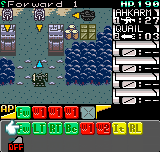
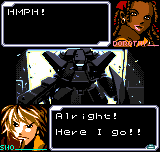
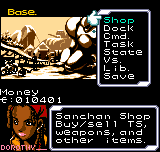
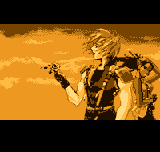
Faselei! emulated via Ares. Source: SNK/Authors.
II.iii. SD Gundam G Generation GATHER BEAT (WS, JP: 2000)
Developed by Vanguard, directed by Tomonori Sugiyama and Takashi Matsuda, and published by Bandai, this is the first game in the G Generation series with a crossover storyline, combining characters and events from multiple Gundam anime into a single campaign. It is also the first G Generation game to use the three-man squad formation that would become standard for handheld games.
Within the franchise, the campaign is relatively modest in terms of the number and variety of missions, but it's adequate for the handheld's standards. Most missions follow relatively repetitive patterns; each mission presents a map with military objectives, which usually consist of eliminating all enemy units or defeating a commander, while the player controls mobile suit units shown in a "super deformed" (SD) style. The gameplay innovates with a squad system: units can be grouped into small teams of up to three mobile suits in the same space on the map and attack in sequence. The game also allows the capture of enemy units, surrounding an opponent, and the use of carriers that function as launch platforms and support for the mobile suits.
SD Gundam G Generation GATHER BEAT emulated via Mednafen. Source: Bandai/Authors.
There is currently no complete fan translation for SD Gundam G Generation Gather Beat. The game received a relatively positive critical reception in Japan: 29/40 (Famitsu issue 604). The game had reasonable sales, 62,012 units (vgsales/Nicher Barrier), successful enough to justify a numbered successor, as well as an expanded remake, released for the GBA: SD Gundam G Generation Advance (JP: 2003).
“Nothing has changed. The rule that ‘if you’ve seen one game in the SRT or SD Gundam series, then you’ve seen them all’ still holds true, and in almost 30 years there have only been a few exceptions. The rest are almost entirely about moving little blue figures across hexes or squares and taking out the red ones.”
[А ничего не изменилось. Правило “если видел одну игру из серии SRT или SD Gundam – значит, видел их все” всё так же в силе, и исключений из правил за почти 30 лет лишь несколько. Остальные – практически поголовно передвижения маленьких синих фигурок по гексам или квадратикам и вынесение фигурок красных.]
Full retrospective review: StormReaver, JRPG (2020).
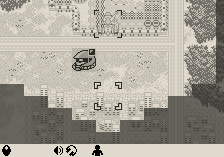
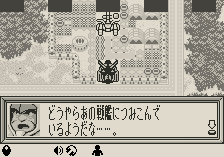
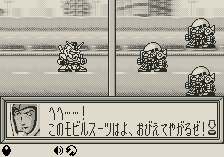
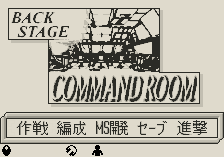
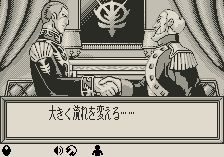
SD Gundam G Generation GATHER BEAT emulated via Ares. Source: Bandai/Authors.
II.iv. Digimon Adventure: Anode/Cathode Tamer (WS, JP: 1999; WS, JP: 2000; WonderSwan Color, AS: 2001)
One of the few Wonderswan games to receive an English translation, Digimon Adventure: Anode/Cathode Tamer is a compilation of the tactical RPGs Anode and Cathode Tamer. Developed by SIMS, the games were the starting point of a series that provided a cross-media perspective for Digimon, connecting itself to the animations from the original Adventure all the way to Tamers.
In the games, Ryo Akiyama would have the chance to partner up with multiple Digimon to try and save the Digital World from a major crisis (and eventually meet his nemesis Millenniumon), in which villains from the first anime series have come back. Summoning multiple allies, he fights his way through grid-based battlefields that open up when he enters dungeons, having to handle consecutive battles to advance the story and power up his allies. The game featured connectivity between Wonderswans for players to battle each other as well as a unique system of unlockable skills called “Variable Moves”, which can show up depending on the player’s choice of up to three units for a given battle.
Digimon Anode/Cathode Tamer: Veedramon Version emulated via Mednafen. Source: Bandai/Authors.
Altogether, Digimon Adventure: Anode/Cathode Tamer sold 212,462 units (vgsales). While critical reviews for it are hard to come by, the game has a strong presence in the fandom due to its connections to other media, being seen as a “missing link” for Western fans willing to dig deeper into Digimon lore. In his personal blog, writer James Thompson comments:
“Do I recommend it? Well, kind of. I can only really recommend this game to two kinds of people: Those who love Digimon and Ryo, and those who love tactical RPGs. While you can easily skip this game in favor of future games, I do suggest at least trying it. It does introduce the hero and villain of this series and is fun for an hour or two, but that’s about it.”
Full retrospective review: James Thompson, Syrup With A Side Of Writing (2017).
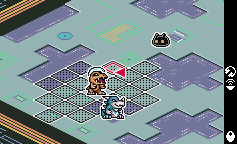
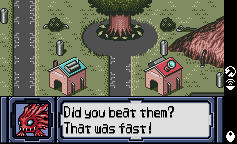
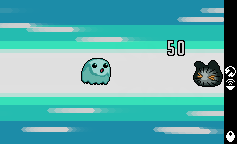
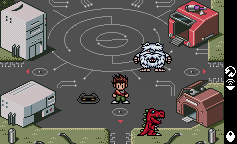
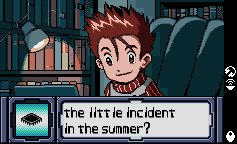
Digimon Anode/Cathode Tamer: Veedramon Version emulated via Ares. Source: Bandai/Authors.
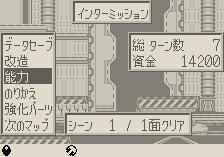
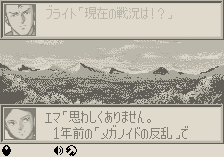
II.v. Super Robot Taisen Compact (WS, JP: 1999; WSC, JP: 2001)
Though the Super Robot Taisen series started in 1991 on Game Boy, by 1999 it had already spread to many systems, with the franchise reaching over 20 releases by the end of that year. The first entry on the Wonderswan was Super Robot Taisen Compact, which would be expanded upon with four sequels and an enhanced WonderSwan Color edition that had some gameplay revisions and changes based on its successors. The games were made by TOSE and published by Banpresto.
As the big crossover series it is, the game included characters and robots from multiple Gundam animations: Mazinger (Z and Great), Getter Robo (original, G, and the Shin manga), Daitarn 3, L-Gaim, Aura Battler Dunbine, Brave Raideen, Daimos, and Dancouga. Super Robot Taisen Compact followed up on the more involved story elements brought to the franchise ever since Super Robot Taisen 2 (NES, JP: 1991) and some of the graphical improvements from Super Robot Taisen 3 (SNES, JP: 1993. These included more detailed animations and backgrounds for the battle sequences, even though it was shown on a monochrome screen, and chiptune versions of classic anime songs. It also introduced a Free Route system, which let players choose the order of the scenarios they’d like to play instead of following a linear structure, opening up plot divergences and secrets that added replay value.
Super Robot Taisen Compact emulated via Mednafen. Source: Banpresto/Authors.
Super Robot Taisen Compact would go on to sell 143,729 copies (Super Robot Wars/Sales Data/Famitsu), becoming the system’s best-selling entry in the franchise. Its WonderSwan Color version would only reach 14,873 units sold (Super Robot Wars/Sales Data/Famitsu).
“This game offers alot of replay value, with alot of strategy and amount of robots to choose from that you can use. Although it is anally hard, the fun factor of the game is welcome by many.”
Full review: AhKenshi, GameFAQs (1999).
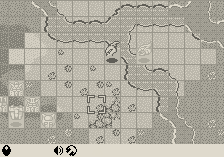
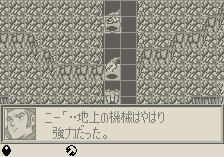
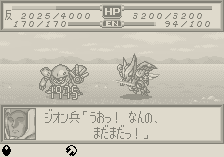
Super Robot Taisen Compact emulated via Ares. Source: Banpresto/Authors.
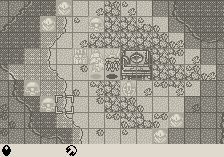
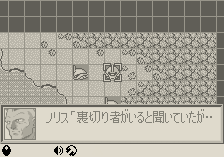
II.vi. Super Robot Taisen Compact 2 - Dai-1-bu - Chijou Gekidou Hen (WS, JP: 2000)
Following the first Super Robot Taisen Compact, Banpresto decided to make a trilogy out of the second game, with each arc sold separately. Super Robot Taisen Compact 2 was divided into three parts: “Chijou Gekidou Hen” (“Earth Crisis Chapter”), “Uchuu Gekishin Hen” (“Cosmoquake Chapter”), and finally “Ginga Kessen Hen” (“Galactic Showdown Chapter“). The games would later on be remade as a single PS2 title called Super Robot Taisen Impact, released back in 2002 exclusively in Japan (as usual for the franchise).
Super Robot Taisen Compact 2’s first chapter was the debut of mecha series Dangaioh and Ninja Senshi Tobikage (known in the west as Ninja Robots). The trilogy is regarded as having very tough combat, to the point that the criticisms of Compact 2 and Impact led the developers to make Super Robot Taisen MX (PS2, JP: 2004) extremely easy. It imported most of its gameplay elements from its predecessor, such as the Free Route system, but it also added the feature to keep some data from one game to the next, giving returning players some advantages in the next chapters of Compact 2.
Super Robot Taisen Compact 2 - Dai-1-bu - Chijou Gekidou Hen emulated via Mednafen. Source: Banpresto/Authors.
To this day, no patch has been released that fully translates the game into English. While its successors didn’t fare as well, Super Robot Taisen Compact 2 - Dai-1-bu - Chijou Gekidou Hen still managed to sell 114,164 units (Super Robot Wars/Sales Data/Famitsu). This game barely received any reviews when it was released. The remake of the trilogy would go on to sell 632,536 units on the much more popular PlayStation 2 (Super Robot Wars/Sales Data/Famitsu).
“Super Robot Taisen Compact 2 is an absolute pillar of the WonderSwan game library, not just because of its unusual three-part structure, but because it really shows off what these games can be when the team behind them is firing on all cylinders. It’s incredibly ambitious both in scope and how it uses lesser-known hardware features of the WonderSwan, and it’s pretty impressive that they pulled it off.”
Full retrospective review: Yanik Magnan, YouTube (2023).
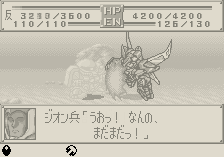
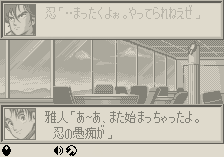
Super Robot Taisen Compact 2 - Dai-1-bu - Chijou Gekidou Hen emulated via Ares. Source: Banpresto/Authors.
III. Minor tactical role-playing games
Not all tactical RPGs released for these non-Game Boy handhelds were prominent in their time, but all deserve their place in the chronology. Below, we present the minor tactical RPGs released for the Game Boy's rivals.
Shining Force Gaiden II: Jashin no Kakusei / Shining Force: The Sword of Hajya (GG, JP: 1993, NA: 1994)
Shining Force Gaiden II is a direct sequel to the first; the story takes place two months after the events of the original Shining Force Gaiden, and features identical gameplay. Reviews of this game in Japan were mixed (Famitsu issue 238: 25/40) and relatively positive in the US (EGM issue 62: 27/40). See more details in this retrospective review: Damien McFerran, Nintendo Life (2013).
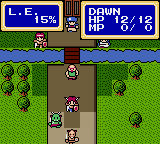
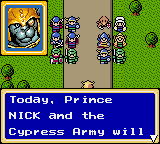
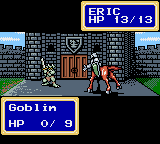
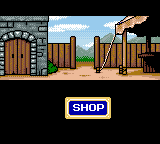
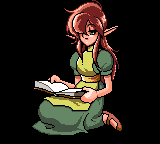
Shining Force: The Sword of Hajya emulated via Ares. Source: Sega/Authors.
Shining Force Gaiden: Final Conflict (GG, JP: 1995)
Despite identical gameplay, the plot of Shining Force Gaiden: Final Conflict is not connected to the story of the other two Shining Force Gaiden games, but rather to the plots of Shining Force and Shining Force II for the Sega Genesis. Like its predecessor, it's difficult to estimate sales figures, but Japanese reviews of the third title were relatively positive (Famitsu issue 342: 29/40). This game has a complete fan translation. See more details in this retrospective review: Fantasy Anime.
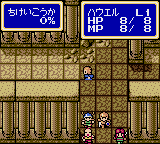
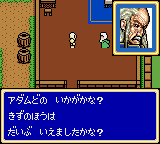
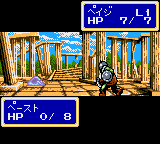
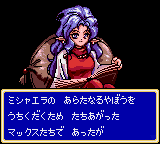
Shining Force Gaiden: Final Conflict emulated via Ares. Source: Sega/Authors.
Front Mission (WSC, JP: 2002)
Front Mission was developed by G-Craft and published by Square, exclusively in Japan, as a portable version of Square's iconic tactical RPG of the same name, originally released for the Super Famicom in 1995. As expected, the handheld version suffered a downgrade in sound quality, but the music still sounds decent. The adaptation simplifies the menus and presentation to suit the handheld display, but preserves the complexity of equipment optimization, terrain effects, and positioning tactics. Unlike the original version, this specific version never received a full fan-made translation patch.
The WonderSwan Color version of Front Mission was a niche release; it sold approximately 7,989 copies (SwanofWonders/GameDataMuseum). Reviews in Japan were relatively positive (Famitsu issue 915: 30/40). See more details in this retrospective review: Hardcore Gaming 101 (2011).
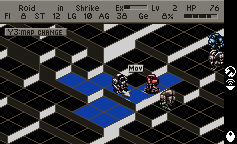
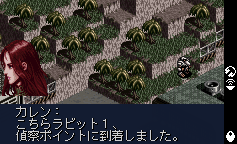
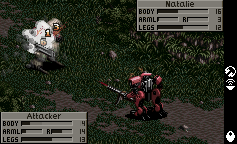
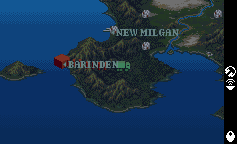
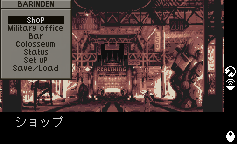
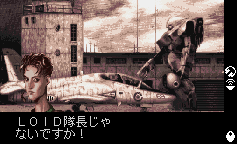
Front Mission emulated via Ares. Source: Square/Authors.
Blue Wing Blitz (WSC, JP: 2001)
Produced by Akitoshi Kawazu (SaGa series) and developed by the Front Mission Team, Blue Wing Blitz emerged with a different premise from usual TRPGs, focusing on aerial battles with customizable aircraft. This game features memorable character design by Nobuyuki Ikeda and the first soundtrack composed entirely by Kumi Tanioka in her career.
The story takes place in an unnamed fictional world, beginning in the Republic of Esk, where the group of playable characters attempts to repel the invasion of the militaristic empire of Ordia. Similar to Front Mission, each unit can be damaged in different parts. There are also ground units on the grid-map that can only be destroyed by bombers. Limited ammunition and fuel are resources that need to be accounted for in missions. The game was not very commercially successful, selling only around 20,000 units one year after its release. (Square). Interest in this game has grown in recent years, as evidenced by discussions on Reddit since 2022, but due to its complex script, it lacks an English fan translation, and there doesn't seem to be any organized project for that purpose. There is only one review available on GameFAQs. See more details in this Japanese retrospective review: w.atwiki (2021).
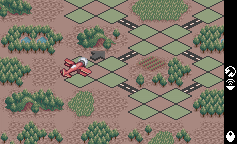
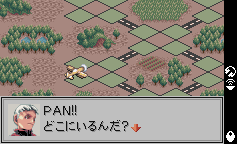
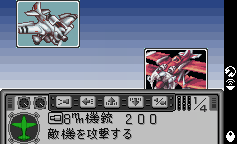
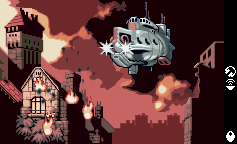
Blue Wing Blitz emulated via Ares. Source: Square/Authors.
Arc the Lad: Kishin Fukkatsu (WSC, JP: 2002)
Alongside Front Mission, the Arc the Lad series is one of the two main franchises created by Toshiro Tsuchida. In this spin-off, directed by Masaki Yamada, Elc returns as the protagonist alongside Finia, a mysterious girl sent from the future to his time due to a hostile robotic invasion that occurred in her era. Based on this premise, the plot revolves around seven playable characters who attempt to prevent the resurrection of the Machine God, events that take place after Arc the Lad III.
The battlefields are small, flat, and contain few units, and the gameplay is simple and similar to previous entries in the series. In terms of exploration design, you can move freely and flee from any battle except against bosses, and there are maps where you can fight the same battle repeatedly. There is no reliable data on critical reception or sales of this title. There is currently a fan translation in progress. See more details in this retrospective review by aln03: GameFAQs (2005).
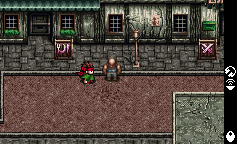
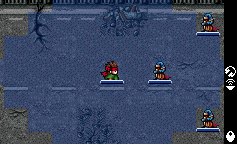
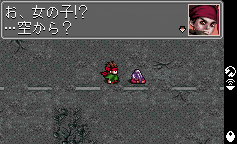
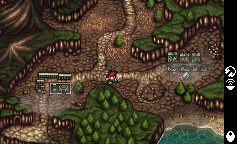
Arc the Lad: Kishin Fukkatsu emulated via Ares. Source: Bandai/Authors.
Langrisser Millennium WS: The Last Century (WSC, JP: 2000)
Alongside Shining Force, Langrisser is one of the most traditional TRPG series on Sega consoles, although it's not a first-party intellectual property. A year after the conclusion of the main series, Langrisser V: The End of Legend (Sega Saturn, JP: 1998), Masaya Games published a spin-off, Langrisser Millennium, for Dreamcast, which attempted to reinvent the franchise. Its story takes place centuries after the events of the classic series, when the world has already undergone many political and technological transformations.
From a gameplay perspective, this game became a real-time SRPG rather than a tactical RPG. Developed and published by Bandai, Langrisser Millennium WS: The Last Century emerged as a prequel to Langrisser Millennium, returning to the classic TRPG style of the main series, but with reduced maps and other simplifications due to the limitations of the handheld console. It is a minor title in the series, with little information about its sales or reviews, and to this day, no English translation is available. See more details in this review by _Faust_: GameFAQs (2000).
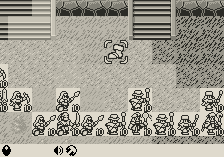
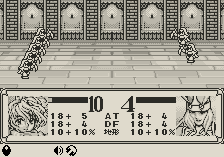
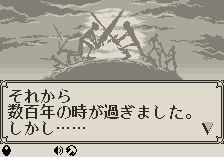
Langrisser Millennium WS: The Last Century emulated via Ares. Source: Bandai/Authors.
Royal Stone: Hirakareshi Toki no Tobira (GG, JP: 1995)
Royal Stone was developed by Media Rings and published by Sega for the Game Gear, exclusively in Japan, during the system’s late commercial phase. Although short and mechanically simpler than genre benchmarks like Shining Force or Fire Emblem, Royal Stone has a clarity and rhythm that give it a certain personality within the Game Gear library. The game received a full English patch (2013) created by the Aeon Genesis group. The title was a low-profile release and has no publicly available sales data from Famitsu or Sega. In Japan, reviews were positive within the Sega ecosystem (Sega Saturn Magazine: 34/40), but not when considering the broader context of the 1995 releases (Famitsu issue 324: 23/40). See more details in this retrospective review: Ken Horowitz, Sega-16 (2016).
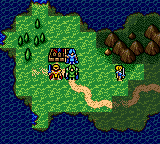
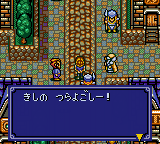
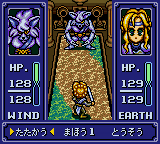
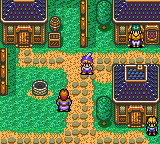
Royal Stone: Hirakareshi Toki no Tobira emulated via Ares. Source: Sega/Authors.
SD Gundam G Generation GATHER BEAT 2 (WSC, JP: 2001)
Like the first game in this subseries, SD Gundam G Generation GATHER BEAT 2 is similar to the Super Robot Wars series: linear campaigns, an original crossover narrative, and relatively compact tactical battles adapted to the portable format. The game expands on the gameplay systems introduced in its predecessor, released for WonderSwan, but the migration to the WonderSwan Color allowed more detailed sprites, colorful graphics, and more elaborate combat animations. However, this sequel was less successful, with 35,842 units sold (vgsales/Nicher Barrier). There is scarce review data, and SD Gundam G Generation: Gather Beat 2 does not have a known fan translation. See more details in this review: KingZora, GameFAQs (2001).
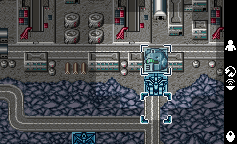
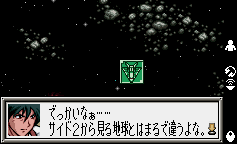
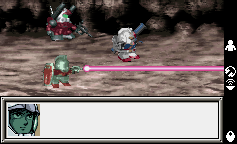
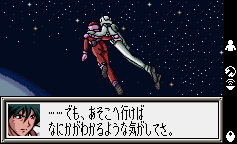
SD Gundam G Generation GATHER BEAT 2 emulated via Ares. Source: Bandai/Authors.
SD Gundam G Generation MONOEYE GUNDAMS (WSC, JP: 2002)
Compared to the other SD Gundam G Generation games, MONOEYE GUNDAMS had a unique setting focused on original characters instead of sticking only with popular figures of the franchise. The game was included as a bonus for SD Gundam Cross Rays in Japan.
The story follows former Zeon pilot Siegfried Wedner as he steals an experimental mobile suit called Sisquiede from the Titans around the same time as Kamille steals the Gundam Mk-II. His story would eventually be told again as part of SD Gundam G Generation DS (JP: 2005), though the game featured new original characters and events as well. There is scarce review data for this game. There is no known fan translation for SD Gundam G Generation: Monoeye Gundams. The game would sell only 18,470 units (vgsales/Nicher Barrier). See more details in this retrospective review: Takashi Yonezawa, Dengeki (2024).
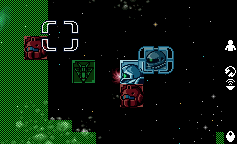
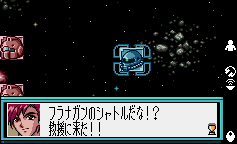
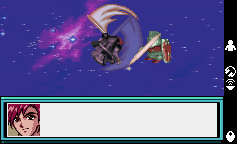
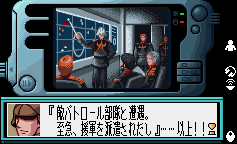
SD Gundam G Generation MONOEYE GUNDAMS emulated via Ares. Source: Bandai/Authors.
Super Robot Taisen Compact 2 - Dai-2-bu - Uchuu Gekishin Hen (WS, JP: 2000)
The second part of the Super Robot Taisen Compact 2, also known informally in the west as Cosmoquake, is well-known for its difficulty spike close to the end and contributing to making the trilogy a hard entry in the series. Data from completing the first game would let players obtain money and parts, though no unit upgrades or pilot levels carried over. It would sell about 53,515 units (Super Robot Wars/Sales Data/Famitsu), but specialized reviews from media back in the day are not available and it never received an English translation through official means or fan patches. See more details about the whole trilogy in Yanik Magnan’s YouTube retrospective review (2023).
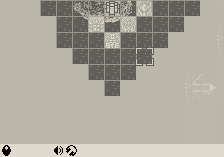
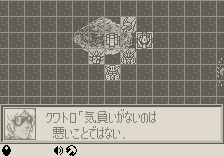
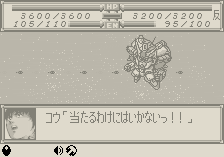
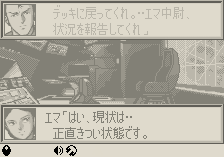
Super Robot Taisen Compact 2 - Dai-2-bu - Uchuu Gekishin Hen emulated via Ares. Source: Banpresto/Authors.
Super Robot Taisen Compact 2 - Dai-3-bu - Ginga Kessen Hen (WS, JP: 2001)
Completing the Compact 2 trilogy, Ginga Kessen Hen promised an epic finale, increasing the scale of the combat to a galactic context. Like its predecessor, it would work within the frame of its mechanics, and the same data could be carried over from them. However, it would only be possible to reach the true final battle by using this system and having reached the ending before Turn 777. Only 47,358 units of the third chapter would be sold (Super Robot Wars/Sales Data/Famitsu); reviews from back in the day could not be found during this research, and, just like its predecessors, it has not received an English translation to this date. See more details about the whole trilogy in Yanik Magnan’s YouTube retrospective review (2023).
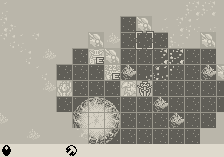
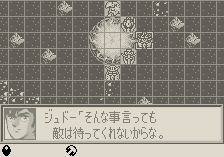
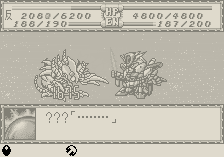
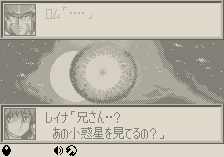
Super Robot Taisen Compact 2 - Dai-3-bu - Ginga Kessen Hen emulated via Ares. Source: Banpresto/Authors.
Super Robot Taisen Compact 3 (WSC, JP: 2003)
Unlike its predecessors, Super Robot Taisen Compact 3 was created with the Wonderswan Color in mind, giving it more leeway in the visual department. The game would introduce the option to skip animations, not something available in previous games. Compact 3 also added other quality-of-life features like mid-conversation saving, as dialogue scenes could be very long. Coming very late in the WonderSwan lifespan, Super Robot Taisen Compact 3 would only reach sales of 10,688 units (Super Robot Wars/Sales Data/Famitsu). Just like its predecessors, there are no means to play the game in English and unfortunately, review data from specialized media back in the day are scarce. See more details about the game on a review from a player back in the day: Mykas0, GameFAQs (2003).
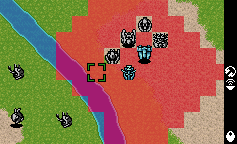
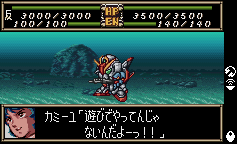
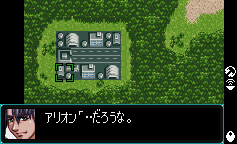
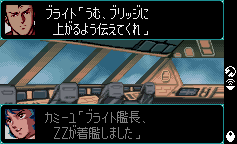
Super Robot Taisen Compact 3 emulated via Ares. Source: Banpresto/Authors.
Dark Eyes: Battle Gate (WSC, JP: 2001)
Developed by Nextech and published by Bandai, Dark Eyes: Battle Gate was a tactical RPG based on the company’s 1999 MMORPG for the Dreamcast, which multiple sources, including GameFAQs, point out as having been cancelled before release. This game, which features an isometric perspective that wasn’t so common for portable tactical RPGs at the time, also had two main characters with different stories within the same world. More data about it, including sales information from back then, was not found during research. There are no known English translations for the game, and reviews are also very hard to come by, with only a general outline of its interesting traits on the Japanese site Console Dictionary (2025).
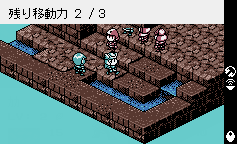
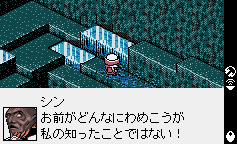
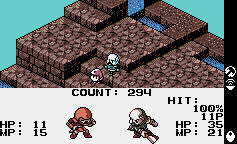
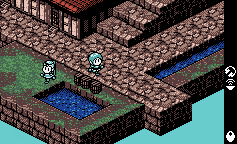
Dark Eyes: Battle Gate emulated via Ares. Source: Bandai/Authors.
Gransta Chronicle (WSC, JP: 2002)
Developed by Megatron and published by Omega Micott, Gransta Chronicle mixed exploring a fantasy world like in a turn-based RPG with grid-based tactical combat. The title was one of the very few Korean-developed games that made it to the Wonderswan, and its battle system menu had a stylized ring format akin to Mana’s ring menu. Players would choose magic or attacks in that menu after positioning themselves in the grid. Once again, ress reviews and sales data were hard to find, and there are no English versions. Still, it’s possible to check a short retrospective article about it in the Japanese blog GameFlame (2015).
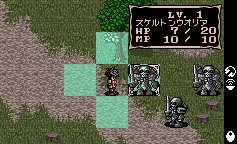
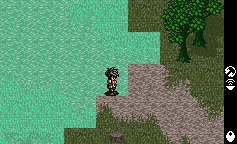
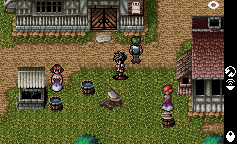
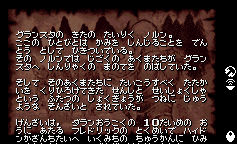
Namco Super Wars emulated via Ares. Source: Omega Micott/Authors.
Namco Super Wars (WSC, JP: 2002)
Years before Namco and Bandai merged, the two collaborated on a tactical RPG called Namco Super Wars. The idea for the game revolves around exploring various worlds, gathering Namco characters from games like Valkyrie no Densetsu, The Tower of Druaga, and Dig Dug. The concept of crossovers with Namco characters would eventually return in Namco x Capcom, released on PS2 in 2005. According to Game Data Library, Namco Super Wars would go on to sell 4,979 units in its first week, but never appeared again in subsequent weeks in the collected data in Famitsu. The search for more information about the game did not find any press review data. There are no English versions of the game, but a short retrospective review by a player was preserved thanks to the Wayback Machine: Retrogame he no Mougen (2013).
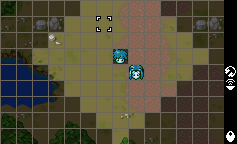
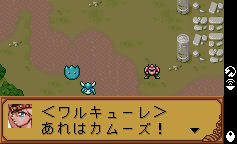
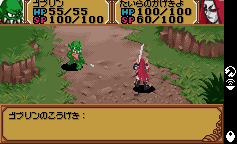
Namco Super Wars emulated via Ares. Source: Bandai/Authors.
SD Gundam: Emotional Jam (WS, JP: 1999)
SD Gundam: Emotional Jam was a unique tactical RPG within its franchise, created as part of a celebration for Gundam’s 20th anniversary. Along with featuring multiple mobile suits and characters from its various animation series, including the U.C. chronology and those of alternate universes, its big feature was multi-layered combat. By selecting a unit and an enemy on the grid, the player would then move to yet another tactical grid to deploy allies, making it a meta-tactical experience. The game would go on to sell at least 79,995 copies in Japan, according to Game Data Library, but no dedicated media reviews from the time could be found. There are no English releases of the game, officially or otherwise. More details on it can be found in this video retrospective review, CGR Undertow, YouTube (2013).
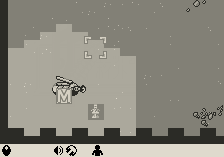
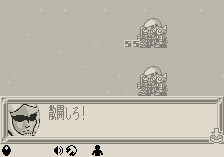
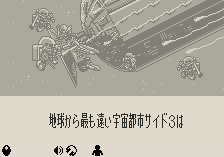
SD Gundam: Emotional Jam emulated via Ares. Source: Bandai/Authors.
Crystal Warriors (GG, JP: 1991, NA/EU: 1992)
In Crystal Warriors, the Jyn Empire has taken control over Arliel and three of the four crystals that kept the world balanced. Avoiding the worst-case scenario, Princess Iris of Arliel has taken one of the crystals, and now she must fight alongside her warriors against the forces of Emperor Grym.
The title features a system in which attacking a unit on the grid leads to multiple combat options, letting players use magic, attack, or try to escape before the second hit. No data about its sales was found. Upon its release, the game received some good Western reviews, including 4/5 from American magazine GamePro, 80% from German magazine Mega Fun, 80% from French magazine Player One, and 91% from the Swedish publication Sega Force. The game was also later rereleased on the 3DS, receiving a much less favorable 5/10 review by Damien McFerran in 2013, which can be found on Nintendo Life.
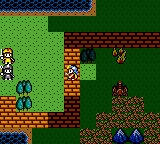
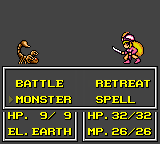
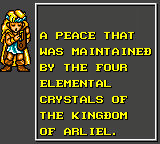
Crystal Warriors emulated via Ares. Source: Sega/Authors.
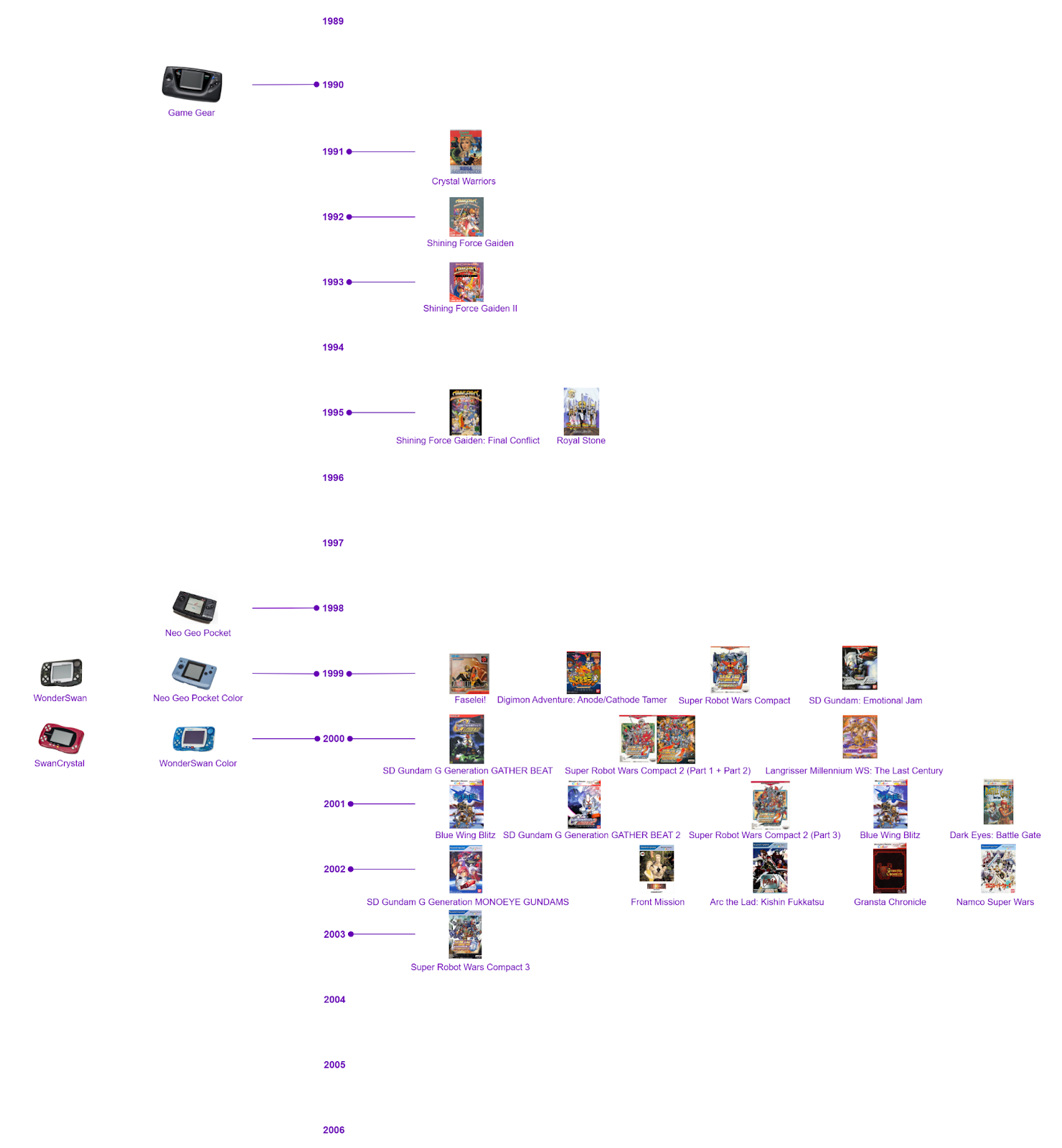
IV. Chronology
V. Honorable mentions
Other 4th–6th generation handhelds with little commercial relevance:
- Gamate (Bit Corporation)
- Game Master (Hartung)
- Watara Supervision
- Mega Duck (Welback Holdings)
- Design Master Senshi Mangajukuu
- Game.com (Tiger Electronics)
- Cybiko
- GP32 (Game Park)
- P/ECE (AQUAPLUS)
- GameKing
- Tapwave Zodiac
The list below includes titles released for the Game Boy rivals between 1989 and 2006 that do not strictly fit the definition of a tactical RPG, but are close to or share important affinities with it.
Titles that receive an honorable mention satisfy one of the following three criteria:
- It is a strategy role-playing game (SRPG), but not a tactical role-playing game (TRPG);
- It is a tactical game, but not a tactical RPG;
- It is a grid-based, turn-based game that may at first glance be confused with our definition of TRPG in this section.
- Ogre Battle Gaiden: Prince of Zenobia (Neo Geo Pocket Color, JP: 2000)
- Pathway to Glory (Nokia N-Gage, 2004)
- Armored Unit (Wonderswan, JP: 1999)
- Chaos Gear: Michibi Kareshi Mono (Wonderswan, JP: 1999)
- Chocobo no Fushigi na Dungeon for Wonderswan (Wonderswan, JP: 1999)
- Last Stand (Wonderswan, JP: 1999)
- Nobunaga no Yabou for Wonderswan (Wonderswan, JP: 1999)
- Sangokushi for Wonderswan (Wonderswan, JP: 1999)
- Sangokushi 2 for Wonderswan (Wonderswan, JP: 2000)
- SD Gundam Gashapon Senki Episode 1 (Wonderswan, JP: 1999)
- Uchuu Senkan Yamato (Wonderswan Color, JP: 2001)
- Hunter X Hunter: Greed Island (Wonderswan Color, JP: 2003)
- Kidou Senshi Gundam - Gihren no Yabou - Tokubetsu Hen - Aoki Hoshi no Hasha (Wonderswan Color, JP: 2003)
- Zan Gear (Game Gear, JP: 1990)
- Taisen-gata Daisenryaku G (Game Gear, JP: 1991)
- Dragon Crystal (Game Gear, JP: 1990, NA/EU: 1991)
- Head Buster (Game Gear, JP: 1991)
- SD Gundam: Winner’s History (Game Gear, JP: 1995)
Generally speaking, the Wonderswan and the Game Gear had various tactical/war simulation games that did not have enough elements to be classified as RPGs. Meanwhile, the Neo Geo Pocket had the strategy RPG Ogre Battle Gaiden: Prince of Zenobia, which isn’t structured on a grid and features real-time movement on the mission map.
SD Gundam Gashapon Senki Episode 1 and SD Gundam: Winner’s History combine the battlefield grid with action combat and no RPG elements. There were also a few games with grid format that were actually “Mystery Dungeon” roguelike RPGs like Chocobo no Fushigi na Dungeon for Wonderswan and Dragon Crystal.
A very unique inclusion worth mentioning is Armored Unit, which has the player navigating through a grid to find the enemy. The game plays with the concept of fog of war, which is an important element to the tactical genre, while having the player search for the hidden enemy in a way similar to the classic tabletop game Battleship. Despite its fascinating nature, it doesn’t have RPG elements, and movement on the grid is actually not turn-based but rather real time, making it not suited for the tactical RPG categorization.
VI. Generation shift
At a time when tactical RPGs were an almost exclusively Japanese genre, the handheld console lines created by Gunpei Yokoi (Game Boy and WonderSwan) were the portable homes of tactical RPGs during the last decade of the 20th century and the first years of the 21st century. 26 of the 32 portable tactical RPGs during the 4th and 5th generations of handhelds were released either for some version of WonderSwan (53.1%) or for some version of Game Boy (28.1%).
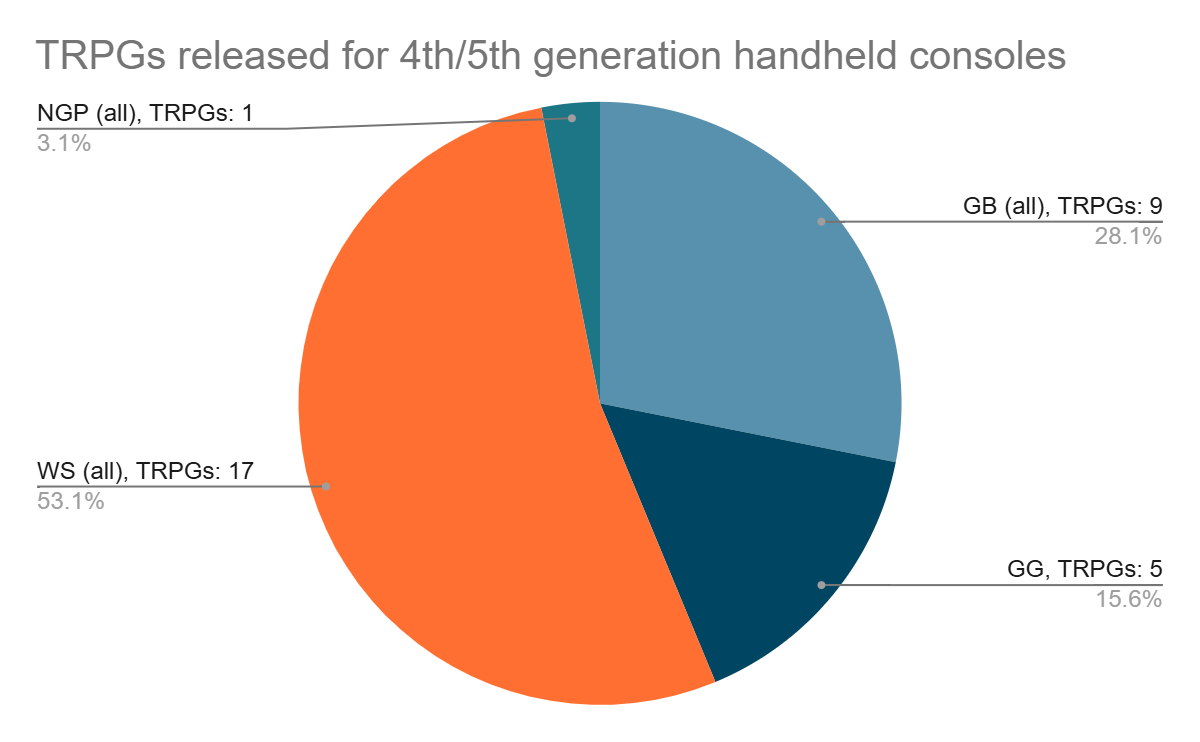
Despite the importance of the WonderSwan line to tactical RPGs in Japan, the only rival to the Game Boy line that sold over 10 million units was the Game Gear (about 10 times less than the Game Boy line); all other relevant rivals sold between 1 and 4 million units. After the discontinuation of the Game Boy Color in 2003, the Nokia N-Gage was released a few months later and remained in production until 2006. It couldn't compete with the Game Boy line's generational successor, the Game Boy Advance, which sold almost 30 times more than Nokia's handheld.
Nintendo's pioneering spirit and commercial success in the early history of handheld video games shaped the history of portable tactical RPGs. From the release of the Game Boy Advance onwards, most developers in the genre focused on developing tactical RPGs for Nintendo's handheld hardware, and Nintendo itself invested directly in the genre through its Fire Emblem franchise, which found its new home on the Game Boy Advance and its successors.