Eat Like a Dragon: What Yakuza's Food Reveals About Character
You are what you eat


When I first started playing Yakuza: Like a Dragon, I didn't know what to expect. It was my first in the series and seemed like a good jumping-off point. Not only was I enamored with the gameplay (much to my surprise), but I also fell in love with the characters and story. Yakuza: Like a Dragon is a HUGE game, a stuffed cornucopia of gameplay! If you aren't too busy cleaning up trash, beating up local thugs, helping out various friends, or, you know, singing karaoke, then you might preoccupy yourself with some of the local cuisine. Yes, this food does have a gameplay function where it can boost stats and heal your party, but it also serves a unique and more important narrative.
Caesar Salads really are the best! Whoever first put crunchy and cheesy in a salad must have been enlightened!
Nanba
This makes perfect sense because food is everywhere in this fictionalized version of the Isezakichō district of Yokohama, Japan, an area renowned for its cultural infusion. In Like a Dragon, food emphasizes the universal revelations about taste, place, and personhood. It all starts with the promise of Peking Duck, a dish that, outside of this game, has its own longstanding tradition in Chinese culture, a clear and important narrative function as a foreboding symbol and reminder of the past. All well constructed, but it wasn't until I heard our street-smart friend Nanba talk about why he loved Caesar Salad that I knew there was something special to the role of food in this game. I laughed to myself as I heard echoes of my own tastes within Nanba's love of the cheesy, crunchy combo.
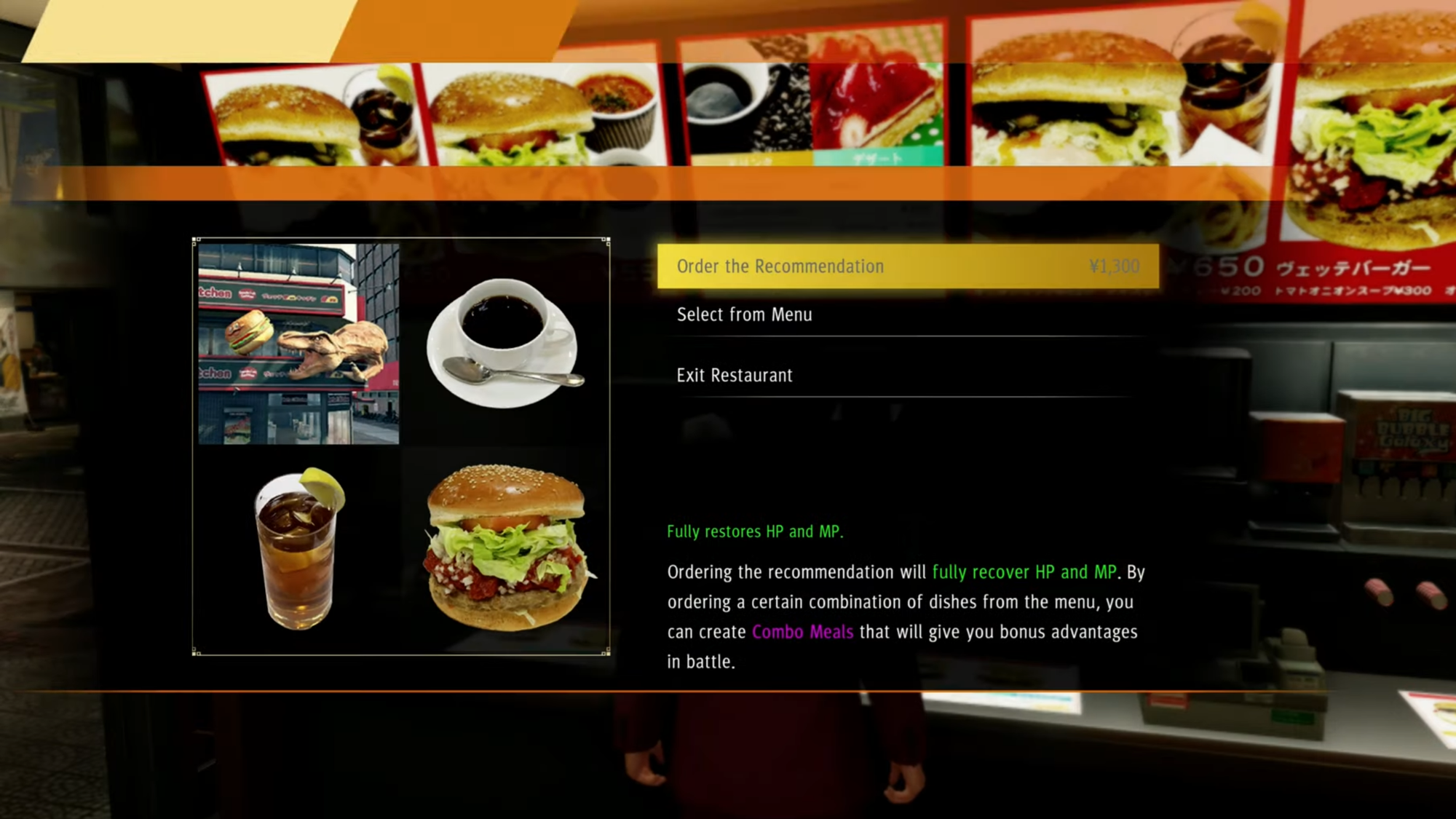
What can food do for a story? What can it do to establish the characterization of people and place? To find the answers, I sought out little conversations, visiting vending machines and doing Table Talks - mini-games where you have to pick the correct meal combos, according to a character's taste - to trigger specific conversations. These were fun and deeply character-building; learning the qualities a character enjoys about food both confirms and subverts previously conceived notions of their archetype, where they are from, and who they really are.
Ichiban: Huh, another soba spot.
Adachi: What's that supposed to mean?
Ichiban: I dunno, I guess I thought udon was Kansai's specialty. But all I'm seein' right now is soba.
Zhao: Don't limit yourself to a singular perspective.
Zhao: For instance, people here still eat natto, even though it's more of a Kanto thing.
Ichiban: Yeah, that's fair.
Zhao: Would you believe me if I told you I eat kimchi every day?
Joon-gi: On the flipside, I'm a big fan of mapo tofu.
For example, this brief but important conversation takes place as you walk through one of the many densely packed food markets in Sotenbori (real-life Dotonbori). Not only does this discussion reference their own personal discrepancies, but it also examines the trappings of food culture, designations, and who controls those markers. It becomes a satisfying reversal of inferred designations, subverting the notion that cultural identity dictates personal taste. Zhoa, the party's authority on all things Chinese cuisine, discloses that he eats kimchi every day. Joon-gi, a Korean assassin, responds that he relishes mapo tofu. A purposeful complication of identity using food! Like a Dragon is not using food as an ID badge, but as something chosen and experienced. Food becomes less about where someone is from and more about what they have decided to incorporate into their lives.
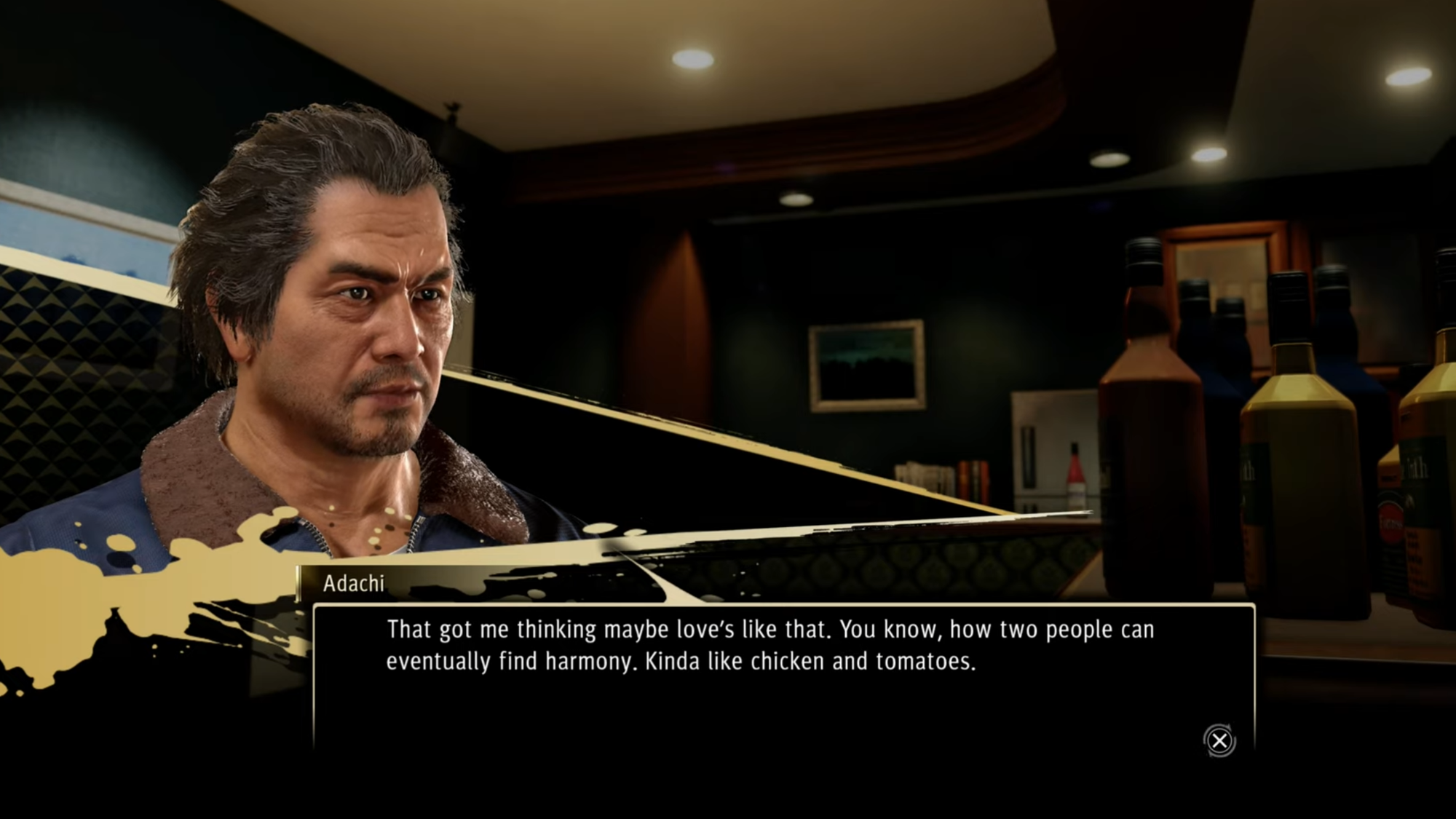
That malleable view of identity is displayed in even smaller and more personal ways. Our friend Nanba, an ex-nurse who once lived on the streets, knows food from necessity: "It's a weed. It's pretty good when you boil it up and put it into a broth." But he also holds on to specific tastes from his former life. Consommé flavored chips are one of his favorites! A labor-intensive French soup, consommé is considerably more delicate and refined than the survivalist lifestyle that kept Nanba alive on the streets.
That same relationship with food can be found elsewhere in the group. For Saeko, a competitive and clever businesswoman, her exterior does not suggest someone who gravitates toward comfort. Over time, however, we discover that Saeko appreciates the simple reassurance of soft and sweet things like milk lattes. And Ichiban declares, "I've seen you crashed on the couch, bottle still in hand. So I figured you might not like sweet stuff."
These conversations are memorable because while they are primarily about food, they are really about more than food. They go beyond the taste buds, and we learn about our companions with every little bit of chatter. A Caesar salad, a bag of consommé chips, kimchi, mapo tofu, or a milk latte; they are all everyday details on their own. But when viewed through the lens of reasonable characterization, it can become a snapshot of an intricate personhood; who they are in that moment, the histories that define them, and all of the contradictions that come with it. While the starting point may be food, what's really at the table is a discovery about truth and assumptions, about how we make them, as well as identity and how we choose it.
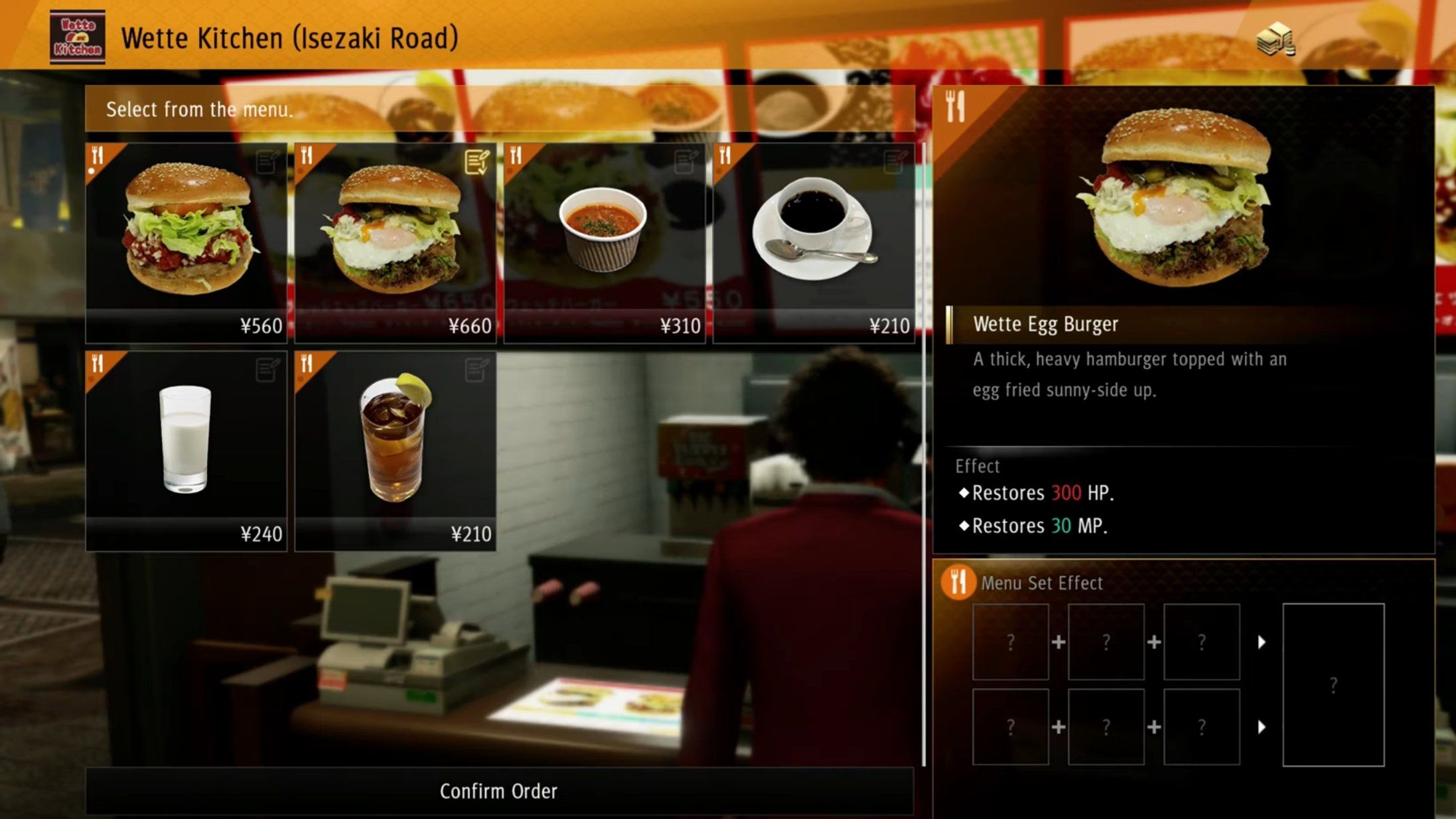
As our beloved Ichiban puts it, "Guess that means good food knows no boundaries, and that's just how it should be." This is a truth that has been quietly playing out in the game's 40+ hour run-time. Ichiban's conclusion isn't wrong, but it lands just outside of the bullseye. Food belongs to people, and it isn't food that rejects limitations, but identity. Who we are, what we love, and the things we bring into our lives are made through what we choose. Yakuza: Like a Dragon is a charcuterie board of well-written characters that both assume and reject our assumptions.
Join the conversation
What do you think? Reply below to share your perspective.