Hidden Gems of Game Design Vol 45
Unearthing Spooky Express, Jail Dice: Roll to Break, Rick Henderson, and Champions of Regnum




Plenty of amazing games go unnoticed and not widely played, for various reasons. Maybe it’s a diamond in the rough, or the marketing wasn’t there, or it could be a game ahead of its time. For this monthly series, I’ve asked my fellow writers at SUPERJUMP to pick a game they think is deserving of a chance in the spotlight. Please share your favorite hidden gems in the comments.
Vítor M. Costa
Spooky Express (2025)
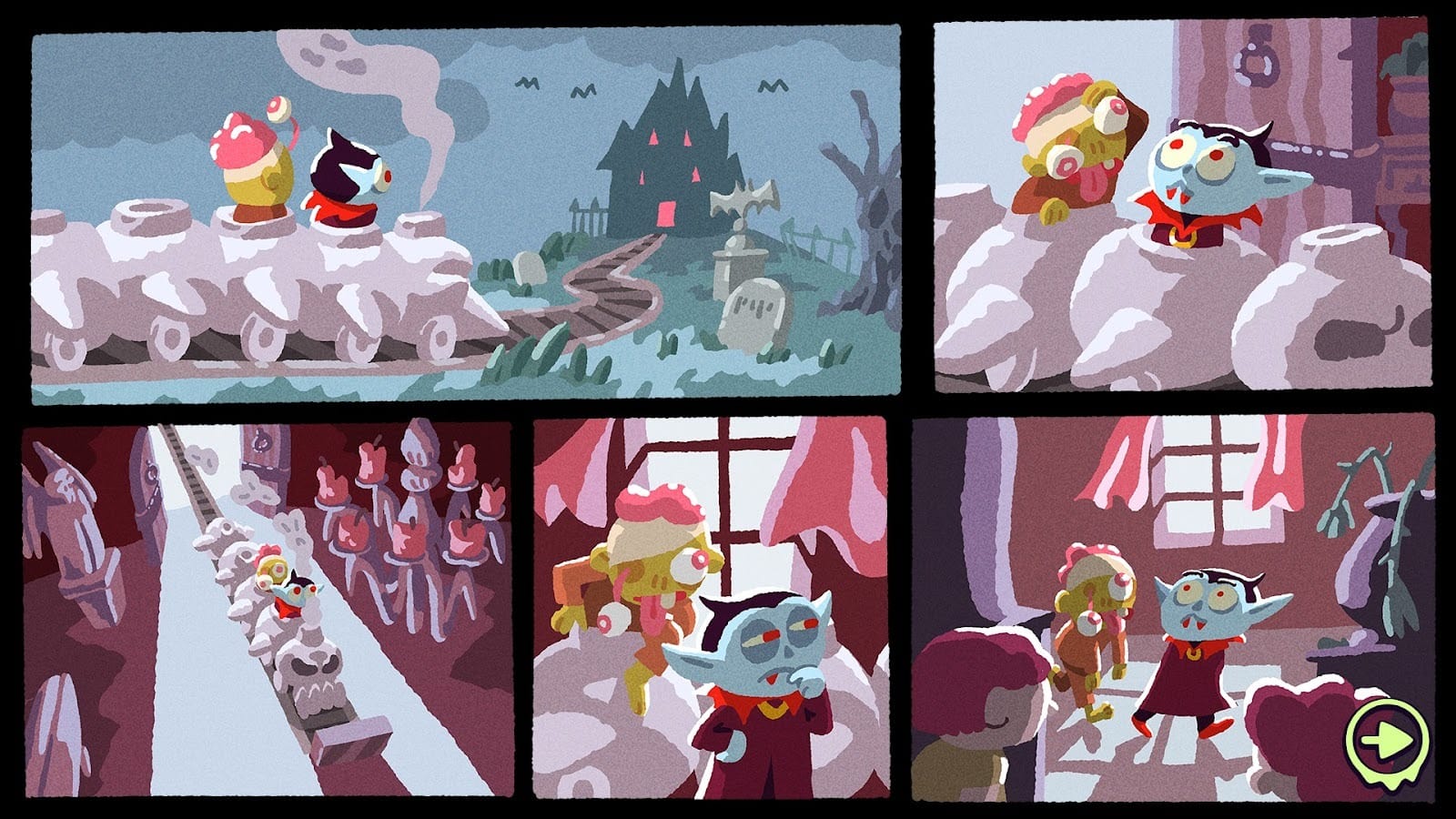
After Thekla (makers of Braid and The Witness), Draknek & Friends is perhaps the puzzle studio that best understands how to teach without speaking. The developers of Spooky Express are masters of clarity and elegant puzzle design, achieving an impeccable sense of pedagogical progression here. Although it shares its core mechanics with Cosmic Express, Spooky Express is markedly superior in terms of difficulty pacing, aesthetics, and interactivity. In scope, it is not as ambitious as A Monster’s Expedition, though its concept is executed with minimalism, brilliance, and near-perfection, further proof of the talent of Lucas Le Slo (level designer), who also worked on 2025's Lab Rat.
Beyond its cute, spooky visuals, Spooky Express is a railway route-building puzzle game with over 200 levels. Each level presents a small, limited grid space in which you must lay train tracks so that all the children can be transported safely to their destination, while also handling the transport of frightening creatures along the way. Each creature has its own destination: vampires must be taken to their coffins, while zombies need to be delivered to their tombs.
Solving a puzzle involving a child, a vampire, and a necromancer. Source: Draknek & Friends/Author.
These mechanics are taught intuitively and gradually in the opening sets of levels, but the game becomes especially interesting once two intermediate elements are introduced between the creatures and the children: necromancers and spaces where passengers can be temporarily dropped off and later retrieved. A human left next to a vampire is bitten and becomes a vampire; when left next to a zombie, they become a zombie. This applies to both children and necromancers. Necromancers, however, are not ordinary humans: when left on a summoning circle, they transform into demons capable of reducing any nearby character to ashes. To eliminate a demon, it must be led back to the summoning circle.
This carefully constructed hierarchy between characters, combined with the meticulously calculated spatial constraints of each puzzle, makes the game increasingly challenging while remaining consistently enjoyable. The designers also implemented an effective hint system that highlights a crucial decision needed to solve a puzzle, offering help without undermining the satisfaction of working through the remaining steps on your own.
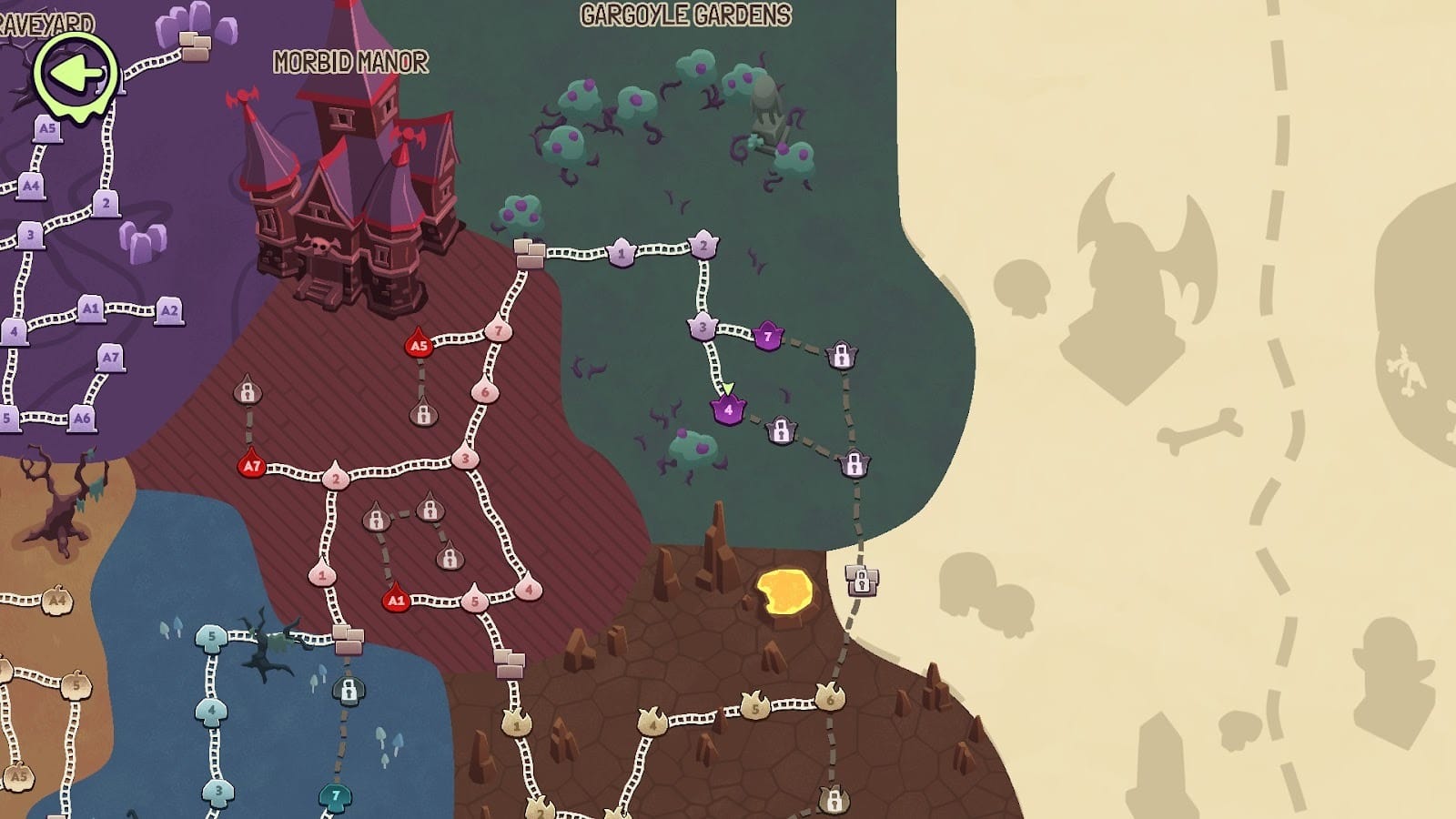
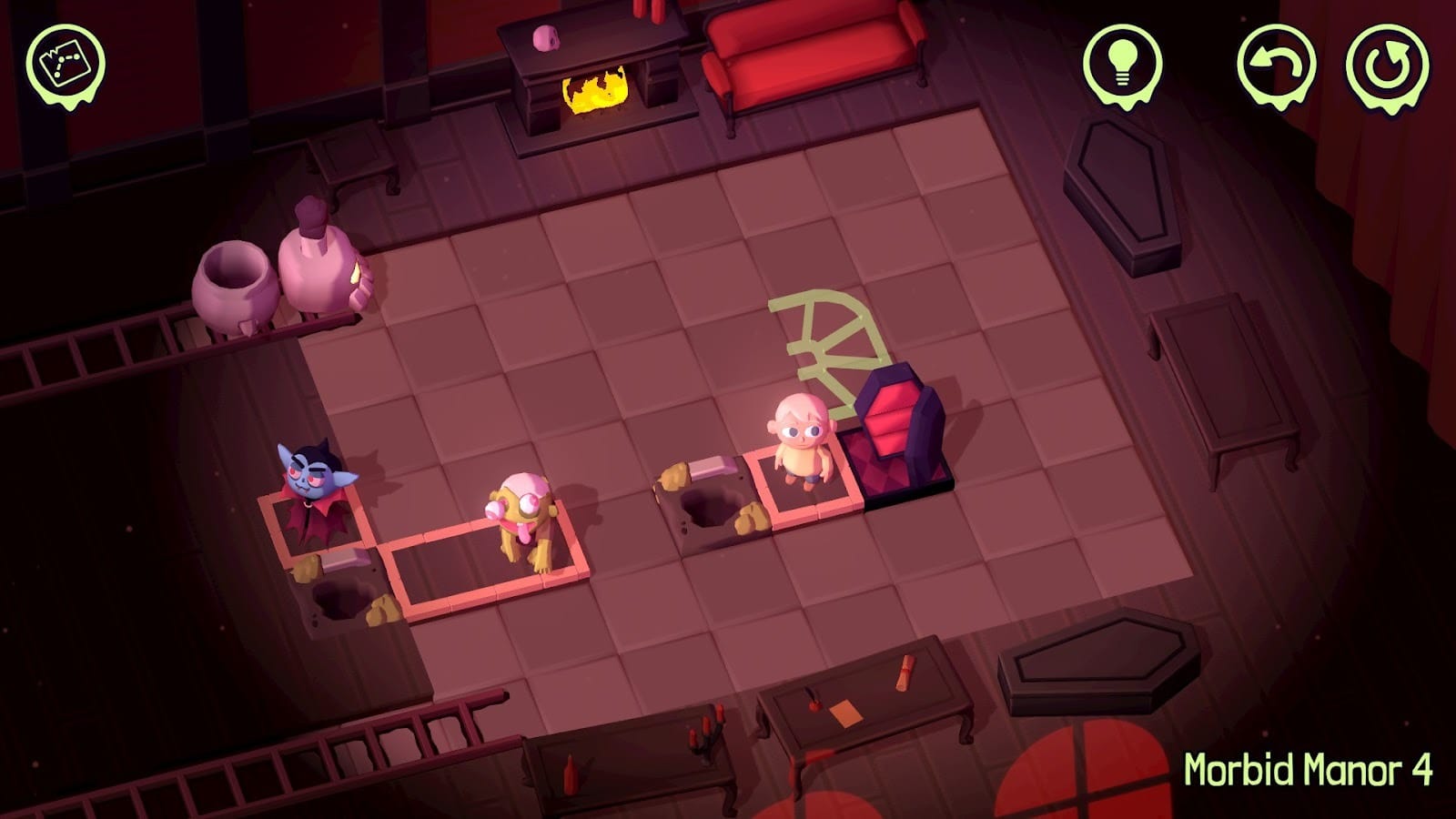
Left: Map showing the progression of the initial levels; Right: the green train track is an example of the use of the hint system. Source: Draknek & Friends/Author.
It seems that relatively few players have given Spooky Express a chance so far: the game has only a handful of reviews on Steam and a single Metacritic entry (a 9/10 from Edge). I wholeheartedly recommend it to any fan of puzzle games. And while you’re at it, be sure to explore other titles from Draknek & Friends, who recently released a collection (Steam/Switch) featuring all of their games except Spooky Express.
Josh Bycer
Jail Dice: Roll to Break (2025)
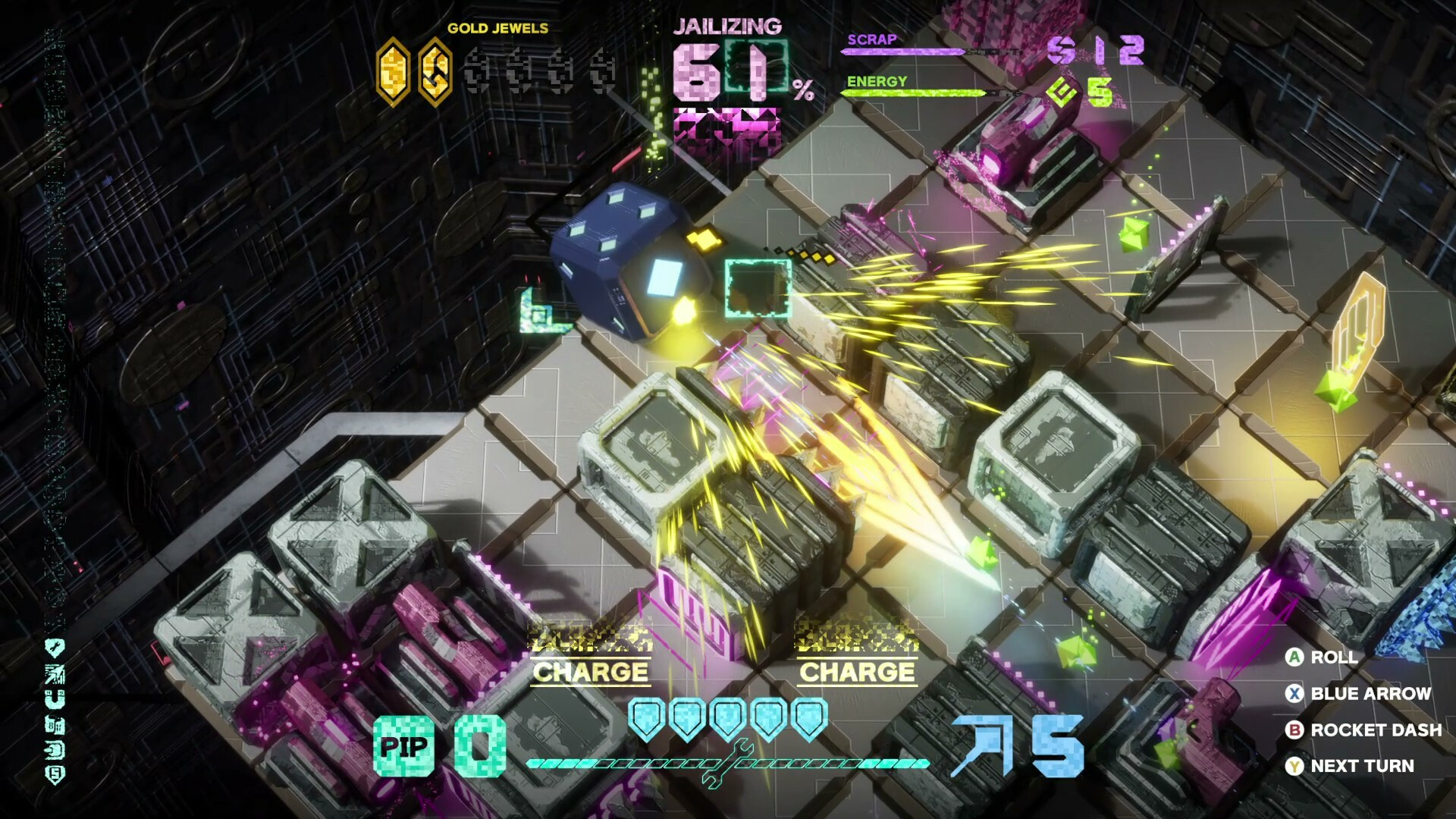
For my pick this month, I turn to one of the strangest combinations of genres I’ve seen yet. Jail Dice: Roll to Break is (takes a deep breath), a turn-based puzzle, real-time combat, extraction shooter, roguelite.
You are trapped in a giant dungeon piloting a dice ship. To get out, you need to collect resources to power up and become strong enough to defeat the warden.
Here’s where it gets confusing. Your ship moves one tile at a time, and different die faces will affect your abilities. The six-face grants a shield, while the one-face lets you shoot out a laser beam. Resources earned are based on how you kill enemies, and your mission is to get as much out of each stage as possible.
The meta progression unlocks game-changing powers and quality of life features, but it also increases the difficulty based on what’s unlocked. If you’re not careful, you can make the game too hard too fast. This comes into play with elemental debuffs for which there are cures on the perk tree; without the cures , they are nasty. Some enemies can give other enemies elemental buffs, and stages quickly fill with all manner of bots trying to gun you down.
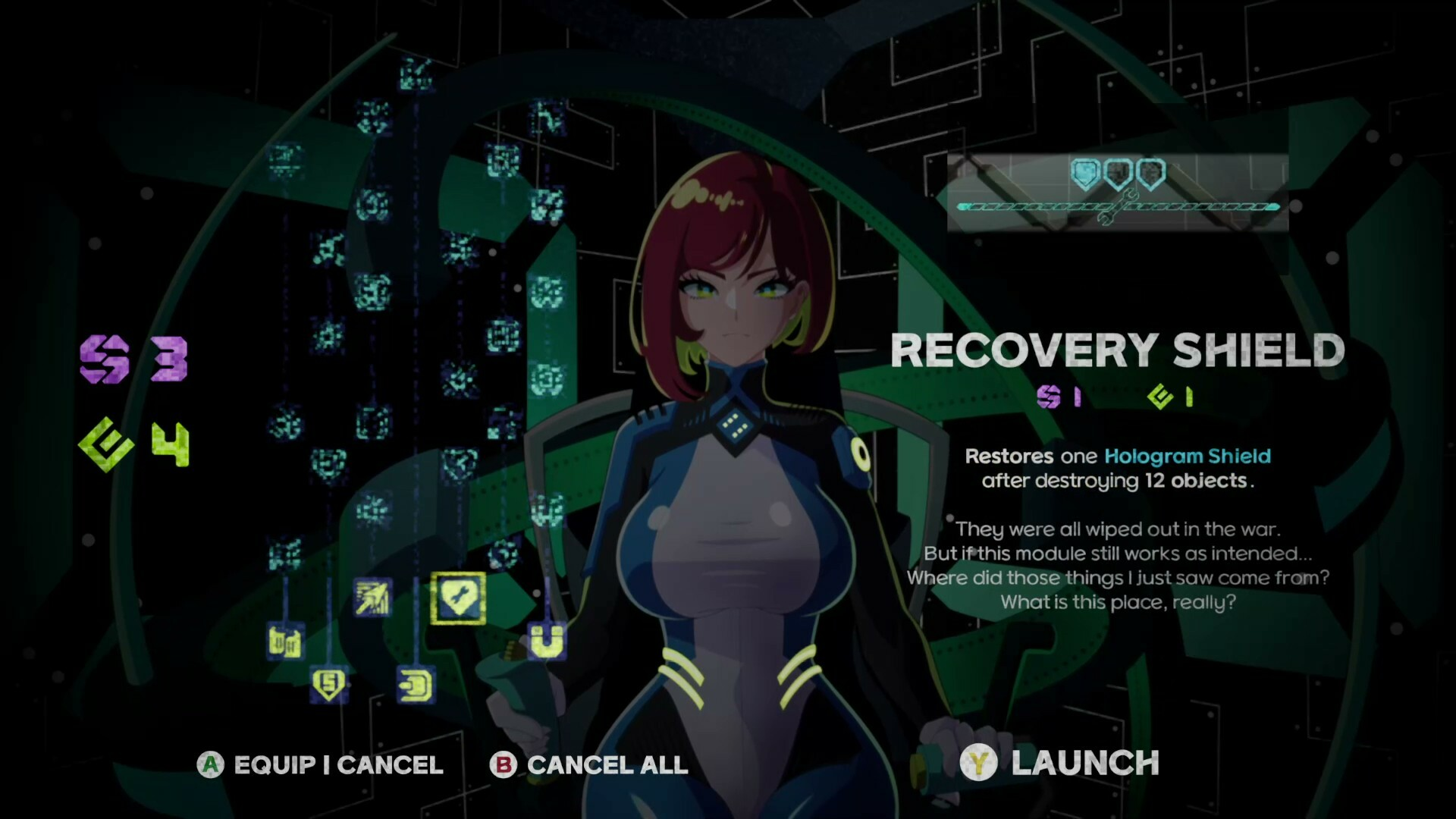
Once you’ve reached the top of the perk tree, the final boss has a chance of showing up after a stage is over, and you need to either kill them, retreat, or face the game’s penalty system. When you die, your next run will start you at 1 point of health, and resource drops are increased. Die again, and you lose all equipped upgrades.
This is incredibly punishing, and if you’re not prepared, you can end up soft-locking your game by not being able to restore your upgrades while the game is at its hardest point. The best tip I can give you is that you must unlock the final perk the moment it becomes available, as that is your ability to retreat from a stage.
Jail Dice is one of the most original games I’ve played, and if you are looking for something very different, you’re not going to find anything else like it.
Ben Rowan
Rick Henderson (2021)

Most rogue-lites will soften the blow when your run comes to a crashing end. Even when you wipe out, you usually walk away with at least something: a perk, an unlock, a small stat-bump that makes you feel like it wasn’t all a waste of time. But Rick Henderson is a rogue-like, so it doesn’t really do that. When you die, you’re back at square one. The only thing you keep is whatever skills your brain picked up during the last run.
On paper, it’s an endless, 16-bit-inspired horizontal shmup from Fat Pug Studio, but it’s also the kind of game that wears its influences right on its sleeve. It’s had a pretty public development arc for something that still feels like it slipped through the cracks: years of visible progress, an IndieGoGo campaign, Early Access in 2020, then a full Steam launch in 2021. Eastasiasoft handled the console versions in 2022, and the Switch is where I’ve been playing.

If you’ve spent any time with the classic roguelike shmup Steredenn: Binary Stars, which I covered way back in Hidden Gems: Volume 2, you’ll feel that lineage instantly. Call it an homage, call it a riff, call it straight-up taking a good idea and running with it. I’m fine with any of those characterisations of Rick Henderson’s originality, because Steredenn always felt like it was begging for a follow-up anyway. Sure, Rick Henderson isn’t as tightly refined as Steredenn, but it scratches the same itch, and scratches it well.
Every run is its own little pressure cooker; there’s no meta-progression, no safety net, and no long-term build to hide behind. It’s just your skills, your decisions, and whether the random upgrade drops decide to play nice this time. When you die, you’re dumped back at the start like you just hit Game Over on an arcade cabinet. The good news is that runs can snowball in really satisfying ways. Power-ups drop after each boss, steadily powering up your ship as you push into deadlier territory, and regular enemies spit out gems for your score alongside the practical stuff like shields and ammo refills.
Weapon variety is enough to make runs meaningfully different, the sound effects have weight, and the pixel art looks like it was carved out of old console hardware: chunky sprites, high-contrast colours, and just the right amount of bullet-hell. The cosmic backdrops are gorgeous too, which sounds like a small thing until you realise how much they help the game feel like a proper trip through space instead of just a looping arena.

And the soundtrack is where Rick Henderson really pulls ahead of its influences. I liked Steredenn’s intro theme, but the rock-heavy score during runs never quite landed for me. Rick Henderson makes the smarter call with a pulsing techno soundtrack that matches the action and tension perfectly. When you’re truly in that bullet-hell flow, the hypnotic beats are the ideal sonic backdrop.
A live global leaderboard helps too. I’m sitting at 319th on Switch, just outside the top 300, which is close enough to feel personal. It’s the kind of ranking that keeps pulling me back for another attempt. And the game performs great without dropping a frame, even on an OG Switch, which is exactly where I’ve been losing hours to it.
With only a couple of dozen Steam reviews, Rick Henderson is an easy pick for hidden gem status. For shmup fans, especially anyone who likes score-chasing and pattern dodging amidst bombastic pixel-art and a pumping soundtrack, this one’s an easy recommendation, especially when it goes on sale for the price of a coffee.
Anonymous
Champions of Regnum (2007)
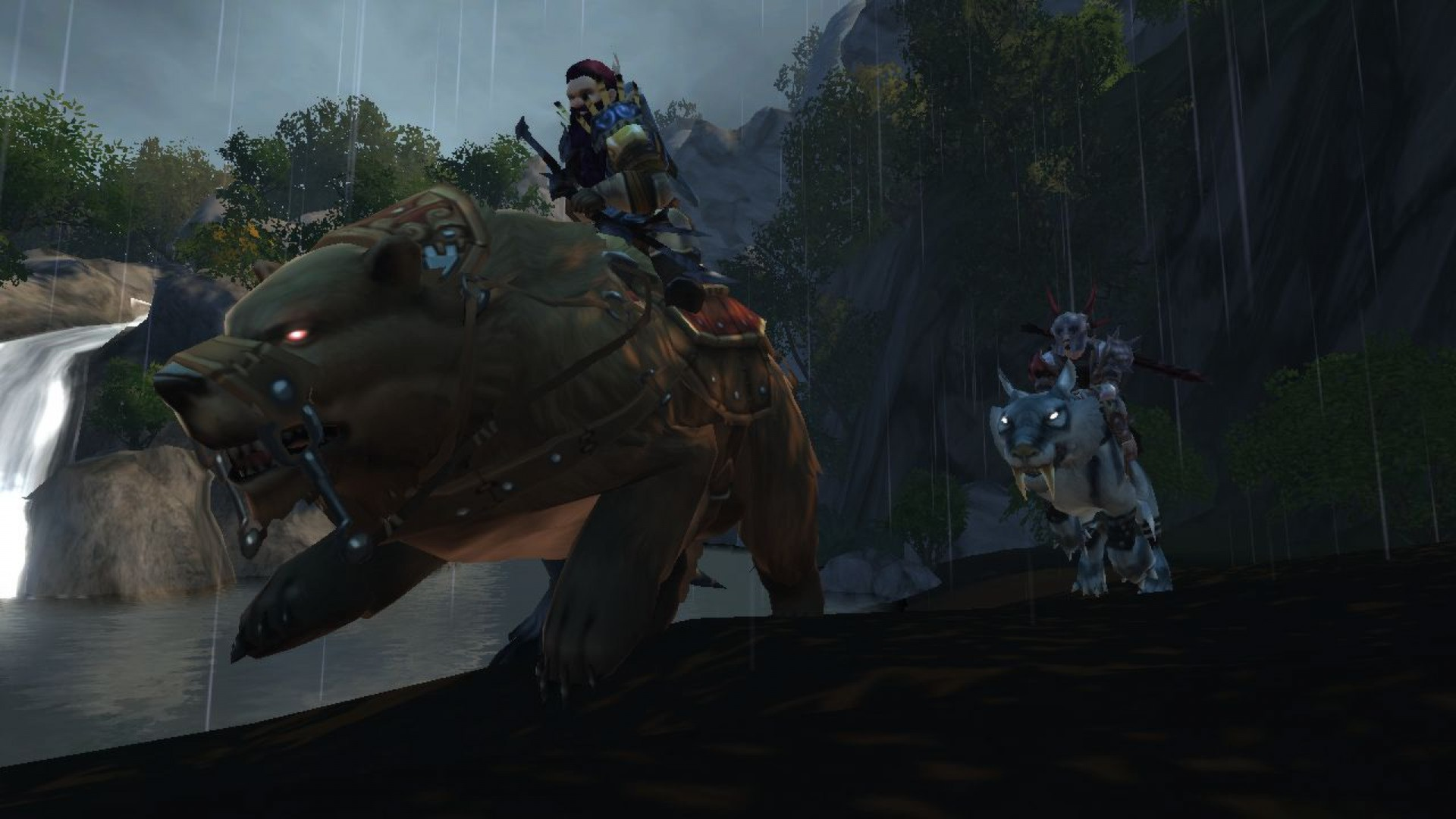
Formerly Regnum Online, Champions of Regnum (2007) is a deeply flawed MMO. Its perpetual realm vs realm fort wars remain an impressive sight, especially by 2007 standards. In 2015, a book by Concordia University professor Mark J. P. Wolf credited NGD Studios with running Latin America’s biggest MMORPG.
Back when I was too young to own a PC, a friend got me to join his realm. Regnum’s visuals were dated for its time, but that didn’t stop it from having diverse biomes with interesting low-res vistas. Icy Alsius sat in the northwest, the deserts of Ignis were to the northeast, and Syrtis’ forests lay to the south. Early on, a quest tasked me with crossing my realm and entering the war zone, a free-for-all battlefield where high-level players sieged forts to steal relics and cripple an opposing faction.
Running into one such player showed me I had a steep ladder to climb. My arrows bounced off their armor as they hacked me to ribbons. As they say, there were levels to this. Sixty, to be specific.
Getting strong enough to face real players meant grinding Regnum’s stale PvE quests of two kinds: killing foes or talking with someone. Buggy servers delayed your hits and skills as you took on beasts scattered across dull environments.
Many of the game’s flaws melted away when you played with friends. The simple loop of picking up quests and chopping up every monster in the area was a great opportunity for conversations. Having a healer in your party fixed Regnum’s worst flaw: healing potions that cost real money.
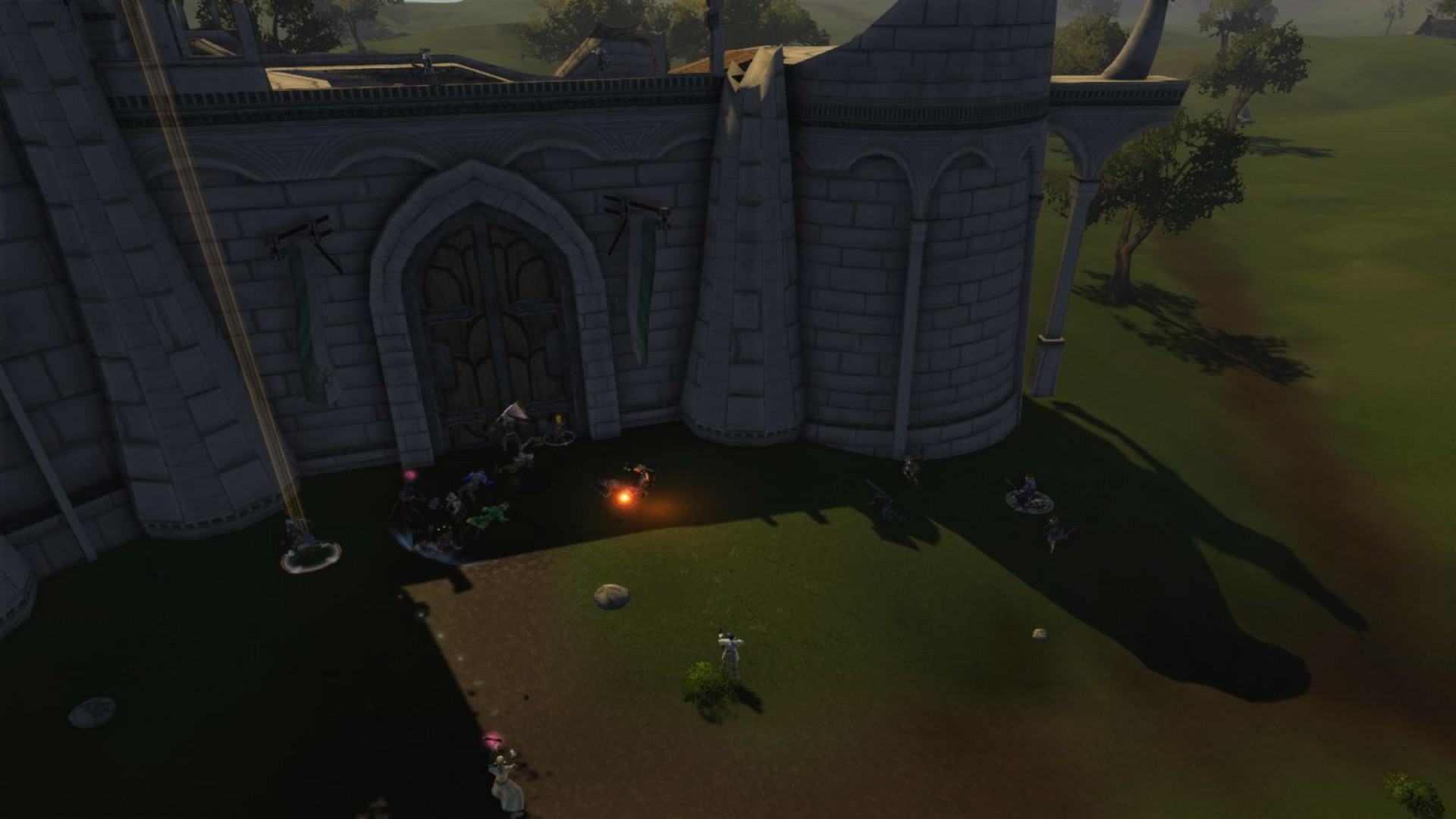
Champions of Regnum still has enough players to make its large-scale fort skirmishes interesting, with attackers charging in formation on colorful mounts toward foes lashing out with spells and arrows. Once a fort gate went down, the objective switched to capturing a flag to hold the fort, flipping the armies’ duties.
Aside from sating your curiosity, the only real reason to play Regnum is its passable Linux support. Having to pay to access healing potions and a mount, taking a hit to your stats on death, and spending your earnings on repairing weapons are sins that no longer plague the genre. It’s a “so bad it’s kinda good” experience that shows you how far MMOs have come in the past 20 years.