Hidden Gems of Game Design Vol 50
Unearthing Addams Family Values, Wipeout 3, DoDonPachi, Carmageddon, and Chicken Little


 +
+

Plenty of amazing games go unnoticed and not widely played, for various reasons. Maybe it’s a diamond in the rough, or the marketing wasn’t there, or it could be a game ahead of its time. This month, we've reached a major milestone in this iconic SUPEJUMP feature: our 50th Volume, a half-century of Hidden Gems!
For this special issue, I gave the writers an additional challenge – pick a game from your childhood that you never heard anyone else talk about.
Josh Bycer
Addams Family Values (1995)
As a gamer and a kid of the 90s, it was my “pleasure” to play wave after wave of licensed games, based on a seemingly inexhaustible supply of IP. While I could talk about some of the most traumatically bad ones, for my pick, I’m going with one that I’ve never heard people talk about.
The Addams Family had a resurgence in the 90s thanks to the two films and animated series, and with it came multiple games from different teams. There was the obnoxiously difficult Fester’s Quest, four different platformers, and the final game we would see from everyone’s favorite weird family: a Zelda-like.
Very, and I do mean, very loosely based on the film, the youngest and newest Addams has been kidnapped and is being held in a giant mansion estate. The estate was complete with multiple areas and a variety of monsters, ghosts, and other creatures to stand guard.
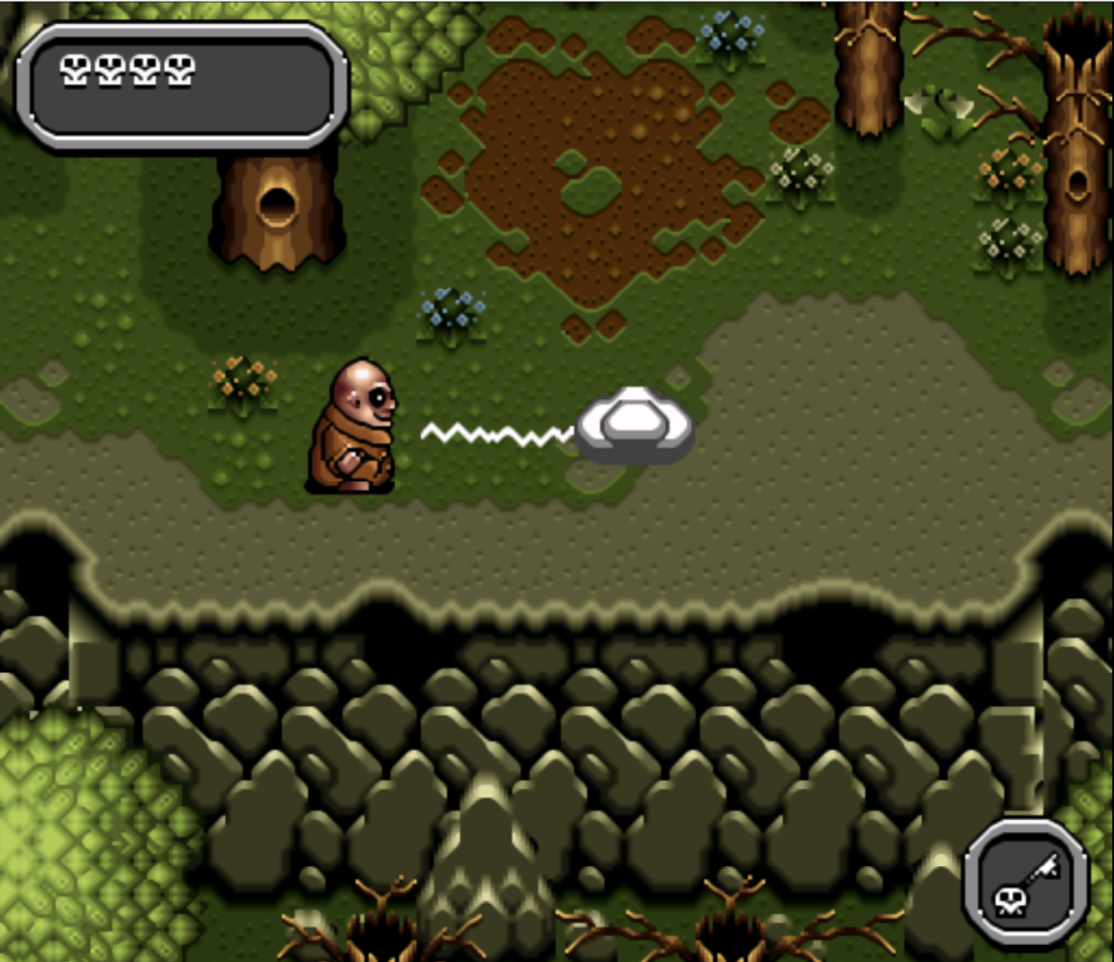
The only Addams who is up to the job is Fester, who must explore the entire estate, grow in power and save the day. Fester’s main attack is lightning, launched from his hands, to zap any baddies that get in his way. The game tries to be like Zelda in that the more health you have, the stronger your attacks are. However, while Zelda typically gives you a boost at max HP, this game does it for several health thresholds. At full health, you have max range, and every few hits decreases it. When you are about to die, and when you need your attacks to be strong, the range is instead shortened, forcing you to stand directly next to an enemy to hit them.
The other option Fester gets is finding cookies that act as potions; each one does something different, and a few are used for puzzle-solving and fighting. I remember the first real boss goes down by eating invulnerability cookies and tanking every hit. What’s challenging is that Fester can only attack in the cardinal directions, and at one fixed angle, so you can end up where enemies are approaching you at an angle but you can't hit them in that direction.
Normally, this is when I talk about how amazing the game is, but unfortunately, I don’t remember much. I have never beaten the game for two reasons: First, this is a very open world, but you have to complete areas in a specific order to unlock the items and upgrades needed to progress. There are a lot of paths hidden behind the scenery, some that take you to a completely different area that you would otherwise have no idea how to access.
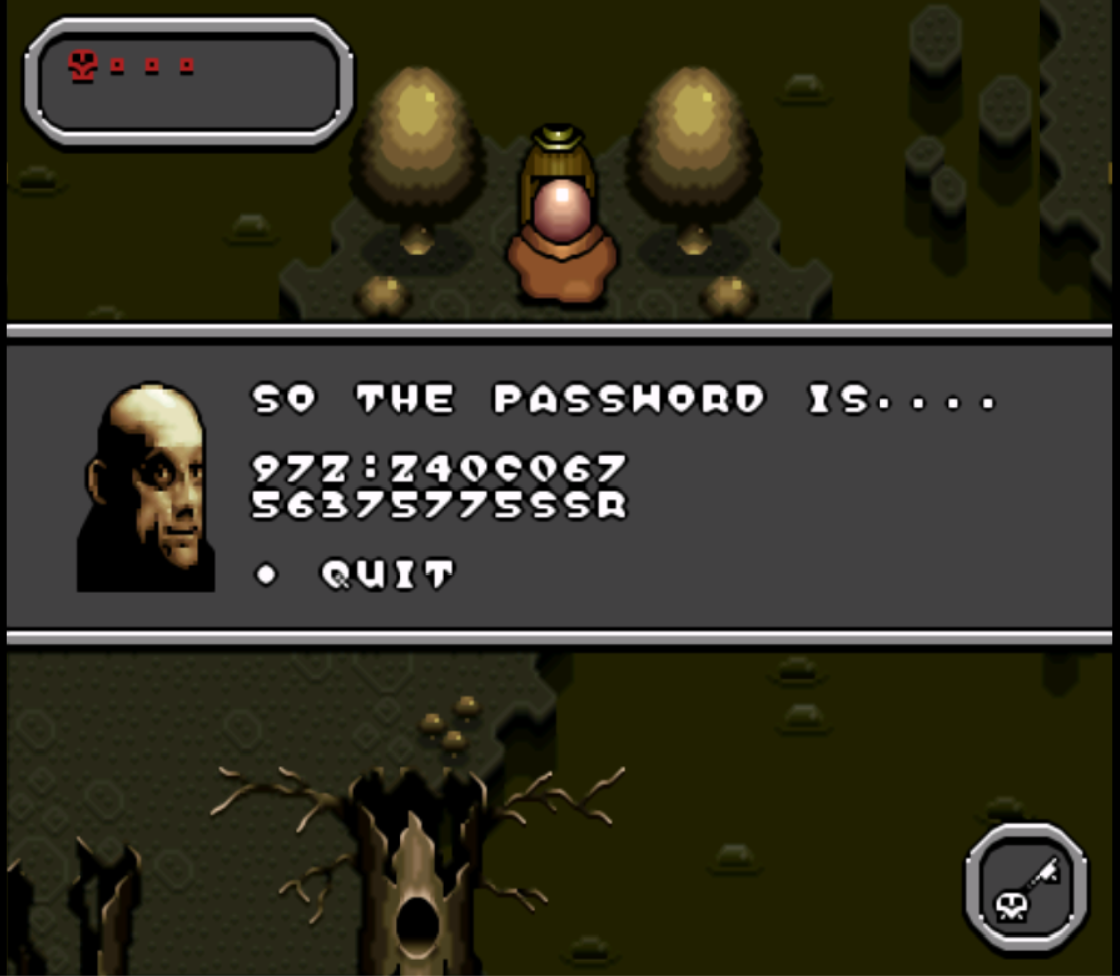
Second, and far worse, the game has no battery saves. The mid-90s was a time when internal save capability (via a battery in the cartridge) was considered a luxury, and many studios opted for passwords instead.
To make things even harder, you need to find one of the Addams family in the world each time you want a password. They move around as the game progresses, and no, their positions are not saved on the map. This is the second-worst password system in a game I’ve played, with the first going to another game that may be my pick for next month. Heaven help you if you don’t write the code down properly, or have horrible handwriting like me, and lose your entire progress.
This one can be a bit hard to return to in the modern era, but Zelda fans searching for a challenging take on their genre may want to give this one a look.
Ben Rowan
Wipeout 3: Special Edition (2000)
While the late 90s and early 2000s were a golden age for the original PlayStation, many exceptional games went unnoticed due to poor marketing, being ahead of their time, or simply remaining as diamonds in the rough. In 2000, during a trip to Malaysia, I stumbled upon a copy of Wipeout 3: Special Edition while stocking up at one of Kuala Lumpur’s ubiquitous gaming malls. Unbeknownst to me at the time, I had acquired a PAL-exclusive holy grail of anti-gravity racing, a content-stuffed swan song to Psygnosis’ legendary original trilogy. So, for this 50th issue of Hidden Gems, I'm looking back at a masterpiece that fits all the criteria of a cult classic and isn’t widely discussed today outside the AG racing community. Wipeout 3: Special Edition was overlooked, unnoticed, and undoubtedly brilliant, and it holds a very special place in my heart.
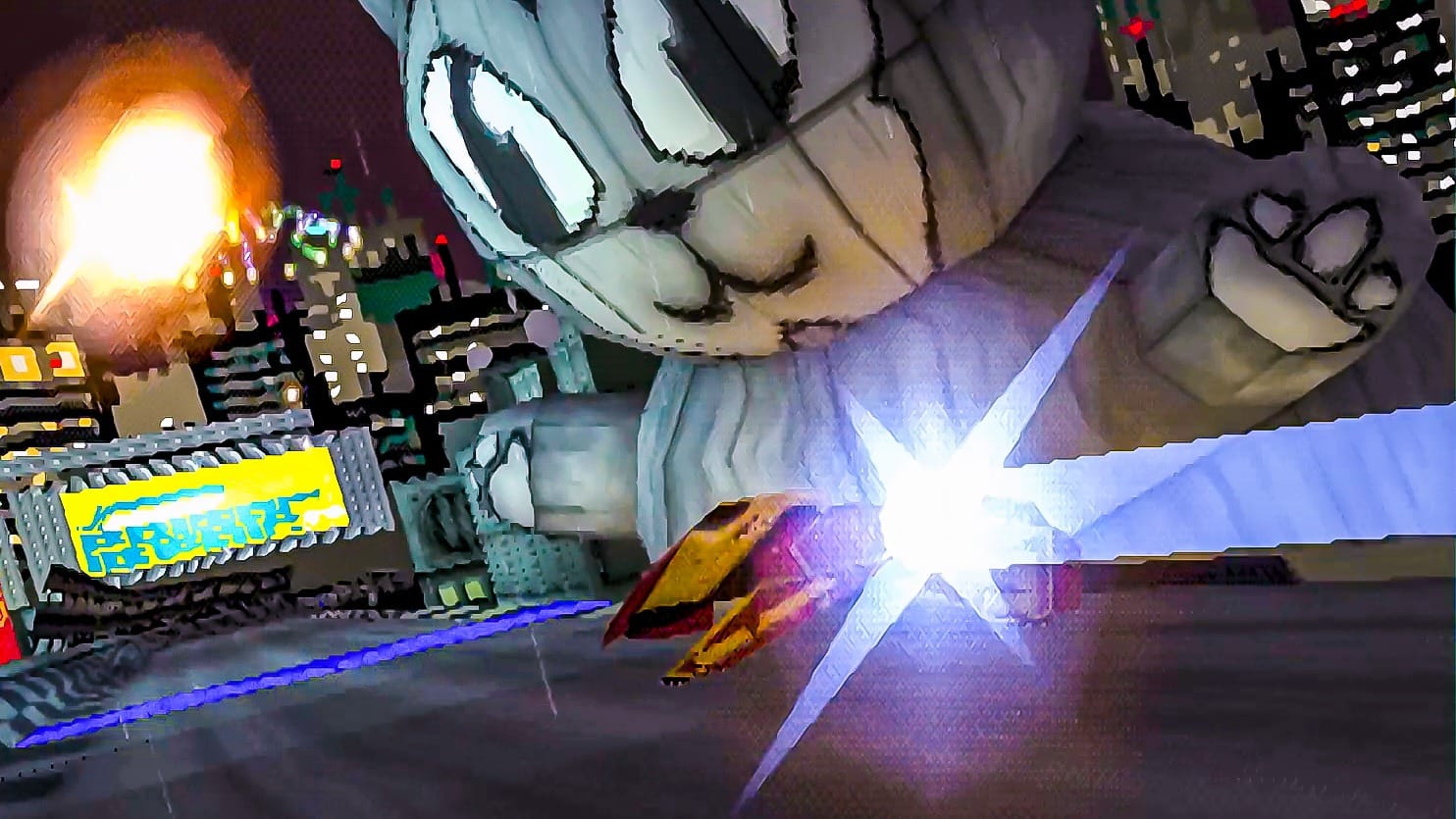
The Special Edition of Wipeout 3 is an absolute triumph of value. Alongside the eight tracks from the base Wipeout 3, it bundles eight fully remastered tracks from the original Wipeout and Wipeout 2097. This 16-track compilation represents the definitive museum of the series' 32-bit era. What makes this release even more extraordinary is the raw technical wizardry underpinning it. Leading up to its late-1999 launch, developer Psygnosis pushed the ageing PlayStation hardware to its absolute limits by completely rewriting their rendering engine from scratch. The visual fidelity was staggering for the time: running at the console's highest resolution (512x384), it delivered a locked 25fps frame rate with virtually no slowdown, all while effortlessly handling dynamic engine-trail lighting and vibrant particle effects.
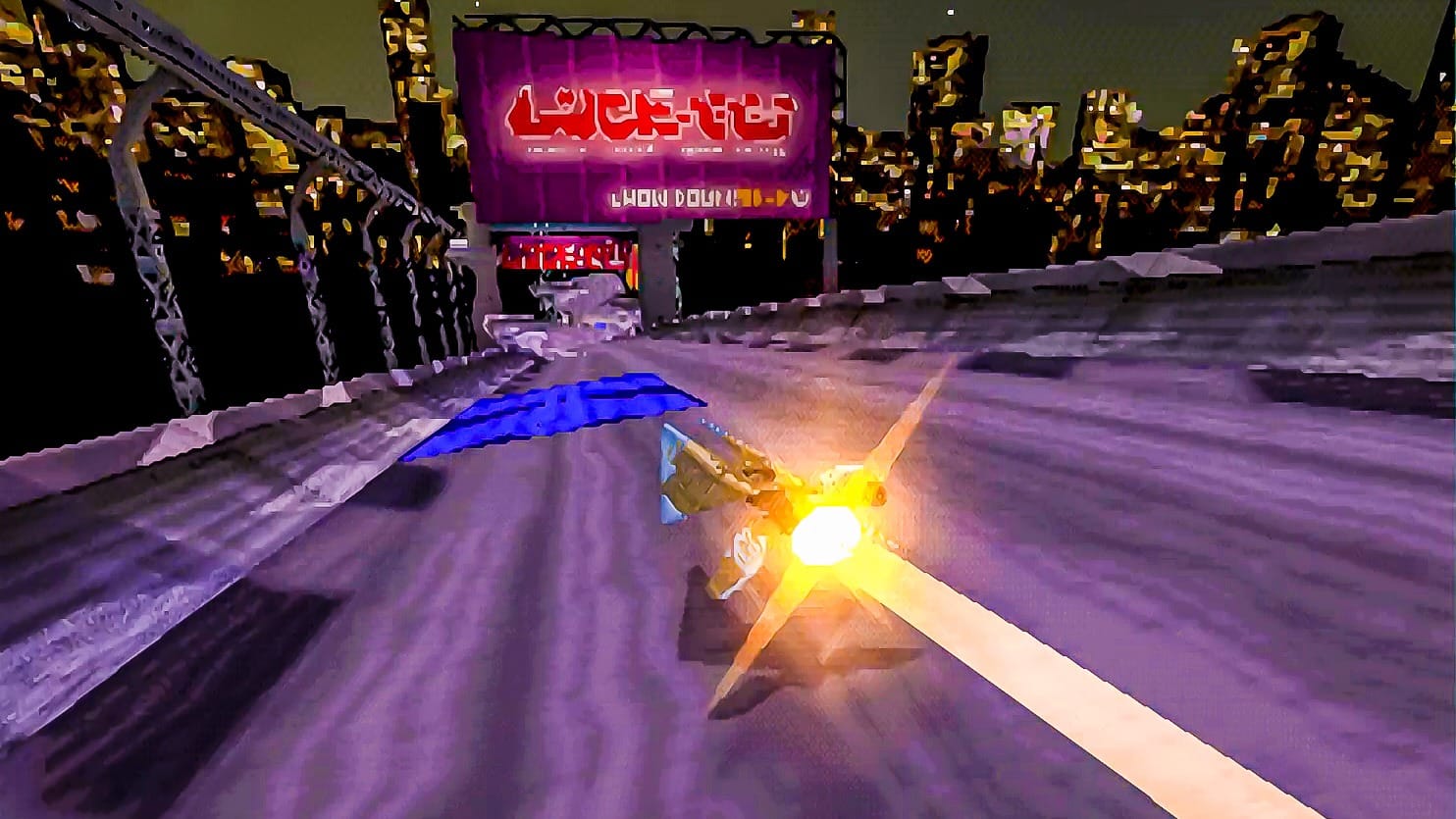
Gameplay-wise, the game’s tactical complexity was elevated by the introduction of the Hyper Thrust mechanic, where the R1 button triggered a manual speed boost at the direct expense of your defensive shields. This created a constant risk-reward dynamic: burning your shields for a speed boost forced you to grasp desperately at every defensive power-up and totally avoid hitting walls, rendering the pit lane vital to survival on every lap. Hitting the Hyper Thrust off jumps also allowed you to launch your craft into ambitious shortcuts, utilising the Autopilot mid-flight as the perfect trick to assist in a safe landing.
This tactical depth was bolstered by an expanded arsenal of weaponry. Defensive choices like the Cloak, Reflector, and Force Wall allowed players to manage aggressive opponents. They were balanced by iconic crowd-pleasers like lock-on Missiles, heavy Rockets, and the ‘Quake’, which deformed the course itself, rippling forward a track-wide tsunami that tore through any opposing ships unlucky enough to be ahead of you. These new weapons were best mastered in the new Eliminator mode, a deathmatch-style arena that proved essential for surviving the blistering speeds of the unlockable Phantom class.
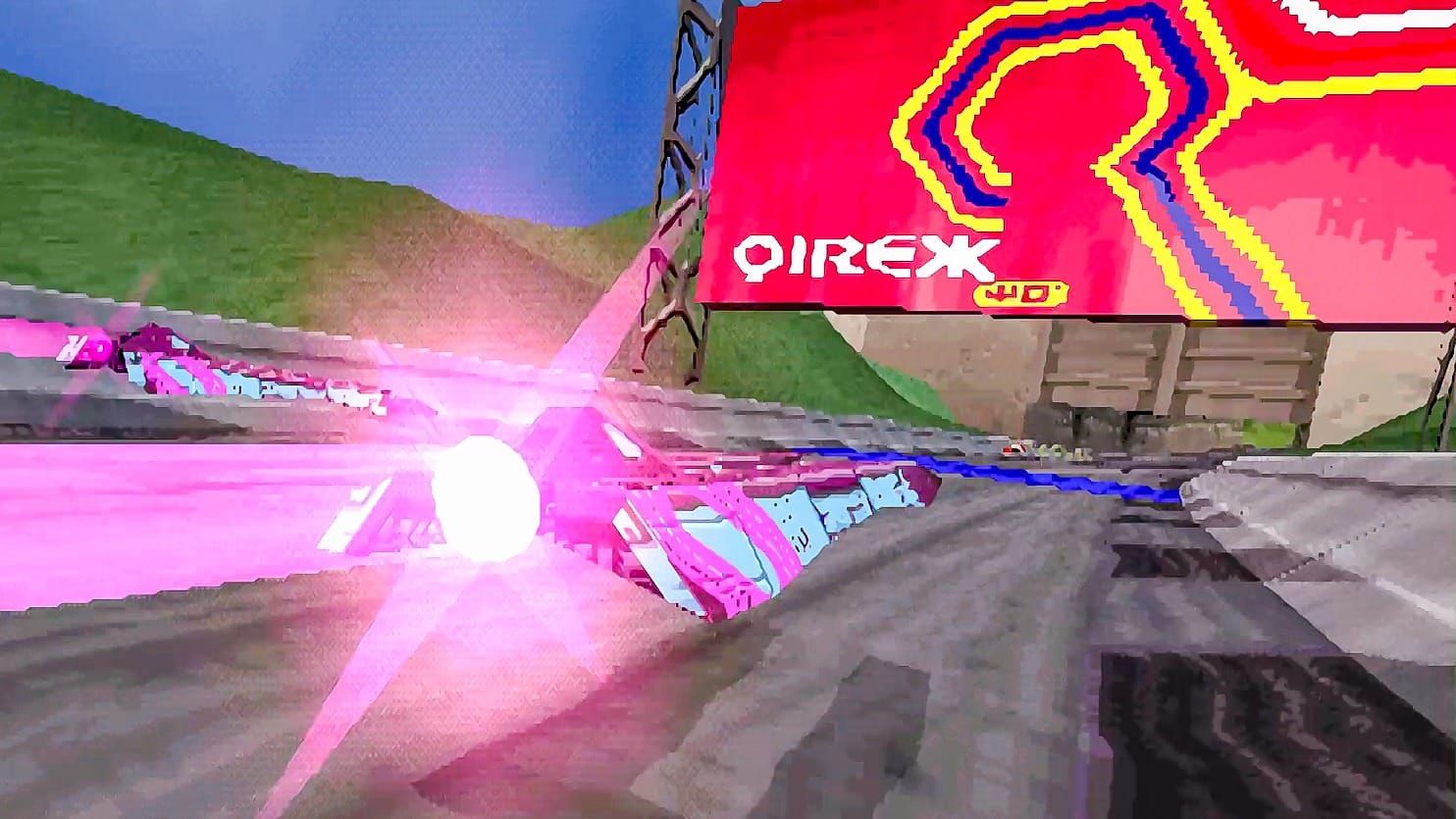
Despite its brilliance, Wipeout 3 underperformed commercially compared to its predecessors. Arriving at the absolute end of the PS1 lifecycle, it was heavily overshadowed by the massive hype surrounding the upcoming PlayStation 2. Its steep learning curve and perceived lack of novel features among casual players also stymied sales. The game's bold visual identity, crafted by the rehired design collective The Designers Republic, swapped the bright, neon club aesthetic of 2097 for clinical, hyper-clean minimalism. While aiming for a grounded, "believable future" rather than over-the-top sci-fi, this more industrial look was initially perceived by gamers as cold and sterile, contributing to the depressed sales.
Yet, over a quarter-century later, history has vindicated Psygnosis' artistic gamble. The game was a critical darling at release, securing an impressive 89/100 on Metacritic, and it has aged remarkably well. The Designers Republic's clean typography, distinct geometric menus, and clinical user interfaces don't look as dated as other 3D games of the 90s, cementing its place as a high-water mark for video game graphic design. Combined with a legendary progressive house soundtrack mixed by Welsh DJ Sasha (featuring heavy hitters like Paul Van Dyk and The Chemical Brothers), Wipeout 3: Special Edition remains a sleek, timeless, and shamefully overlooked masterpiece, and undoubtedly a ‘hidden gem’ of the early PlayStation era.
Ben Rowan
DoDonPachi (1998)
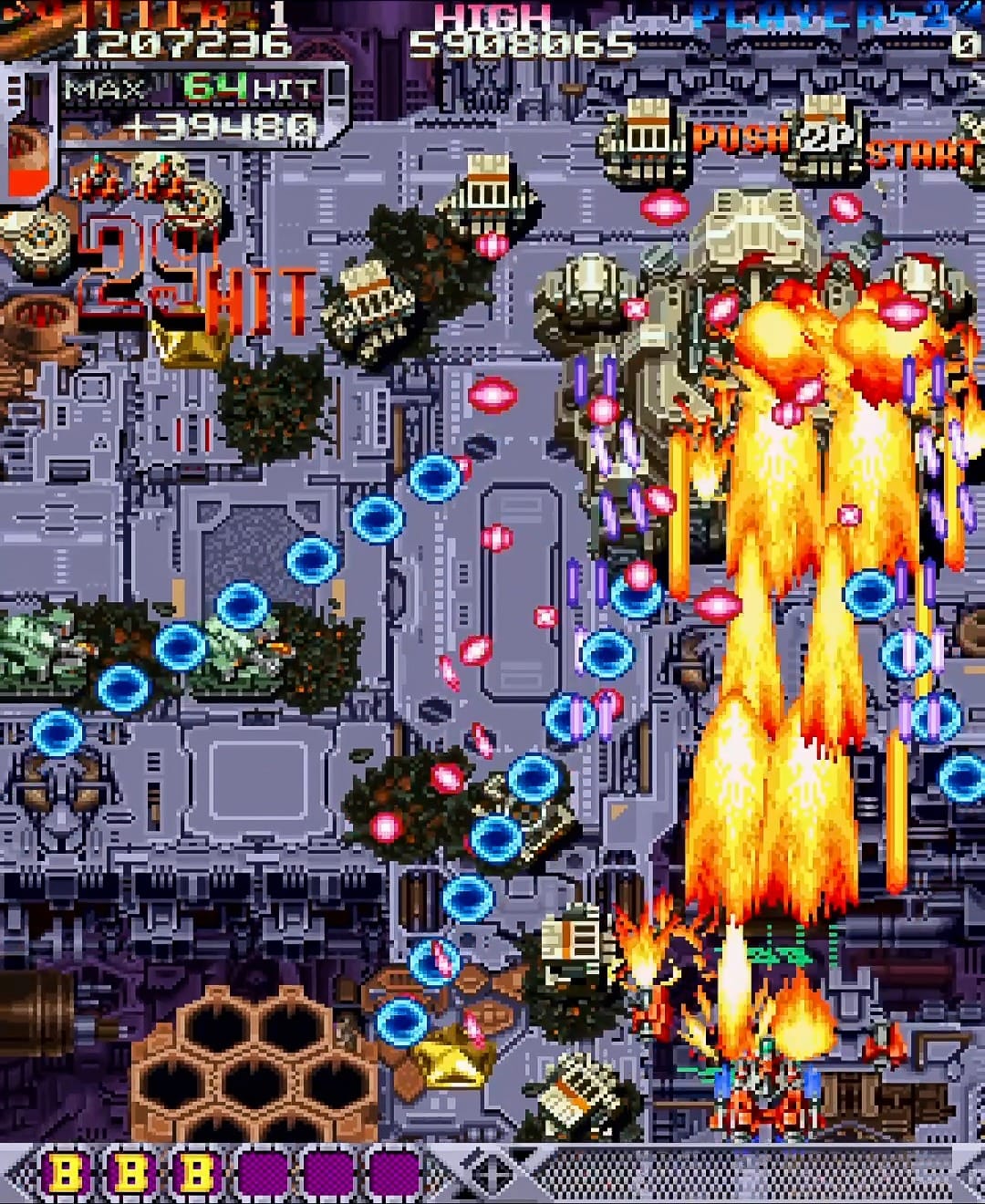
Back in 2000, I was lucky enough to spend a school holiday in Kuala Lumpur visiting a mate whose expat parents lived there. He gave me a crucial piece of advice before departing: bring my PlayStation along. The bustling mega-malls of Malaysia turned out to be a goldmine for Japanese import gaming, full of air-conditioned markets overflowing with obscure titles. I picked up a haul of games, including CAVE’s 1998 vertical shooter DoDonPachi, which I bought purely because the back cover art looked awesome.
Safe to say, it blew my mind. Released in an era when mainstream gaming was obsessed with 3D cinematic blockbusters like Metal Gear Solid and Resident Evil 2, traditional sprite-based arcade shooters were routinely ignored by Western retailers. DoDonPachi never received an official Western release, locking this seminal entry in the "bullet hell" genre behind expensive import channels. As a result, outside of dedicated shmup circles, it is rarely celebrated, and barely gets a nod in any "greatest PS1 games" roundup.
What made DoDonPachi on the PS1 so exceptional was the brilliant duality of its brutal difficulty and surprising accessibility. The port included a godsend ‘slow-motion’ feature mapped to the L1 button, allowing you to dial down the speed and focus on weaving through the dense, swirling webs of enemy fire. It was a great way to learn the tactical aspect of bullet dodging without getting penalised. Coupled with free play options and unlimited continues, you could play through the entire game and see the initial final boss on your very first sitting.
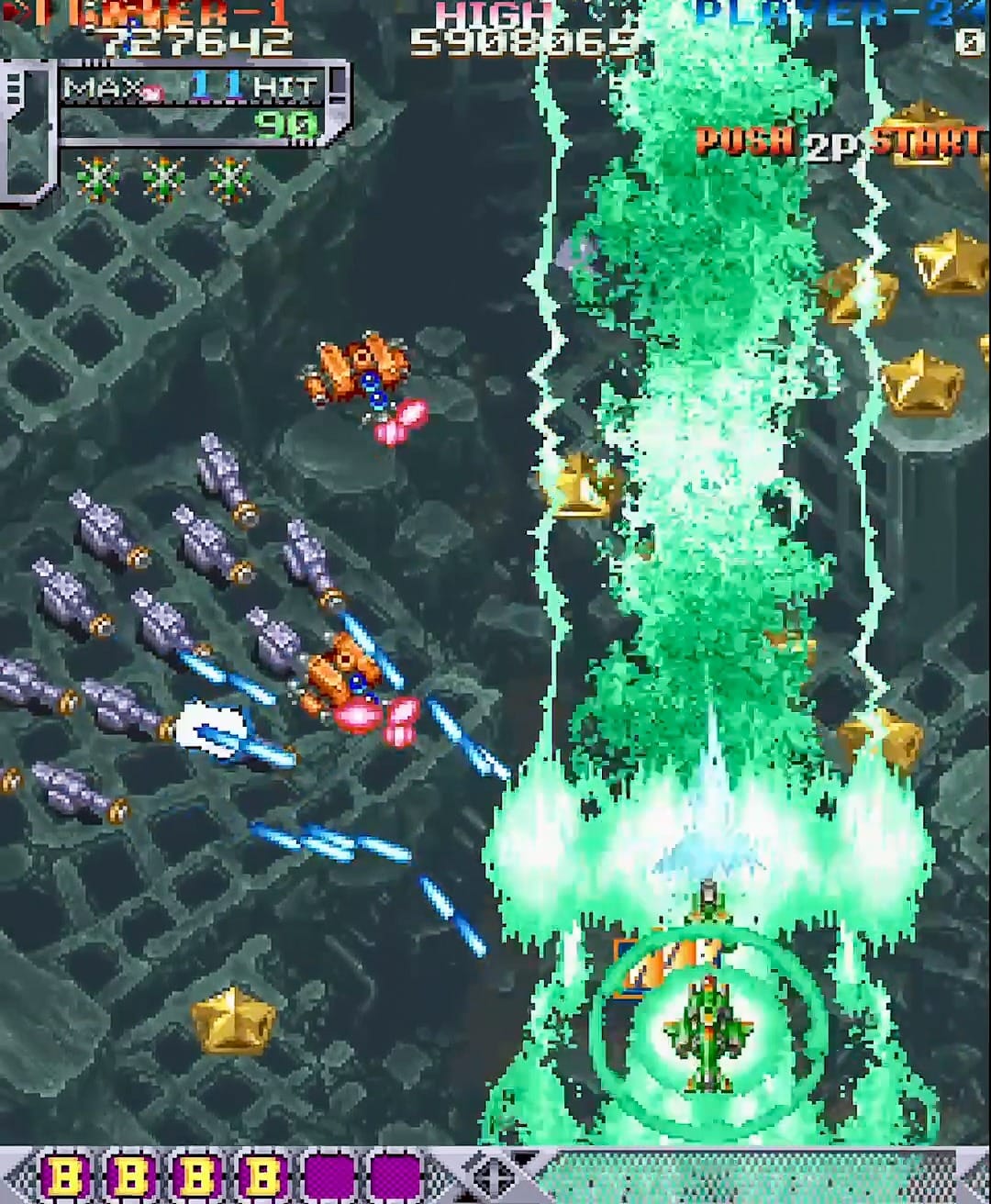
However, CAVE built a genius hook into its scoring system: the second you used even one continue, your score was reset to zero, permanently barring access to the grueling "second loop" and the true final boss of the game. This design choice created an irresistible psychological pull. Every fresh run began with an optimistic ambition that “this was it” - the run where you’d finally make it through unscathed. When you’d inevitably die at the hands of the game’s brutal difficulty, continuing allowed you to treat the rest of the session as a risk-free practice run; it was a win-win, especially for us casuals just along for the ride.
Visually, DoDonPachi remains a 32-bit pixel art masterpiece. With its screen-filling enemy swarms, massive explosions, and towering mechanical bosses, it often feels like Metal Slug converted into a vertical shoot-'em-up, and screenshots simply don't do justice to its frantic action. The only hurdle is its native 3:4 arcade aspect ratio. Playing in standard "Yoko" mode squishes the game on each vertical side into a lower, blocky resolution, while "Tate" mode renders it full-screen albeit at a 90-degree tilt. Back in the day, the purist solution was simple: physically turn your boxy CRT television on its side! It was the only way I'd play it. But sadly, having to flip the TV over every time eventually stopped me from playing it more regularly.
Though I never managed to reach the brutal ‘second loop’ to witness the true ending myself, DoDonPachi became a solid go-to game when friends came over. If I wanted to blow their minds with something they'd never seen, it was simple: hold up, just rotating the TV sideways like a true arcade purist. Masterfully balanced, visually arresting, and mechanically forward-thinking, it stands as a classic of the genre and an unmistakable 32-bit hidden gem.
Terence A
Carmageddon (1997)
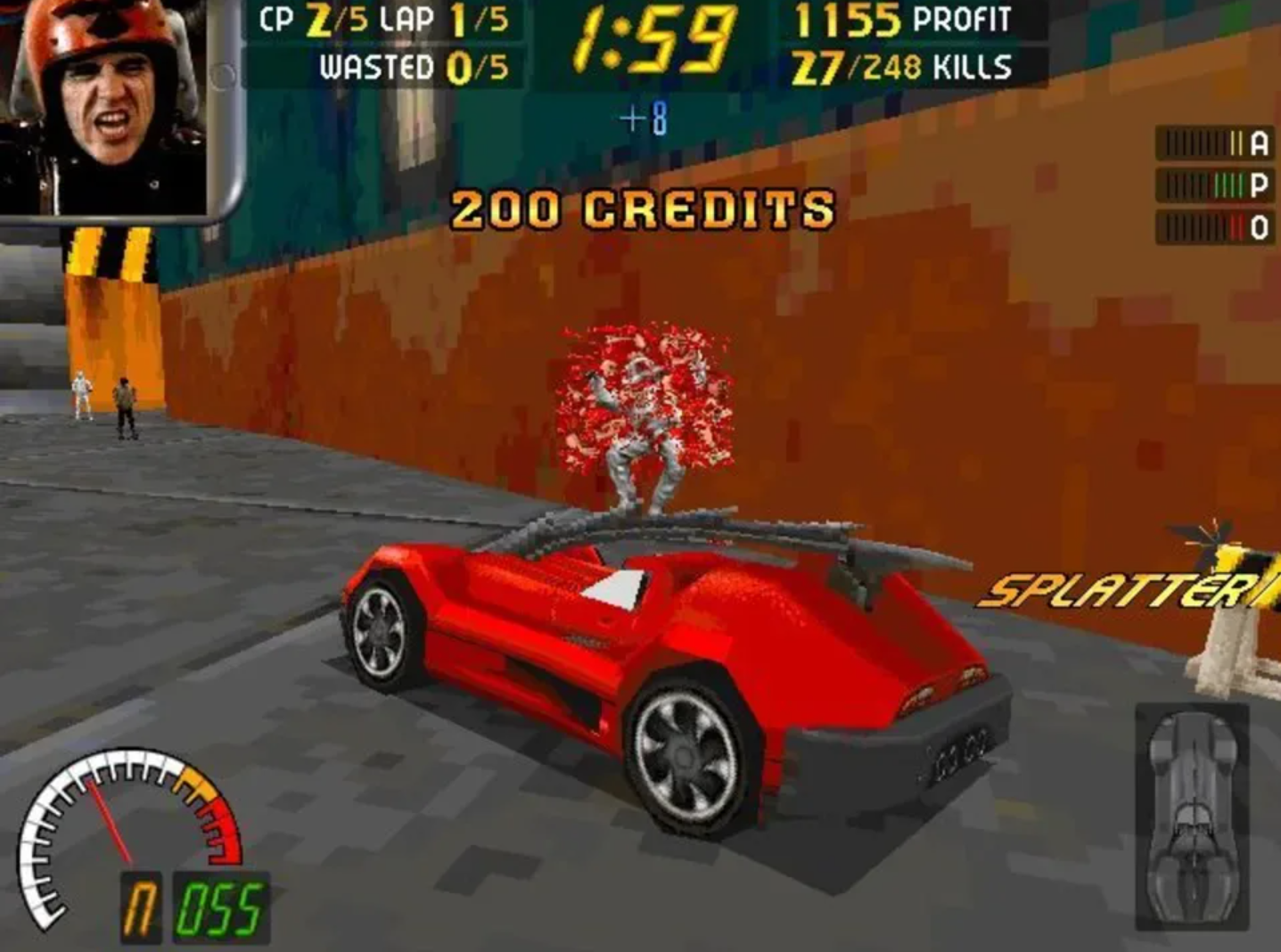
Good games inspire rivals. Great ones leave claw marks outside genres they helped define. If Doom’s menacing corridors and bullet-eating demons had a racing game compatriot, it was Carmageddon. Developer Stainless Games lost the rights to the movie Death Race 2000, which it planned to spawn in alongside the 90s barrage of licensed games, but it built the pedestrian-mowing cherry-red race car anyway.
Carmageddon’s now-iconic vehicle took on races across tracks inspired by the usual ranges in urban density and climate, from deserts to cities and industrial zones. It had no narrative, leaving players to craft their setpieces. Cars handled corners like a semi-truck, trimming the scenery as much as it did opponents. A timer ticked down, pitting you against racers to pass checkpoints. It could be topped up by crushing pedestrians, breaking barrels, or plowing into cars.
Unlike what you’d expect from a racing game, this one didn’t track your position. This nudged many players, me included, toward free-roaming into graphic violence. Sickos could even finish missions by eliminating all rivals or worse, every pedestrian on the map. Its well-designed playing areas encouraged exploration, even if the game’s structures and obstacles felt like cardboard set dressing.
Those concerns leave the mind as the shrieks and guts of your victims punctuate the air. A pre-recorded avatar onscreen constantly reacted with the playful excitement of a puppy to flipped cars and poorly-taken corners. A score system kept note as you went from circuit to circuit, letting players upgrade car stats and unlock new ones with a severed hand cursor between levels. Carmageddon, being generous with its blood and body count, led to publisher Sales Curve Interactive facing police raids and its CEO receiving threats of jail time, before an appeal ensured its launch. Controversy aside, the game’s a running riot that’s well worth an afternoon.
CJ Wilson
Disney’s Chicken Little (2005)
When you are playing video games as a kid, you might play some titles that just happened to be there when you owned a video game console. Back when I was younger, I distinctly remembered playing Chicken Little on the PlayStation 2 in the basement of my childhood home. I never learned how we got the game, but I feel like we got it from a garage sale, where my dad initially got the PS2.
What’s crazy is that while I enjoyed playing Chicken Little, I have never seen the movie that the game is based on. Actually, I saw bits and pieces of the film once as a kid on a small video player with an attached screen (I feel old just writing that last sentence). Thankfully, the game uses clips from the movie to tell the story along with in-game cutscenes.
The brief synopsis: Chicken Little is an anthropomorphic chicken who feels isolated and treated poorly by his classmates; suddenly he finds evidence of aliens planning to take over the town of Oakey Oats after a polygonal shape from the sky lands on his head.
The game was developed by Avalanche Software, who would go on to make other beloved Disney games like the cherished Toy Story 3 with its in-depth sandbox mode and the short-lived toys-to-life series Disney Infinity. The studio was acquired by Disney back in 2005 through its Buena Vista Games division (later renamed Disney Interactive Studios) to make various tie-in animated Disney games like Meet the Robinsons and Bolt. The studio unfortunately shut down on May 10th, 2016, due to slowed interest in the toys-to-life genre and increased development costs. Thankfully, Avalanche was reformed by Warner Bros. Games, where the developers made one of the most celebrated licensed video games in recent memory, Hogwarts Legacy.
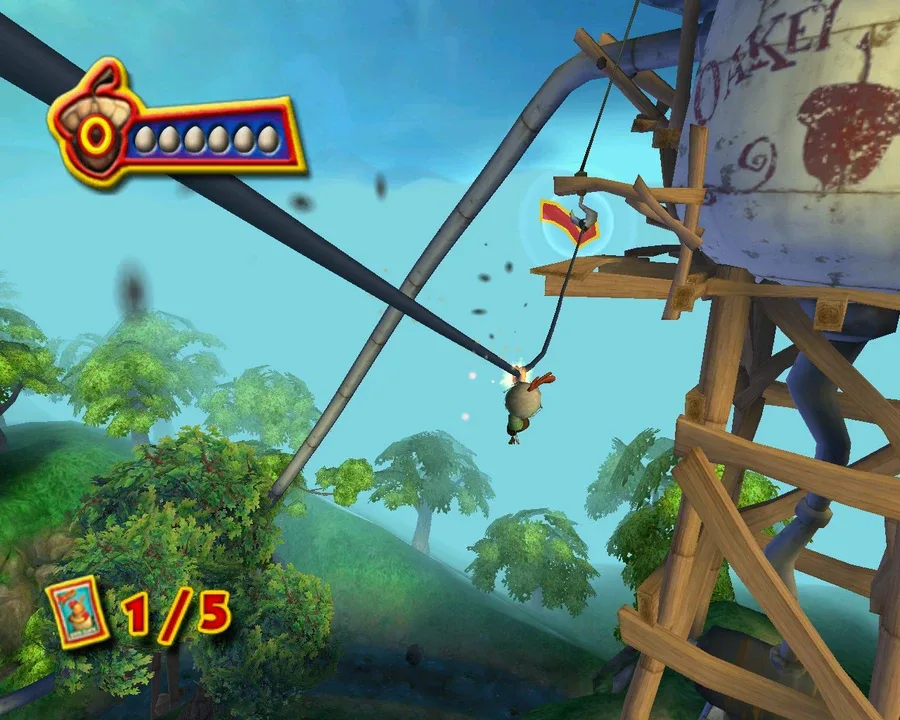
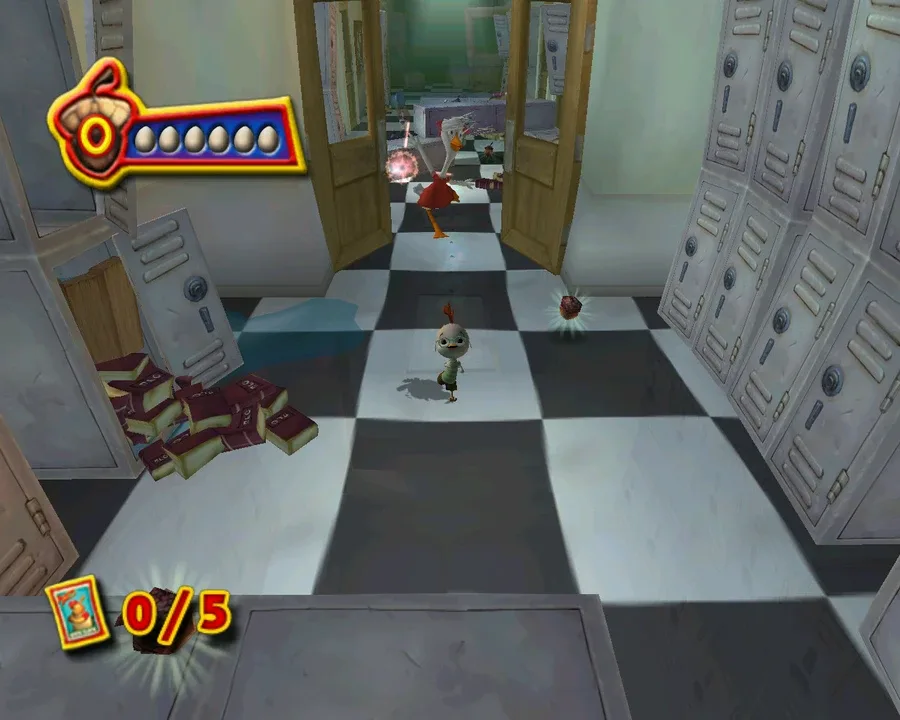
Chicken Little plays like your typical 3D platformer of its era. You can move around, double jump onto various obstacles, and use your handy yo-yo to defeat enemies. As the levels progress, there are new upgrades to earn, like a grapple shot for the yo-yo to reach new areas from a distance. The game moves along at a lively pace, and in some levels, you play as some of the other characters from the movie. One level has you playing as Chicken’s friend Abby, who can’t attack but can flap along to travel tremendous distances while also controlling a mechanical robot that moves with its flailing metal tentacles and shoots lasers.
There’s plenty of variety in the game that can satisfy any child (like me back then). One moment, you’re building momentum in a timed rhythm sequence to score a home run at the major little league game, then suddenly there’s a driving sequence where you’re making deliveries around town like it was built as a kid-friendly version of Crazy Taxi. Most of the levels also have collectible baseball cards that unlock special minigames in the multiplayer mode.
Even just playing through Chicken Little again on the back-compat Xbox version brought me some affectionate nostalgia that I haven’t felt from a game in a long time. While you can sail through in about four hours like most licensed games, it’s simply a blast that’s enjoyable for the whole family. I could easily see it as someone’s first action-adventure platformer and a stepping stone to other games of its ilk, like the 3D Super Mario Bros series from Nintendo.
Join the conversation
What do you think? Reply below to share your perspective.