Hidden Gems of Game Design Volume 46
Unearthing Freeride, Blazing Beaks, Cravan SandWitch, Clean Up Earth, and Battle for Troy





Plenty of amazing games go unnoticed and not widely played, for various reasons. Maybe it’s a diamond in the rough, or the marketing wasn’t there, or it could be a game ahead of its time. For this monthly series, I’ve asked my fellow writers at SUPERJUMP to pick a game they think is deserving of a chance in the spotlight. Please share your favorite hidden gems in the comments.
Josh Bycer
Freeride (2025)
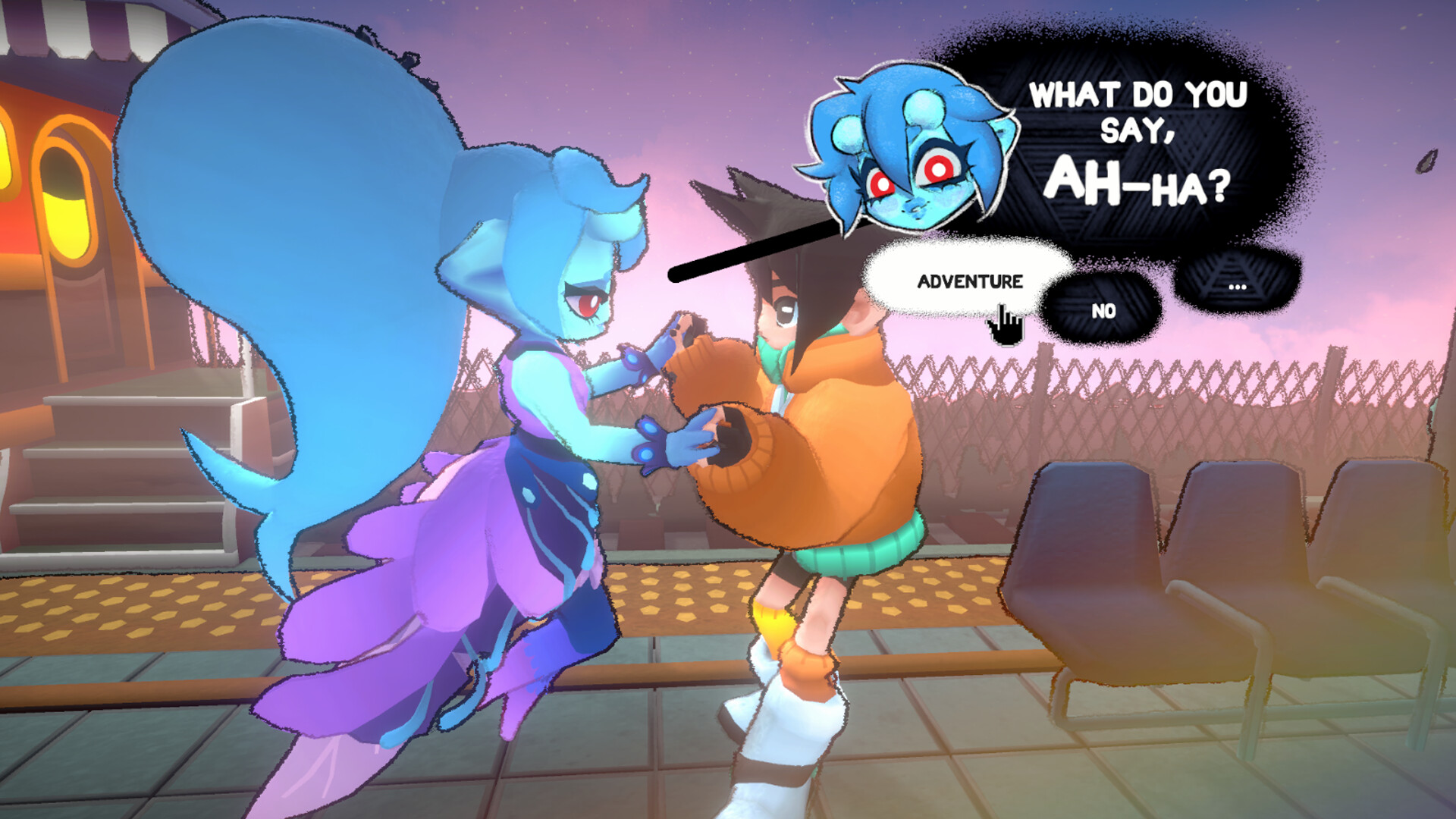
Games where the player can make choices can often feel like a marketing point, and it's rare for a game to go all in with the concept. Freeride manages to make this work by focusing more on tying it to the story as opposed to the gameplay. You play as a boy who is whisked away on a magic train that transports people through the afterlife, but when the conductor mysteriously disappears, you stumble upon what could very well be the end of the universe as we know it.
The game is split into different chapters, each with choices both large and small. The small ones are there to define your personality, which the game will do after each chapter and at the end of the game. The large ones are what steer Freeride into different directions, because the subsequent chapter will be affected by the choices you made prior. By seeing a plot point all the way to its conclusion, you'll start to unlock the items needed to see Freeride's true ending. The different stories are all well done; characters who were friendly to you in one story chain will actively hate you in another.
As for the gameplay, you are free to explore areas and pick up and fling just about anything around. This is used for combat and puzzle-solving, which, unlike the story, has only one way through. For players looking for a challenge, there are optional, hidden boss fights that hide some of the deeper meanings of the story in each chapter.
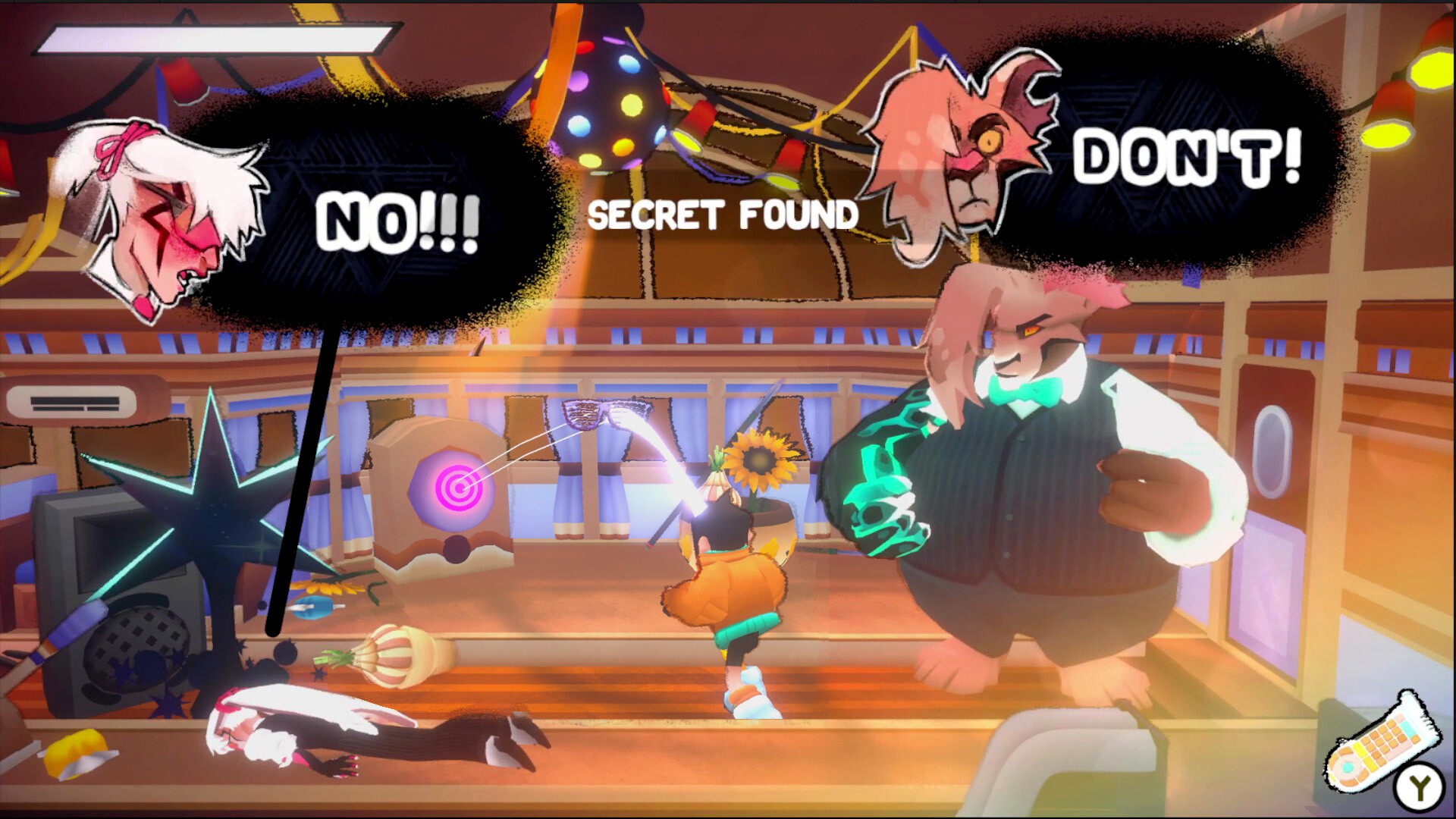
There is a great story going on with Freeride, dealing with topics like redemption, what power and choice mean, and the many regrets someone can have about their life in the end. While the game explores some heavy topics, it never does so from a place of nihilism.
Where the game falters is the one area most important for a game that wants you to play it multiple times - making it feel good to replay. There are no internal notes or ways of tracking story progress outside of the different endgame symbols. Each time you play, you are required to go through all the same events and situations until you get to the branch point, and I don't find the gameplay strong enough to justify repeating the game multiple times. I would have liked the option to just skip to the specific paths that I haven't done. A single play of Freeride is about 4-5 hours, faster once you start doing replays, but it can feel like a lot of work for minimal payoff.
If you're in the mood for a fantastic story and don't mind a bit of repetition, then this is one ride worth taking.
Ben Rowan
Blazing Beaks (2017)
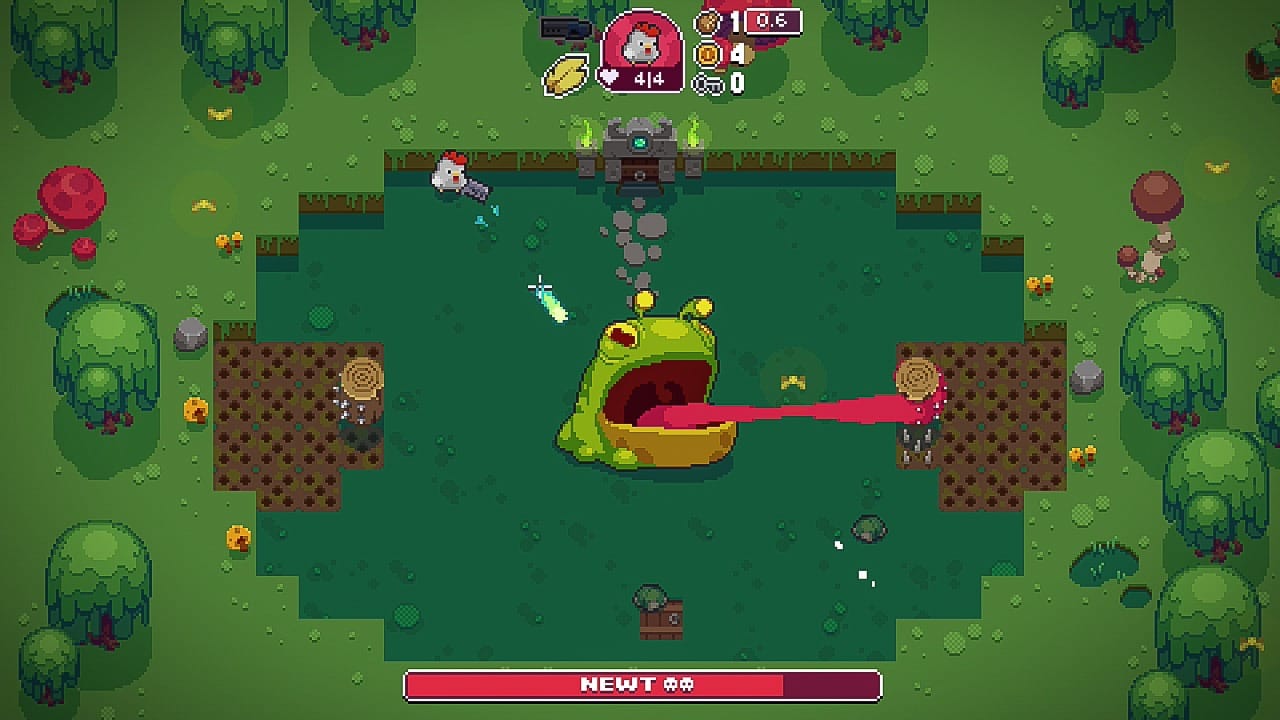
The best runs in Blazing Beaks move with the satisfying rhythm of a well-tuned roguelike. Your movement is clean, rooms are clearing out at a decent clip, and the loot situation is looking good. Then an enemy drops an artifact, and before you've even fully processed what it does, you're already picking it up. Not because it's safe, or smart, but because of what you might be able to trade it for later, once you've suffered through whatever it's about to do to you.
That little tug-of-war is pretty much the core Blazing Beaks gameplay loop in a nutshell. Developed by Applava and released back in May 2017, it's a top-down twin-stick roguelite that keeps its priorities refreshingly uncluttered with sharp movement, compact single-screen arenas, and runs that survive almost entirely on the choices you make while something goopy is actively trying to kill you.
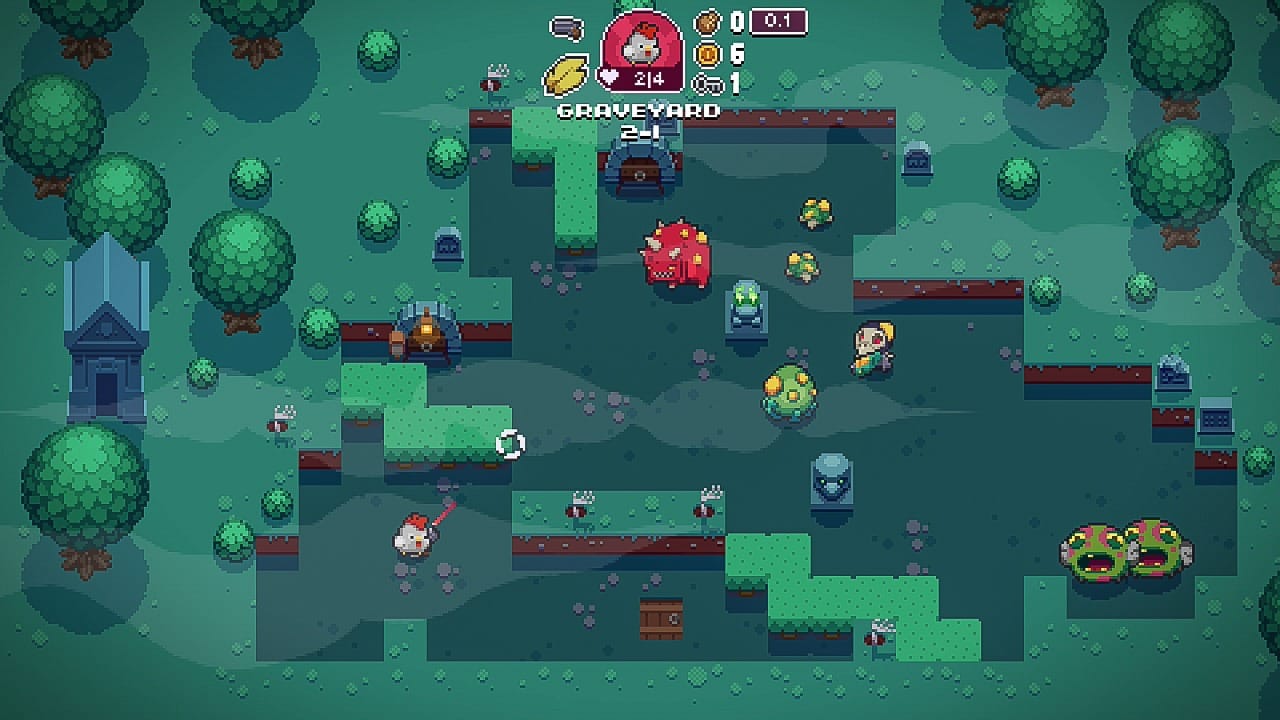
If you've spent time with the legendary 2015 roguelike Nuclear Throne, this rhythm is going to feel immediately familiar. Encounters flare up fast, the screen gets busy in a hurry, and the game is completely unapologetic about punishing lazy positioning. There's not much in the way of meta-progression here to soften the blow either, which means improvement comes the old-fashioned way: getting good. You learn how enemies move, sharpen your dodges, refine your aim, and go in a little bit cleaner every new run.
Part of what stops that loop from going stale is the roster. There's an obvious goofy charm to the whole "anything with a beak gets a gun" premise, but it's not just a gimmick. There are ten playable characters to work through after unlocking them all, including a duck, a chicken, and my favourite, a very cute platypus. These let you bounce between genuinely different play-styles whenever a run ends in disaster, which keeps things feeling fresh longer than I expected.
The game's best idea by far is the artifact system I mentioned earlier. Enemies have a chance to drop cursed artifacts that actively make your run worse while you're carrying them, the kind of modifiers that take a comfortable flow and turn it into a stress test. Maybe your fire rate tanks. Maybe you start bleeding coins every time you take a hit. Maybe every enemy you kill turns into a steaming puddle of acid.
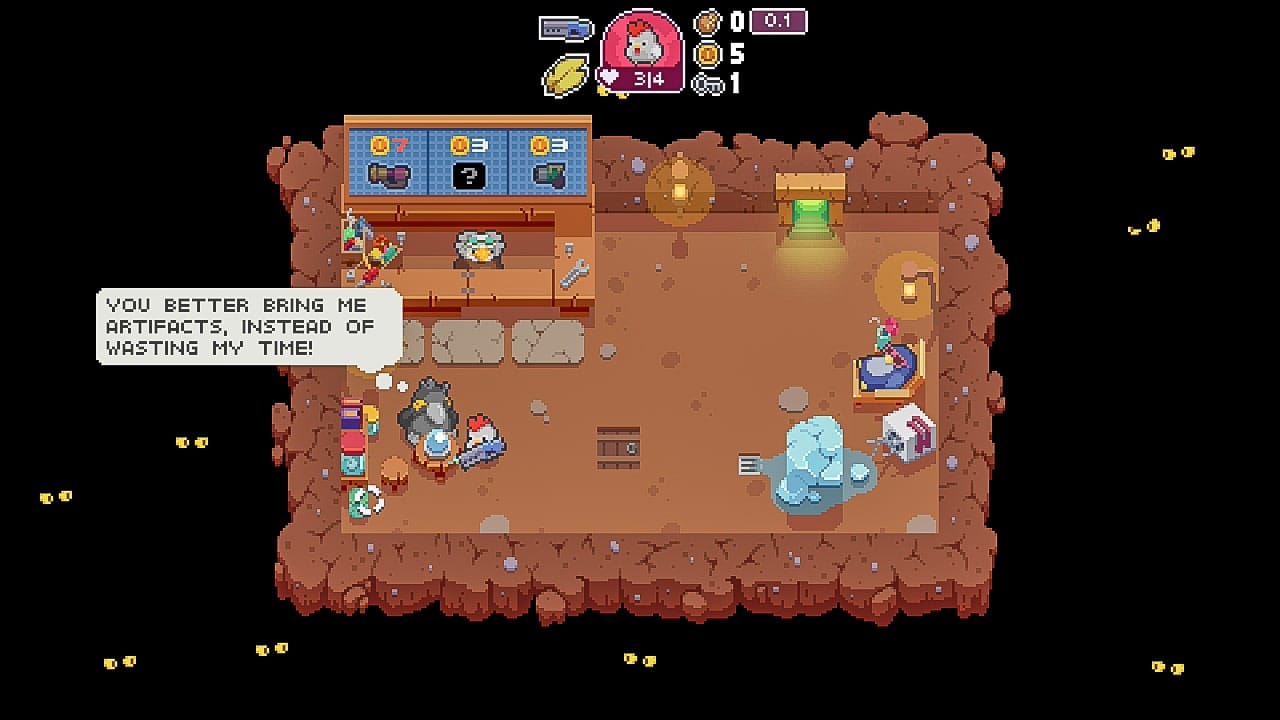
The key thing is that these curses aren't just punishment for punishment's sake. When you finally reach the shop, you can trade them for stronger rewards, which means every single artifact pickup becomes a weighty decision. Do you keep things stable and manageable, or do you accept a tougher few rooms in exchange for showing up to the next boss with something more effective than the pea-shooter default gun?
On Switch specifically, it’s also an easy game to play with friends. Local co-op makes the chaotic campaign feel a bit more survivable, and Tournament mode lets you redirect that chaos to your shoot friends when you’re in the mood for something a little more bloodthirsty. It’s not the greatest local multiplayer indie on Switch (that honour still belongs to TowerFall), but it’s a damn good time.
Blazing Beaks isn't obscure in a ‘nobody on Earth has played this’ kinda way, but it's absolutely the kind of hidden gem that slips past people until it's already sitting on their console quietly waiting to get its hooks in. And once it does, it's surprisingly hard to stop thinking about the next run.
Hiero de Lima
Caravan SandWitch (2024)
Colonialism is one hell of a drug. Even from my upper-middle-class ivory tower, as a Brazilian, the child of a mixed Black/Indigenous man who grew up in poverty and a woman of Italian-Spanish heritage whose ancestors were incentivised to come here so they'd whiten the population (exact way the government put it), I am inherently chained to the whole affair. When I played Caravan SandWitch with one of my first-ever press review copies, the skies of São Paulo, my hometown, were marred by gray coming from a human-wrought attack on the Amazon — and it felt hauntingly fitting.
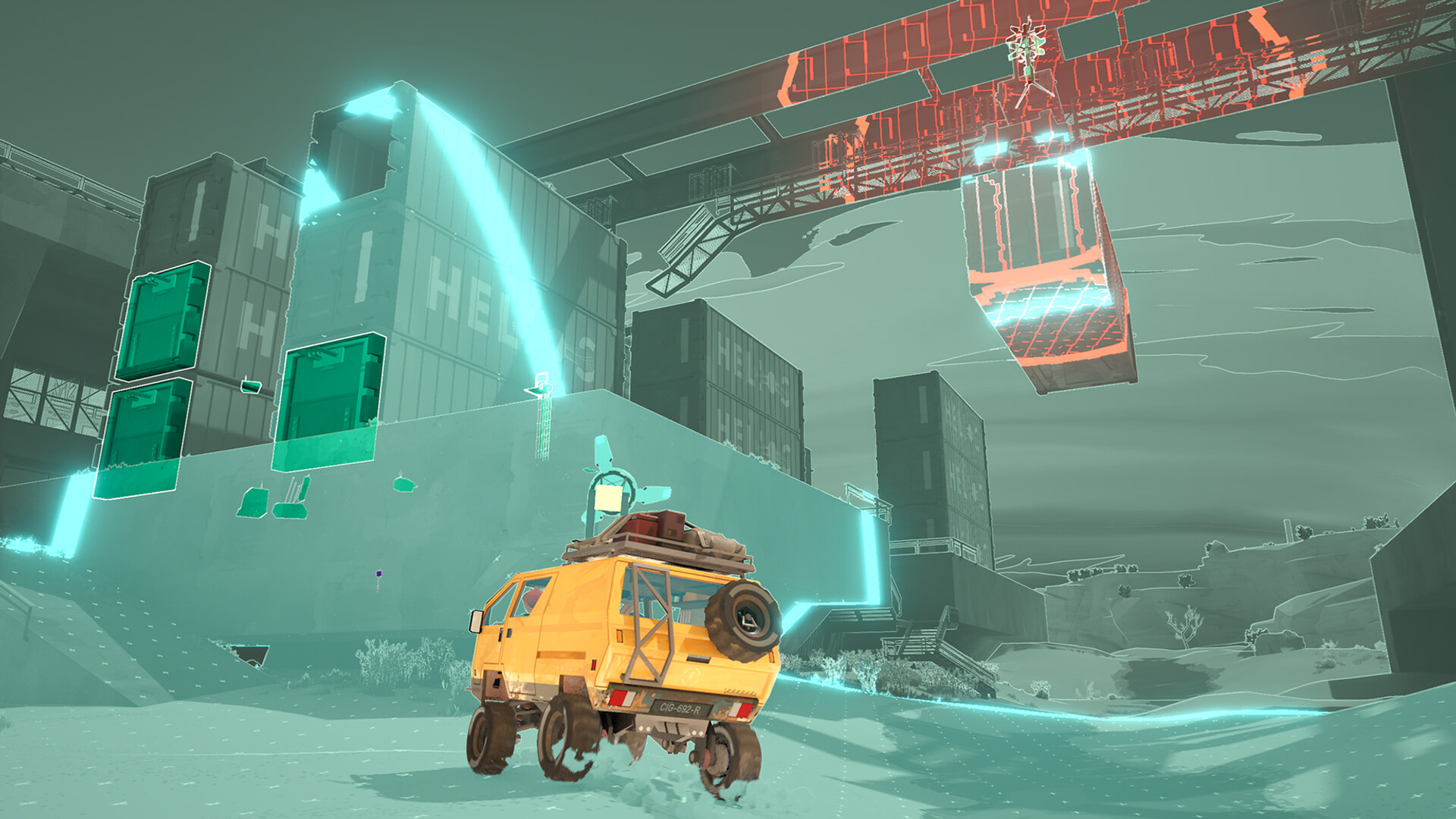
This lovely little open-world story-based puzzler takes place in Cigalo, an alien planet colonised by humans and modeled on the Provence region of France. As Sauge, a young girl coming home from a long season in the big city, you set out to find your sister Garance, long thought to be dead, but the apparent sender of a distress signal just recently. You also take the opportunity to reckon with the state of the place you'd left behind as a child.
No one resents you for leaving, is the thing. Rather, they're all curious about what life under the warm embrace of the Conglomerate was like. Was the ravaging of Cigalo worth the cushy life you get to live in the metropolis compared to the colony?
Blatantly inspired by France's occupation of Haiti in the 1800s, Caravan SandWitch asks hard-hitting questions about the human cost of the practice, all while keeping the atmosphere light enough that it doesn't become soapboxy or vapid. As a video game, it's also a sweet ATV-led journey across a small open world that values curiosity and presents rewarding little puzzle boxes all around. Clocking in at around 9 to 10 hours, it's a great game to chip at for a while, available on PC, PlayStation 5, and Nintendo Switch.
Priya Sridhar
Clean Up Earth
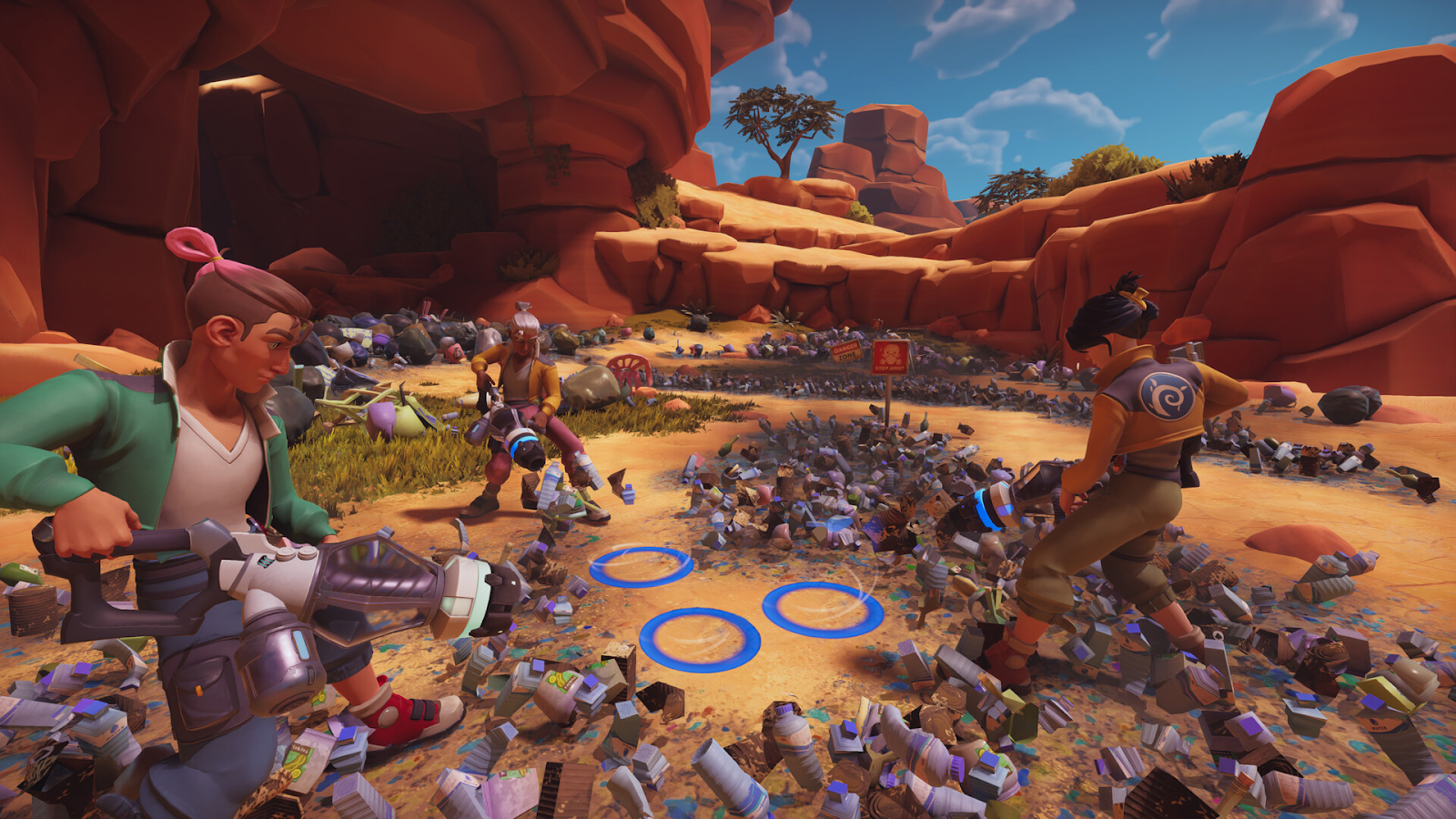
Though the full game won’t release until next month, I can 100% recommend Clean Up Earth based on the demo. The premise is simple: you have to clean up different areas, removing plentiful amounts of garbage and pollution. You can also repair ecosystems and revive desolate spaces. Co-op mode provides options for team players, and large enough cleanups in that mode may also trigger micro-donations to real-life environmental organizations and projects.
It felt liberating to press a button and clean up the waste that somehow ends up in our oceans and beaches. (We need to have a talk with whoever does this dumping on a regular basis). I’ve done clean-ups as a kid and a teen in real life and am looking at some events in my city. Getting trash off the beach and invasive plants out of the Everglades requires gloves, elbow grease, and occasionally sharp tools. But it also requires a team; one person will burn out trying to clear an area without any backup. Cleaning up solo in a game feels cathartic, especially when you can see the visible fruits of your labor. And honestly, it makes me excited for the full game, especially knowing a story is underneath all the trash.
Anonymous
Battle for Troy (2004)
If reading an Iliad translation before Nolan’s Odyssey adaptation sounds like a chore, a video game might be an easier entry point. Battle for Troy doesn’t trace the Greek hero’s journey, but its real-time strategy battles still tackle an era largely unexplored by games.
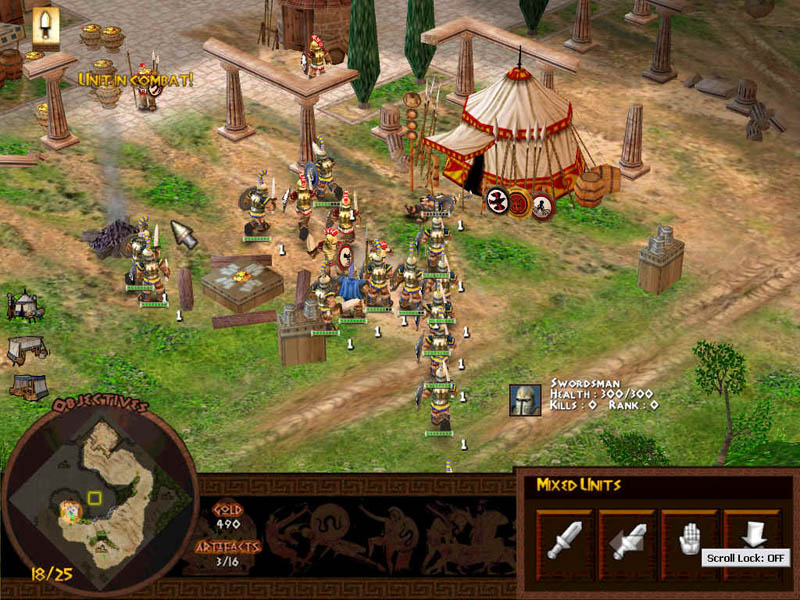
Gold, the game’s sole resource, is acquired by defeating soldiers, raiding camps, and holding objectives. Spending it on buildings and troops is well-trod RTS territory. You’ll find the typical array of soldiers, archers, and healers assisting you in a numbers game against your opponents, be it the invading Greeks or defending Trojans. Heroes, cavalry and catapults join the menu in the campaign’s latter portions.
Its uninspired levels boil down to waiting to accumulate a large army before sweeping the map clean. Stat bonuses from relics and god powers bring some flavor to largely vanilla battles. However, the inability to save mid-mission means you’ll have to beat them in a sitting. On the bright side, the visuals are fairly detailed, from rocky and grassy environments across towns and ruins to varied unit models and textures, especially at night.
Iffy pathfinding and units blocking each other mid-fight made combat less intuitive than WarCraft. Bringing troops over to subsequent missions helped build a sense of attachment over the course of Battle for Troy’s campaigns. Middling gameplay loop aside, it’s worth playing if you dislike trial-and-error and combat optimization.