Star Wars Outlaws and the Ubisoft Problem
Villainy of another sort

“Ubisoft” used to mean something to me.
Growing up, it was a word synonymous with wonder – a seal of quality, a promise that I was about to be whisked away on an adventure that would ignite my imagination and mould new memories.
I fondly remember seeing the company's 1995 logo for the first time, marvelling at the rainbow arcing over those enigmatic words, and how they used to lure me into the world of Rayman 2: The Great Escape. I recall its swirling successor just as vividly. Designed in 2003 for the company’s teenage phase, it didn’t matter whether I was liberating Vegas from terrorists or dispatching templars in 12th-century Damascus; the word on the box remained, and crucially, it still meant something.
It doesn’t, now, and I think I know why. First, though, it's time for a history lesson.
Who-be Soft?
When I sat down to write this, I realised that I’d never actually resolved the childhood mystery of the Ubisoft name for myself. That means for roughly twenty-five years, I’d sort of assumed that its meaning had been lost to time, a far-flung relic of the distant past. It wasn’t, of course and after subjecting myself to a little over two minutes of painstaking research, I now know that Ubisoft is a portmanteau, combining the French ubiquité with the English word software.
Ubisoft’s games are undeniably ubiquitous, but that ubiquity has, ironically, become its greatest weakness.
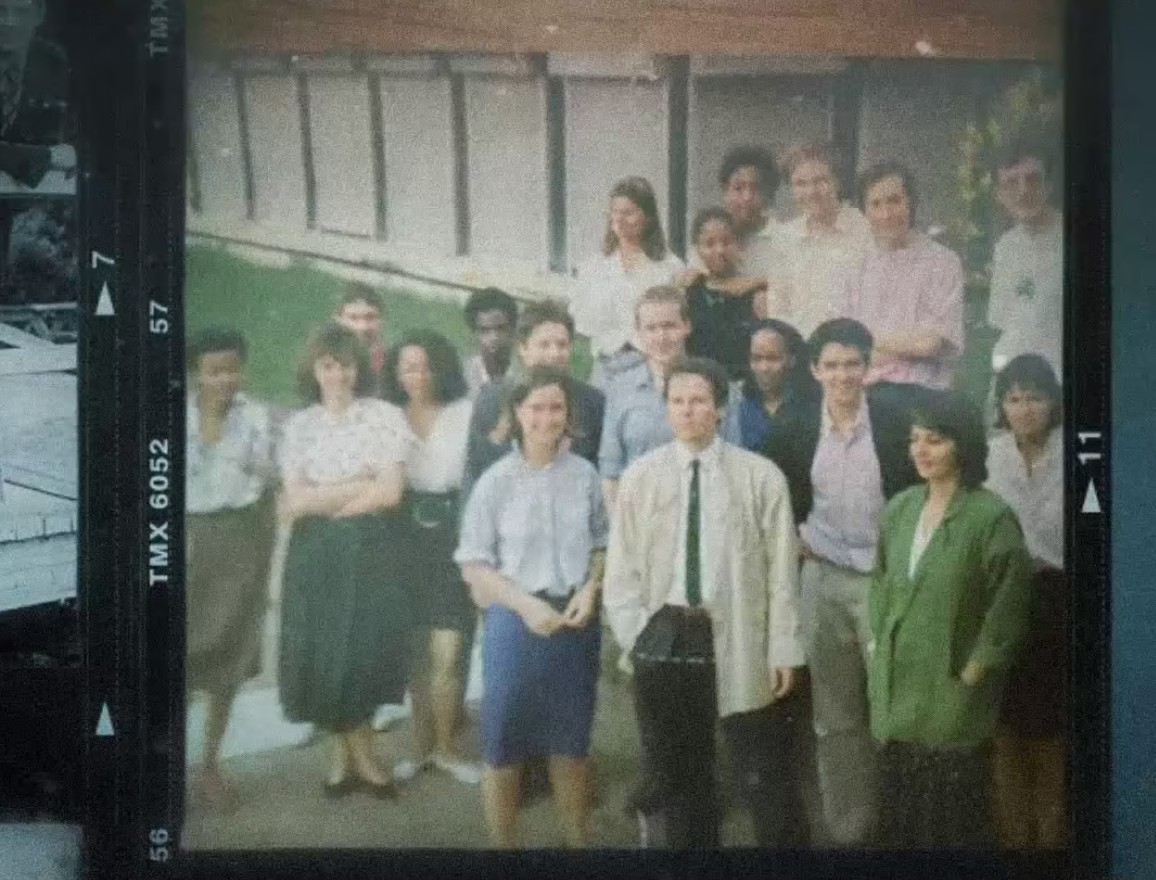
The company was founded in 1986 by the Guillemot brothers, five siblings who identified a gap in the budding software development industry and decided to create and distribute video games. Evidently, the compound word that made up the company name reflected a desire to make their products so commonplace, so ubiquitous that the business would be recognised worldwide as one of its foremost video game publishers.
In this pursuit, they have inarguably succeeded. For the 2025-26 fiscal year, the company reported net bookings of €1.53 billion. Although this represented a 17% decrease year-on-year from the previous financial year, it’s also fair to say that this isn’t chump change. Ubisoft’s products are now so ubiquitous that they generate over a billion euros in annual sales.
Job done, right? Yes and no. Ubisoft’s games are undeniably ubiquitous, but that ubiquity has, ironically, become its greatest weakness. Where once they were celebrated for taking creative risks and innovating, they are now defined by the same tried-and-tested formula they've been relying on for almost two decades.
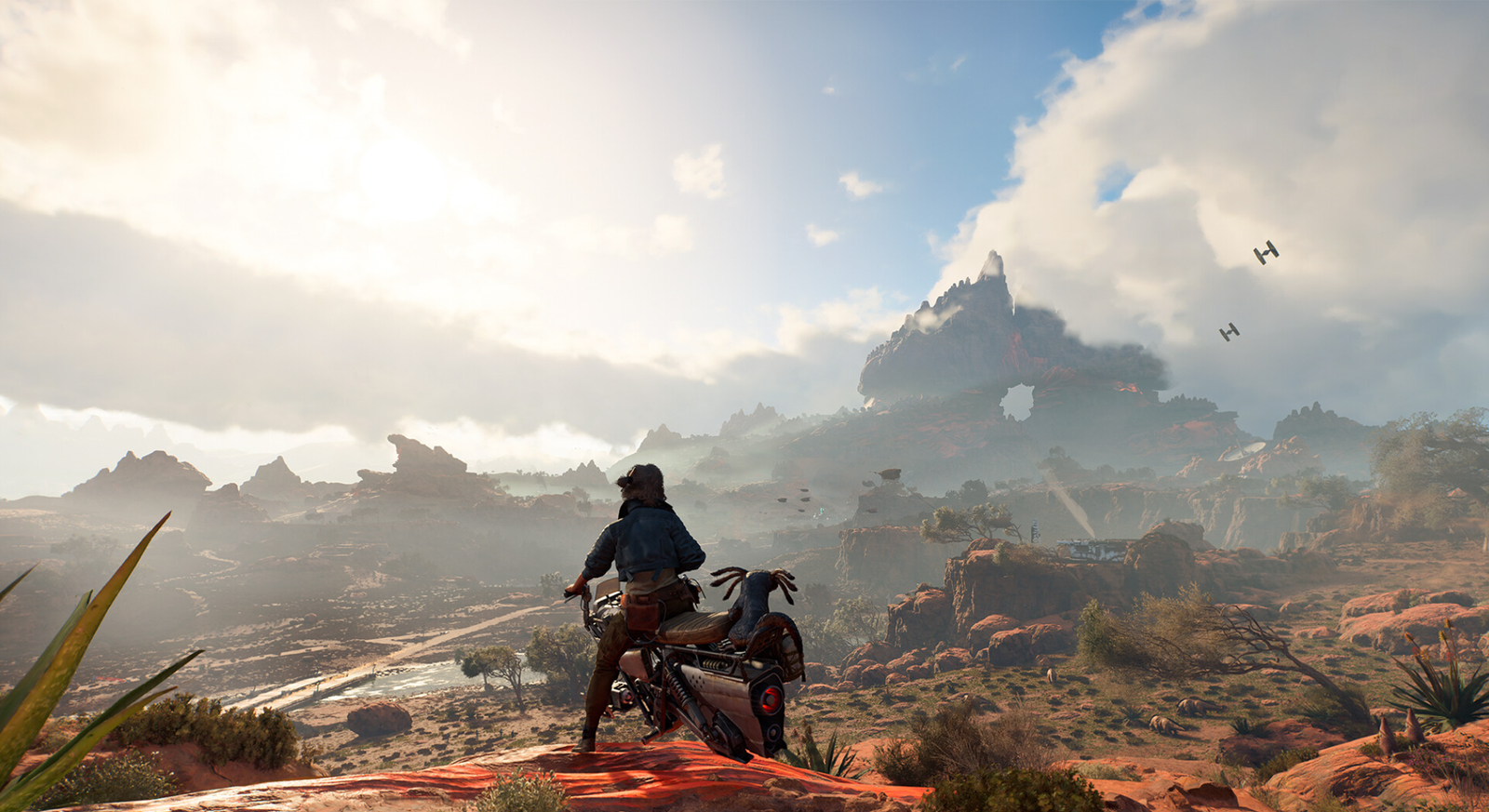
This was the realisation I had while playing Star Wars Outlaws.
A Long Time Ago in a Galaxy Far, Far Away
Released on 27 August 2024, developed by Massive Entertainment, Star Wars Outlaws passed me, and much of the wider gaming community by – at least that’s what its middling sales and mixed critical reception suggest. Out of curiosity, I snagged it for free via the PS Plus Game Catalogue. Here’s what I learned.
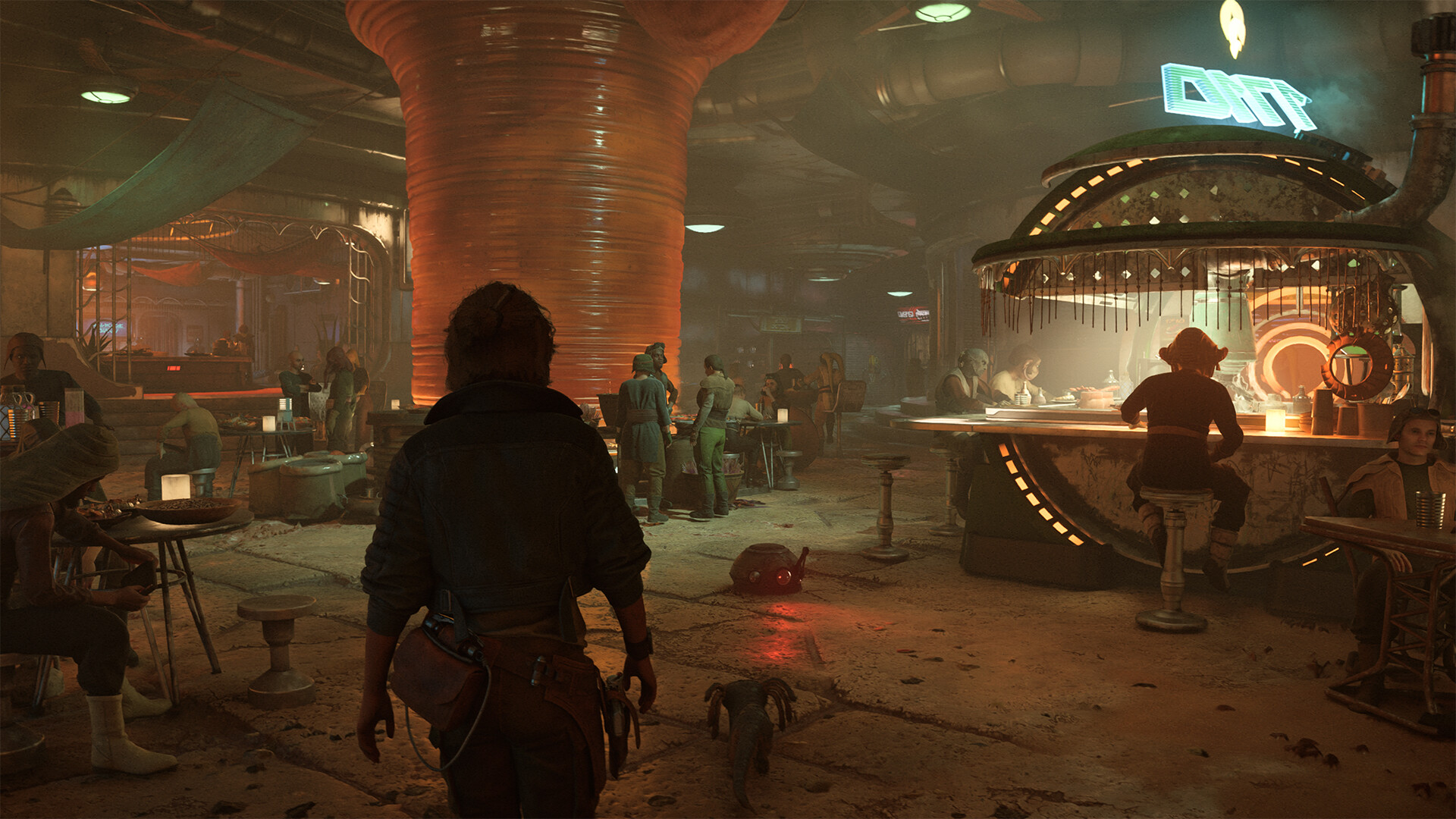
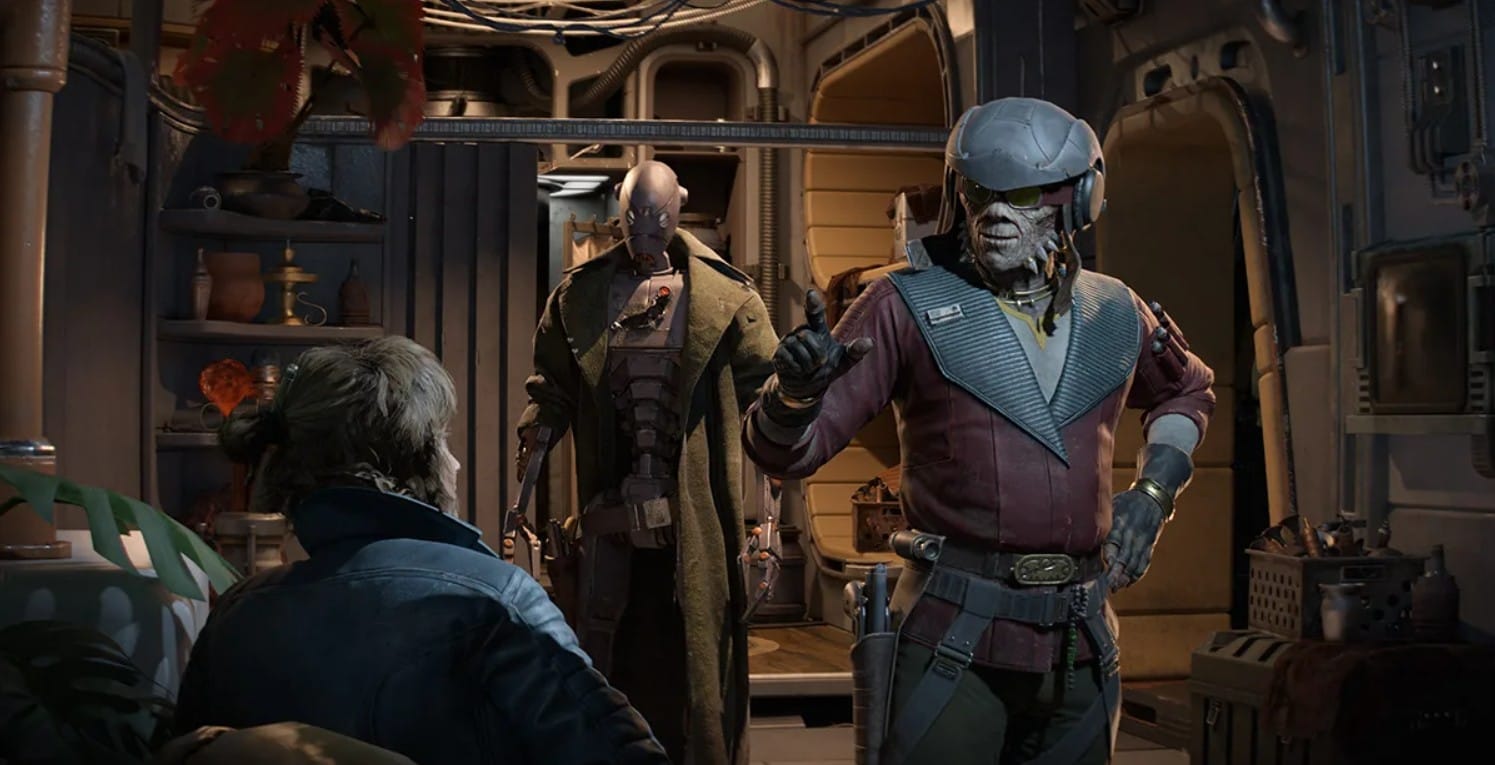
You play as Kay Vess, a lovable rogue forced into the galaxy’s criminal underworld after a botched job leaves her marked for death. Along the way, she's joined by Nix, her fiercely loyal pet Merqaal; ND-5, a lethal BX-series commando droid; and a colourful supporting cast of both new and familiar faces that round out the interplanetary adventure.
Together, you’ll travel between the planets of Akiva, Kijimi, Tatooine, and Toshara, assembling a crew for the boldest heist the Outer Rim has ever seen. While this is pretty standard fare for Disney-era Star Wars, it’s a strong elevator pitch for a game. Unfortunately, ubiquity gets in the way of that potential.
By going after such a wide audience, Star Wars Outlaws is impaired from the outset. Rated PEGI 12 in the UK and T for Teen (ESRB) in North America, this is more Saturday morning cartoon than The Sopranos in space. This is a universe without teeth. The game will frequently insist that Kay watch her back, but it’s never quite clear what from.
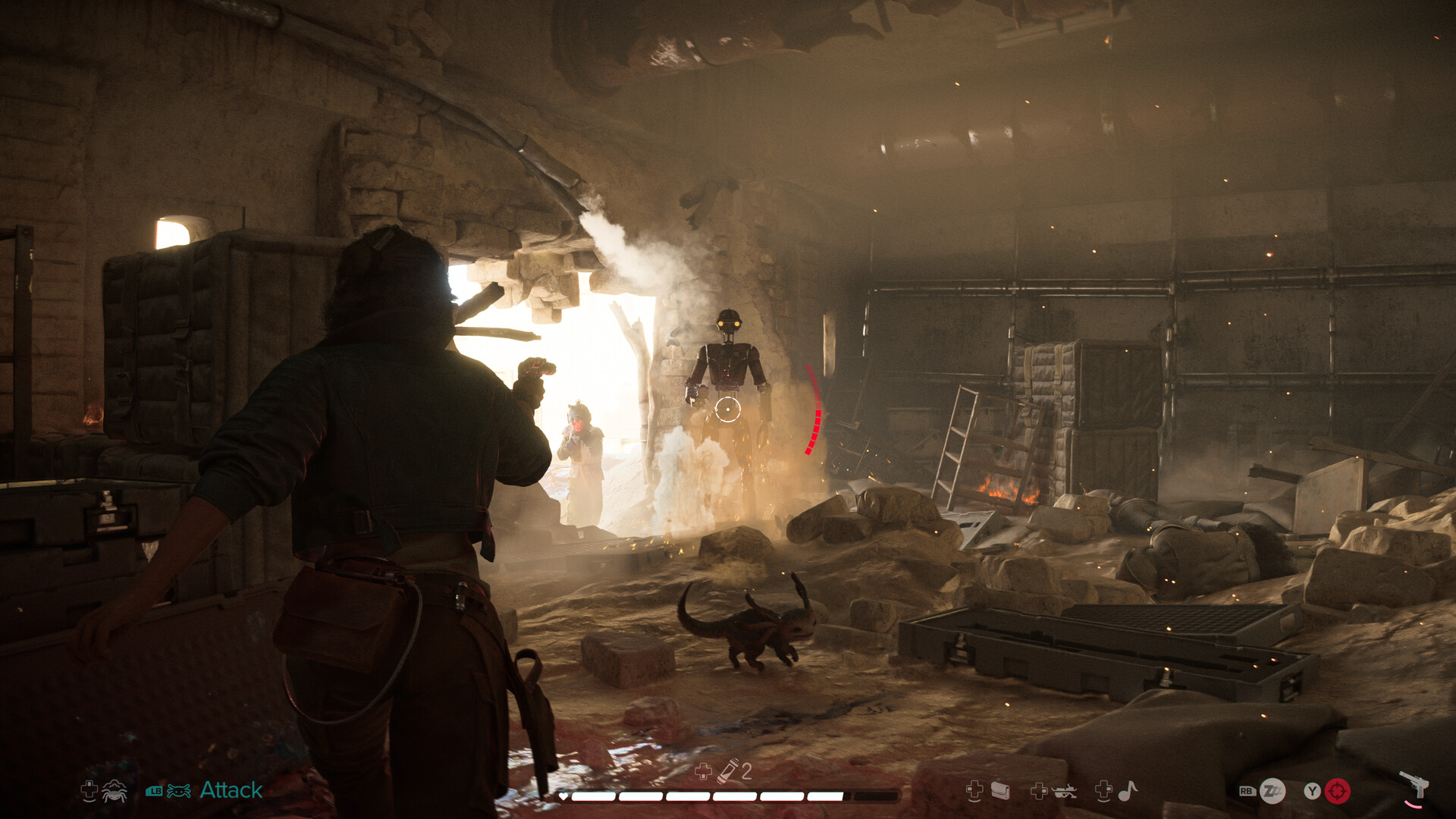
Now, I hear you, Star Wars has always leaned toward the frenetic, child-friendly tone of adventure serials like Flash Gordon and Buck Rogers, but I have to push back on the notion that it consciously avoids moments of darkness. I mean, the Galactic Empire obliterates an entire planet in A New Hope; Han Solo is encased in carbonite in the next film, and in the one after that, Darth Vader watches as his son is almost air fried. Star Wars has the capacity for malice, but Star Wars Outlaws does not, and I’m just left wondering why.
It’s easy to forget, but Ubisoft wasn't always afraid of leaning into darker, more mature subject matter. In fact, as a teenager growing up in the 2000’s, this was precisely what made their games so enticing. Terrorists in Rainbow Six Vegas spoke to their hostages with ugly disregard for their lives. Splinter Cell: Double Agent forced players to make difficult moral choices, constantly balancing their loyalty to the NSA against the need to maintain their cover inside the JBA terrorist group. Hell, in Far Cry 2, you almost immediately contract malaria and spend the rest of the game managing its debilitating symptoms.
In fairness to Star Wars Outlaws, the examples listed above were all rated M for Mature. But if you're asking players to infiltrate the galaxy's most dangerous criminal syndicates, the tone needs to match. It needs to trust players to live in the uncertainty of a moral grey area, and it certainly ought to carry an age rating that allows developers to depict subject matter at a deeper level. I’m not saying that I need Kay Vess to wrench people’s heads from their shoulders and bathe in their blood; I’m saying that I need the game to believe in the promise of its premise.
In the name of ubiquity, Ubisoft hasn't published a game that has genuinely challenged or unsettled me in years, and Star Wars Outlaws is no different. It's tonally compromised. No one feels deadly, nothing feels unsafe, and it’s a problem that’s only worsened by the gameplay.
I’ve Got a Bad Feeling About This
If I were asked to name the defining games of the last decade, I’d instinctively point to titles like Red Dead Redemption 2, Elden Ring, and Breath of the Wild for two reasons.
1. Each of these games puts the player in total control of their moment-to-moment open-world experience, trusting them to find the fun in doing so.
2. They respect the player's time and intelligence.
Ubisoft games do neither of these things. Don’t get me wrong, they pretend to, but in every meaningful sense, they don’t deliver. So, let’s test Star Wars Outlaws against these criteria in practice.
The Open World
Ubisoft creates incredible open worlds that they don’t want you to explore. Let me explain. The Cambridge Dictionary defines “explore” as “to search a place and discover things about it.” In any given game from the French publisher, that’s not really what you’re doing. You’re told where your next objective is, what you’ll likely find there, and how you’ll likely have to approach it. This is the trap Star Wars Outlaws has also fallen into.
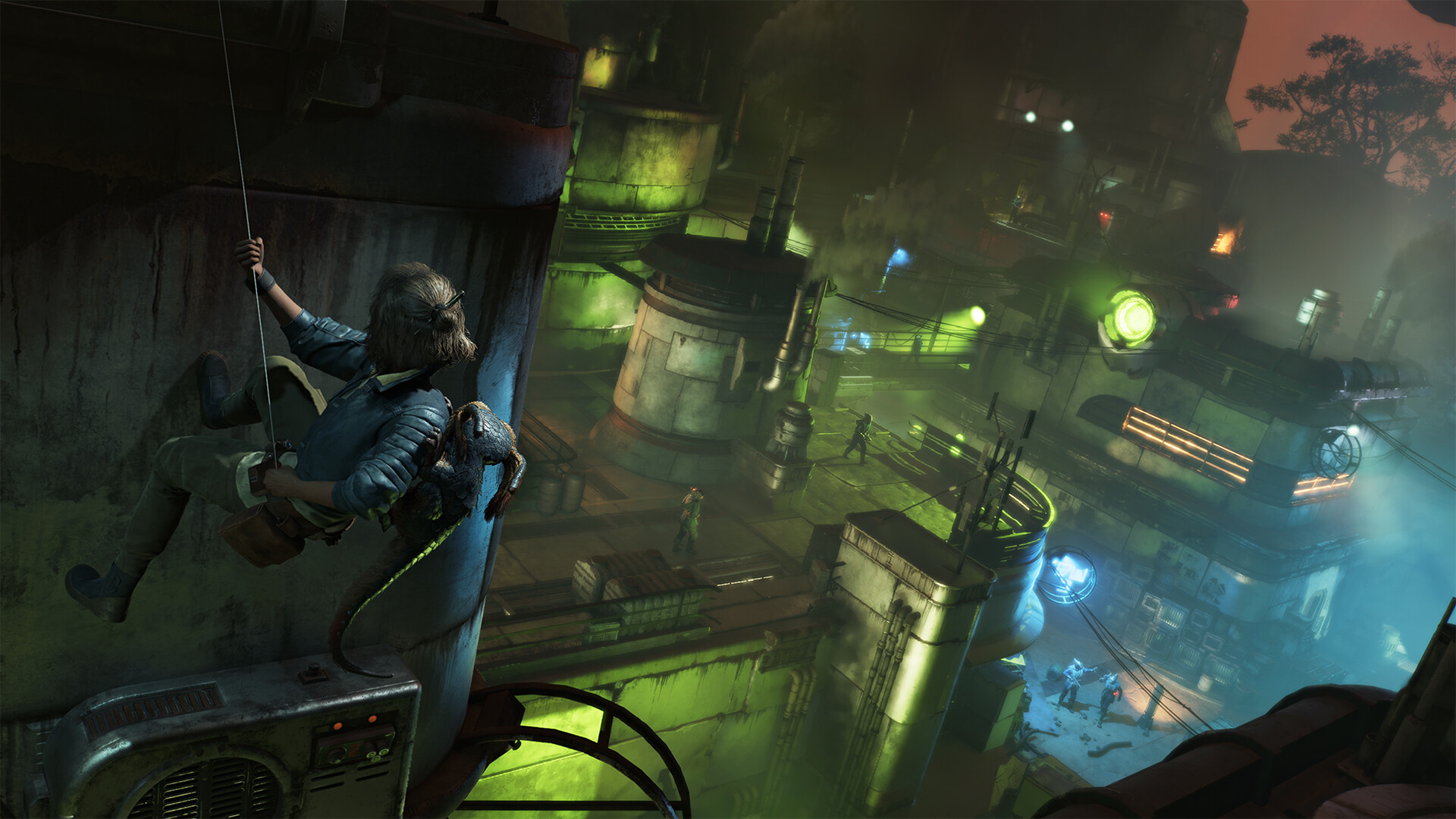
Akiva, Kijimi, Tatooine and Toshara are gorgeous, lovingly crafted maps that you’ll want to escape into—but you can’t. Instead, Kay’s journal keeps track of all objectives, tips, treasures and stashes, ready for the player to place a waypoint and head straight there on the admittedly great-feeling speeder bike.
The problem is that you don’t meaningfully stumble across these things. They’re embedded within pre-existing quests that you only encounter at their intended starting points and carry through to their scripted conclusions. I never once found high-level gear by accident, because the game neither encourages that behaviour nor really supports it.
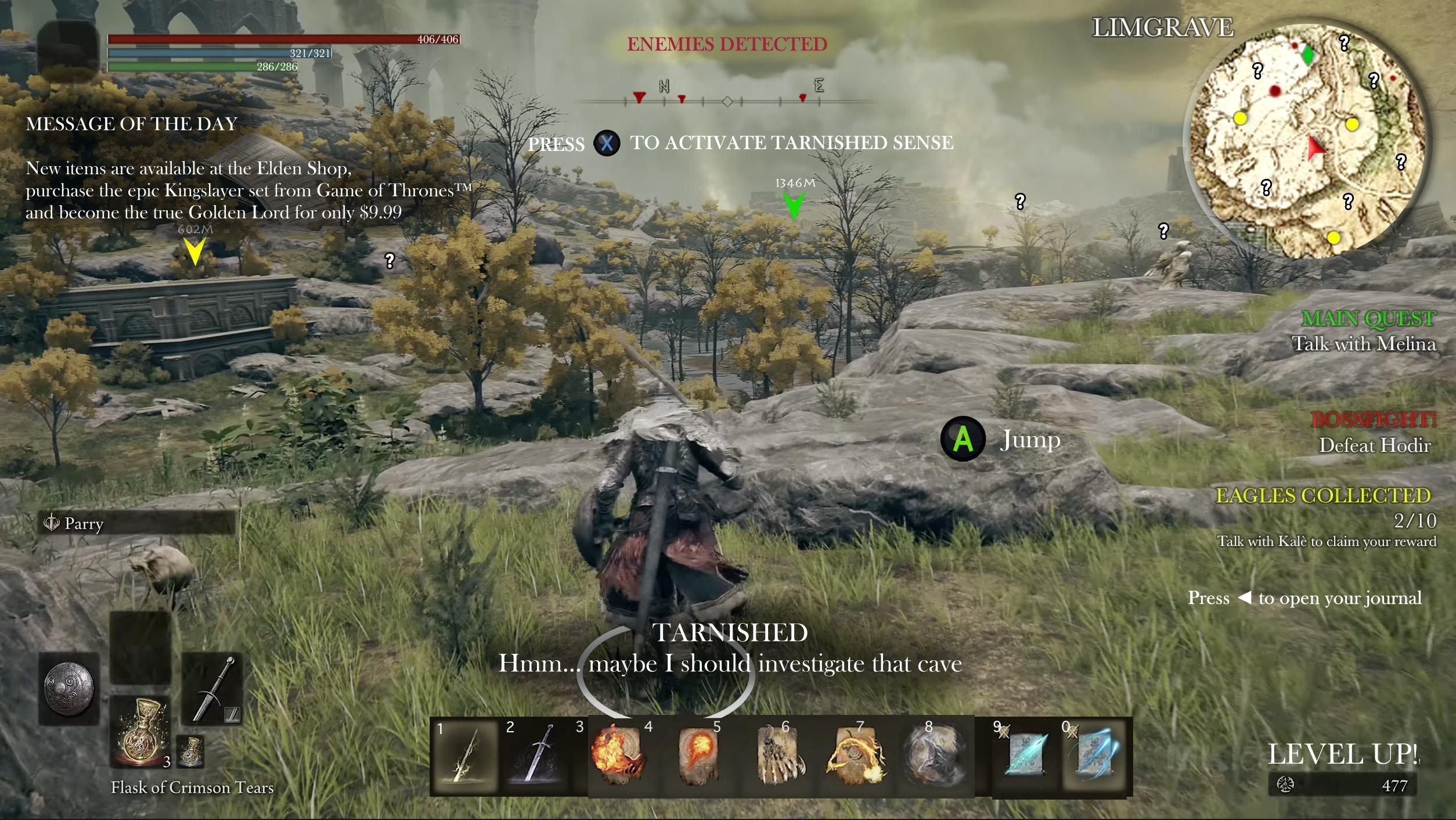
It’s not exploration, it’s the illusion of it; a carefully crafted game of Simon Says in which you can feel the puppeteer strings of the developers guiding you this way and that. As such, you’re not really in total control of the open-world experience, nor are you truly trusted to be. On more than one occasion, it unfortunately reminded me of this infamous meme:
Respect and the Lack Thereof
Ubisoft needs to fix its AI, full stop. Since the launch of the original Assassin’s Creed back in 2007, Ubisoft games have placed outsized emphasis on the player’s ability to engage with their stealth systems, but far less on making enemies feel capable of tracking you down.
Throughout Star Wars Outlaws, you’re told that you’re facing off against the deadliest criminals in the galaxy. In reality, it seems that some kind of Empire-mandated lobotomy programme is in full swing, because these are some of the dumbest NPCs I’ve ever encountered. I spent much of my playthrough knocking out guards next to their friends, walking straight past checkpoints with oblivious sentries, and sleepwalking through encounters that the story painted as frantic, but the gameplay turned into comedy.
It fares no better in open combat either, as most of these enemies amount to little more than blaster fodder, unable to keep up with behaviour that could be described as underhanded. Once again, this undermines the game’s premise and its respect for your time.
It certainly doesn't respect the player’s intelligence either. Star Wars Outlaws took me around 27 hours to complete, but even at the end, it still felt the need to over-tutorialise. Whenever I reached one of the game’s numerous climbing sections, a large “X” button prompt would appear on screen to reassure me that, yes, the X button still meant jump, and that I could trust the developers at Massive hadn’t suddenly changed the rules.
Just imagine if a game like Uncharted did this. Would it improve the game in any material sense? The answer is no. It only comes off as patronising and hurts your sense of immersion in the impeccably designed open world. When the Resident Evil 4 remake introduced yellow paint to highlight interactable objects, people complained, but that’s an accessibility choice I can accept. What’s far more irritating is the assumption that, having not climbed something in five minutes, I’ve suddenly forgotten the very concept of ascending vertically. It is simply unnecessary and disrespectful.
The Cost of Ubiquity
Before I finish, I want to clear something up.
Star Wars Outlaws isn’t a bad game; it’s a game with real promise that’s been flattened by Ubisoft’s lack of meaningful evolution from its corporate-mandated design philosophy. Throughout this piece, I’ve directed my criticism at Ubisoft rather than its developer Massive Entertainment, and that’s deliberate—it isn’t on them. Everything I like about Star Wars Outlaws, I like because it flies in the face of the same tired, stilted ideas that Ubisoft has been recycling for almost twenty years.
I mean, this is a publisher that was once bold enough to platform the phrase “nothing is true, everything is permitted.” A quote from Vladimir Bartol’s 1938 novel Alamut, it is used in the Assassin’s Creed universe to suggest that truth, authority, and even divinity are constructs—useful fictions for social control. I cannot conceive of a world in which Ubisoft could ever be this interesting again.
Ubisoft is dead, and ubiquity killed it. The word used to mean something to me; it doesn’t anymore.
Join the conversation
What do you think? Reply below to share your perspective.