The Equality of Entertainment Born from Soup, a Plate, and Coins - Part 1
More than just toys


Video games are just toys.
However, I believe that behind these seemingly lighthearted words lies the most noble form of democracy that humanity must protect. This is an idea where, by inserting a single 100-yen or 25-cent coin, anyone can become a hero on equal terms, regardless of nationality, wealth, or social status. Has there ever been a time when such an idea spread so widely across the world? Of course, I do not intend to deny the evolution of technology or the transformation of business models. However, I cannot help but feel that we are so obsessed with the convenience — a kind of forbidden fruit — that we are losing sight of the very roots of video game culture. In my view, the essence of video games lies not in a mere display or celebration of technology nor in the efficient consumption of interactive content, but in the provision of a thoroughly refined equal experience. ・Why do video games captivate us so deeply and refuse to let go? ・Why has a single game been able to transcend national borders and become a universal language for humanity? To explore these questions, I would like to unravel the true nature of this culture by examining four perspectives through the dual lenses of the ethics of toys and player sovereignty.
Chapter 1: Soup and a Plate: On the Ideal Relationship Between Hardware and Software
Nintendo’s Hiroshi Yamauchi once declared, “Hardware is simply a ‘box’ that people are forced to buy in order to play the software they really want to play.” These words represent the most sincere business truth, demonstrating that the software (the gameplay) is, without a doubt, the true star of entertainment. I view the relationship proposed by Mr. Yamauchi as analogous to that between soup and the bowl that holds it, the relationship between the dish itself and the vessel that serves it. Here, the soup refers to the game experience itself, crafted with the creators’ heart and soul. The bowl refers to the hardware that delivers that experience to the user. In essence, entertainment should be evaluated based on the taste of the soup. However, looking at the modern game market, a strange reversal has occurred: before we knew it, the conversation shifted entirely to the luxury of the plate (the specs of whatever machine is used to play the game). Furthermore, the taste of the soup we enjoy has come to depend on which plate is being used—meaning that disparities in hardware or PC performance fundamentally erode the game’s content and the experience itself, creating inequality in the experience.

What Nintendo continues to offer is a 100-yen soup that is simple yet infinitely warm, with a flavor that never disappoints
This is akin to serving a dish prepared by dousing a mind-bogglingly expensive gold-plated vessel — born of hardware developers’ self-indulgence — with an excessive amount of a potent poison consisting of the distorted ideologies of outsiders and the terrible self-absorption of certain creators. This can be described as a betrayal of the customers — the children and adults who paid a high price and went to great lengths to visit the restaurant to enjoy the soup. In my view, the ideal relationship between soup and a plate is one based on thorough and absolute equality. What Nintendo continues to offer is a 100-yen soup that is simple yet infinitely warm, with a flavor that never disappoints. This soup isn’t served on gold-plated chairs reserved for the elite or on the top floor of a skyscraper. Whether on a park bench or in a corner of a factory, it allows everyone—the small and the great, the rich and the poor, the free, and everyone from innocent children to the elderly — to sit on a bench and equally enjoy the same flavor, sipping from the same plastic bowl.
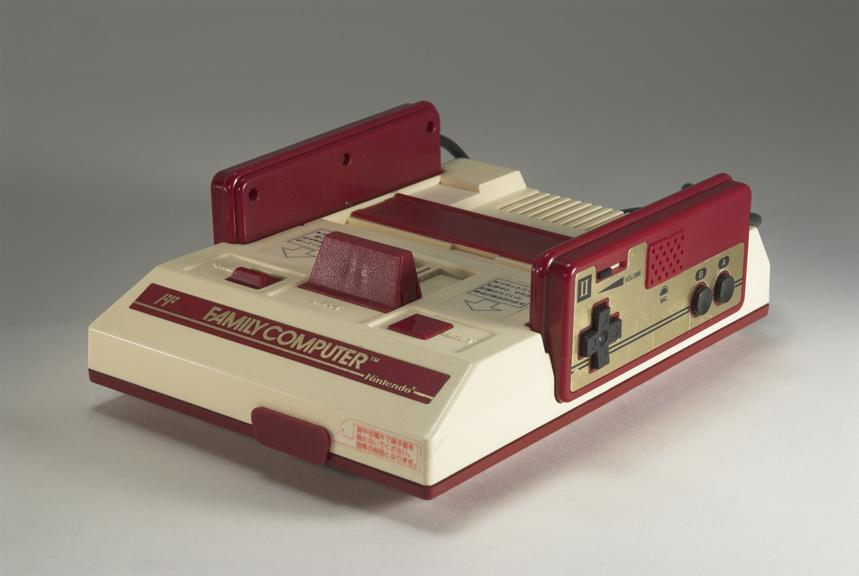
Furthermore, rather than spending money on fancy plates, Nintendo has consistently prioritized preserving the purity of the broth - ensuring that when you finish every last drop, you can sincerely think, “Ah, that was fun” - since the dawn of the gaming industry. Although Nintendo was founded in 1889, it has cast aside the pride of a long-established firm and the pretensions of a high-end restaurant. The democracy of play, where anyone can become a hero with just a single 100-yen coin, is the one-of-a-kind recipe they have steadfastly upheld. In fact, wasn’t the Famicom, or rather, the Nintendo Entertainment System, once embraced by households around the world because it was the fairest plate in the world? No matter a child’s background, as long as they picked up the same Famicom plate, they could experience Super Mario Bros. at exactly the same temperature and flavor, equally, and with a smile. Everyone, adults and children alike, could savor that same taste.

The fact that the hardware functioned as a common standard (an equal plate) must have been the minimum ethical standard for creators to fulfill their promise of delivering the very best flavor they intended, exactly as intended, to everyone.
The plate (specs) does not overpower the soup, but supports it in the most user-friendly way possible. I am convinced that it was precisely because this master-servant relationship was upheld, creating a fair foundation where everyone could equally enjoy a single bowl of soup, that games took root in our culture as precious toys that remain in our memories for a lifetime.
The true role this plate must fulfill is not merely to hold the soup. The guarantee of honest responsiveness — a quality achievable only by a tightly integrated hardware-software system - is that it returns the intended output (behavior) with absolute precision in response to physical input (controls). It is not the sheer amount of specs, but the precision of this synchronization that determines whether users can trust the world.
Here, I’d also like to touch on why the Nintendo Switch 2 — which is already in our hands — was released at that particular time and with those specific specifications.
Around the time of its release, there was a lot of numerical comparison in the public sphere, such as how much the resolution had improved and how close it came to rivaling other companies’ high-performance machines. However, Nintendo’s true intention in bringing this new plate (hardware) to the world lies on an entirely different plane from such a specs race.
The primary reason they revamped the hardware and significantly boosted its capabilities was none other than to serve the highly evolved soup (game visuals) of today without spilling a single drop, and to continue serving it equally to everyone around the world.
As game development technology continued to advance, the old plate increasingly forced creators to cut back on the ingredients they wanted to include in their soup, or else dilute its flavor. This would have made it impossible to fulfill the promise Nintendo made during the Famicom (NES) era—a promise they hold most dear: to deliver the best possible flavor, exactly as the creator intended, equally and in the best possible condition to everyone.
The Switch 2, this new plate, has redefined the fairness of entertainment—not as a luxurious dish enjoyed only by a small, core niche audience, but as a platform where tens of millions, even hundreds of millions of people around the world can equally savor the latest experiences at 100% quality right on the device in their hands.
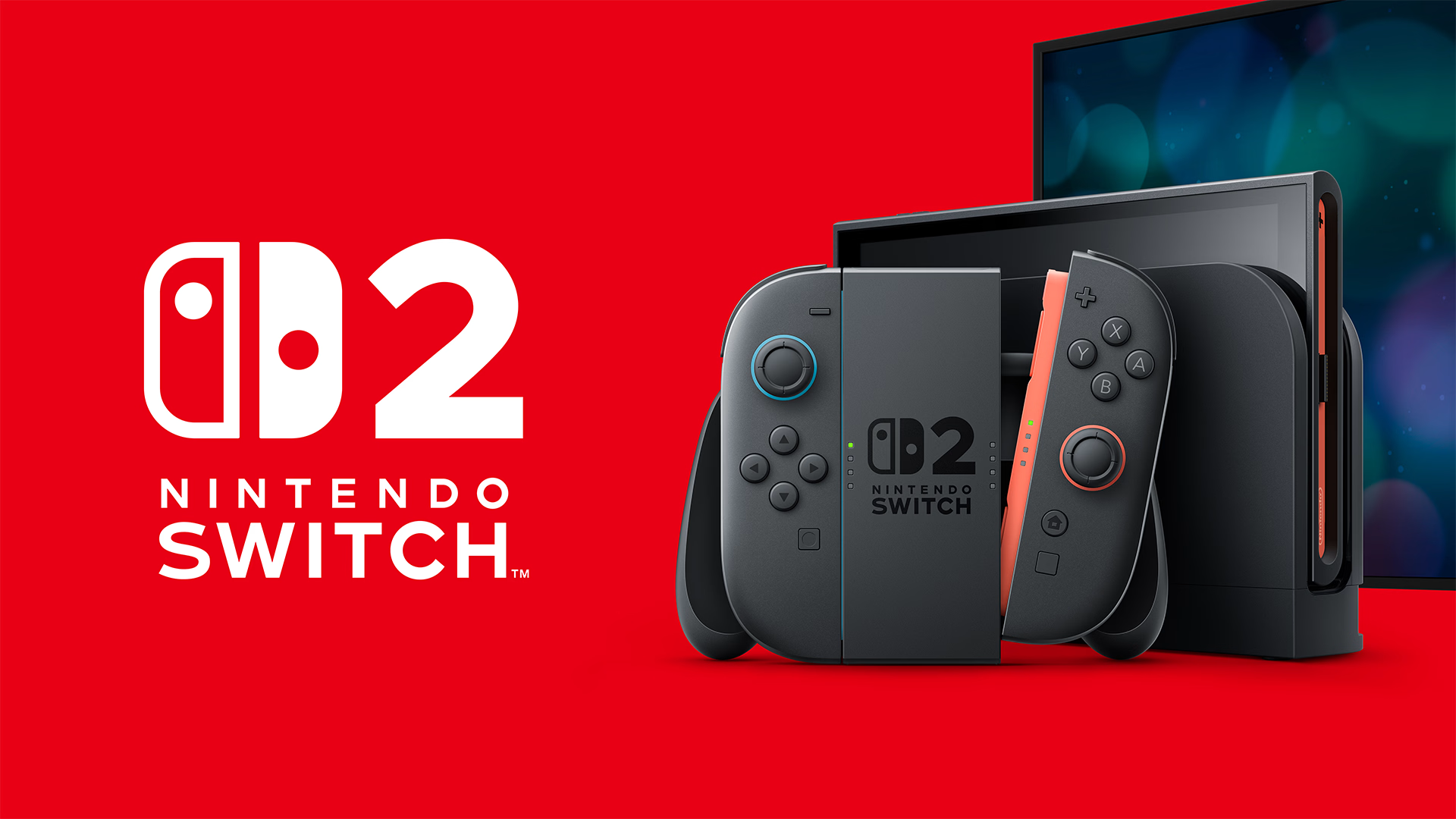
Improvements in specs were not the goal; they were merely a sincere means to pass on the equality of entertainment to the next generation. Above all, they are both the seasoning and the plate that enhance the flavor of the new soups to be released in the future. By viewing it this way, we can correctly understand the cultural significance of this new hardware. Hardware is not merely a lump of plastic and electronic components. It is an extremely ethical and absolute vessel of promise designed to preserve the creator’s passion and ensure the flavor remains unchanged regardless of the user’s environment. Nintendo’s stance of providing the same taste on the same plate to everyone is rooted in a single spirit that has flowed unbroken since the very moment video games were born. It is the story surrounding that coin we once experienced in dimly lit arcades and at the counters of candy stores. So why is equality so important? To unravel the answer, I’d like to discuss the purest and most powerful coin philosophy that lies at the very foundation of video game culture.
Chapter 2: The Democracy Preserved by the 100-Yen Coin
If we trace the history of video game culture, we find that a single coin has been a constant presence.
In the past, we would insert 100-yen coins (or 25-cent coins) into the arcade cabinets placed in dimly lit game centers or in front of candy stores. In fact, it is precisely within this extremely simple exchange - pay 100 yen to get a few minutes of play - that lies the absolute ultimate democracy that video games can proudly present to the world.
Just imagine: Whether the person inserting that 100-yen coin is the CEO of a major corporation, an elementary school student on their way home from school, or even an innocent kindergarten child, there is absolutely no difference in the play they receive. The program inside the machine does not care about the player’s social status, bank balance, or where they live - it disregards all attributes and race.
The moment you insert that 100-yen coin, you instantly attain the unique and most liberating status of a single player (challenger). None of the inequalities, disparities, or discrimination that exist in the real world can be brought into that space.
Even though video games are often dismissed as just toys, the reason they have been loved across borders and races to this extent is surely that they have steadfastly upheld this absolute fairness brought about by a single coin for decades.
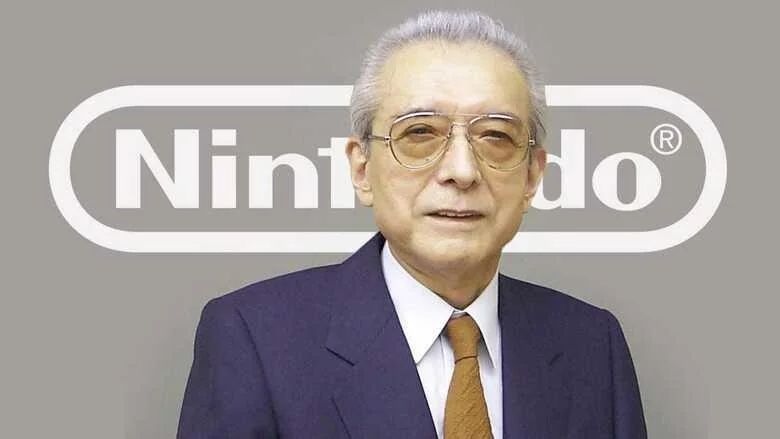
We must now reexamine the crisis facing this spirit of the single coin within today’s complex business models, and why it is a sanctuary that must be protected.
The history of video games, which began with Nolan Bushnell and Atari’s Pong, has always valued this equality of a single coin above all else. When we insert a 100-yen coin into the machine, a silent contract is formed. It states: “I have paid the price. Therefore, for the next few minutes, I have the right to be treated fairly as the protagonist of this world.” And the game machine, regardless of who the player is, responds faithfully only to the inputs received.
It is precisely this attribute-agnostic nature that constituted the greatest cultural revolution brought about by video games. In the real world, we are plagued by inequalities we can never choose for ourselves, such as our parents’ wealth, where we live, our educational background, our social connections, and even our race. Yet the gateway to the world of games has always demanded nothing more than the fee of a single coin from everyone without exception.
What is important here is that what this 100-yen coin created was not cheapness, but dignity.
By paying 100 yen, the player enters into an equal relationship with the creator. They are not buying a seat as a customer receiving charity, but as a hero who carves out their own path through the world of their own volition. That is precisely why the creators, to live up to the weight of that 100-yen coin, poured their hearts and souls into polishing the program so that every single second of the experience would be the best it could be.
However, when we look at the modern gaming scene, we realize that this 100-yen coin democracy is beginning to waver.
Under the guise of free-to-play, we see systems where victory is determined by how much players spend to acquire cheats, weapons, and structures, where only those with high-performance internet connections and devices hold an advantage (a disparity in the soup of the gaming experience served up by the bowl of hardware). These practices do nothing less than reproduce within the realm of play the very real-world inequalities that video games were once meant to break down.
What Nintendo—and the culture of video games—has continued to protect is not mere entertainment. It is one of the few sanctuaries of absolute equality in this world, where, if you come here, everyone is equal, and you can change your fate based solely on your own skill.
This colorless, transparent fairness is brought about by a single 100-yen coin. Losing this philosophy of the coin is synonymous with losing the greatest source of pride that defines video games.

Equality Is What Guarantees the Quality of Play
Why is it necessary to be so particular about equality? It is because video games are products that sell the player’s own experience.
If the person playing next to you gains an advantage or enjoys more beautiful graphics simply because they’re using a higher-spec console, the weight of the controller in your own hands instantly loses its luster.
Fairness in video games refers to a state where players can believe 100% that “my failures are due to my own inexperience, and my successes are the result of my own efforts.” When this trust is broken, play degenerates from a serious contest into mere time-wasting.
The Pride Behind the Phrase “It’s Just a Toy”
Perhaps the reason Nintendo’s pioneers continued to call themselves toy sellers was not only because of the company’s past as a toy store, but also because of their pride in this absolute commitment to equality.
Toys should, by their very nature, be open to all children. They should allow children to forget—at least during playtime—the pain, sadness, and hardships caused by real-world barriers such as family background and economic circumstances, over which they have no control. They also serve as a medium for innocent children to find common friends and interact with one another.
The common 100-yen coin entry fee acts as a filter that blocks out the disparities of the real world, and in the virtual world beyond it, players are evaluated purely on the basis of finger dexterity and creative thinking. It is this integrity that has propelled video games to become the most democratic form of entertainment in human history.
And what this 100-yen coin guarantees is not merely fairness. It is a space of extreme meritocracy where results are attributed purely to the player’s skill and decision-making (strategy), rather than to financial power or personal attributes. It is precisely because this legitimate causal relationship between effort and results is guaranteed that players can find true self-affirmation in victory within the virtual world.
The Dilution of the Soup Brought About by Subscriptions
In modern times, what we offer in place of that 100-yen coin is a monthly flat-rate fee (subscription).
At first glance, this system, which resembles an all-you-can-eat buffet where you can enjoy many soups at a low cost, seems like a fair deal for consumers. However, a serious trap lurks within. When soup is thrown into the giant pool of a flat-rate system, the unit price per bowl approaches zero, and at the same time, the player’s commitment to that single bowl also fades.
It is clear which will leave a deeper imprint on your soul: A single bowl you receive after paying 100 yen — a sum that is by no means small to you — versus a bowl chosen on a whim from a vast list.
The greatest flaw in the subscription model lies in the disappearance of the pain of choice (switching costs). In an environment where there is no weight (cost) to spending 100 yen, players will easily escape to another soup at the slightest sign of difficulty or boredom. If the experience of self-transformation that lies beyond overcoming difficulties is the very essence of entertainment, then we must conclude that presenting options that are too easy, ironically, undermines the quality of the experience at its core.
To be honest, I feel that this freedom of choice, which was used as a catchphrase in the commercials for Japan’s Family Computer Disk System, is gradually eroding the emotions that every player in the world has surely felt at least once: that frustrating yet irresistible feeling of “It’s infuriating, but I can’t stop!”—the desire to try again or try it this way.
What we must protect is not a future where soup is watered down in the name of convenience and the passion of countless wonderful creators is exploited. It is, instead, the spirit of the 100-yen coin — recognizing the true value of a single bowl of soup and ensuring everyone can enjoy it equally and in its best form — that we must continue to uphold, even in the digital age, albeit in a different form.
The benefits of this 100-yen coin democracy extend far beyond mere entertainment. It also serves as a device for peace, dissolving conflicts in the real world.
When you think about it, no other medium has succeeded as well as video games in bringing people from different backgrounds together under the same rules.

When this ultimate stage is set, we can finally don Mario's mask and set off on an adventure
Even if the two players sitting in front of the screen differ in nationality, religion, or political beliefs, once the game begins, the only relationship that exists is that of equal opponents or trusted allies. In that world, unlocked by the common key of a single coin, real-world propaganda and hatred are rendered powerless in the face of the pure communication that comes from controlling characters.
The reason why “just a toy” has connected people’s hearts across borders more eloquently than any diplomat is that the creators have consistently maintained an equal playing field that excludes no one at the height of a 100-yen coin.
If this place were an unfair battlefield where only the haves could win, it would have spawned nothing but new hatred and feelings of inferiority. But precisely because of its thorough fairness and the path shown where anyone can become a hero, we can recognize the player next to us as a comrade even after closing the screen.
A small entrance fee — one 100-yen coin, one 25-cent coin, one euro — yet it is open to everyone.
Defending this entrance is not merely a business matter; it is also a cultural mission to protect the last sanctuary where everyone can laugh equally in this complex world.
When this ultimate stage is set, we can finally don Mario's mask and set off on an adventure.
So, why have people all over the world been able to identify so completely with Nintendo's plumber, a character so different from themselves?
The secret lies in the fact that Mario was designed not as a specific person, but as a sophisticated vessel for embracing yourself (It’s You).
Check back soon for Part 2, as we explore The Hero’s Journey and why Mario is the world's most beloved character!