The Interplanetary FINAL FANTASY IV
The beginning of something big

The implementation of so much innovation rarely goes as well as it does in Final Fantasy IV. In every area, Cecil’s fantastical road trip to the moon innovates and improves on the mechanics and writing that Final Fantasy III set out to do. For the first time, we see Final Fantasy begin its inexorable crawl towards action gameplay by implementing the ATB (Active Time Battle) system. The extra storage afforded by the Super Famicom allowed for a story and characters deeper than we had previously seen in the series. All of this culminated in the incredible adventure that finally redeemed the Dark Knight and sent Final Fantasy into space.

An Epic Tale
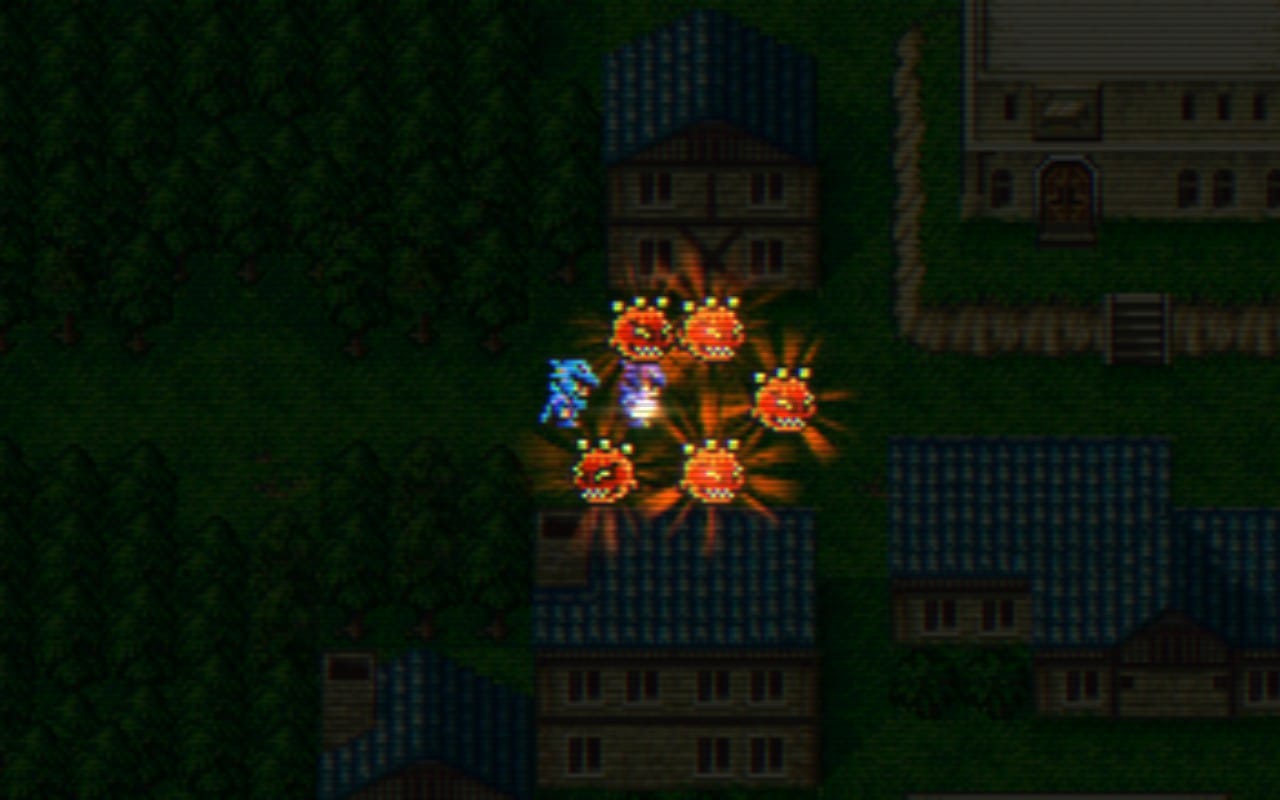
Final Fantasy IV’s story is in stark contrast to the tale of the four nameless Warriors of Light seen in the previous game, even though a surprising number of elements have remained the same. We start our story as Dark Knight Cecil, who is in service to the King of Baron and tasked with bringing the mad King all of the world's crystals of light. The crystals are currently owned by each region's ruling group, and Cecil comes to realize that his task would involve robbing these mostly defenseless people. This task leads him out of Baron and through a cave to the small town of Mist.
I want to highlight our main party quickly, as I think that they are the strongest part of this game. They help tie the narrative together and give me a better reason to care about the fate of this world.
Cecil is our main character; overcoming his manipulation at the hands of the Baron and becoming the warrior of light is his heroic trait throughout the story. Seeing his unwavering dedication to his mission, while watching Kain continue to serve Golbez, makes him an outstanding main character that is easy to grow attached to.
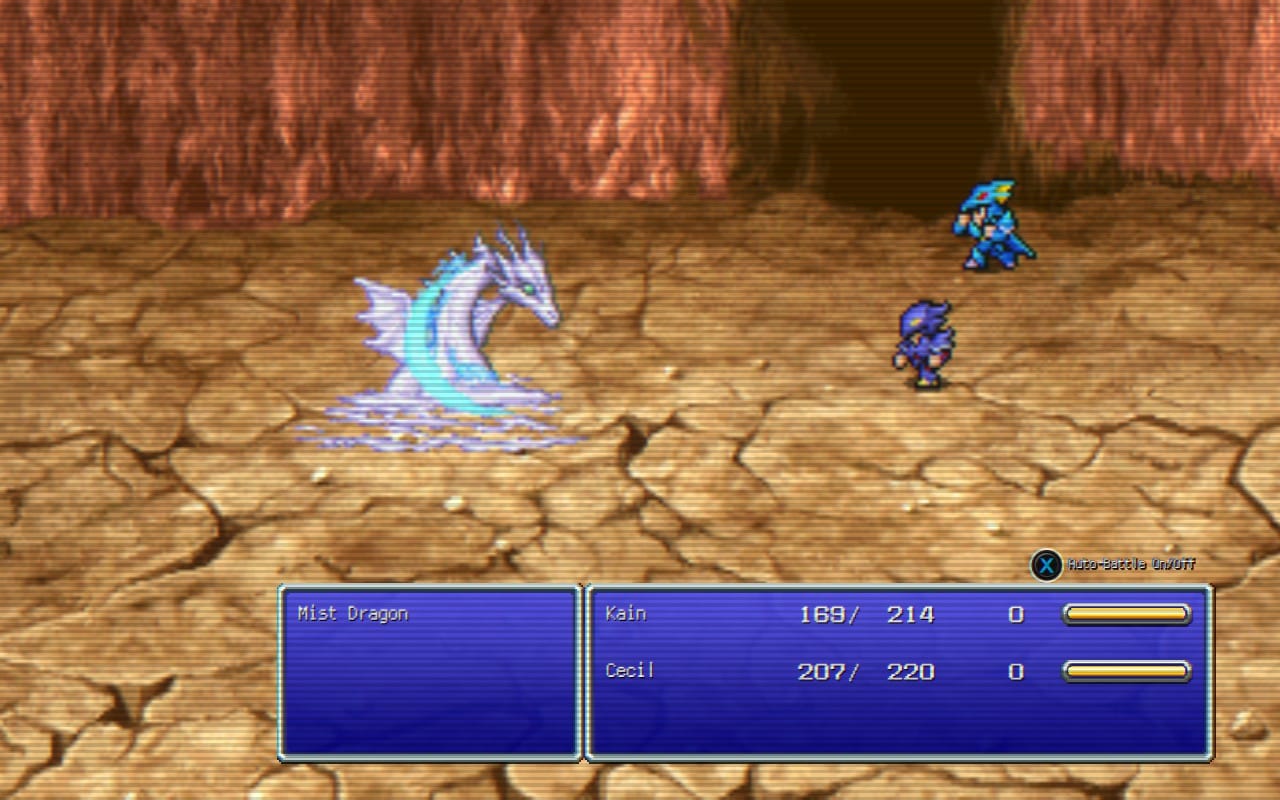
Kain is the foil to Cecil; his betrayals lead us to believe that the manipulation Golbez achieved while Kain was in the Dragoons and Cecil commanded the Red Wings was so absolute that Kain would give up his best friends for the mad sorcerer. Out of all of the comings and goings, I really only appreciated how they handled Kain's. Also, jumping is the best move in Final Fantasy, and I know it’s not actually stronger than other moves, but the big number makes me feel really good.
Rosa is Cecil's main love interest, characterized by her loyalty to Cecil, never straying far from his side. She also never gives up on Kain, making the friendship between the three of them shine amongst all of the other characters.
Rydia is the girl that Cecil finds after destroying all of Mist. I kind of wish that there were more of a father-daughter relationship between her and Cecil; however, I also really like that she gets to find her spiritual plane and have the independence to learn her craft on her own.
Battling With Time
Coming in pretty hot off Final Fantasy III, the ATB bar caused me immediate distress. Even though I knew that wait mode was enabled, I still felt the pressure of that little bar pleading with me to navigate the actions menu as fast as possible. This isn’t so bad after a few battles when you have only Kain and Cecil to worry about, but seeing a wizard's whole spell book caused me to concede to the clock as I would decide which spell to use.
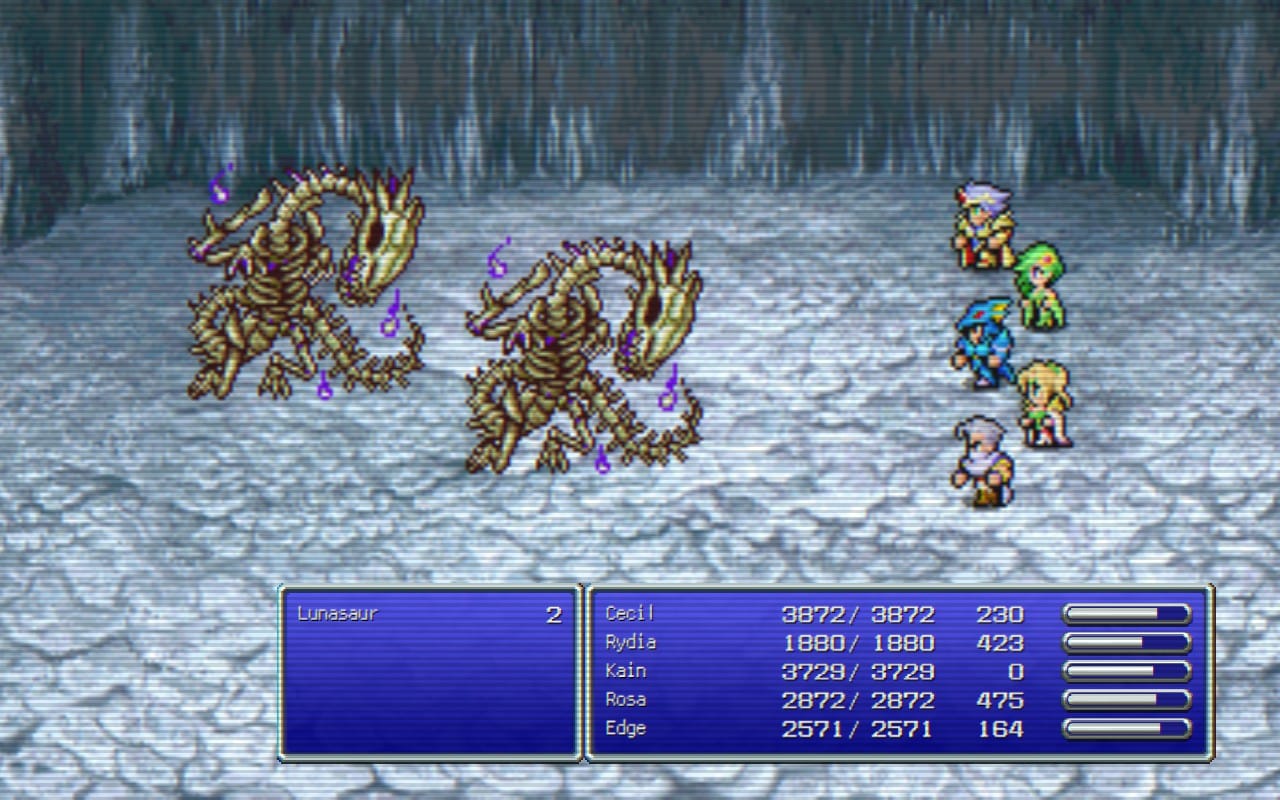
After beating the game, I admit that I really enjoyed the ATB system. It’s no Chrono Trigger, but unfair comparisons aside, it helps make battle much more engaging. I hadn’t realized, but from the NES trilogy, I had developed a habit of taking a drink or throwing a few chips in my mouth as soon as a battle started. That is NOT something that you can do in this game. Well, you can with the wait mode; it’s hard to explain, but that little meter demands your attention even if it does wait for you. After 20 hours, I still could never convince myself that the enemies would actually wait in wait mode.
Another growing pain that I faced was just having to pay attention to both the menu bar and the action happening above. Very often, an enemy would attack at the exact moment that one of your character's ATB meters filled. My attention was drawn to the menu, causing me to miss the damage number shown after the enemy took a swing at a party member. There were so many times that I would choose to heal a party member only to find that a different party member had just lost half their life, chunked away by an enemy attack. Mastering the ability to watch these numbers is really thrilling. I used to play healer in Final Fantasy XIV for exactly the same rush of managing multiple health bars and timing them with your own cooldowns.
I think many of the damage dealers also function in such interesting ways. Queuing up damage feels so good as you are inputting new moves while watching Kain come down from a Jump that you sent him on a few seconds before, then all the action stops as Rydia calls in an epic Summon. Removing the turn-based action and allowing the characters' actions to be just slightly delayed brings us a bit closer to actually seeing a live battle happening in the main window.
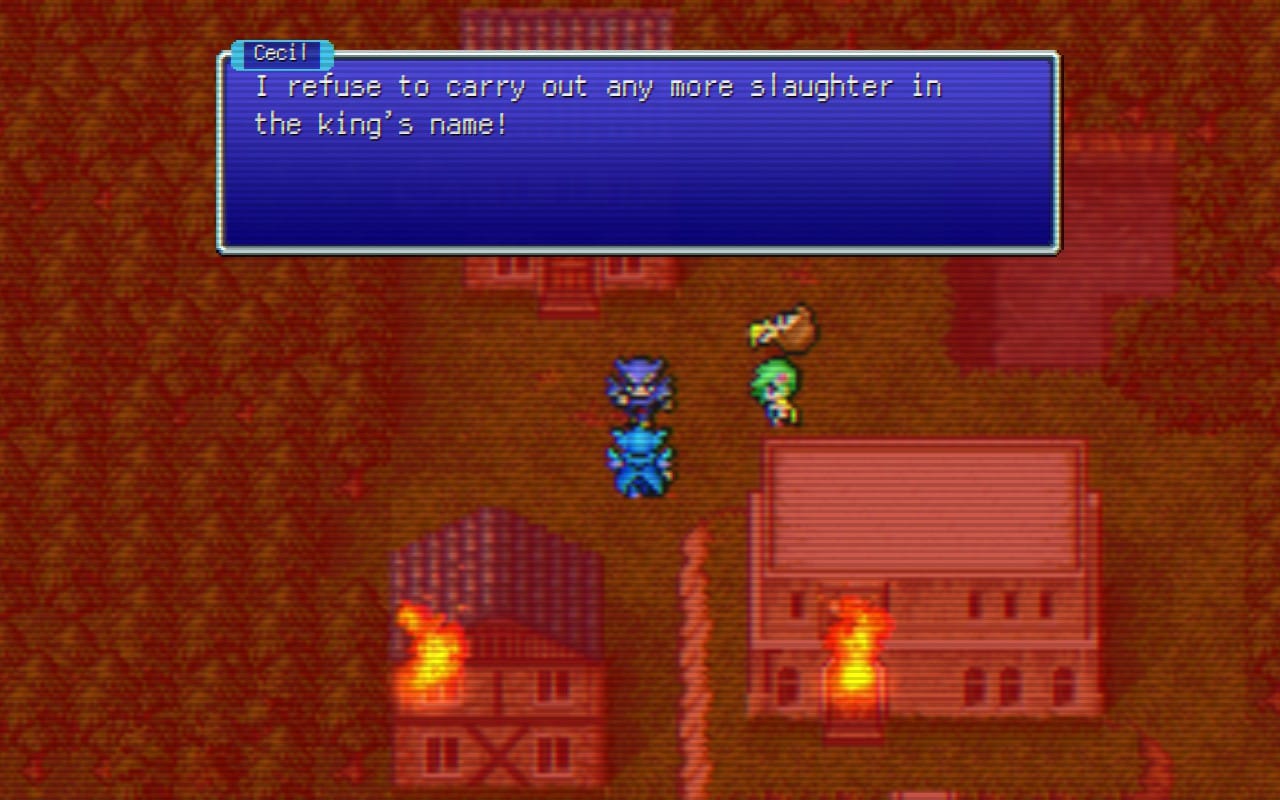
Cecil finds out too late that the price of his loyalty to the King was to genocide the summoners living in the town of Mist. He then learns that the King was only a puppet to a dark sorcerer named Golbez, who wants the crystals so he can activate the Tower of Babel and reach the Moon.
My only complaint with the story is that the pacing is absolutely atrocious. Every single dungeon in the first half of the game will swap party members and tell all of their stories in fairly compact chunks that I wish were expanded throughout the journey. Many of the characters are actually put on bed rest after the overworld section, as they don’t have any story left to explore. The side quest format of Final Fantasy III is used to tell these characters' tales when they easily could have been woven into the main plot and explored over many hours instead of only one or two.
I thought that I really disliked the ATB system in the first hours of Final Fantasy IV because of the overload of looking through the enormous spell libraries of Tellah, Palom, Porom, and Rosa. After finishing the game, I know now that my problem was not with the ATB system, but the storytelling method in which characters are so frequently added and removed from your party. Perhaps fans of this game think that this type of gameplay variety enhances the experience. I found that it caused combat encounters to feel slightly rushed, as you fumble through spell selections to cast something from a list that you only received about 30 minutes prior, which won't be used again after that specific cave.
Notably, this section contains Cecil’s redemption, in which his class is changed from Dark Knight to Paladin. Veterans of the series up to this point will be familiar with the Dark Knight twist, which most Final Fantasy games rely on; the classic Star Wars reveal, where the dark knight is revealed to be truly good at their core. The Paladin transformation, however, is wholly unique to Final Fantasy, and for the first time, we see a true departure from the “Dark Knight is Darth Vader” plots that we’ve seen before. Well, at least for now, that is; more on that when we discuss the ending.
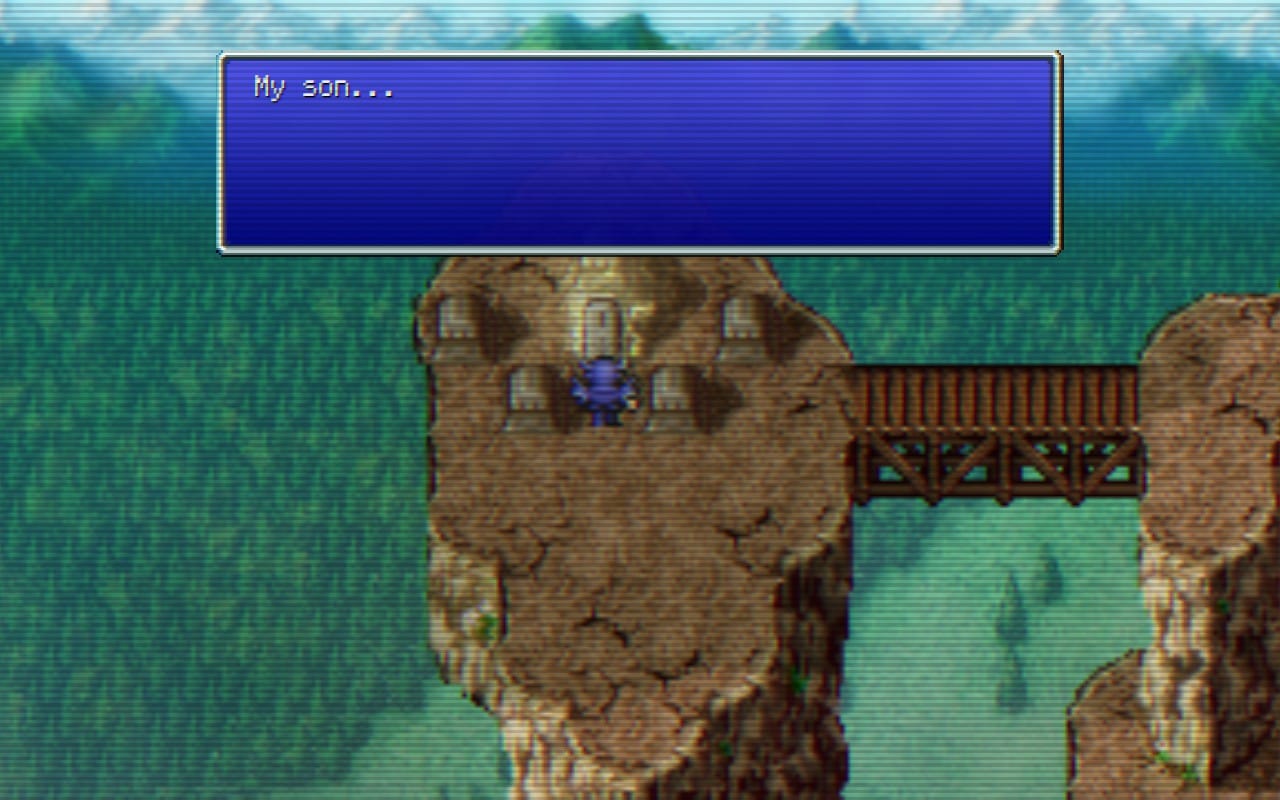
It is soon revealed that Rosa has been captured by Golbez, who demands the final crystal as the price for setting her free. Cecil hands it over without any other plan, and the group makes their escape from what was definitely a trap to kill all of them. Their destination is quickly revealed: Apparently, there is a whole other land that lies beneath Earth's surface, and they must go there to stop Golbez from taking the four crystals of darkness.
This underworld segment puts the gang on a bit of a losing streak. They are, time and time again, unable to stop Golbez from taking all of the crystals. I had really started to feel bad for the party, and even worse, almost all of their friends had to sacrifice themselves to effect the narrowest of escapes. Towards the end of this act, Kain even comments on how insane it is that people keep giving their lives without thinking about another way first. In the wake of losing Yang, Cid, and Tellah, it’s becoming too much.
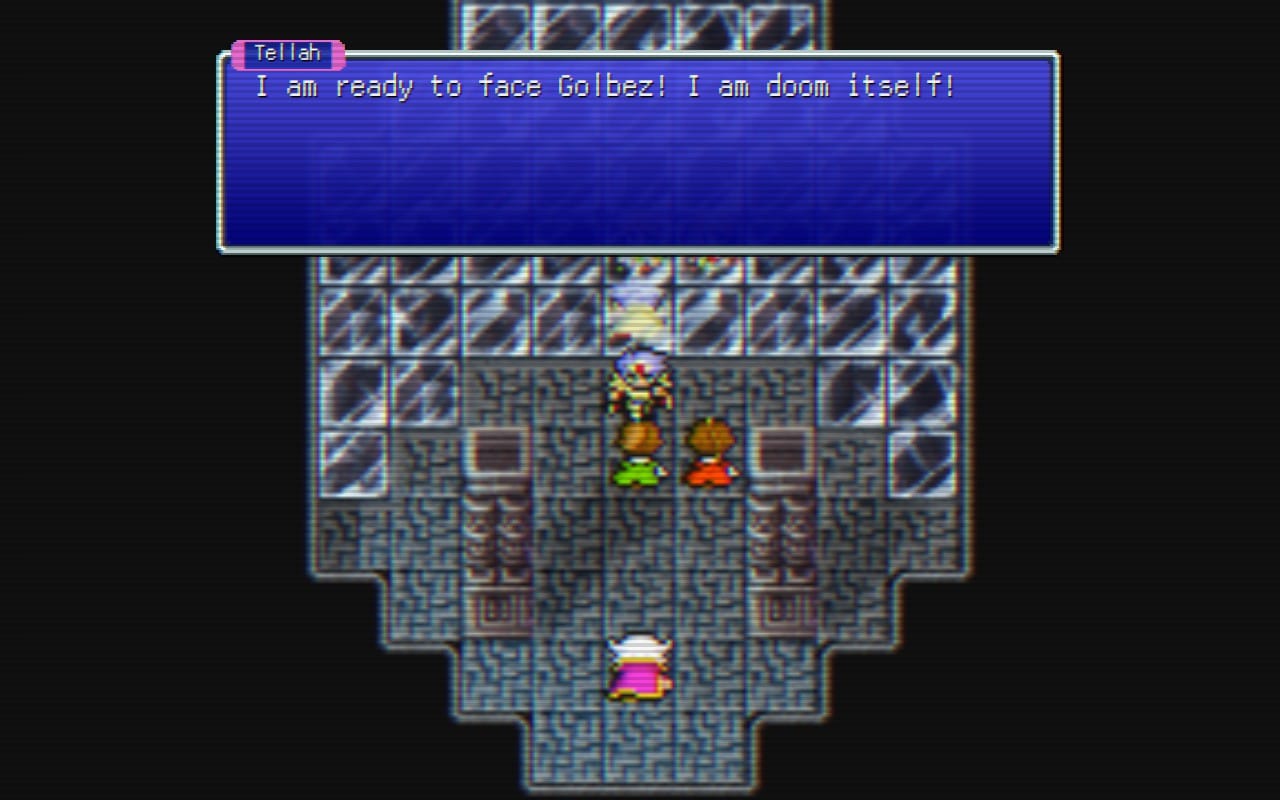
So let’s talk about Tellah. He is, without a doubt, my favorite character, with only Kain as a close second. Tellah’s daughter Ana runs away with Prince Edward early on in the game and is consequently blown to smithereens by the Red Wings during a bombing raid. Tellah then tracks down Edward and beats him black and blue while calling him a “spoony bard” until they are forced apart. He then swears to learn the most powerful spell in Final Fantasy and kill Golbez all by himself.
There is a section where he learns Meteor and yells, “I am doom itself!” and runs out of the room to go find Golbez. The man was crazy. He gets his encounter with Golbez, but it doesn’t go well, as ultimate magic in the Final Fantasy universe drains your life force if you aren’t strong enough to use it. He fails to kill his mark and loses his life in the process.
Throughout Final Fantasy IV, you have to fight the four elemental lords much like you do in Final Fantasy I. These fights are largely unremarkable except for Rubicante. In the underworld, you team up with a young Ninja named Edge, whose parents have been turned into monstrosities by Doctor Lugae. They are being held by Rubicante in the Tower of Babel. In a heartbreaking scene, you watch Edge's parents kill themselves to prevent harming their son, then you must face Rubicante.
This is an extremely difficult boss fight and becomes one of the biggest failings of this early implementation of the ATB system. Without telegraphed moves like you would see in a game like the beloved Chrono Trigger (which came along 4 years later), timing these hits the way that the game wants you to is hit or miss (literally). Many online guides recommend that in most of these fights that ask you to learn timings, you are advised to just smack with Cecil and ignore the mechanic almost entirely. This is easier than timing casts of Blizzaga, but Rubicante is still no pushover, and if you can’t survive his larger attacks, you won’t be able to pass him.
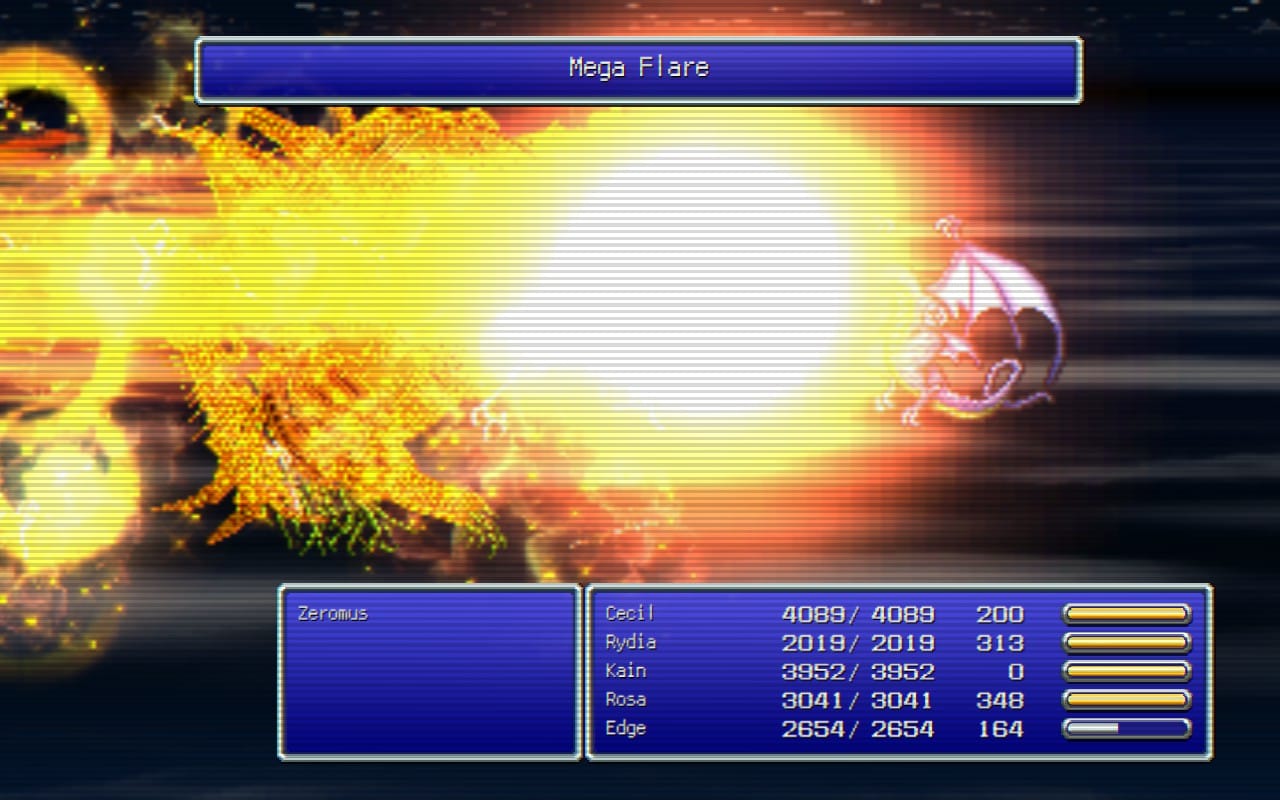
Golbez finally arrives on the moon with all of the crystals. We still don’t know what he wants there, but we know that we have to stop him. In the same town that you rob at the beginning of the game, the village elder raises an excellent airship (spaceship?), the Lunar Whale, from the ocean to send you and your party to the moon. At this point in the game, you are free to do a few side adventures that involve getting all of the summon spells for Rydia and smacking Yang on his bald monk nogin with a frying pan. I really enjoyed the Land of Summons quest line, and its rewards make it a great detour. Bahamut's Mega Flare is the coolest magic spell in the game, and it never gets old.
On the moon, you learn that Cecil is actually the descendant of a race of Lunarian people and that Golbez is his brother (see, I told you we’d still get our Darth Vader story). Golbez was being used as a puppet by Zemus, which makes Kain a puppet’s puppet, which is hilarious but also shows the reach of Zemus’s manipulation. Golbez uses the crystals to summon the Giant of Babel from the black pit to destroy the entire world. One giant kaiju robot fight involving dwarven tanks and mage airships later, and we are in the final dungeon, on our way to the core of the moon to stop Zemus for good.
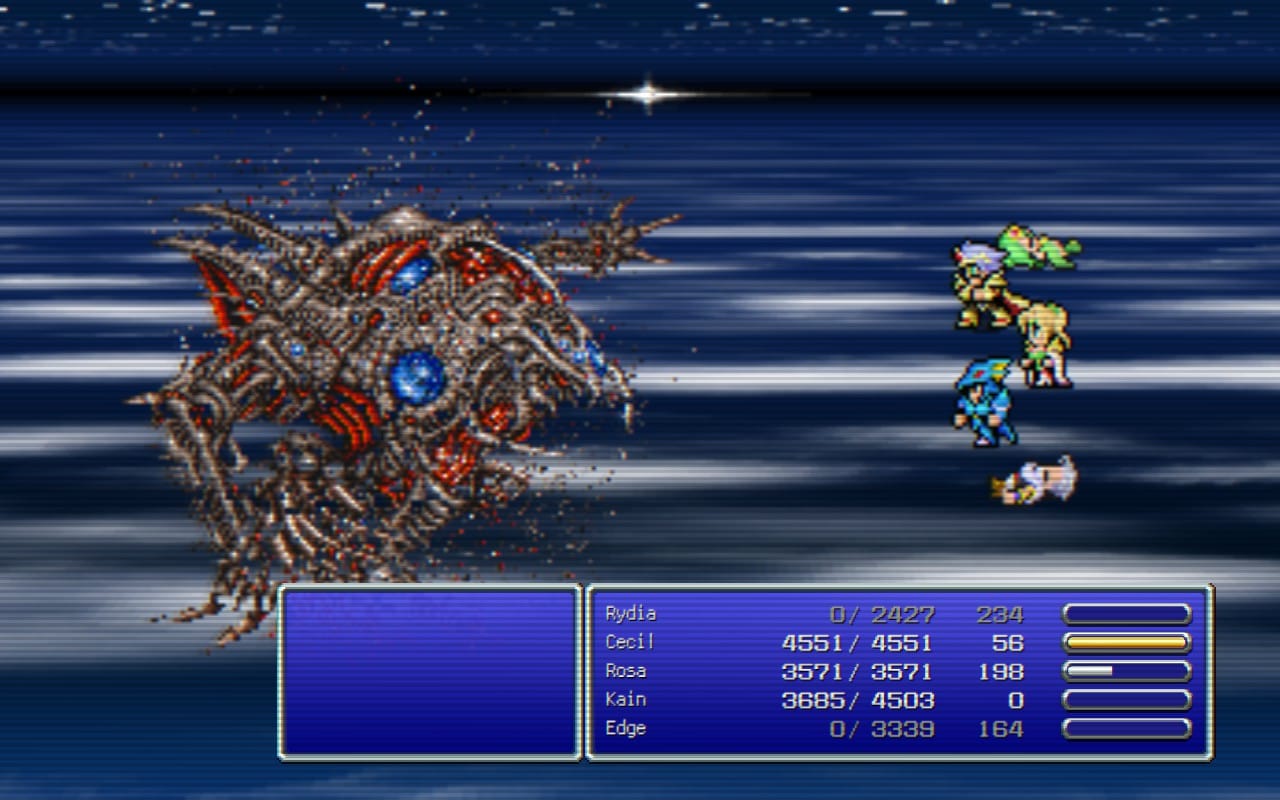
As always, the final dungeon in a Final Fantasy game is the most intense and the most fun. You command the main party that you’ve been honing for the past 5 hours, and your skill in ordering them should shine through brilliantly across all of the challenges on the moon. Sadly, though, the final segment highlights all of the issues that I had with the early hours of the game. Swapping party members over and over doesn’t let you feel the progression of your party, and to see all five main protagonists operating at full strength right at the end emboldens that fact.
Cecil watches as FuSoYa and Golbez fight with Zemus. Killing him sheds his physical body to reveal something else. With the prayers of your friends aiding you, you dispel the illusion and reveal Zeromus (the spirit and hate of Zeromus made incarnate).
This fight was tough, but I’m four Final Fantasy games in, so I know the drill.
There was no way that I could survive the final boss's party nukes, so I ground out ten more levels on the moon. Thank god for the Pixel Remaster; I just cranked experience gain up to 4X and fought 8 Behemoths and 6 Dragons, and I was ready.
With proper management of my health and good Dragoon-jump timing, Zeromus goes down without a sweat, and the world is saved. Typically, I would have given this a few more tries before grinding out levels to see if I could beat it with some skill and a big spoonful of luck, but they had placed a five-minute unskippable cutscene right before the fight, so my tolerance was a little lowered. All in all, I enjoyed this fight just as much as Chaos from the first game, though out of the four games so far, Chaos is still the most fun to actually fight.
I love the cyclical nature of Final Fantasy. For me, there doesn’t have to be any additional reason why evil exists. Good and evil are forces of nature, two sides of the same coin. Zeromus reminds us of that as he is defeated, and our heroes despair. “How can we truly win?” they ask, a little dejected.
Cecil is the warrior of light and the embodiment of good, the force of nature sent to balance all things. And when the light grows too strong, the warriors of darkness will be sent to balance things just as Cecil has. Every Final Fantasy to this point follows this ideology: for every dark god possessing a power-hungry man, there is a warrior of light sent to stop him.
Final Fantasy IV treads very neatly in the lines of tradition while striking out and blazing a new action-combat trail that will eventually lead to Final Fantasies more resembling Devil May Cry than its Dragon Quest roots. Despite lulls in the story's pacing, I relished every bit of character development and each fast-paced battle. This is widely recommended as an excellent starting point for the series, and I wholeheartedly agree. Final Fantasy IV feels like the start of something big, and if I were playing this as a kid in 1991, I would be on the edge of my seat waiting for whatever Hironobu Sakaguchi would make next.