The Rise of Digital Third Spaces
Late-stage capitalism is eating our Third Spaces. WEBFISHING, Flock Around, and a wave of low-stakes social games are quietly building digital ones to replace them

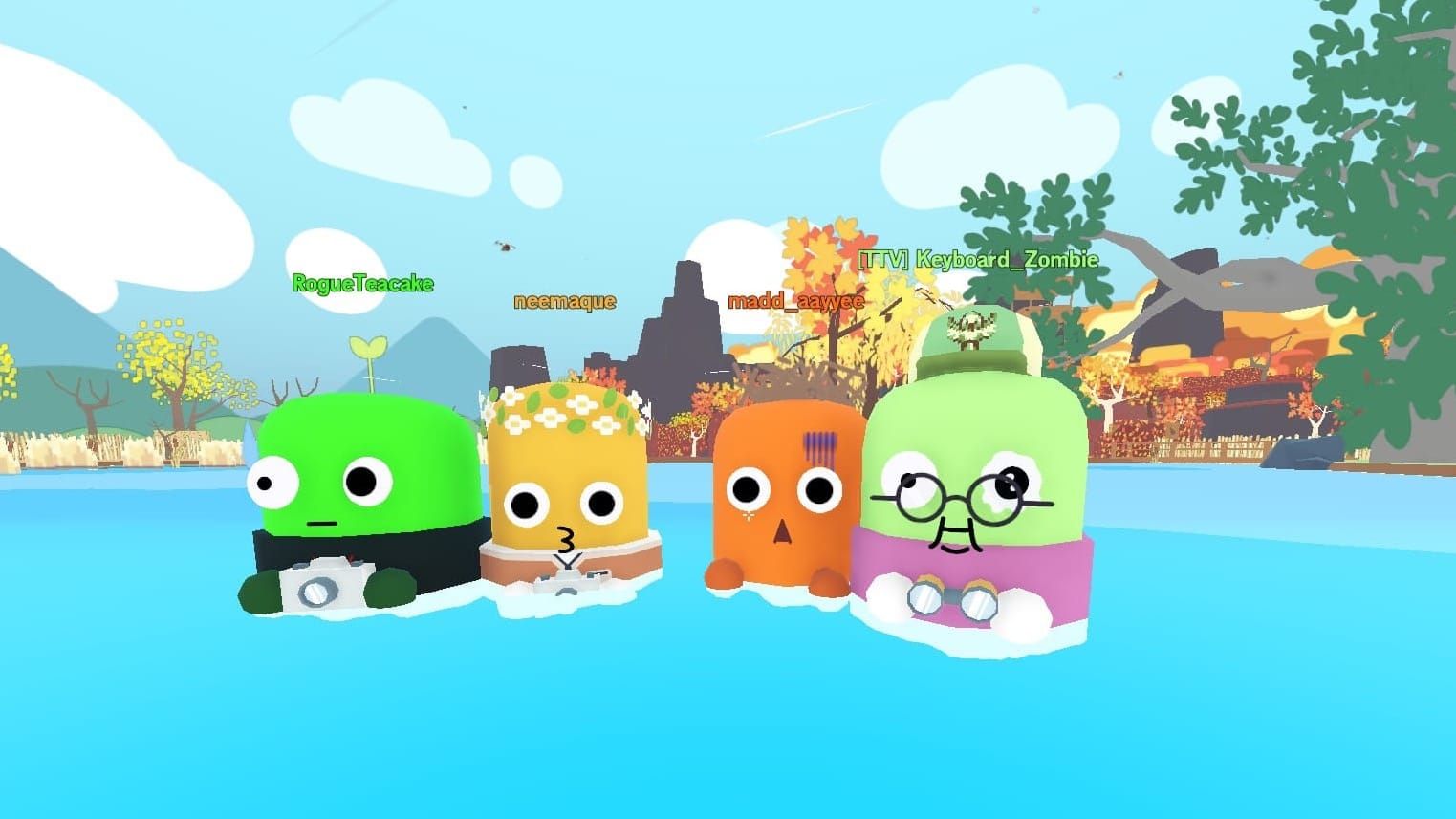
It's no secret that people aren't going out nearly as much anymore. Skyrocketing living costs, declining public transport, stagnant wages — essentially anything associated with late-stage capitalism — have slowly been eroding our collective ability to get out and connect with people. In other words, Third Spaces are disappearing. In response, we've seen a growing number of video games tailored to replace what our society has lost. These Digital Third Spaces are allowing people to connect again.
For a quick rundown, a Third Place is a term coined in Ray Oldenburg's 1989 book The Great Good Place. Primarily, it's somewhere that exists outside the home, work or school where you can gather socially. They're commonly neutral, accessible grounds where class and financial status aren't important, and they don't require an explicit invitation to attend — think parks or public libraries.
Oldenburg believed that Third Spaces were essential to the balance between work and home life. He observed that, even back in 1985, there had been a significant decline in places where people could freely spend time together. This has only gotten worse, with places like cafes and bars generally requiring purchases to linger in, and existing gathering spots being literally torn down for corporate interests.
During the COVID pandemic, we saw these spaces merge at a grander scale, with the home now incorporating both work and social convention. While the overlap of home and work life had mixed results, the issue of continually eroding Third Spaces was exacerbated.
Gathering socially was out of the question; people were quarantined in their homes and we had widespread implementation of "social distancing". It was undeniable that there had been a shift toward online retail during this time, with the food delivery industry alone nearly quadrupling between 2019 and 2022. With this sort of hybridisation of our online and offline lives, it was natural to see an uptick of video games catering to what we'd lost socially, too.
Game on
Previously, we've seen segments of large-scale online MMOs fill the role of a social gathering site. World of Warcraft and RuneScape have their own social hubs in the form of cities and towns like Stormwind or Varrock. Not only do these places provide a space for parties to form, gather and hang out, they also double as an area for newer players to get help and for me specifically to buy gf. Games like Club Penguin, Habbo Hotel and VRChat encompass this concept on a much larger scale, with their design built to focus more on socialising than anything else.
Nowadays, younger gamers flock to online games like Fortnite and Roblox to socialise. These coalescent platforms are great for giving players somewhere to hang out online, connecting people around the world for "free". They also provide players with an avenue to express themselves through avatar customisation and are packaged with entertainment via both official and user-generated channels. With all of these benefits, however, come some fairly big drawbacks. The massive multiplayer platforms are well known to be hyper-monetised, using mass marketing and dark patterns to profit primarily off children. Roblox, in particular, has also been caught in many scandals surrounding the exploitation of child labour and other predatory risks.
In other areas of the gaming sphere, a few games have been specifically designed as social spaces for bringing people together. 2024's WEBFISHING went viral for reviving the "chat room game" genre. The game hit a peak concurrent player base of around 24,000 in the month after its release. A simple premise surrounding fishing and socialising, WEBFISHING became a mini social hub for a time; it was as easy as creating an avatar and joining a server.
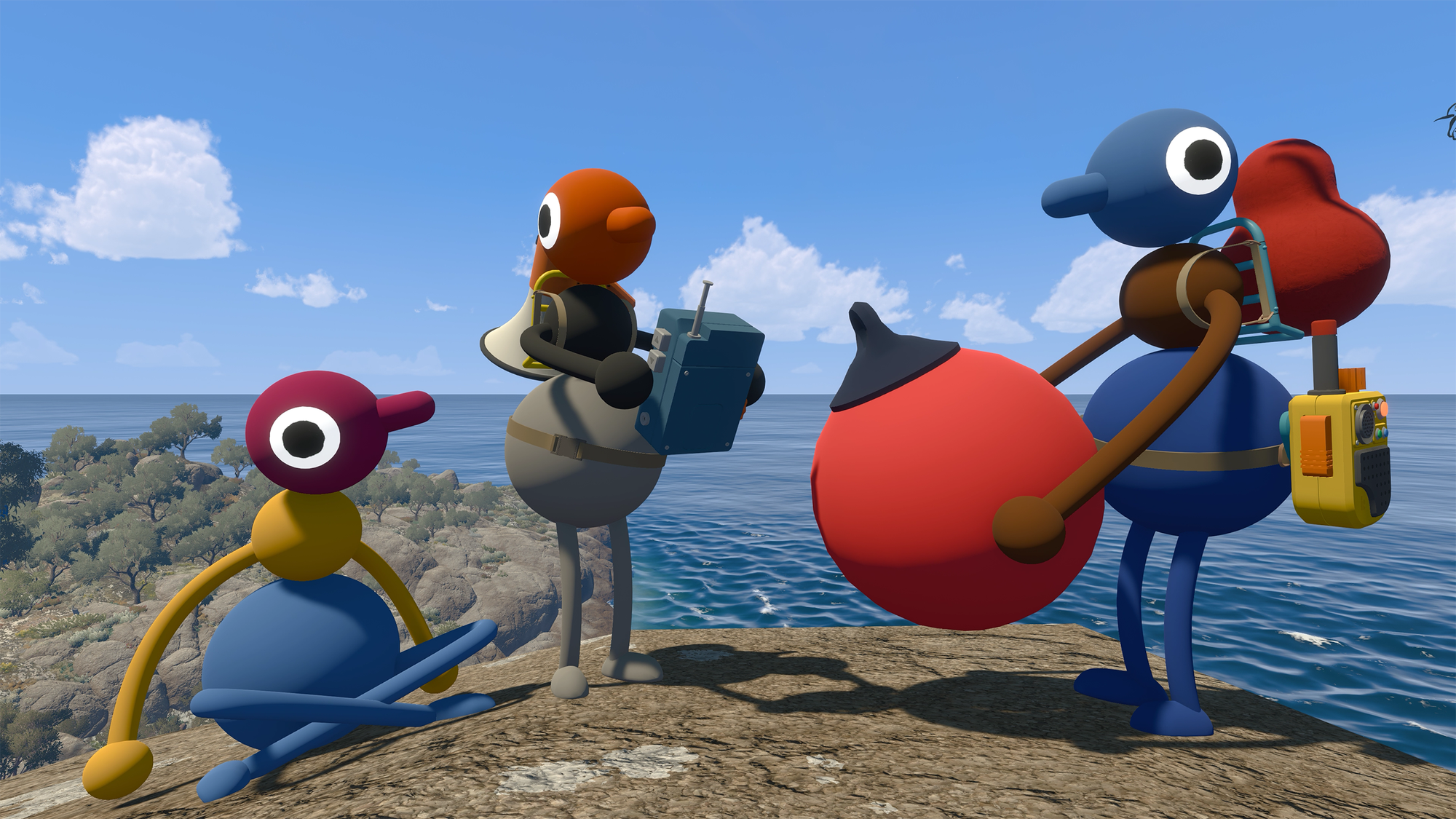
Other games have been created in WEBFISHING's wake. On-Together, Sledding Game and Flock Around all released earlier this year, and we're seeing even more on the horizon, such as Big Walk and Spirit Crossing.



Sienna, Wyatt, and Toby of Secret Plan Games. Source: Secret Plan Games.
Toby Murray of Secret Plan Games shared that the team was looking for a chill way to spend time with friends online. Taking inspiration from popular co-op games like PEAK, REPO and Lethal Company, the Canadian developers wanted instead to make a game with less pressure, where the goal and gameplay loop were more of an option. After watching the documentary Listers: A Glimpse into Extreme Birdwatching, they agreed that birdwatching would be the perfect activity to build a game around.
With the team's understanding of the importance of a gathering place, Flock Around was always made to be a digital third space. Toby explains how the combination of expressive characters and proximity chat works differently from a Discord or Zoom call, sharing that lobbies would sometimes separate into groups with multiple conversations going at once.
It's accessible platforms in this up-and-coming genre that will allow those who are immunocompromised or suffer from social anxiety to access the same kind of social gathering the masses do outside. What's more, digital third spaces transcend time zones and sit at a relatively inexpensive price point, providing a gathering point that can be returned to at will, any time, after a single purchase.
"This isn't a new take, but it definitely feels like as we've become more connected, we've also become more isolated."
Toby Murray
It’s not all sunshine and rainbows
There is an argument that the gamification of social interaction will exacerbate the erosion of Third Spaces in the real world, and, by definition, these games sit outside what Oldenburg had in mind when discussing Third Spaces. With our lives being ever more interwoven with technology, more research needs to be done into the long-term effects of mixing offline and online interactions. Murray concurs: "This isn't a new take, but it definitely feels like as we've become more connected, we've also become more isolated".
There's also a larger conversation to be had about the limits indie developers have to reckon with regarding online moderation and interaction. Cyberbullying and online harassment are rife in online video games, and these smaller teams have only a fraction of the resources available to moderate the way people behave and communicate. They aren't without their tools, of course; Sledding Game has options to both restrict text and voice chat when creating a server and disable it entirely client-side in the game's options.
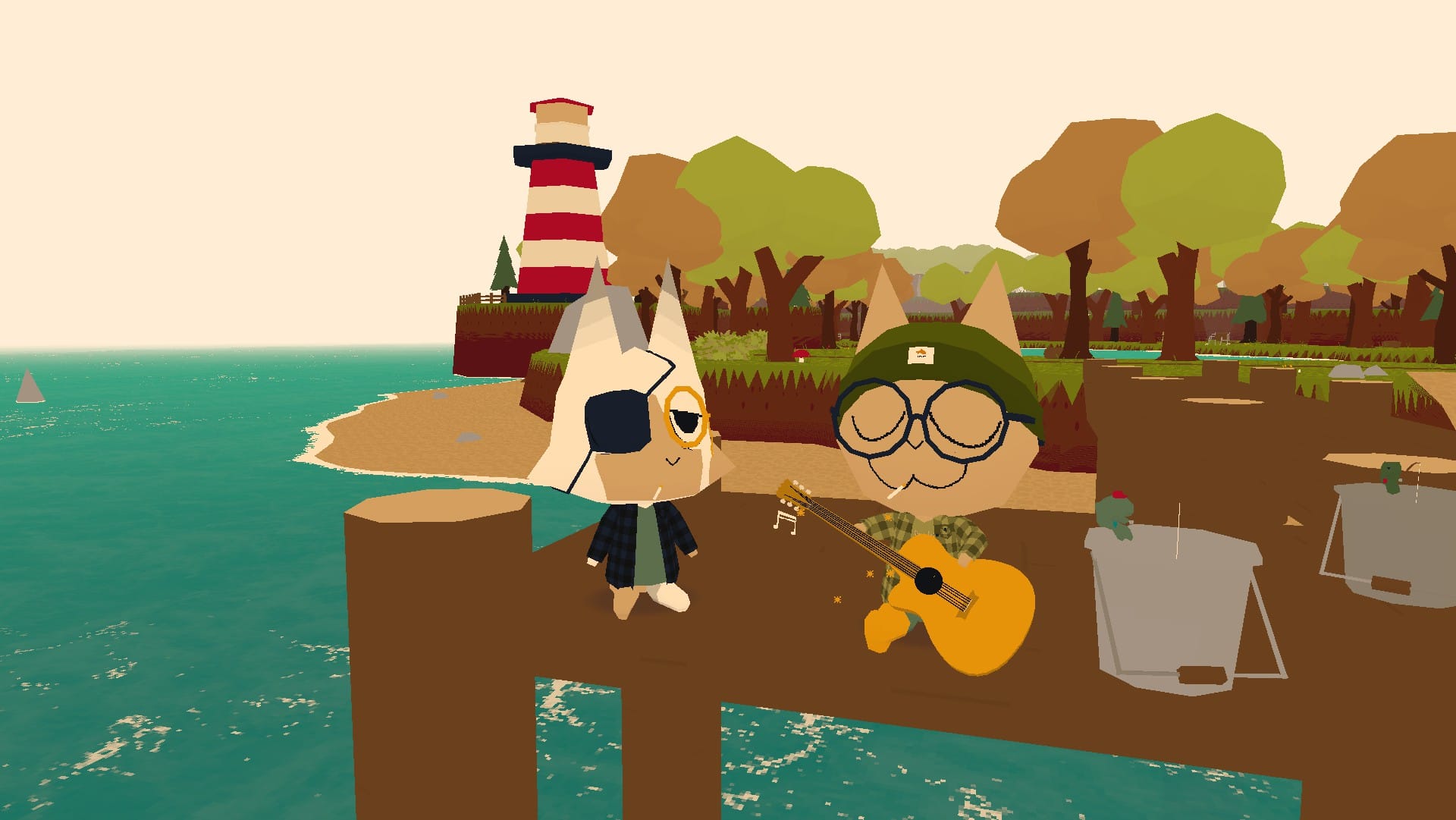
Outside the game, things can get just as dire. The solo developer behind WEBFISHING suffered numerous harassment campaigns and even doxxing for their support of the LGBT community, and has gone radio silent ever since.
Digital Third Spaces help ease the growing uncertainty of social interactions. They offer an accessible and inclusive way to meet and hang out with people, while doubling as a low-stakes way of passing the time. They aren't a permanent solution to the problem, and they aren't without their drawbacks and shortcomings, but I believe we're going to see a lot more of these types of games gracing our libraries over the coming years.
Join the conversation
What do you think? Reply below to share your perspective.