Big Walk Is Devastating (in a Good Way)
All we're on is a big walk

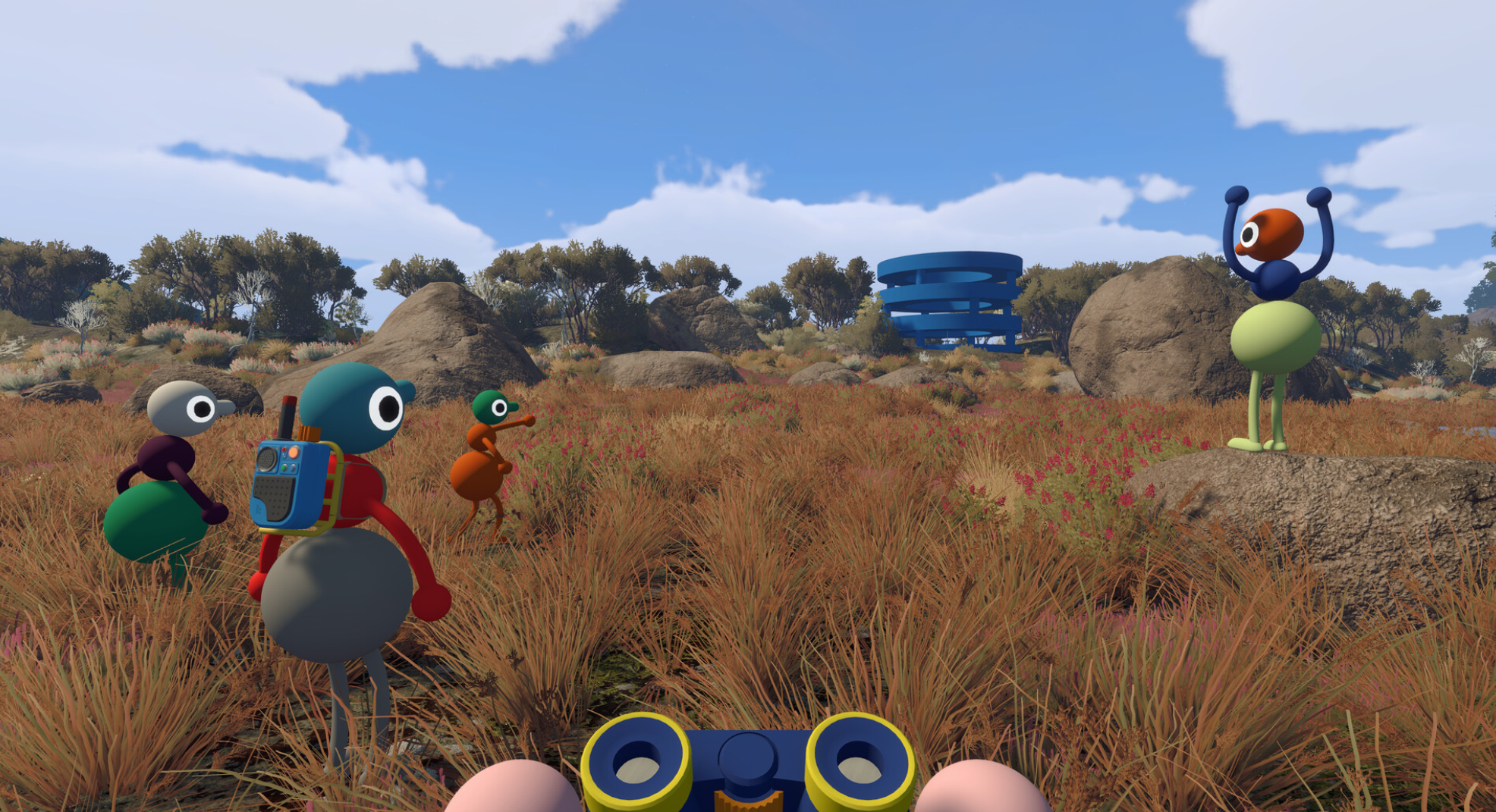
When our little threesome-sometimes-foursome friend group picked up House House's Big Walk, it was because it had the lauded recipe for long-distance bonding: play a game and yap. We'd all sat down to previously play Baldur's Gate III, Peak, and Stardew Valley together and occasionally had the rarefied privilege of schedule alignment for Dungeons & Dragons one-shots (or, uh, twelve-shots). Since breaking up the band, so to speak, after a big IRL move, online games have been our hangouts for the past two years. Through these games, and because we're pretty at home online and on Discord in general, we've maintained at least monthly chat sessions and catch-ups, where we decide if we want to hop into a new world via a game or sit for a while in this one with each other, even though we're thousands of miles apart.
Big Walk, at the outset, was another little gaming world we thought we'd enter, beat, play again, etc., etc. But then the ending hit, and it hit hard enough to encourage us to sit for a while and relish not only the beauty of online third spaces and their sanctity to our connection, but us in our entirety.

Walk Together
Big Walk is a game that I've been recommending to others who haven't so much as touched a game in the poorly titled 'friendslop' genre or who may not even play games on the regular. I plug the game as this: something we can play together, that has low stakes and a lovely little world, no jump scares (although there is a dread to Big Walk when you're alone that...well, I'll touch on it later), and no need to 'git gud' at anything but communication. When you play with friends who've known each other a while, who know how to banter and crack inside jokes often, the game takes on a new dimension of immersive fun.
There is something to be said for games that value – and actively capitalize on – the third space of the online world. For years, the third space of the Internet was for the terminally online, for those with subscriptions to some MMORPG or another, who flocked to forums and had good dial-up; ultimately, those who, for better or worse, were assumed to have a lackluster social life in reality. Nowadays, telling people you have a core group of friends you can game with remotely is something of a brag.
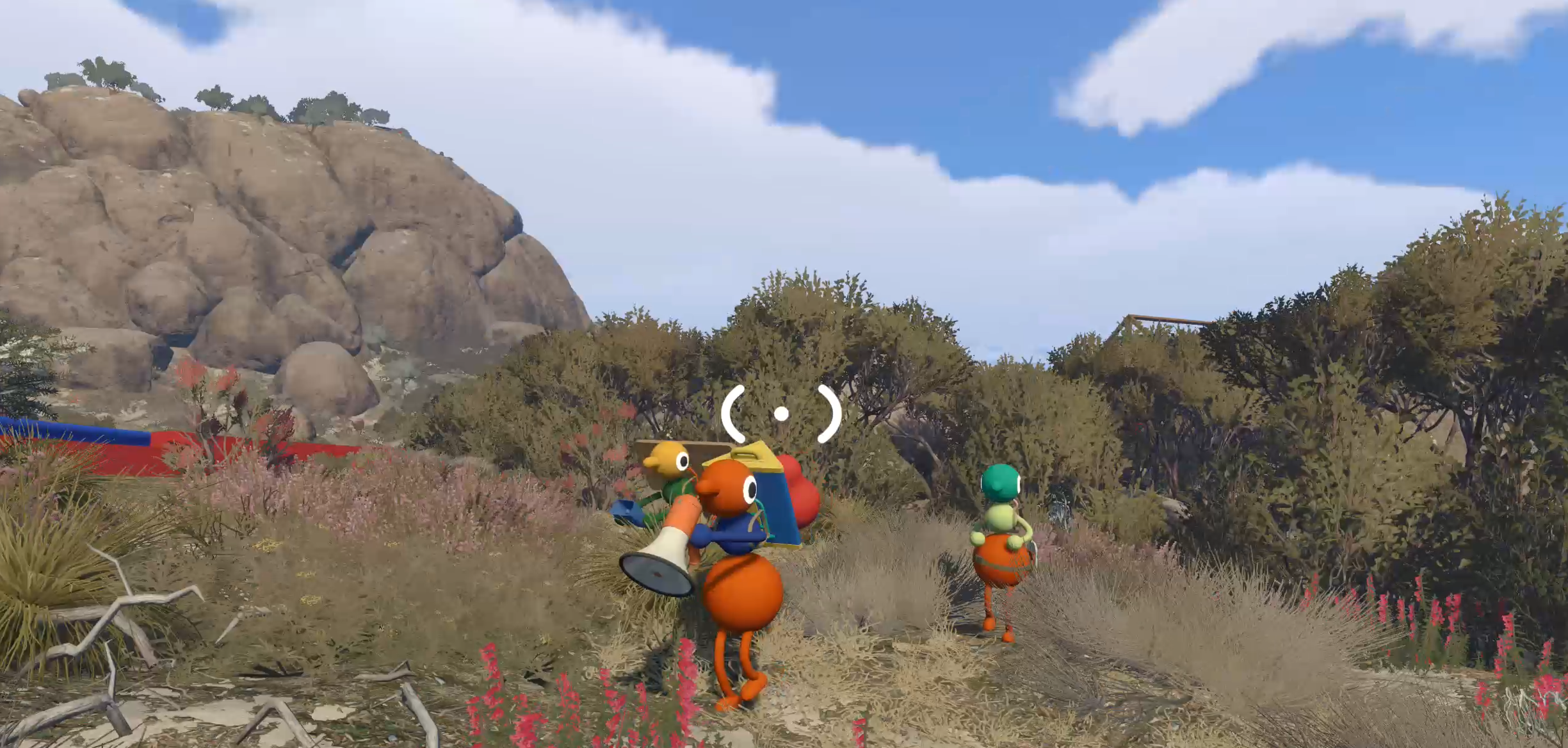
Those first few days of stumbling through the wilderness when the sun started to set – sometimes alone after doing some recon – were actually pretty terrifying.
When you first load Big Walk, you enter alone, in a bright red corridor, into a wide building we came to call "the house." In here you have access to myriad training areas, where you can throw things and practice important poses and jump onto platforms and try anything else you may need to do while you scour the world for little gourd-shaped 'keys' we affectionately dubbed 'babies.' (They look, indeed, like tiny versions of the characters' heads). These little squash-shaped things unlock actual keys, which you then have to cut accordingly in order to unlock bigger components of the game.
Departing from the house took us a while as we got acclimated to the world and what the game wanted of us. We took time to catch up, running around and yanking stuff from each other's grasp (your character makes a funny, confused face when this happens). Later we'd discover whiteboards you can write on and either take with you or leave as what's essentially signage back at the outer area of the house. We defaced these, of course, with our inside jokes and left them up so we could run by each playthrough and recount our previous hilarity. Once or twice, we even chased each other down to place a whiteboard on someone's backpack so they'd be carrying around the equivalent of a 'kick me' sign. It was, truly, absolute buffoonery.
But as you progress through even this first little portion – where you can see a house in the middle of the shrub brush – the world itself takes on a sudden vastness, augmented by a lovely (if fairly brutal) day/night cycle. At night, the darkness becomes so complete, you can really only see by the light of the stars and sky and, if they're nearby, your friends' eyes, which serve literally and figuratively as little beacons. Those first few days of stumbling through the wilderness when the sun started to set – sometimes alone after doing some recon – were actually pretty terrifying.
We all sort of clustered by the light of that tinier house the first night, using the paintbrush available there to paint our 3-piece segmented bodies different colors. There are also bulbous orbs of light scattered on little round pedestals throughout the wilds. You can either carry these with you (which we often did) or set them down to act as pseudo-campfires, which make great navigation beacons if you get caught out in the brush at night.
Once you start understanding how to navigate, what you can use to help make things easier, and what exactly the puzzles might expect of you, you move into a cadence of understanding and familiarity with the language of the landscape. There are scrub bush, what we grotesquely but aptly named 'the blood river', thin trees, thick cone bushes, big ol' rocks, the chattering of the birds, and the game itself. Once that great big first door opens, it's all pretty much yours to explore.
Walk Alone
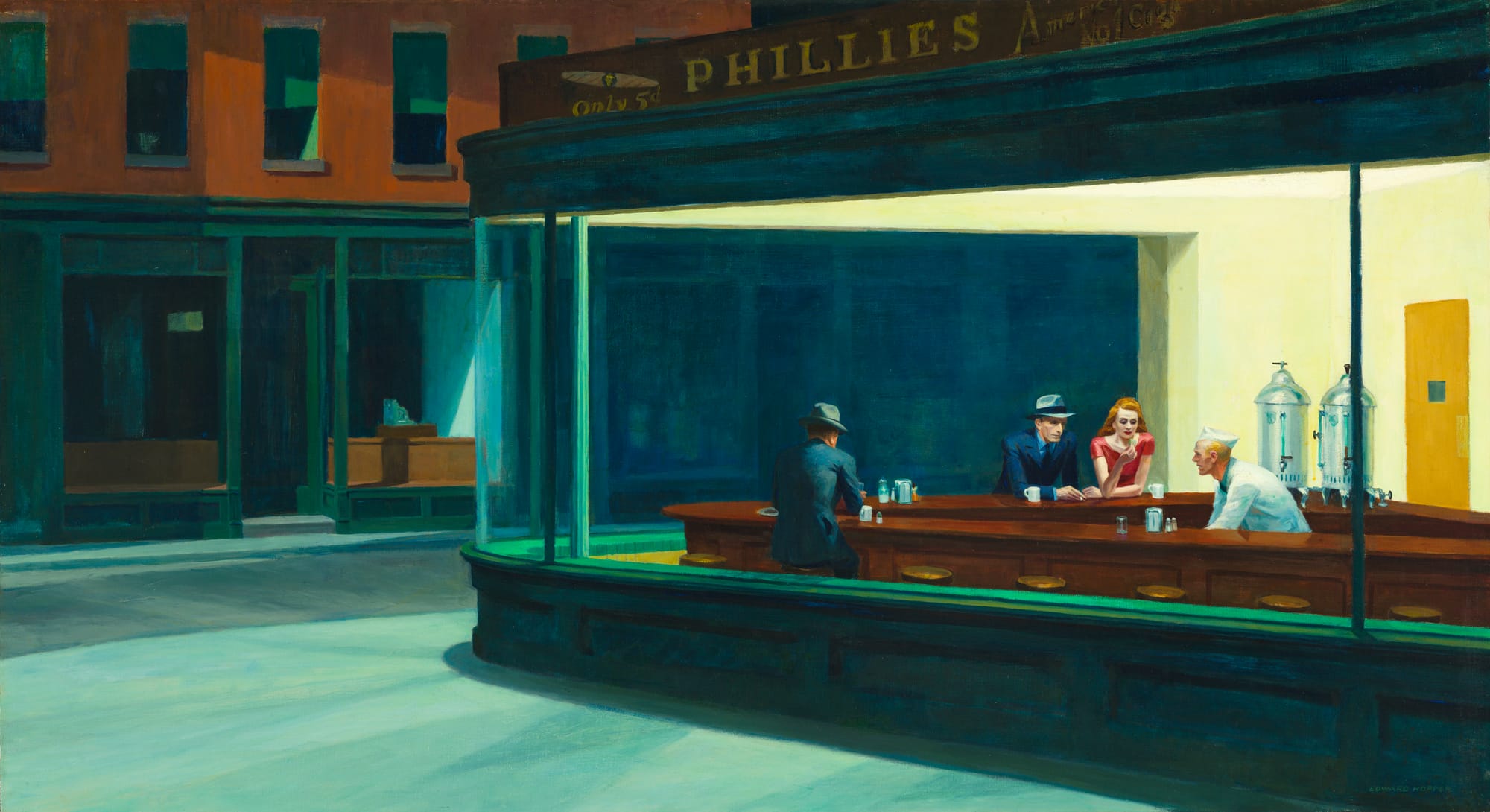
Big Walk is, at times, a very unsettling game. That initial nightfall where all you see is the starkly lit big house (your starting point) and the dinky little paintbrush house you find a bit down the way – there's an element of almost lonely isolation to it. I was reminded immediately of Edward Hopper's Nighthawks, housed at the Art Institute of Chicago, a very famous 1942 rendering of folks gathered in the white-hot yellow lights of a diner interior while the night exists peaceably (or with melancholy, depending on your interpretation) outside.
It's here we'd talk, waiting out the night if we needed to, about our weeks or funny stories or shows we were watching or things we were working on.
Big Walk's usage of a light-in-the-distance type of navigation can, at times, feel adjacent to first-person horror games and how they employ shadows, contrasting their sharper bastions of light with the threat of the unknown. This is much like Alan Wake II does with its lampposts, but unlike that use case, Big Walk could care less how long you linger. While not necessarily cozy, sitting with your friends in a well-lit puzzle house feels akin to a hang-out session, albeit one that has more in common with a camping trip than anything else. It was more than once that we sat on the beach, the big ball of pinkish light between us, caught from rolling downhill into the water by our crossed little stick-legs blocking its path.
It's here we'd talk, waiting out the night if we needed to, about our weeks or funny stories or shows we were watching or things we were working on. When we started to see the tips of pale sunrise light creeping across the sand, we'd stand and look out for a moment before resuming whatever quest that needed to be done. These small moments of peace grounded us a little more to the island-world of Big Walk.
And it is a beautiful world. I've played through beautiful worlds in many games – pick any Final Fantasy – and while these are, indeed, creatively imagined and often profoundly well-executed, there is something to the simple realism of Big Walk's world that made me love it more than any I'd wandered before. I was a childhood fan of the Lord of the Rings movies, with those iconic shots of the Fellowship navigating the ridges and walking together across the wide forests. This game feels like that.
It also feels like our world but emptier, less a bustling island and more a lived-in but post-extinction setting, à la Myst. The structures are often brightly colored and blocky. Others are spiraled, big or small. They're always empty of life when we enter them together, or sometimes alone, if we get lost or end up scouting, outside of the ambient but unseen forest life.
We navigate this world that looks and sounds so very much like ours, though absent any other life. I kept waiting the entire time for a first and then second heavy shoe to drop. I heard people express big emotions around Big Walk, and I kept wondering if there wasn't some slyly integrated Nier-esque plot twist. Big Walk's core message is much simpler, and because of that simplicity, it's all that much more devastating. It never answers the wider questions of the world, at least in our first playthrough, and the truth is it doesn't really need to.
For all the early harrowing aspects of Big Walk's realistic day/night cycle, eventually you make peace with it. We discovered early on that you can fire rockets into the air at certain look-out points to act as flares that let your teammates know where you are. These fire high up and pop open in a burst of colorful smoke in the sky (or in the very small, confined quarters of puzzle houses, where we kept firing the handheld flare guns at each other). Depending on where you are, these colors vary, so teammates who are lost can feasibly follow the trail no matter where they are to hopefully locate where it was fired from – whether from someone or from a platform.
Because of these discoveries, getting lost became simply a shruggable offense. More so, the faint annoyance I felt was reserved for the tediousness of the day/night cycle (a game mechanic that's not my favorite flavor of time management). But this quantifiable passage of time is actually in the game's best interest – that little insertion of frustration reminds us of time's passage in and outside of the pixelated world. It's also a reminder that this is a game, still, and a puzzle game at that, so frustration is part of the process. You may get lost or lose a pivotal piece of equipment – both of which are made more difficult by the night – or you may fall off a devastatingly high cliff (screaming with terrifying realism on the way down – which is really funny with the game's proximity chat).
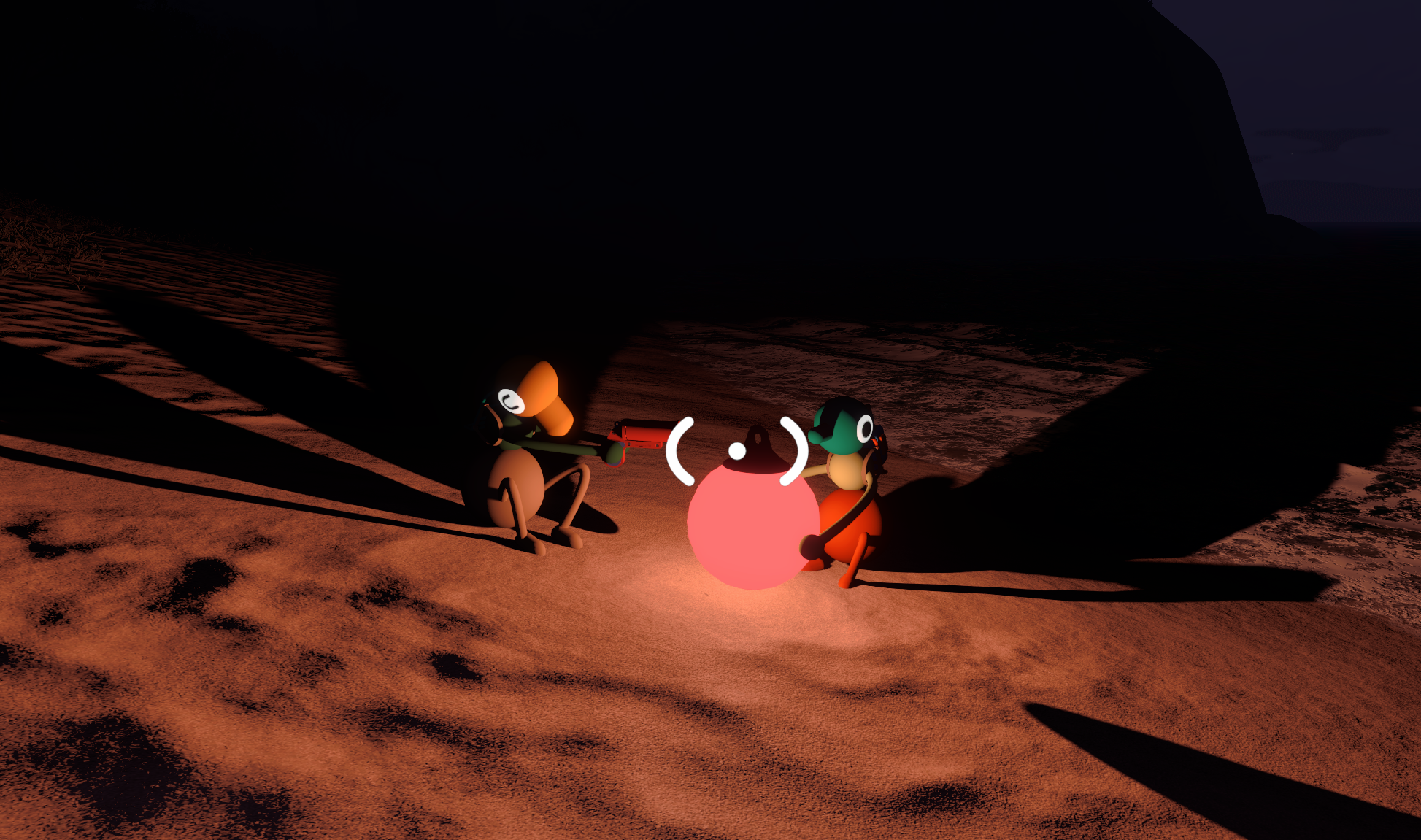
Pitch-black, edge of the world – that's occasionally what Big Walk feels like.
But the slightly unsettling allure of the world is true for all aspects of Big Walk's environment. The water surrounding the whole island is swimmable, and you can enter it and see the little reeds at the bottom and bob like a beleaguered buoy. At night, this takes on a terrifying realism. I have swum in the ocean at night; It's fun until you begin to realize how wicked the ocean's power can be on small, fragile humans. I remember very distinctly realizing this on a camping trip, where I stared out at the dark waters, backlit only by meager stars and a few lanterns and the soft, laughter-lit voices of fellow campers. I heard the waves crashing on the sand and thought, "No one would be able to rescue us out here." Pitch-black, edge of the world – that's occasionally what Big Walk feels like.
Walk One After Another
As you conquer the wider open world and collect your 'babies' (there are great comment section debates on what to call them), you begin to unlock more and more useful traversal tools. There is a monorail and a ski lift which remain dormant until you unlock their corresponding towers; when they start up, you can more easily cross the island to find other areas of interest. The world and its mechanics slowly unfurl with you and your friends, and we met each new discovery with cheers and hand-waving and laughter. From backpacks to laser pointers, Big Walk gives you so many possible ways to navigate its expansive, rocky world. You won't use all of them, but you can change it up based on what works best for all of you.
We played Big Walk in pieces. A few hours here, a few hours there, but it isn't all that long of a game, which is a shame only because it's such a good one. We had fun playing Baldur's Gate and Stardew together, but nothing outside of, perhaps, Peak, so fully captures a pure sense of adventure with friends. And I love Peak too – but it functions differently. Sure, Big Walk has a goal, and the game does end, but it feels fundamentally different in how it lessens the gamification of cooperation. Or perhaps perfects it? Either way, your teamwork is the core component of the game. It's like a grown-up, digital field day. The entire design seems built around you supporting one another and having these leisurely moments of conversational ease between bigger pushes to get the puzzles done.
I don't want to spoil any of the puzzles – they're all a lot of fun – but I will say that some of them expressly highlight this zen-like insistence. Big Walk's surprises are many and welcome, and one of the more startling ones I realized later on was that the game has very little background music. I thought I would notice this sooner, but the sounds of the forest, your footsteps, ocean waves, the creaking of the ski-lift – you don't need much else. And I'm usually a headphones-on-all-the-time kind of gal, but whenever I found myself lost, I would happily bobble-head my way toward my friends' desperate skyward flares without even so much as whispering to myself. There's a reliance on the game of that silence, until you stumble across what we called 'music zen-gardens' interspersed throughout the world that offer hoppy, peaceful little 8-bit beats, almost like elevator music, but somehow more effective.
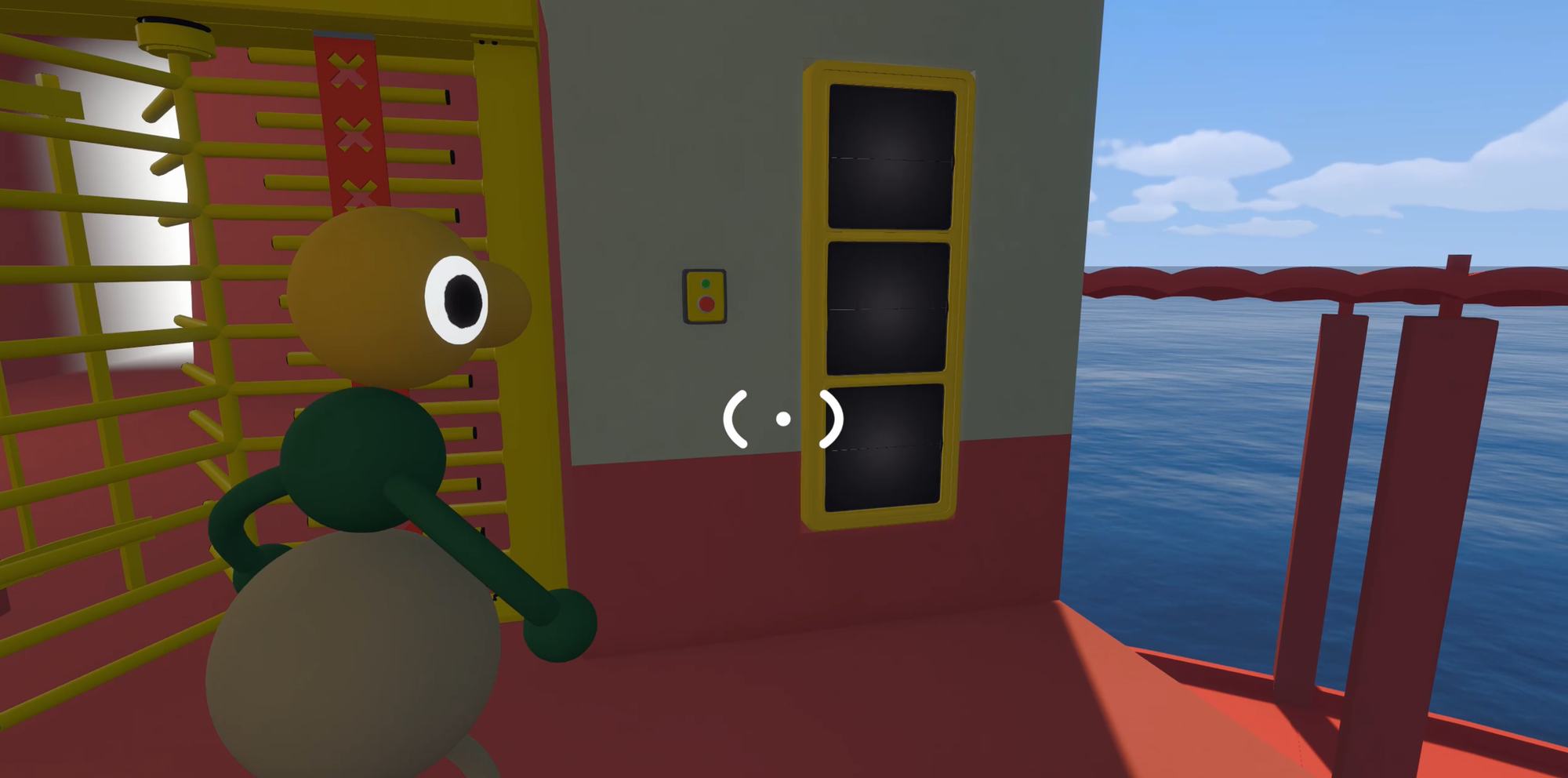
Big Walk has no big rug pull, no 'aha!' moment of narrative revelation, nothing to really give you clues as to the world at large, but it does end like this: one by one, you walk into a big white tunnel.
As you near the end of the game, the puzzles get more complex in the ways they need to be executed, and you start to feel more uneasy with some of the imagery. Chief among these is a big black sphere visible in what we called the 'big map room', where the entire island and the locations of the 'babies' are displayed. There's a big green wall blocking us from seeing this sphere outright in the open world, but when we got past the wall, that's all we could see. It stood in the distance, imposing, humming at an eerily low frequency, and we simply looked to each other and kept on walking towards it. What is this big ball? We all wondered. It's a bit domineering where it sits on the landscape, monolithic in a very Space Odyssey way.
Big Walk has no big rug pull, no 'aha!' moment of narrative revelation, nothing to really give you clues as to the world at large, but it does end like this: one by one, you walk into a big white tunnel. At first, we were all like, "oh, here's the end! Wow, cute!" But as we saw each other off – beside a sign that said what to press to wave goodbye – what had been dread at seeing these odd structures became something more like yearning, which softened into outright loss. I watched with three friends as the first of us faded into the white light (with her even mentioning it was kind of scary), all of us waving behind glass; then we watched my other friend leave, and then it was just me, waving my final friend through her walk into the light.
Look, I didn't really think much of that small metaphor until I set the controller down. But wow, Big Walk, what the hell? I entered right after them and was about to step in when...I turned around. I looked back at the world to see the ominous big sphere, and immediately was assailed by memories of us chasing the train ("for the bit!"), and laughing about the babies, and getting lost, and finding each other, and sitting on the beach telling one-sentence stories, of flares lighting the sky to lead us to one another, of flinging each other into the air on lawn chairs, of riding the train together with its sonorous horn, of looking down as we rode the ski-lift in pairs and pointing out where we'd been and oh, look at that over there!
Isn't that all this is? I thought to myself, staring out over this little chunk of digital space we'd come to love being together in. It didn't hit me until the next day when I sat down to write this that it is, indeed, all just a Big Walk. At the end, when I pressed my little round hand to enter the final doorway, it was with a realization of the terrible beauty of ephemerality. But as I looked at the white light, which did, outright, feel like a terrifying abyss, all I could think was how I wanted to chase my friends' laughter into it.
Join the conversation
What do you think? Reply below to share your perspective.