Ghost of Yōtei Doesn’t Try To Be Tsushima
A sequel that dares to stand on its own

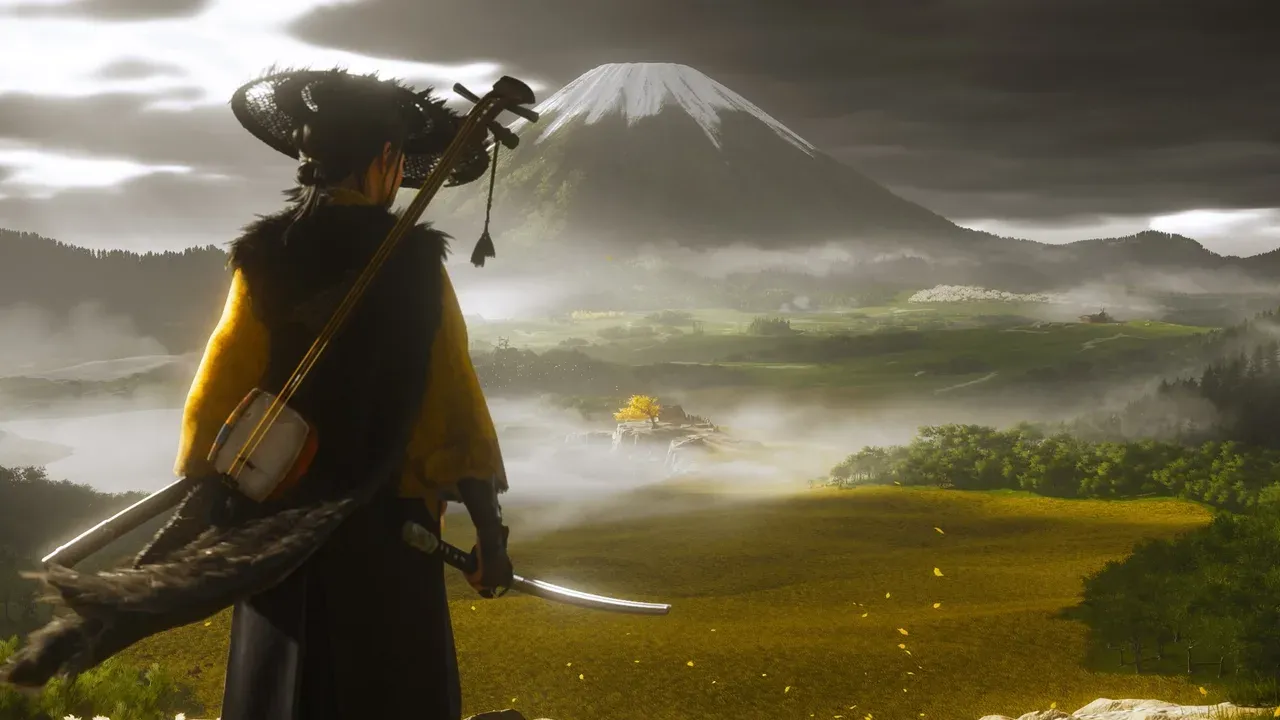
Many underestimate how difficult creating a successful sequel can actually be. How does one, as a creator, capture the essence of what made the original well-liked enough to be successful while still elevating it intuitively? What drives the series forward? It is not a task I envy a creative team going through, for there is a lot of thought process that goes into it. In some sense, it gives you pause when winding back to output criticisms. I believe many in gaming critique tend to forget the human beings behind these art pieces we so enjoy. If you are to look at games as art, then the common decency you should have is to treat the artist with due respect. That reason is why I find myself in a very odd spot with Sucker Punch’s Ghost of Yōtei.
Sony’s exclusives tend to follow the lines of very safe sequels, for better or worse. The games remain mostly the same, iterated upon to a certain extent. Insomniac’s Spider-Man 2 is a great example of this. It ends up being a high-quality game, though just on par with the original. Sony isn’t the only studio guilty of these “safe sequels,” however. Star Wars Jedi: Survivor is yet another one of these, giving players more of the same overall with some minor improvements. With that in mind, I was curious how Sucker Punch would handle their sequel to 2020’s Ghost of Tsushima.
A “safe sequel” isn’t anything inherently bad, but it creates a very gray area where it becomes hard to critique. If it is just as good as the original, then perhaps it should be rated the same, shouldn’t it? Perhaps it deserves to be critiqued more harshly for not iterating enough on the formula that the first game established. It almost sounds derogatory to say, “If you liked the first game, you’ll like this one.” It has the energy of “This isn’t anything to write home about otherwise.” I have to praise Sucker Punch for deciding not to go for a direct sequel at all with Ghost of Yōtei, though it still finds itself in some areas where it feels safe.
Ghost of Tsushima was Sucker Punch’s first foray into a new IP after their previous work in the Sly Cooper and Infamous franchises. Tsushima followed the story of Jin Sakai, a samurai who had to learn to forgo his code of honor in order to defeat Mongol invaders. Ghost of Yōtei is a very notable departure from both this setting and theming. Yōtei instead is centered around a revenge arc, with its protagonist, Atsu, hunting down a group of six men who tragically ruined her life when she was young. It takes place over 300 years after Tsushima, setting it firmly apart from its predecessor in a way that makes it feel standalone. References to the events of the first game are far and few between, reduced to minor passing mentions or easter eggs. It is remarkably refreshing, and I'm happy that Sucker Punch decided to go this route.
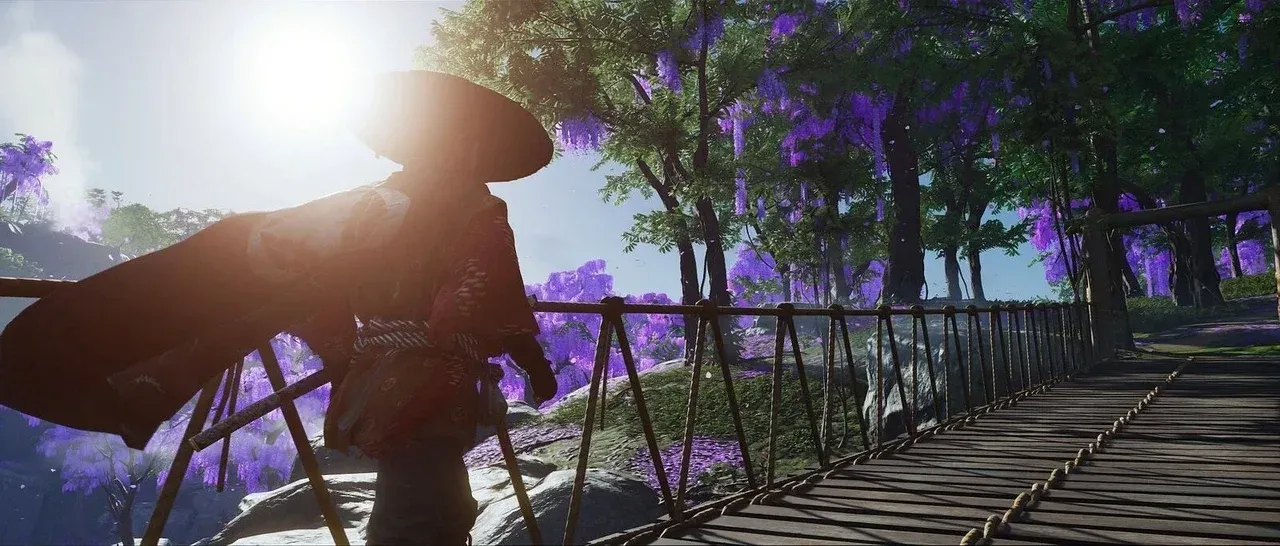
Jin Sakai’s arc was over. He did not need a direct sequel whatsoever. Often, when we try to force more plot onto a character whose arc is already over, it can feel forced. I respect the decision to refrain from touching Jin again, especially since he became such a beloved gaming protagonist. I had this issue with Senua’s Sage: Hellblade II, a game that felt like it didn’t really need to exist. Senua’s arc was already over, so did we really need to try to extend it further? I’d likely compare this to a D&D character being forced into another plot after the current Dungeon Master finishes their story. That character was meant for a standalone story, so anything else featuring them would only feel strange at best.
I make this point to say that while Ghost of Yōtei has the right idea in mind when it comes to storytelling, I left it rather confused. I was puzzled by my own thoughts about the game. I was more prepared than anyone to give the game a fair shake, having only played Tsushima for the first time a month earlier. I found myself struggling to really convey what caused me to feel this way. My gut-check reaction upon completing the game was to say that it was great, but it was missing something. Whatever that something was became lost in the aether, like a word stuck on the tip of your tongue while being just out of reach.
What I can manage to do is to convey what worked and what did not for me. More importantly, I can stop to recognize what Sucker Punch was attempting to do here.
Yotei Remains Familiar, But Fresh
Gameplay-wise, Ghost of Yōtei is stellar. It iterates in all the proper ways you would want from Tsushima. It feels familiar, yet fresh at the same time. Much of what players had grown familiar with in the previous game appears again here. The hot springs that allow the protagonist to reflect and permanently increase their health are still here, alongside the bamboo cutting challenges for Spirit boosts. Even these open-world side activities have been iterated upon or touched up in some shape or form. Bamboo cutting now occasionally will have a piece of bamboo fly into the air, forcing the player to input a combo of buttons quickly in order to cut it. Exploring the parkour-based shrine trails now has a convenient method of fast-traveling back to the entrance of the trail to save yourself time.
There are new activities provided here as well. Since Atsu is not a samurai, she wasn’t taught in the ways of haiku like Jin Sakai in Tsushima. As a result, that activity is absent in this game, though Atsu is still creative in her own right. There are places found while exploring where Atsu can sit down to create Sumi-e paintings, or to play her Shamisen for a while. It adds some very needed characterization to Atsu, a softer side that she rarely shows from simply playing the story alone. It does a lot in making her relatable. Even as the throes of life take us on their headwinds, we all still have that place or hobby where we can simply sit down and be at peace, a place where we can be serene for a while. I found myself going out of my way to have Atsu do these activities because of that inherent relatability.
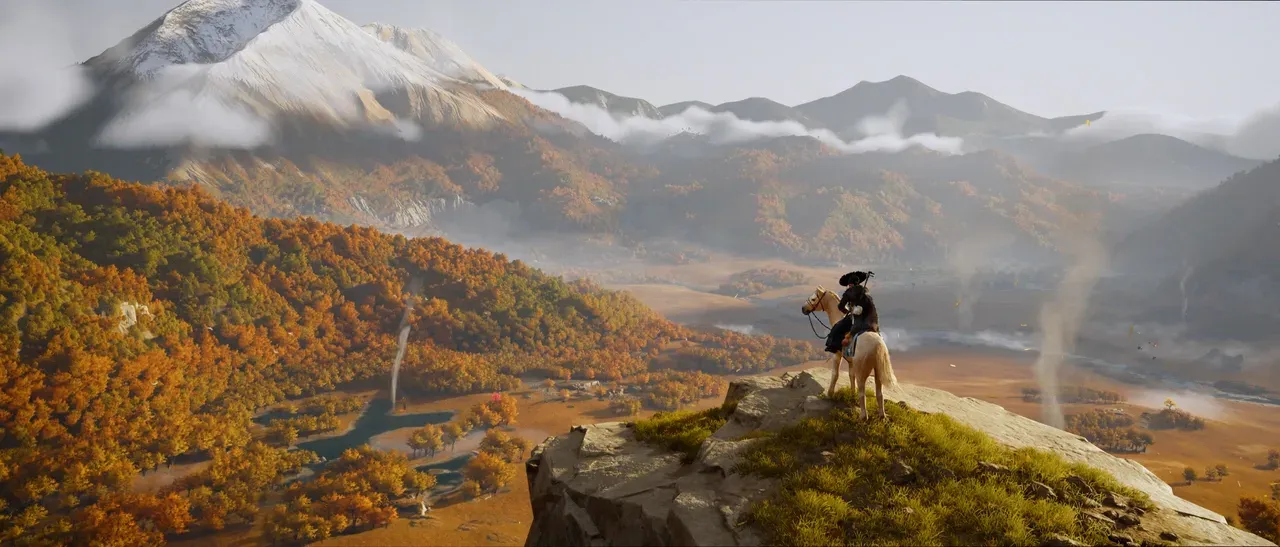
The region of Ezo (what is now known as Hokkaido) is also a wonderful setting for the game. It is stunningly beautiful to explore, even from the first area. It is quite possibly one of the greatest impressions a game could give a player from the standpoint of a sense of wonder. If there is anything to take away from the experience Ghost of Yōtei offers, it is that Sucker Punch is remarkably talented at inspiring awe in its players. The sprawling fields of the Yōtei Grasslands, damasked by the distant mountain looming, are marvelous. This extends even to later areas in the game, where the development team must be praised for their art direction. Teshio Ridge is still wonderful to look at despite being snowy, and an area such as the Nayoro Wilds perfectly invokes the sense of being in a temperate forest. Oshima Coast, which players will not see until Chapter 2 of the main story, has plenty of delightful cherry blossoms dotting its landscape. All-around stellar work was done to nail the setting.
Gameplay is where Yōtei begins to deviate from the previous series entry. The sense of exploration is splendid right from the beginning of the game, and while Tsushima did have solid exploration, Yōtei really banks on this aspect, almost to a fault. From the very start, Atsu can roam anywhere she really wants. I’d perhaps compare this to Elden Ring or Breath of the Wild, where once the prologue ends, you can simply go wherever you’d like when it comes to exploration - or at least, that’s the illusion they wish to give you. You’ll quickly find that once 3 of Atsu’s six targets are dealt with, the story will force the player into Chapter 2, which is essentially the endgame. It is rather unfortunate; the ability to beeline straight to target 5 or 6 immediately would add a lot to Yōtei’s replayability. I digress, however, for this is the story Sucker Punch wishes to tell.
This feeds into one of Yōtei’s core issues: story pacing. If one was to hard-focus the main storyline of the game, they’d find it to be surprisingly shorter than expected. After the prologue, you’ll engage in questlines where Atsu hunts the next two targets on her quest for revenge. Then you’re shoved directly into Chapter 2 of 3. Chapter 2 has its own singular, short questline, though this leads directly into the abruptly short Chapter 3. Chapter 3 feels as if it could’ve been included with Chapter 2 since it only encompasses the finale. Perhaps Ghost of Yōtei did not need ‘chapters’ at all; labeling them as such creates the assumption that they’d be lengthier or more focused than they actually are.
To counter this, I presume that stellar exploration is meant to act as proper padding for the main story. In that sense, exploration is the driving factor behind the gameplay. Even side quests are not found in the usual way as they were in Tsushima, where NPCs will have a bubble over their head detailing one for you. Here, the player is instead encouraged to find these things on their own. At times, you’re not even given a direct location of where to go. Yes, the guiding winds return from the first game to give you the correct direction to proceed, but often you’re encouraged to suss it out for yourself. There are many side quests you will miss out on purely because you never ran into their quest-giver. Assassin’s Creed: Shadows attempted a similar design with its quests as well, calling the information gained a “lead”, which you’d then seek out within the related area.
Although I am of the mind that Ghost of Yōtei excels above Assassin’s Creed Shadows in almost every way, I did enjoy having the option to have more traditional quest markers in Assassin’s Creed. I’ve always been a side quest junkie, and it made me sort of sad that Yōtei regressed so much in how it handled its side quests. The "leads" only appear on the map screen in Yōtei, and you find yourself having to cycle through them with just the D-pad alone. There is no Journal or Quest Log menu in the options. It is incredibly unintuitive to use, especially when considering the weapon-unlocking Sensei quests and main story quests are also slotted in as leads. I understand what Sucker Punch wanted to go for here, nonetheless, but I did not particularly find myself enjoying it during my playthrough.
Combat and stealth have remained relatively the same, which is not a bad thing. Tsushima’s combat was great, and the rock-paper-scissors aspect of switching stances based on the enemy you were fighting was really enjoyable. Yōtei freshens this up by introducing weapons instead, each weapon taking the place of one of the stances. Enemies with shields will be weak to the Kusarigama, for example, while bruiser enemies will be weak to the lumbering Odachi blade. Although these weapons will be of great assistance during your playthrough, you can, in theory, miss out on some of these if you skip over the respective Sensei quests, where Atsu will be trained how to wield them by a master in the weapon’s craft.
These weapons add a much-needed amount of flair and spice to the combat formula of Tsushima. Although it is still functionally the same, it works well in making the game feel different enough that it still feels fresh. If I may add a minor nitpick to these weapons, I find the visual to be a little awkward when you switch between them on the fly mid-combat. Since the animation needs to be snappy in order to make the combat still feel smooth, you have to sacrifice a bit of immersion for the sake of that. While I do prefer that, I still found the motion of swapping from a weapon like the Odachi to dual katana to be a tad off.
Revenge Arcs Aren't Anything New
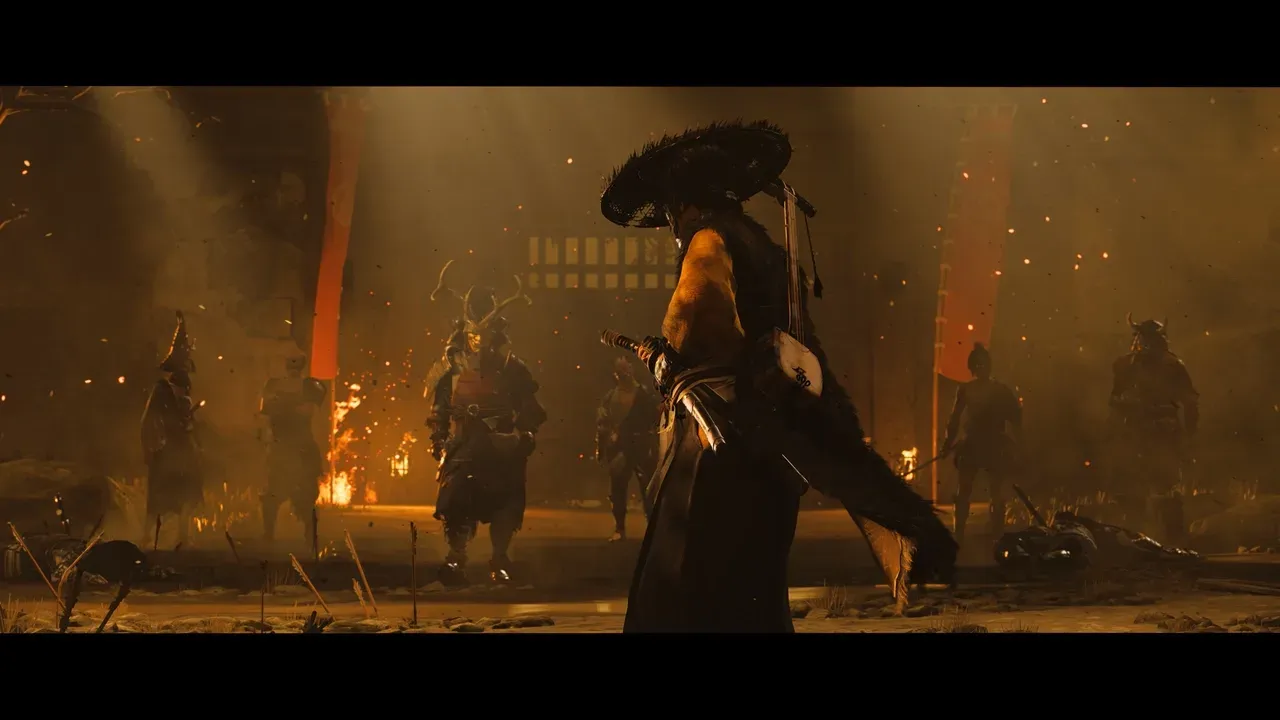
Now, I’d like to delve into the story side of the game, but the issue here is that I cannot elaborate to an extent that makes my points clear unless I actively dip into spoiler territory. I’ve structured this intentionally so that you can still read most of this review up to this point entirely blind to the game’s story content. I am still going to be very careful about what I do spoil here, nonetheless. I will avoid naming specific characters or explicitly detailing events that occur in the story beyond the prologue of the game. I’ll refrain from spelling out the finale or the ending, but I will be talking about the game’s overarching themes, so please keep that in mind.

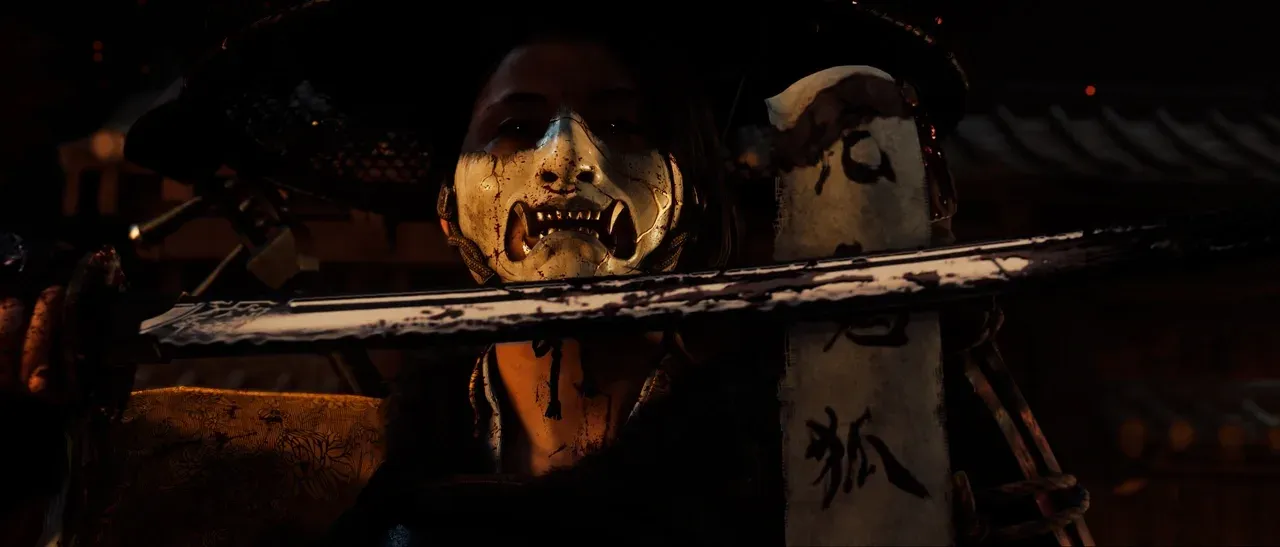
The immediate notion that will hit you right away in Ghost of Yōtei, as a major shift from Tsushima, is Atsu herself and the identity of the ‘ghost’. In Tsushima, there was a slow build-up to the idea of Jin Sakai donning the ‘ghost’ persona. Atsu, on the other hand, takes on the persona almost immediately in the game. Once you’re done with the prologue, Atsu’s identity is very clear. She is dubbed an Onryō - a vengeful spirit in Japanese folklore. Onryō are brutal and ruthless in their intention to right the wrongs they’ve suffered. Atsu, as a character, is meant to embody the Onryō, which is partly why her characterization in that aspect really works for me. Atsu is remorseless toward her enemies. She’s often blinded by her rage and need for revenge to the point where she sometimes makes irrational decisions, ignoring the well-being of others simply for the sake of it. At times, this makes Atsu a frustrating and frankly unlikeable protagonist. This is by design, I presume, for NPCs in the game that Atsu interacts with are sometimes even put off by Atsu’s persona as the Onryō.
This all makes me struggle with how much I actually like Atsu. At times, she’s relatable, someone you can sympathize with. Her struggle feels real, her aforementioned hobbies as outlets are quite relatable, and she surprisingly has a dry sense of humor as well. On the other hand, I can’t find myself really getting behind her as a protagonist. There’s a certain level of likability Jin Sakai had that Atsu does not. It took me a while to figure out why exactly that was, though, following more pondering, I deem the reason to be that Atsu’s personal quest is more selfish than Jin’s. His story feels heroic because he’s fighting for something bigger - repelling the Mongol invaders on Tsushima. Atsu is hunting six men who wronged her in the past, and is completely justified in doing so when you learn the reasoning, but Atsu does not care about being part of something bigger. She actively shuns that idea even when it presents itself to her. When given the choice of rescuing others or satisfying her bloodlust against the Yōtei Six, she chooses her blade.
In a way, I can see the value in Sucker Punch attempting this type of protagonist. Rare are the protagonists in games that have you questioning their goals or morals in this type of way. I find this to be both frustrating and utterly fascinating - because Atsu is indeed well-written, but she is also a protagonist I struggle to connect with. I am able to appreciate what Sucker Punch has done with her from a writing standpoint, but while playing the game, I found myself checking out. What really doesn’t do Atsu any favors is the overarching plot and thematics of the story, which feel tonally inconsistent to the point where it somewhat cannibalizes itself.
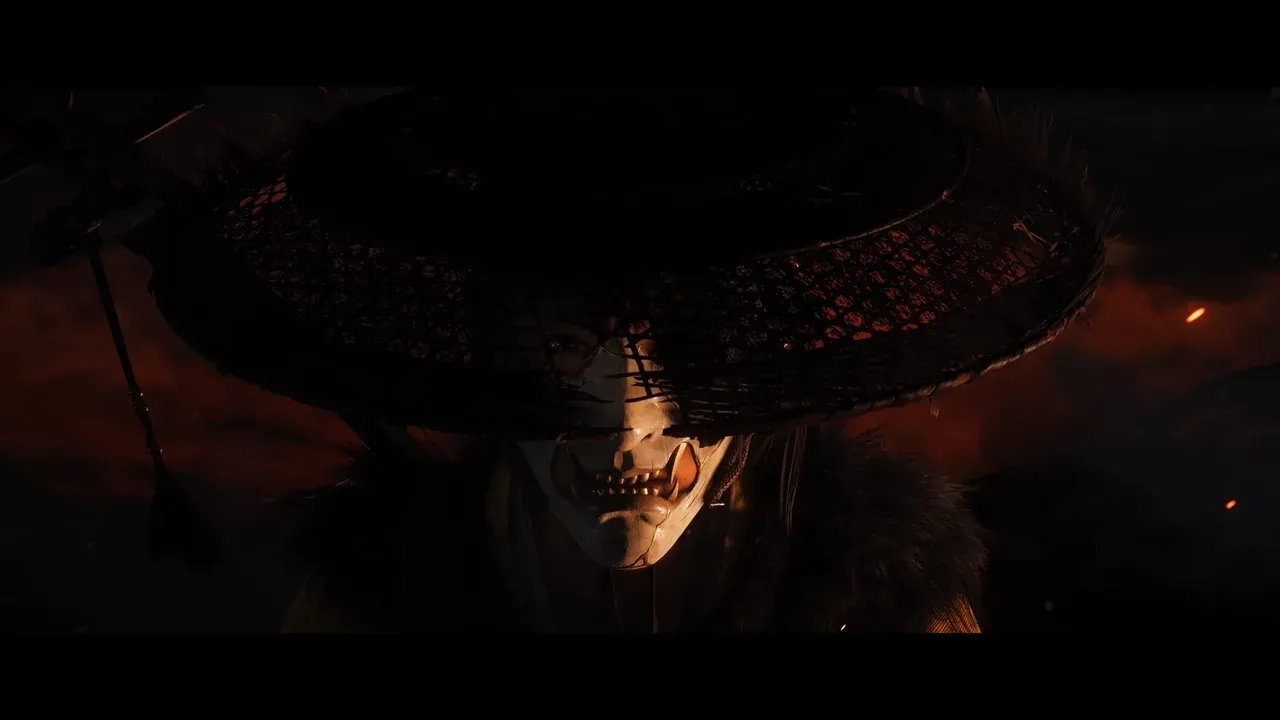
Of course, this story is a revenge arc. You’re not given a fully detailed depiction of what happened on the tragic night that kick-started Atsu’s quest for revenge, not ever. You’re given a brief glimpse of it, a drop in the water to send you on your way, so you understand her motivations at a base level. As the story progresses, you are drip-fed flashbacks to the “Night of the Burning Tree” to 1flesh out Atsu’s motivations further. Upon revisiting Atsu’s childhood home, you’ll also be able to experience some more pleasant flashbacks that harken back to Atsu’s family as well. While I am glad it wasn’t all spelled out at once for me, it is splintered enough that it is hard to grasp the order of events that happened on that evening or how the puzzle pieces exactly click together. It is still a good set of motivations for Atsu, nonetheless.
My real issue is that Yōtei diminishes how hard this revenge arc actually hits the player. Right at the beginning, you’re given a minigame where Atsu writes the names of all of the Yōtei Six members she intends to hunt down. However, the prologue alone has you kill one of the six. Having Atsu so quickly form into the Onryō feels rushed, really. Being the ‘ghost’ from the start makes sense with context, but it lacks the build-up it had with Jin Sakai in Tsushima. One of the most iconic moments of Tsushima is when Jin finally unlocks the Ghost Stance, which is symbolic of his growth as a character. Atsu does not really have a moment like that ever in the story. She begins with a nerfed-down version of the Ghost Stance called Onryō’s Howl, which ends as soon as the player gets a single kill with it instead of being on a time limit. When Atsu finally unlocks the proper Ghost Stance, it comes in a moment where it feels comparatively awkward to Jin’s and even relative to Atsu’s own story. To avoid spoiling exactly when, it comes in a very late-game story quest against a boss - one that Atsu does not even kill, instead keeping them alive to use as bait for a subsequent quest.
Ghost of Yōtei could’ve benefited much more from Atsu embracing the Onryō persona. In the prologue, it is implied that there is indeed a supernatural element involved in Atsu’s story. After the fight with the first member of the Yōtei Six, Atsu is thought to be dead, both she and her target killed in the trading of blows. Even an onlooking civilian remarks in shock that Atsu was ‘dead’ when she awakens. The implication here is that Atsu is indeed an Onryō, and cannot exactly die until she exacts her revenge. Unfortunately, Sucker Punch doesn’t do anything at all with this idea. I understand their intention to make a story that is immersive and grounded within its setting for the most part, but there are supernatural elements that crop up in side quests as well, namely the “Mythic Tales”.
It ties into a sentiment that I couldn’t let escape from my mind once I completed Ghost of Yōtei in its entirety, for I was not very enthused by the resolution of Atsu’s story. Sucker Punch sadly utilizes the tired and rather dull trope of a revenge-driven character realizing they’ve been consumed by revenge, instead of attempting to change for the better. I nearly rolled my eyes when I realized that was where the plot was going. It doesn’t really land for me when we’ve been conditioned the whole game to see Atsu being embroiled by her Onryō persona. I’ve seen some call Tsushima’s plot cliche, but I never found that apt. The trope of someone attempting to come to terms with forgoing their code of honor is much more interesting than a revenge arc concluding with the protagonist realizing they’ve been consumed by revenge. It has its own beauty and resonance as a trope. I have no qualms with it inherently, but I find it disappointing.
Sucker Punch Invokes Reflection With Yōtei
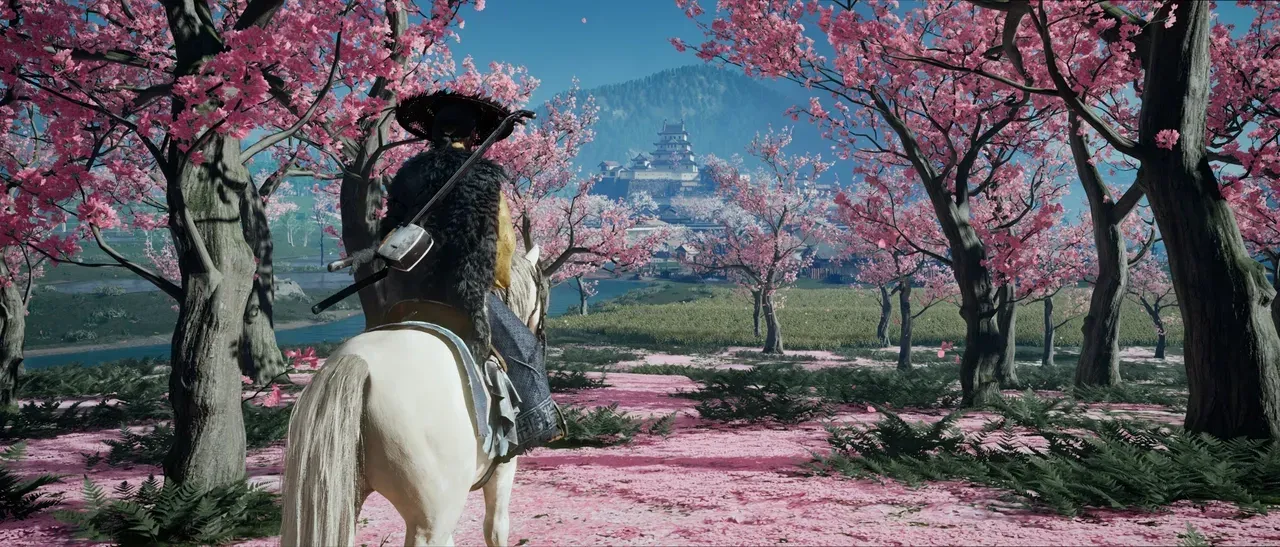
We’ve seen this type of plot in fiction plenty of times before - even in other PlayStation exclusives. I felt like Sucker Punch had the chance to do something really unique and hauntingly tragic if they set their minds to it. I would’ve liked to see Atsu embrace her Onryō persona instead, being consumed by it in a bittersweet way at the end of her arc. Lean into the fact that Atsu is consumed by bloodlust; don’t try to redeem her at the last minute. Dare to be different in the ocean of your own trope.
To their credit, Sucker Punch does have Atsu stick to her need for revenge as long as possible, but as soon as Chapter 3 begins, it is like someone snapped their fingers to change Atsu entirely. It almost conveys the idea that Sucker Punch was rushing to wrap up its own story. As I suggested in my review of Ghost of Tsushima, I believe Sucker Punch should look at implementing the Karma system that appeared in the Infamous series within their Ghost series of games. That Karma system would’ve fit splendidly with the themes present in both Tsushima and Yōtei, while adding a needed amount of player agency to the experience.
I don’t entirely mind what Sucker Punch has made here, regardless of my qualms. This is the game they wished to make, and I still appreciate it from the perspective of their vision for the experience. What it tries to do is worthy of acknowledgement. It is historical fiction at its finest - excellent combat, a sprawling, grounded setting to become immersed in, and gameplay that gives the player a needed amount of freedom. I’ll look back on my experience with Ghost of Yōtei positively for those reasons, but I’ll also remember feeling very disconnected and conflicted. I would be entirely remiss if I were to say I enjoyed it as much as Tsushima, but that’s not a bad thing. Yōtei is a game I greatly respect.
I want to leave things by actually giving Sucker Punch my thanks. Ghost of Yōtei was an interesting experience, for in all the time I have been looking at games critically, never have I found myself in the midst of a conundrum such as this one. I am of the mind that is where the beauty lies in this game. It does not set out to please everyone. It does not intend to embrace returning players from Tsushima. It doesn’t try to be its predecessor, and it does not try to be a sequel in the standard sense of the word. While it feels familiar to play, it is remarkably standalone.
Ghost of Yōtei stands as an experience that taught me about my own taste, of what I look for when it comes to the type of stories I want to enjoy. It’s a great game that will remain in my mind as one that left me fulfilled, not from the game itself, but rather from reflecting upon it - and for that, I cannot thank Sucker Punch enough.