Indie Monthly: February 2026
Steam Next Fest is here again


Another Steam Next Fest has come and gone, showcasing some fine examples of the three subgenres that encompass all of indie games now. Oh, there's still variety to be had; it just takes a little patience and some digging. This month's offerings demonstrate that. We've got a 3D platformer, a novel take on the roguelike deckbuilder, and that riskiest of indie plays - the grand strategy game.
As a bonus, I've thrown in an extra cut from January. Mea culpa time - between some behind-the-scenes bureaucratic stress and the usual game-related chaos, I managed to completely miss that I'd been offered a key to one of January's better releases. This game - Escape from Ever After - is at the bottom of this month's issue.
Master of Piece
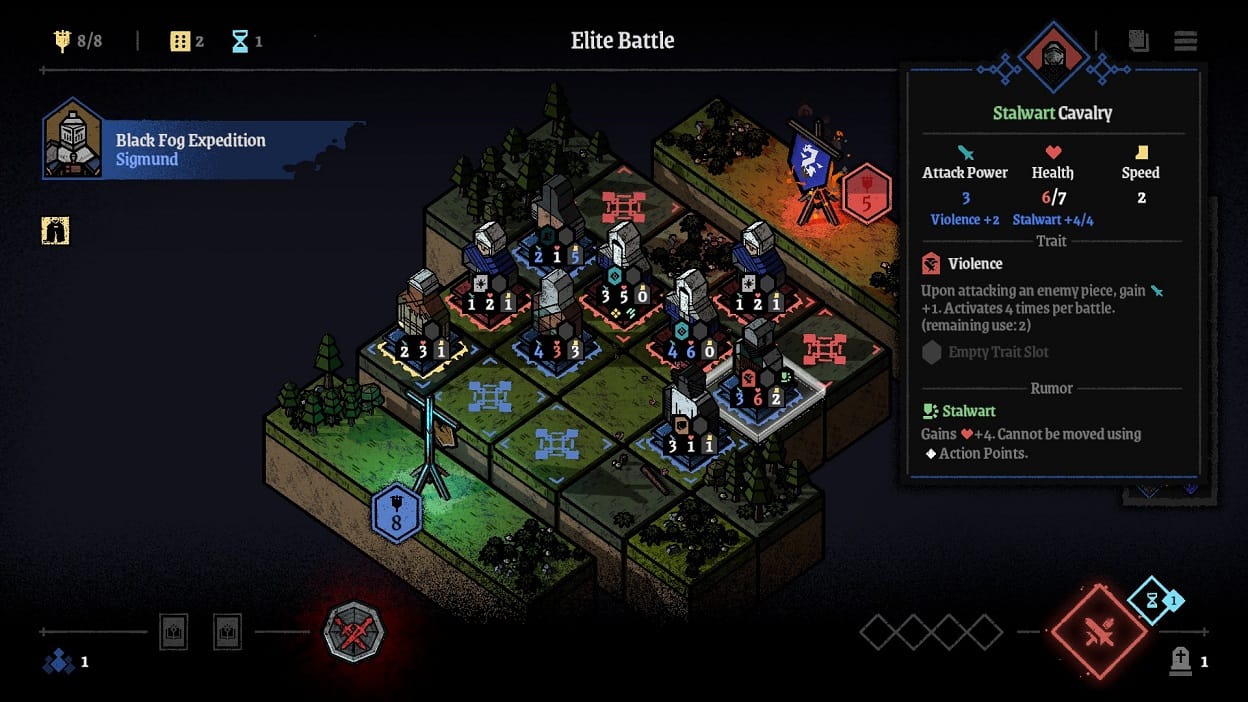
Master of Piece is a tactical deckbuilder with some RPG elements. Focused on an expedition to find the source of a dense black fog, it emphasizes upgrading the player's units to create an army powerful enough to endure the endgame.
The game is distinguished from other deckbuilders in that the player is collecting neither cards nor dice, but board game pieces. These are used in a simple strategy game in which the player and opponent take turns placing or moving pieces with the goal of launching an unobstructed attack on the enemy flag. It's a simple system that's complicated by the massive number of piece abilities and the occasional boss fight.
Most non-combat tiles focus on powering up the pieces already in the player's inventory. Pieces are quite weak to begin with, having just a few points in their main attack, health, and speed stats, along with (at best) a single trait. That's fine early on when the enemy has comparable pieces, but the difficulty scales up very quickly, and surviving past the halfway point of a run absolutely requires broken pieces.
It does take some tactical thinking to power up those pieces, as the core stats can only be boosted a few times. Beyond that, most pieces can accept a second trait, which the player can either find directly or, more likely, transfer by destroying another piece, similar to Inscryption's altars of sacrifice. Pieces can also acquire rumors, which further boost stats, but often with some kind of drawback. With some planning and a little luck, it's possible to use these to build monster pieces that crush bosses with ease.
The actual combat can be a little less impactful. The system is simple enough: Place pieces in either empty columns to attack the enemy flag or opposite enemy pieces to block their attacks. There are occasional tactical considerations, such as turns where it might be better to move a piece rather than play a new one, as well as fields with usable objects or traps. Nevertheless, tactical skill has nothing on the power of the pieces.
Overall, Master of Piece can have appeal to anyone who doesn't care for the highly random nature of deckbuilders. For those more accustomed to the subgenre, it offers a novel gameplay style that might be lacking in the usual deckbuilder variety.
Master of Piece is available for PC via Steam. A copy was provided for this review.
Manairons
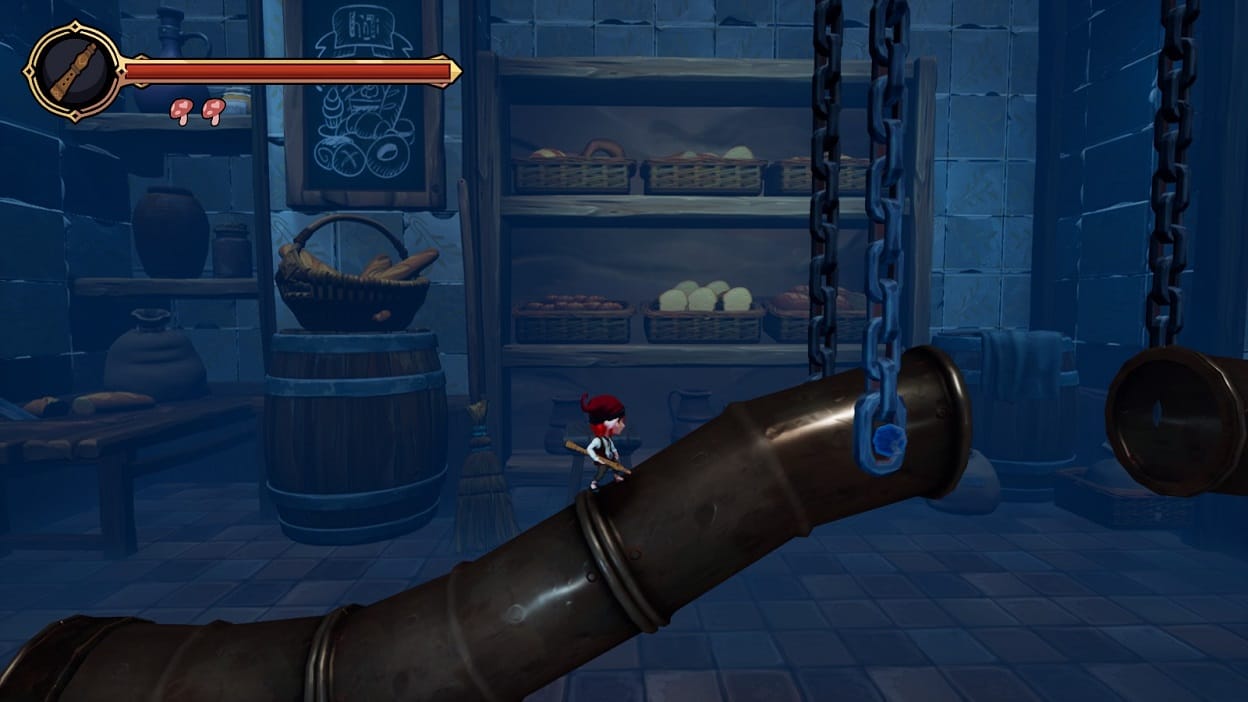
Manairons is a 3D platformer with an emphasis on puzzle-solving. Taking on the role of Nai, a fairy-like Manairo, the player explores a Catalan village that has been turned into a mechanized nightmare by his kinsmen and the diabolical landlord who commands them. It's a simple, easygoing game with lots of late-90s influence.
While Manairons is a fully 3D game, the actual gameplay switches between a 3D focus for combat and puzzle sequences and a side-on 2.5D presentation for most platforming. Levels are chiefly linear - there are hidden collectibles, but completing the main game simply requires passing through a series of rooms and defeating a boss.
Nai's skill set is focused mostly on puzzles and combat, which are a far larger part of the game. For platforming, he starts with a double jump and eventually gains a series of songs that temporarily grant context-sensitive abilities. For defense purposes, he has a standard attack combo, a block, and a weak ranged attack. One ability the player doesn't possess is control of the camera, which is fixed in place depending on the present challenge.
Most of the gameplay focuses on puzzles, which in Manairons are centered on switches and object manipulation. They tend to be on the easy side, solvable through trial and error with some basic observation skills. The puzzles and platforming are frequently connected - for example, with switches controlling the movement of platforms needed to cross gaps.
Combat is similarly straightforward and forgiving. While the lack of a roll or other dodge ability might throw some players for a loop, the enemies are slow enough that avoiding attacks is easy, and Nai is fairly tanky to boot. Bosses are more of a threat, but anyone experienced with similar games shouldn't struggle too much.
The one thing that does introduce some difficulty is the fixed camera. Surprisingly, it isn't an issue in the platforming sections due to the tight controls and a color-changing shadow that makes it easy to stick landings. However, the lack of spatial information can make fighting small enemies or avoiding floor traps harder than it should be.
Overall, Manairons is a game made to appeal to fifth- and sixth-gen nostalgia. It's a mellow and enjoyable experience, but don't expect it to blow your mind.
Manairons is available for PC via Steam. A copy was provided for this review.
Fall of an Empire
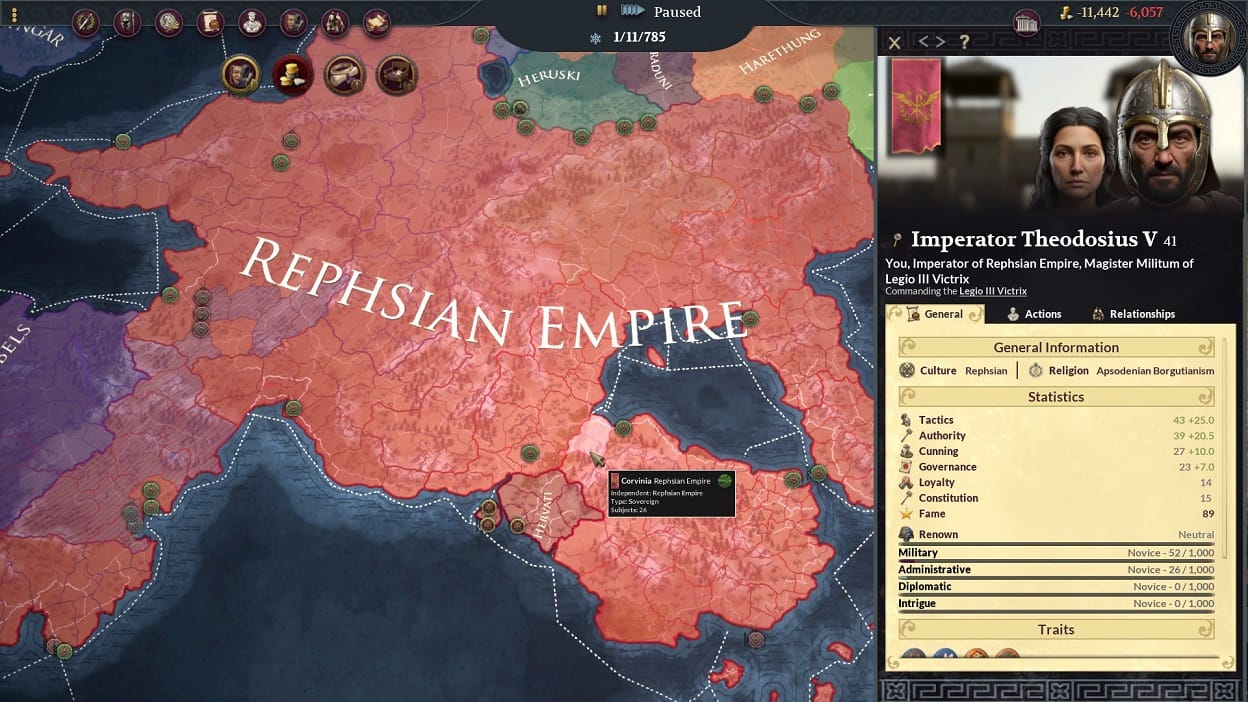
Fall of an Empire is a pauseable real-time strategy game set in a fictional analog of the late Western Roman Empire. It is, essentially, a reverse grand strategy game, one with familiar mechanics but a novel approach to campaign progression.
The grand campaign puts the player in the role of the last ruler of the Rephsian Empire. Generations of infighting and constant warfare have left the empire fractured, with the player having the thankless task of keeping it together for as long as possible. This is the key difference between Fall of an Empire and other grand strategy games: Rather than growing an empire from humble beginnings, the empire starts as big as it's going to get, and all the player can do is try to arrest the collapse.
From a mechanical and design perspective, Fall of an Empire draws inspiration from other well-known strategy franchises, with the most obvious being Crusader Kings. As with CK, Fall of an Empire puts a heavy focus on internal politics and the desires of individual actors. In fact, with no new lands to conquer, all of the action is internal to some degree, whether that's imperial intrigue or open rebellion.
Combat is heavily abstracted and mostly focused on the strategic level, but unlike most Paradox games, there's more emphasis on army composition and formations. Wars are won or lost before the first battle is joined, but forget about careful planning - with hostilities starting seemingly at random, being flexible and working up strategies on the fly is how the game is played.
If you haven't picked up on it by now, this is not a game for beginners. The grand campaign throws the player into the deep end, dealing with multiple uprisings and wars between subjects along with a failing economy and several antagonistic factions. There is a tutorial and some useful pop-ups for the more arcane mechanics, but even a player familiar with the game's inspirations will have to learn a lot and learn it quickly.
Overall, Fall of an Empire is an interesting take on grand strategy, but one that will only be accessible to people with an enormous amount of strategy game experience.
Fall of an Empire is available for PC via Steam and EGS. A copy was provided for this review.
Escape from Ever After
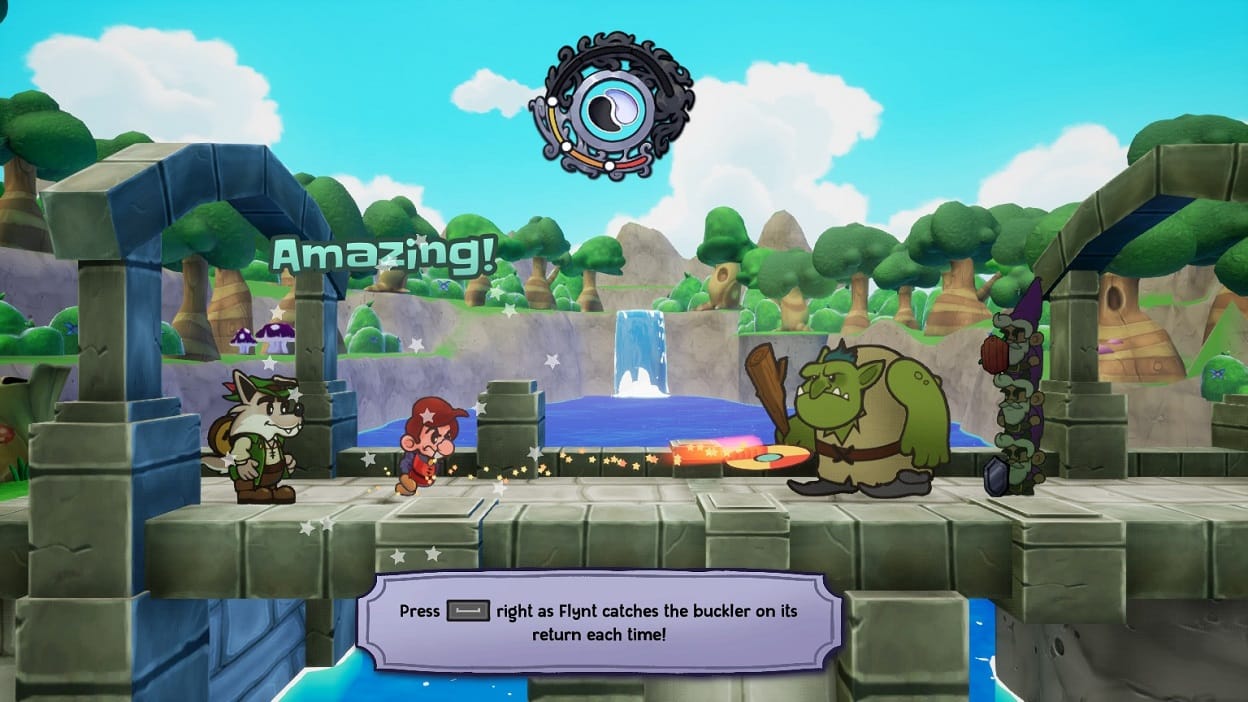
Escape from Ever After is a timing-based RPG with heavy inspiration from the Paper Mario series. Compared to its spiritual predecessors, it offers a greater challenge suitable for more experienced RPG fans.
Flynt is an archetypal storybook hero with a very standard quest: slay a dragon. It's a journey that plays out in the book every day, but this time, Flynt hit a snag. The dragon's lair has been replaced by a corporate branch office for an outfit called "Ever After Inc.", an organization from the Real World that has found a way to send its employees into works of fiction for profit. With the lair's previous occupant reduced to diminutive size by Ever After Inc. technology, Flynt won't be able to complete the story until the company is gone - and that means getting hired and taking them down from within.
Escape from Ever After is unabashedly drawing inspiration from Paper Mario in many ways, not limited to the aesthetic similarities. The combat system has very clear echoes - low stat, timing based, two active characters with a shared mana pool, and an experience/customization system built around badges. Where it varies is in the complexity of the individual fights.
Following from many other recent indie RPGs, Escape from Ever After features much more tactical combat than older games. Enemies have many variants, assume different stances, and team up in ways that require specific attacks to overcome. While individual fights aren't all that hard (on standard difficulty, anyway), they do demand plenty of attention, and every party member serves a role. Meanwhile, bosses are multi-stage affairs with gimmicks that change over the course of the fight.
The game also features a fair number of puzzles based on the abilities each character brings to the table. Most puzzles are conceptually simple but demand precise timing or positioning in a way that makes them dicey. Even so, it's unlikely that anyone with RPG experience is going to be too stumped by the puzzles.
Overall, Escape from Ever After combines old-school Nintendo design with modern indie sensibilities in a way that really clicks. With a playtime of 15-20 hours, it's also a bit more substantial than some of its competitors.
Escape from Ever After is available for PC via Steam, Xbox, PS5, and Nintendo Switch. A copy was provided for this review.
That wraps up our look at the indie games that caught our attention in February! As always, be sure to come back each month for more of those sweet, sweet indie games you need to know about!