Mario Tennis Fever Works Better When You Strip It Back
If you take away the gimmicks, can Fever still hold a decent rally?

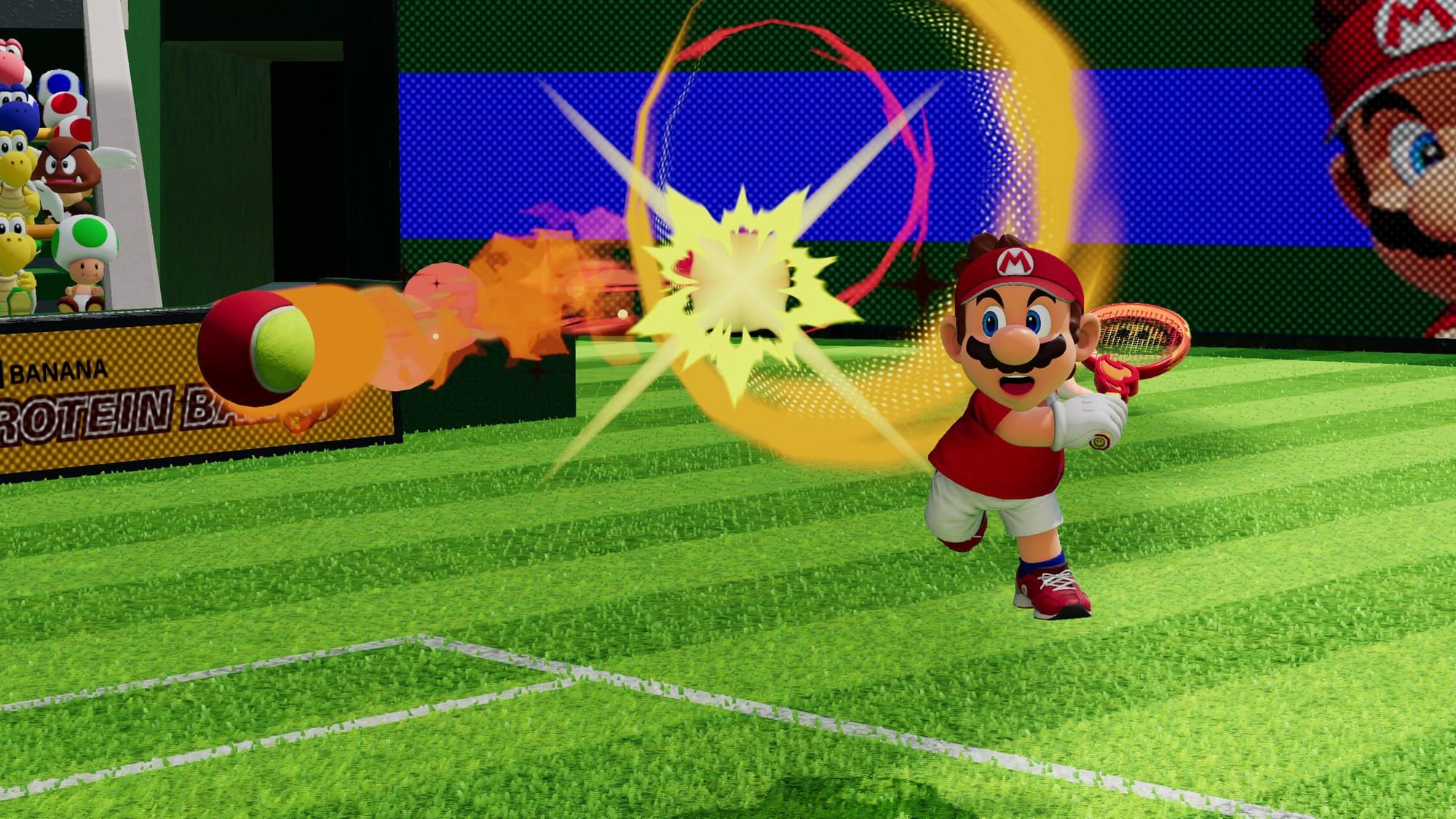
I really wanted Mario Tennis Fever to be an easy recommendation. Instead, my first few nights with it were a slow, slightly baffling loop of trying modes, bouncing off them, and wondering if I’d missed the point of what this game was supposed to be. It wasn't in a grumpy “games aren’t what they used to be” kind of way, but more of a “why the hell isn’t this clicking with me?” feeling. I kept waiting for it to start feeling like the old-school Mario Tennis games I grew up with, but that moment never came.
Well, not at first.
Luck of the Draw
The online ranked mode was the quickest route to disappointment, mostly because it never settled into anything I could build on. One match, I’d be flattening someone so comprehensively it felt like the game had paired me with a kid holding the controller upside down, and the next match I’d get smoked without scoring a point.
That kind of swing isn’t inherently a problem, because ranked is ranked, but the whiplash made it hard to learn anything or extract any enjoyment from the experience. The skill curve didn’t feel like a curve I was climbing; it felt like a staircase where half the steps were missing. I was either strolling along happily or falling to my doom.
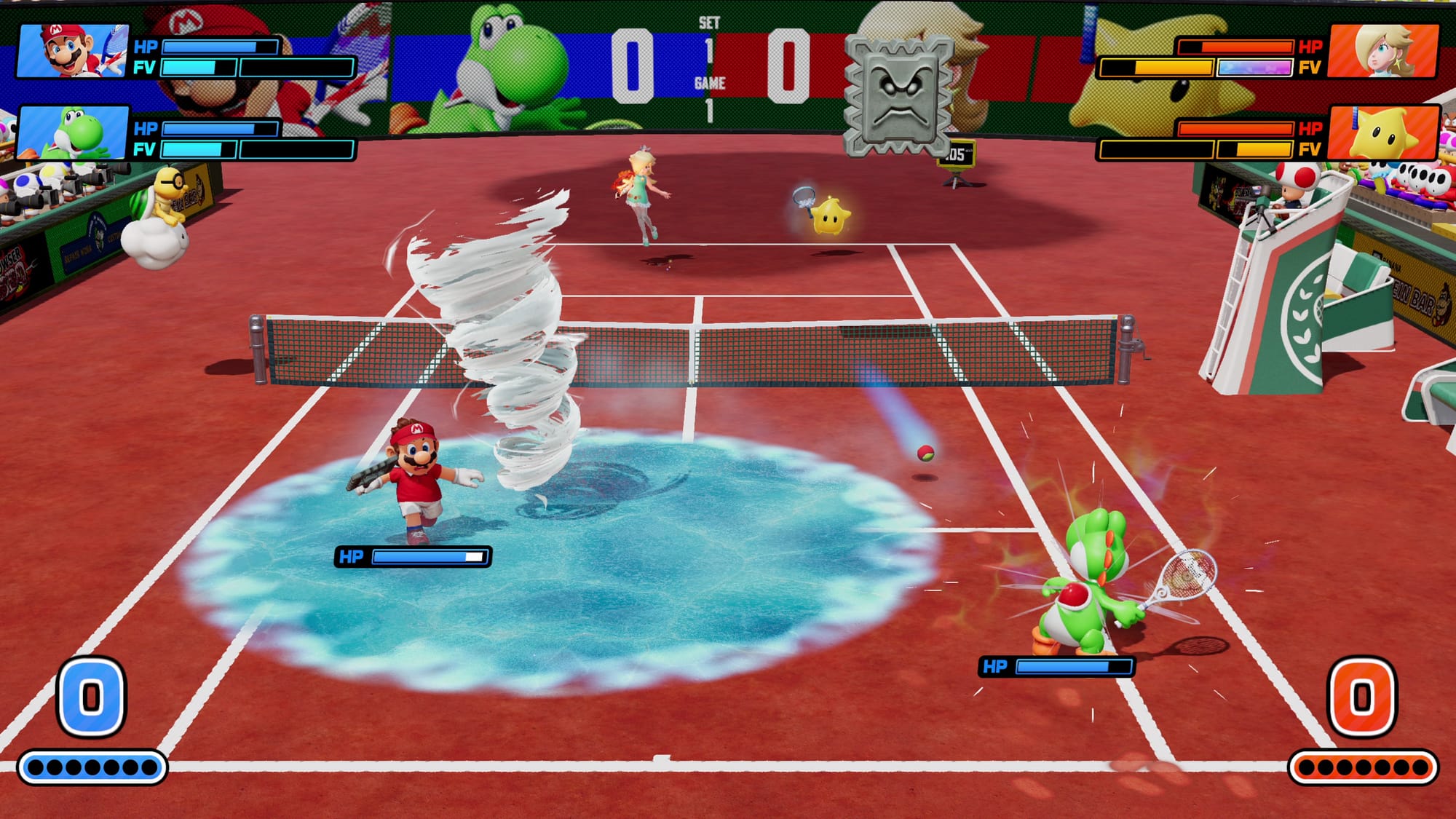
So, I did what I always do when multiplayer starts feeling stale: I went looking for the “real” single-player mode, the one that would let me settle into the flow without all the random noise. Adventure Mode (the ‘RPG’ part) should have been the answer, at least on paper, because Mario Tennis has a history of making the solo game feel more substantial than it should be.
Back in the early 2000s, I had a genuine obsession with Mario Tennis on the Game Boy Colour, and not just because it was portable. It was a proper little sports RPG, where I was building a player, grinding through matches, earning experience, and watching the numbers go up in a way that hooked me. But, most important of all, it was grounded in tennis with a semblance of realism, despite the cartoonish wrapping.
Well, Fever’s Adventure Mode has the setup of a Saturday morning cartoon and, sadly, the soul of a training manual. Daisy gets sick one day, so Mario and the gang head to a remote island to find a magical golden fruit that can cure her. Then Wario and Waluigi show up and start causing trouble, waking monsters that curse everyone, turning them into babies. Sure, it’s silly, it's weird, but I was ready to roll with it. Then, the game plonked me down as baby Mario and started feeding me tutorials in a long, careful, hand-holding procession.
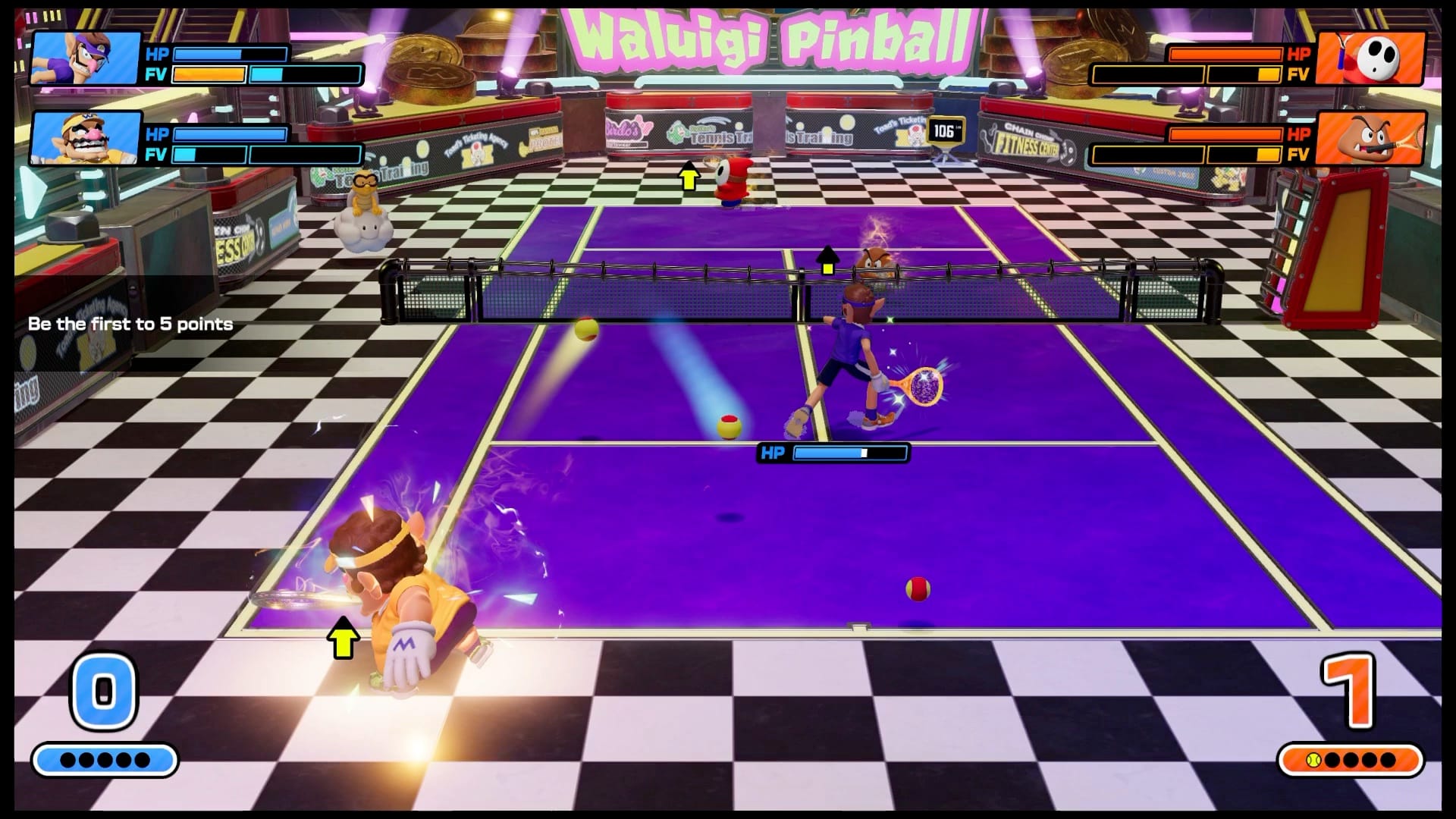
Each challenge was fun in isolation, but as a wider mode, it felt incohesive, like flicking through channels rather than committing to a season
Every few minutes, I’d get a tiny stat bump that didn’t feel like rewarding progression so much as an apology for my time, and I could feel my patience draining. I’ve always hated tutorials, because I learn better through play. Adventure Mode didn’t feel like learning through play at all. It felt like being dragged through a series of trivial mini-games. I dropped it quickly, which I don’t say proudly because I genuinely wanted it to win me over.
After that, I tried the Tower modes, which at least have the decency to be interesting. They’re basically a rotating carnival of rule tweaks that see you climbing your way up, rogue-lite style. This mode does a great job showing off how much stuff Fever has crammed into its toy box. One match might be straightforward singles, except everyone’s using Fever rackets, the next might have you swatting balls through hoops for bonus points, and another might throw you into frantic doubles with multiple balls flying around the court like a pinball machine on jackpot mode. In short bursts, it’s clever, and it does keep you on your toes.
The problem is that the Towers started to feel like variety for its own sake, with every new idea arriving before the last one had time to settle. Each challenge was fun in isolation, but as a wider mode, it felt incohesive, like flicking through channels rather than committing to a season. There’s a difference between “fresh” and “random,” and Tower mode kept drifting toward random, which meant I’d finish a challenge and feel entertained, but not satisfied. I wasn’t building anything; I was just surviving the next bit of nonsense.
The Pitfalls of Gimmicks
At that point, I had to admit something uncomfortable, especially in an era where games are constantly trying to give you more: I didn’t want more stuff. I wanted less, because my favorite Mario Tennis memories aren’t tied to gimmicks at all. They’re tied to how clean those older games felt, especially the N64 entry with its responsive Camelot feel, where everything is snappy, readable, and full of character without ever getting in the way of the match.
Over the last few years, I’ve sunk dozens of hours into Mario Tennis on the N64 via Switch Online, mostly playing doubles with my nephews during Christmas get-togethers. What makes those sessions work is rhythm and rivalry, not a game constantly interrupting you with new systems and special rules.
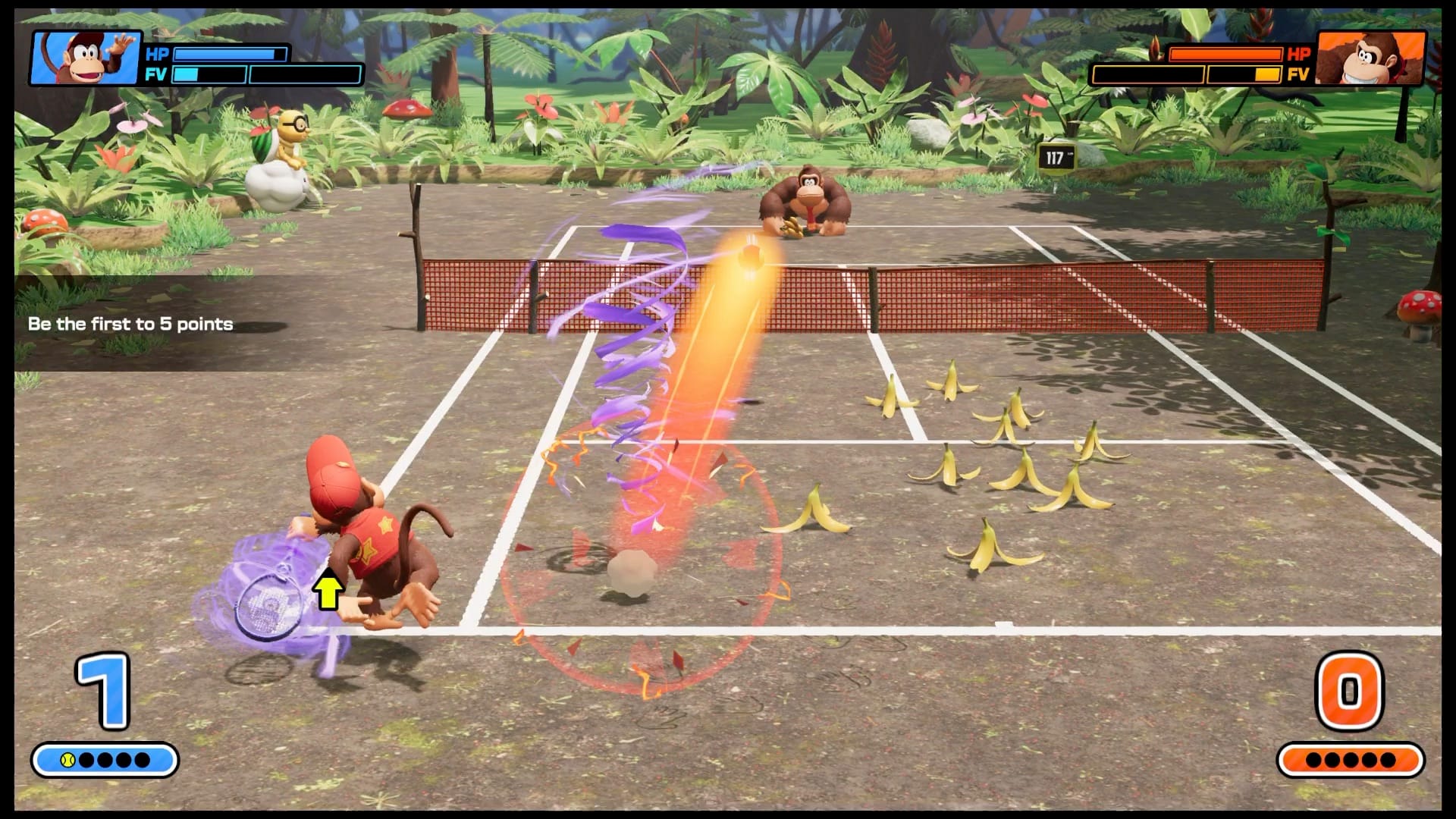
That’s why Fever’s big differentiator, the Fever rackets, started to bug me more the longer I spent with them. They’re creative, and I can see the appeal immediately: setting the court on fire, smothering it in ice, creating a ghost double of yourself, and bending shots in ways that border on cheating. In a vacuum, those ideas are playful, and I don’t want to pretend they’re not.
But the issue for me is how they pull focus away from the tennis, because when the rackets really get going, the game stops feeling like a sport with flow and starts feeling like a sports-flavoured fighting game. Windjammers 2 kept popping into my head, not because Fever plays the same way, but because the game feels so similar at times, where the point is less about constructing a rally and more about managing the split-second craziness.
Instead of reading your opponent’s positioning and choosing the right shot, you’re trying to land your nonsense before their nonsense lands first. This can absolutely be fun, but it’s a very different kind of fun from what I personally want from Mario Tennis.
A few hours in, I realised I was doing a very specific kind of menu drifting, where I wasn’t searching for the “best” mode so much as hunting for the one that felt most like, you know, actual tennis. I wanted clean rallies and simple points, wins that came from reading an opponent and placing shots, not from triggering the correct fire hurricane at the correct time. I wanted the sport, not the spectacle, and once I admitted that to myself, the solution became obvious in hindsight.
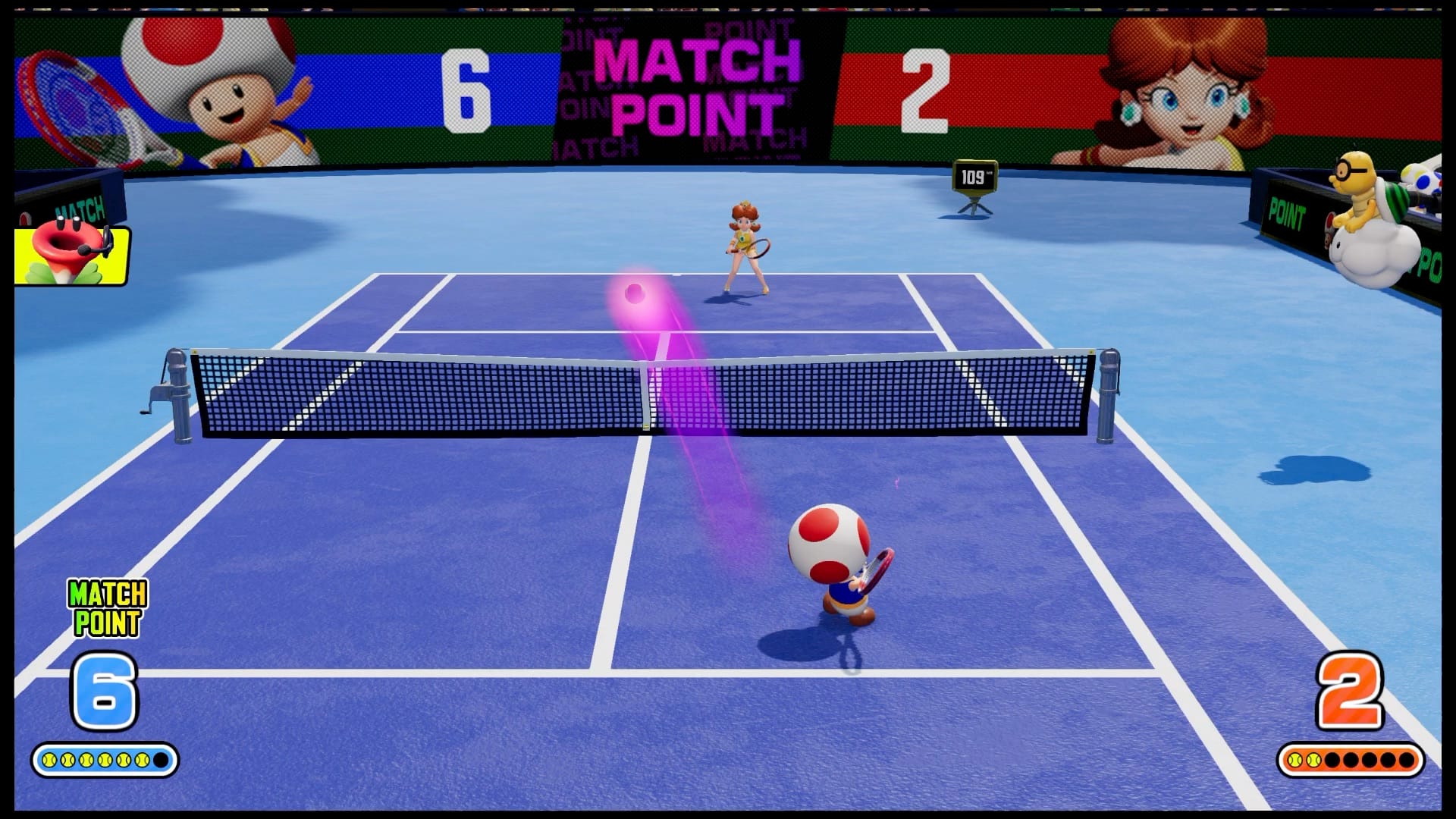
The rallies are where the personality of Fever lives, and they don’t need fireworks to be interesting
So, I stopped trying to meet Mario Tennis Fever on its terms, and instead went into Free Play, picked a character, turned off the gimmicks, and started playing the CPU properly. That’s where the game finally clicked, because a straight match against an AI that’s well-tuned gives you something modern games sometimes forget to value: a state of flow.
You play, you lose, you adjust, and you play again, and somewhere in that repetition, you start noticing patterns, charging up faster returns, and learning when to approach the net versus when to stay back. Most importantly, I could feel myself getting better, not because the game told me that I got better, but because the rallies started lasting longer and the points started going my way.
Bliss in Simplicity
Free Play became my personal ladder, the simple old-school progression I’d been subconsciously craving. It reminded me more of my old Mario Tennis favourites than Adventure Mode ever did. It also made me realise what I want from Mario sports games in 2026, and it’s not an ever-expanding checklist of modes. I want a strong base game that doesn’t seem embarrassed about being a sport, because sometimes it feels like Nintendo is trying to justify the existence of a tennis game by turning the court into a theme park ride. It's acting as if tennis on its own isn’t enough to hold my attention, when the truth is that it absolutely is, as long as the fundamentals are solid.
The rallies are where the personality of Fever lives, and they don’t need fireworks to be interesting. They live in the way Yoshi stretches for a desperate return, in the way Donkey Kong’s raw power delivers unhittable blasts down the line, and in the satisfaction I get when I realise my opponent keeps leaning on the same pattern.
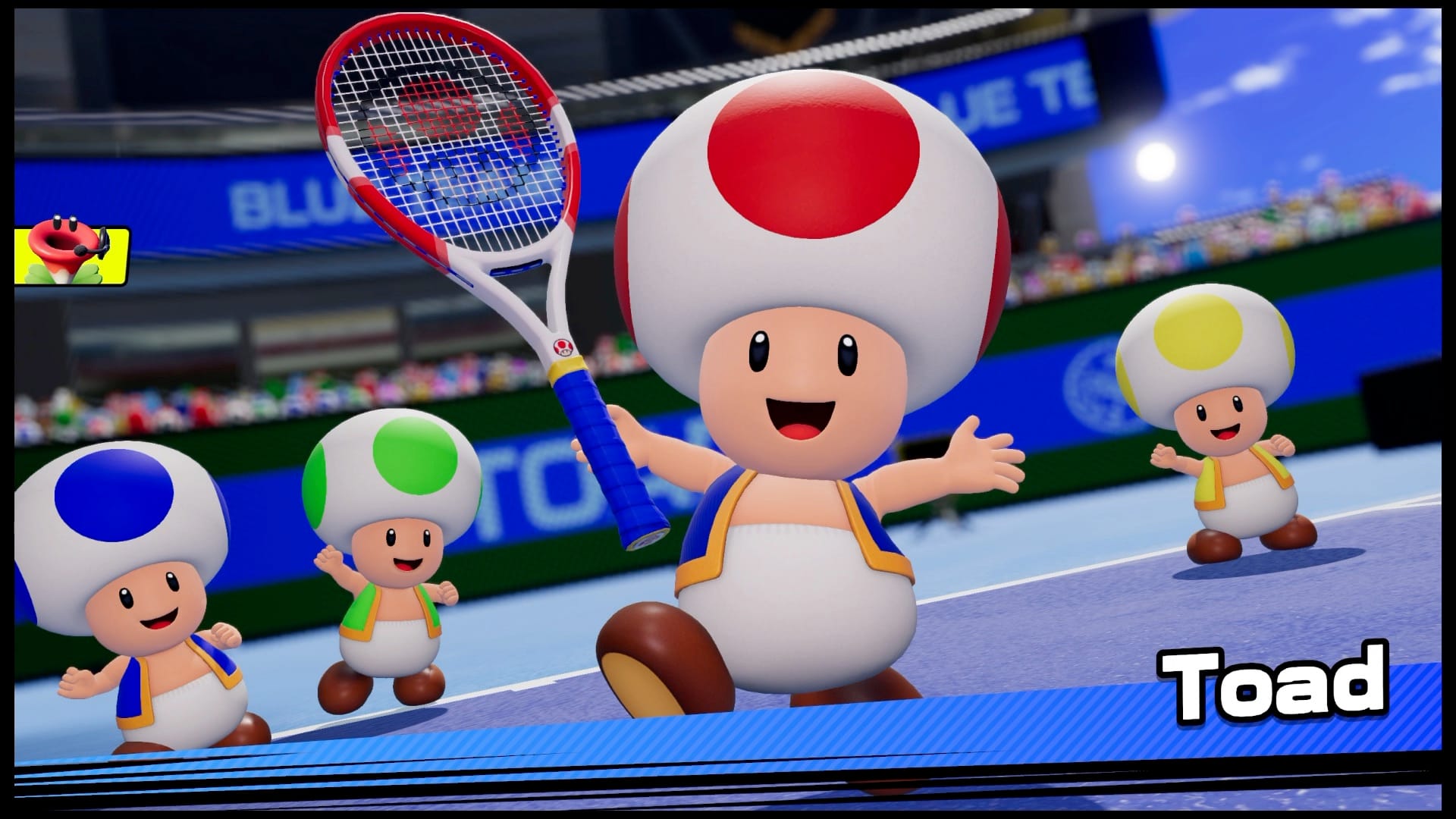
That stuff needs room to breathe, and when Fever finally gave me that space, it stopped feeling like a noisy collection of gimmicks and started feeling like Mario Tennis again. So now that I’ve found the version of Fever I actually like, Tournament Mode is the next obvious step, with Classic Rules switched on and my pride on the line.
Mario Tennis Fever disappointed me at first because I kept meeting it where it wanted to be met, in the craziness, the spectacle, and the modes designed to look cool in trailers. The moment I simplified it and treated it like a tennis game instead of a party game with a tennis flavour, it became something I actually wanted to keep playing. Not because I’d cracked the perfect racket loadout or mastered a cursed baby tutorial, but because I’d finally found the version of Mario Tennis I’d been looking for all along.
The simple one.
Join the conversation
What do you think? Reply below to share your perspective.