Mixtape Isn't Just a Video Game
Blurring the lines between romanticized nostalgia, short-form storytelling, and multimedia art

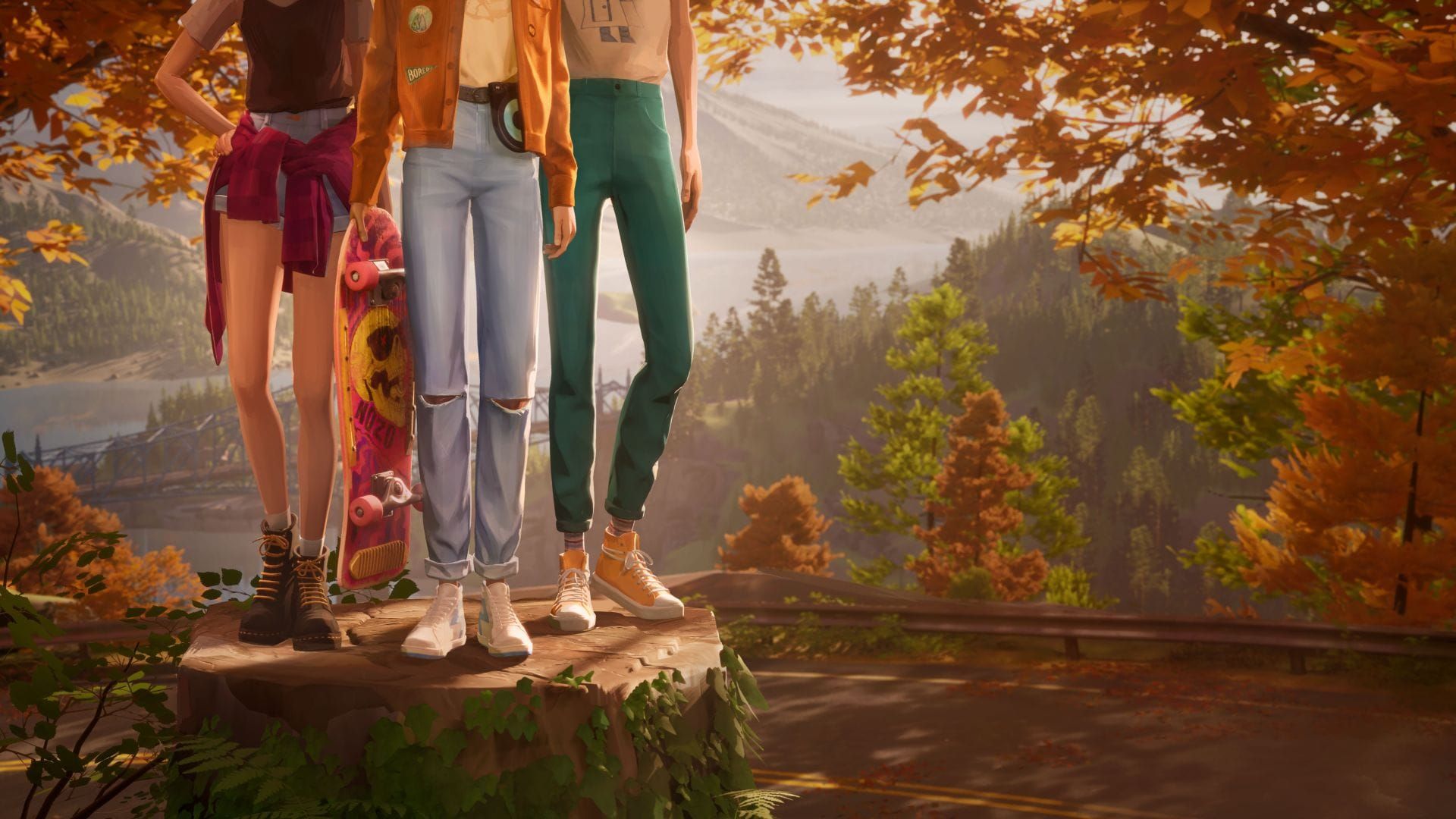
I wasn't a cool teen, as much as I wanted to be.
I had cool friends. Gratefully, in the throes of my nerddom, I found the alternative kids, the ones who listened to My Chemical Romance and Senses Fail and Alkaline Trio and Brand New, the ones who wore ripped jeans and band shirts, with mediocre grades and skateboards who spent the lunch period looking for trouble.
I was never one of them, but I was thankful to be adopted into their scene congregation for a time.
The cool kids don't survive for very long. You can only be cool, alternative, and rebellious while there's something to rebel against. Eventually, you go to college or pick up a part-time job over the summer, and suddenly, your life belongs to someone or something else. The camaraderie you fostered reveals itself to be Stockholm Syndrome, and twenty years pass, and you don't talk to anyone from that crowd anymore. You romanticise your high school years, adding layers to the nostalgia, telling yourself that the brief moments of youthful invincibility weren't a distraction from the existential threat of growing up.
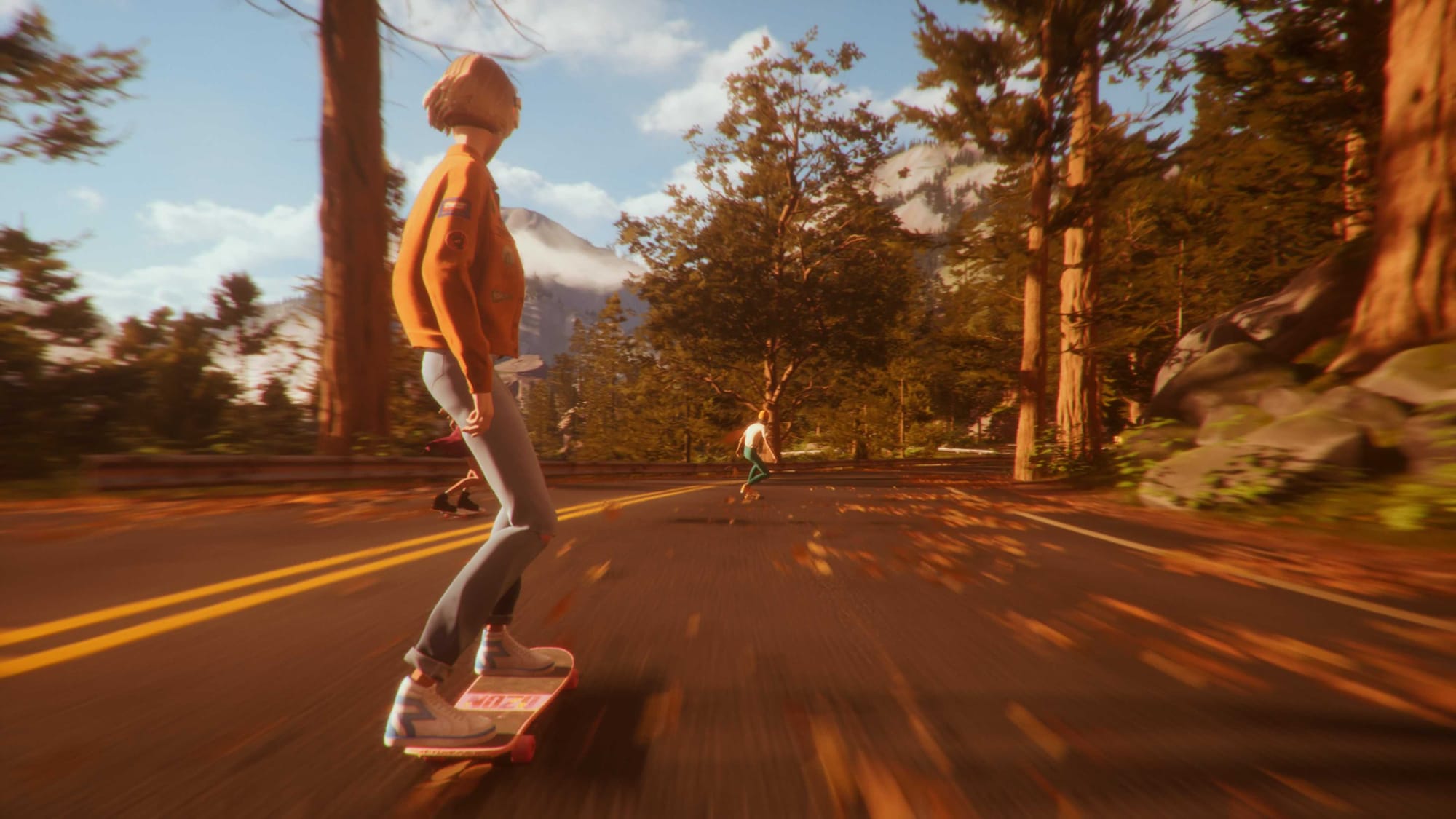
Make Memories to Good Music
Mixtape says those afternoon hangouts and wild parties; the emotional frisson of sharing burned CD mixes and bundling up in the back of your friend's car for a drive-in movie; and spending the weekend rained out in a campsite, eating marshmallows and cold hot dogs, are all real. They happened; you and your friends loved each other intensely for an instant. And then you went your own way, but maybe without the fireworks. The ghosts of your younger self still drift around somewhere behind you, poltergeists that emerge when you watch Garden State or listen to Taking Back Sunday.
"On their last night together, three friends embark on one final adventure. Play through a mixtape of memories, set to the soundtrack of a generation."
- Annapurna website
More than a visual novel on wheels, Mixtape is an ode to the shared dream of growing up. Like John Hughes or Steven Spielberg, Mixtape's creators attempt to convey the unhinged majesty of a particular, fleeting, indescribable moment in life, one that many of us ache to return to. Unlike other teeny-bopper narratives that try to portray the high school years as sacred or overly profound, Mixtape lets itself play out over just a few hours, showing a snippet of life shared among three best friends on their last night together. And, of course, it's all about a killer party.
To many, Mixtape will feel like Life is Strange or other similar titles that have tried to convey the bittersweet ache of growing up. I have complicated thoughts about our societal obsession with high school, and why this albatross dictates so much of our creative and material aspirations. Was high school good for anyone, or do we desperately wish it had been, and craft narratives around the imaginary? Mixtape's whimsical yet stoic sincerity is illuminated by the game's interspersed mini-games, eclectic soundtrack, and heartfelt themes.
You Might Miss It
I must admit, I was moved by Mixtape from the jump—er—downhill skate. Developer Beethoven & Dinosaur may have created a title light on engagement, but every moment connected me with the characters, with not one second of emotional grandiosity wasted. As with Firewatch or Life is Strange, I felt myself in the game, connected to the characters through something more than desire or whimsy. The unusual graphical direction, coupled with the game's intensely film-motivated editing, endeared the experience to me right away. While some players might not vibe with the dialogue and cutscenes driving most of the action, there's plenty of variety in the playable segments, and the game does occasionally slow down long enough to explore moments lost in time.
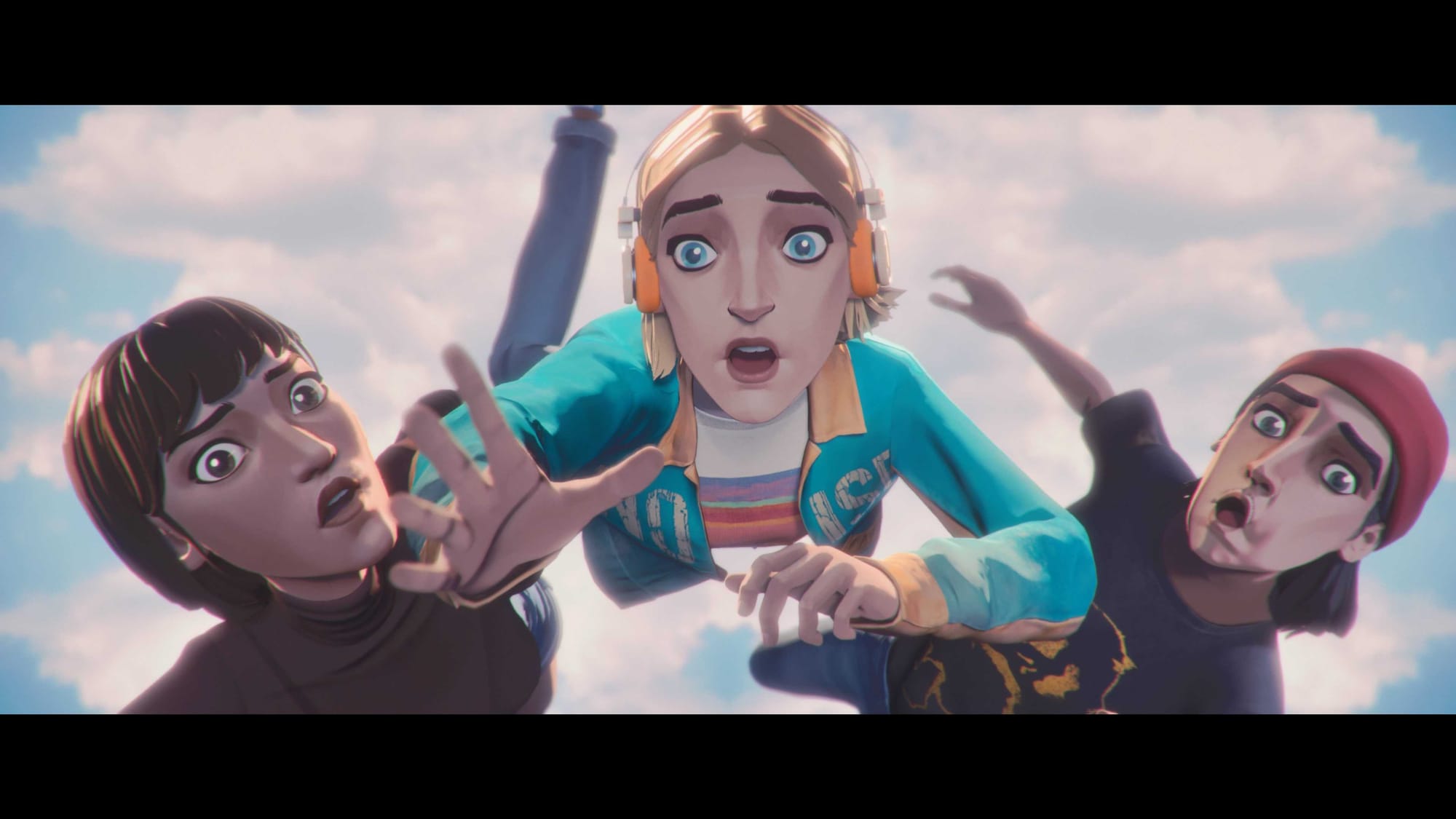
Rockford, Cassandra, and Slater are all bravely written characters, each realistic enough in their archetypes to coincide with iconic Ferris Bueller or Breakfast Club favorites, while retaining their own unique personalities along the game's limited course. Instead of baiting us with a collapsing love triangle or granting too much audience to any individual character, each of our ne'er-do-wells is allowed to spread their wings in the short time allotted them, especially Rockford. Mixtape is aware of its mechanical strengths and plays into them, relying on the audio cues of its pin drops to flesh out this "mixtape game."
Rockford, Cassandra, and Slater all have an overly romantic view of the world at large; each is undercut by the interplay of their dynamic perceptions, with Rockford's obsession with music balanced by Cassandra's violent dynamism and Slater's laissez-faire California hippy philosophies.
Mixtape also doesn't backseat its raucous Gen-X soundtrack. Depending on your age (and audio mileage), you may only immediately recognise a quarter of the twenty-plus songs that play out across the game's linear narrative. Rockford's tastes aren't singularly post-punk and heavy metal, but pull from decades of musical history, backed by a meta-directional explanation of the song, its place, and its meaning. The developers further ensured the songs were edited to fit the narrative and mechanical moment, with many of the audio drops perfectly aligning with an emotional beat or press of a button.
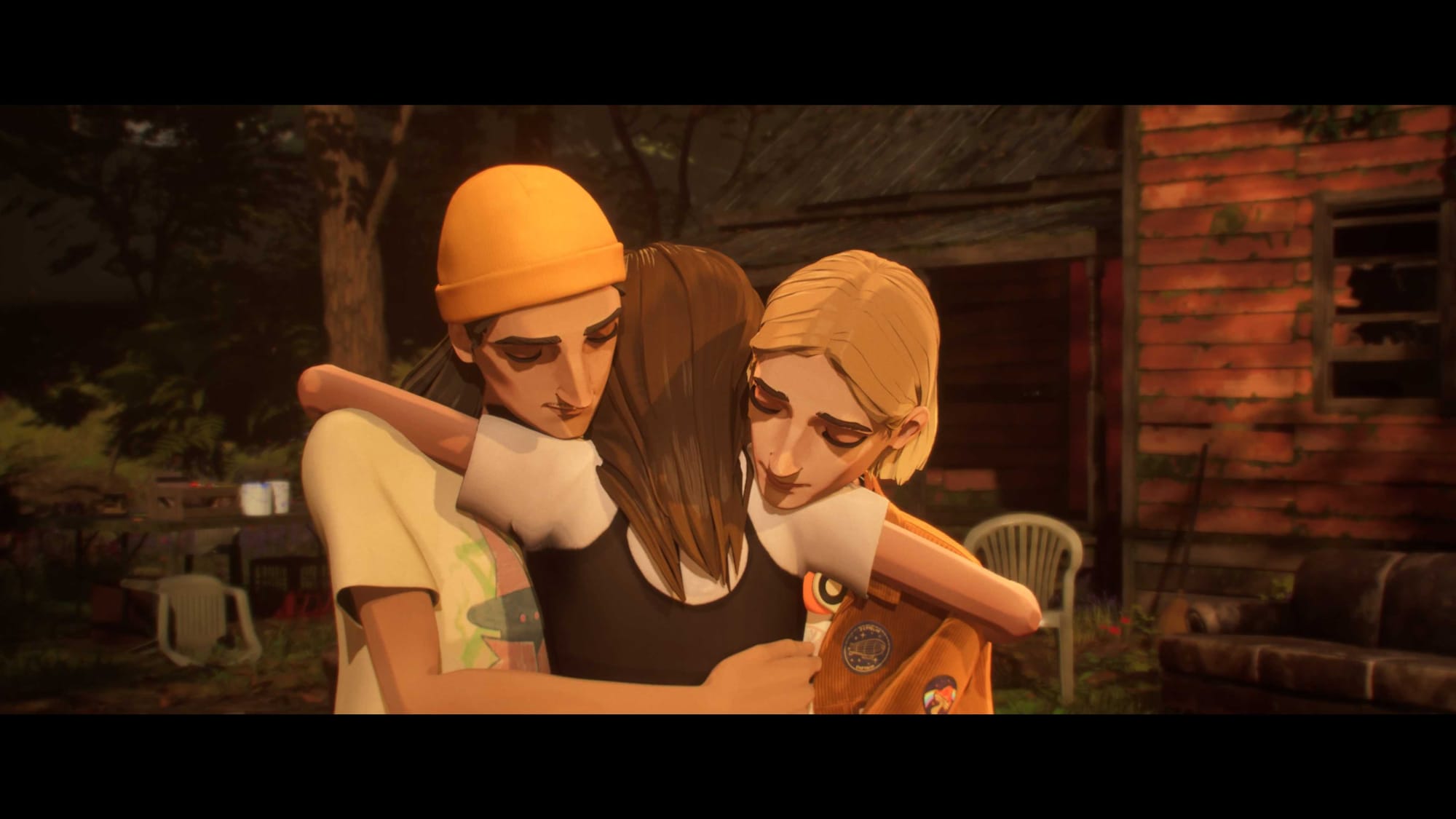
Optimal Teenage Experience
While refreshingly punchy, plenty of moments left me wanting more. More time to be in the moment, more time to enjoy the buildup, more time to fall into the unique experience. But I have a feeling that developer Beethoven & Dinosaur wanted to rob us of this saccharine meditation, to some degree. Life doesn't wait for us. Our best moments are here and then gone, contained in hazy memory. Mixtape can be replayed again and again, but the initial experience is a gut-punch firing on all cylinders, meant to evoke strong feelings while simultaneously reminding the player that life marches on at an uneven, frustrating pace.
Coming-of-age stories make us nostalgic for lives we haven't lived. Gone Home, To The Moon, Florence, and Life is Strange place us in a very particular slice of someone's life, and then yank it all away. The Beullerian "Life moves pretty fast. If you don't stop and look around once in a while, you could miss it" is ever true because it punishes those of us who are supremely anecdotal and sentimental.
You don't have to have lived any of the experiences within Mixtape to feel for its characters. The serviced nostalgia isn't based solely on lived tableaus, it's a historical reference of pop culture, a framed eccentric network of bite-sized vignettes recognizable to players who have come across movies, songs, even other video games that pull from our recognizable collective consciousness. Empathizing with the characters doesn't require placing yourself in your shoes—Mixtape is the sort of emotional microdosing that's perfect for a weekend afternoon.
For the aging adult who recalls a more formless world free of pressures and responsibilities, Mixtape is a vacation into the fantasy of teenager-hood, a risk-free celebration of the possibility and imagination that comes with raging hormones, close friends, and misplaced ambition.
Art Supersedes Knowledge
Video games like Mixtape straddle a fine line of established convention, eschewing traditional gaming aspects for artfully conducted episodes. Predictably, there is a slew of the gaming public who cannot stand when a game dares to edge outside of the corporate zeitgeist. A game can't be for them; it has to fit into the binary of good or bad, mine or yours, and, vexingly worse, necessary or unnecessary. It's difficult to imagine a video game like Ico, Flower, or Journey being released in such a hostile climate. Even tremendous, medium-shifting titles like Kentucky Route Zero are not immune to the guile of the internet, where any interactive experience outside of Elden Ring, Baldur's Gate 3, or Grand Theft Auto is condemned.
Mixtape deserves to live on its own outside of the monocell derision of a culture that has shifted so completely into negativity and monotony. If the video game industry is not allowed to take chances on experiences far outside of the realm of expectation, it is doomed to orbit the same list of corporate-approved genres, ancient franchises, and unoriginal stories.
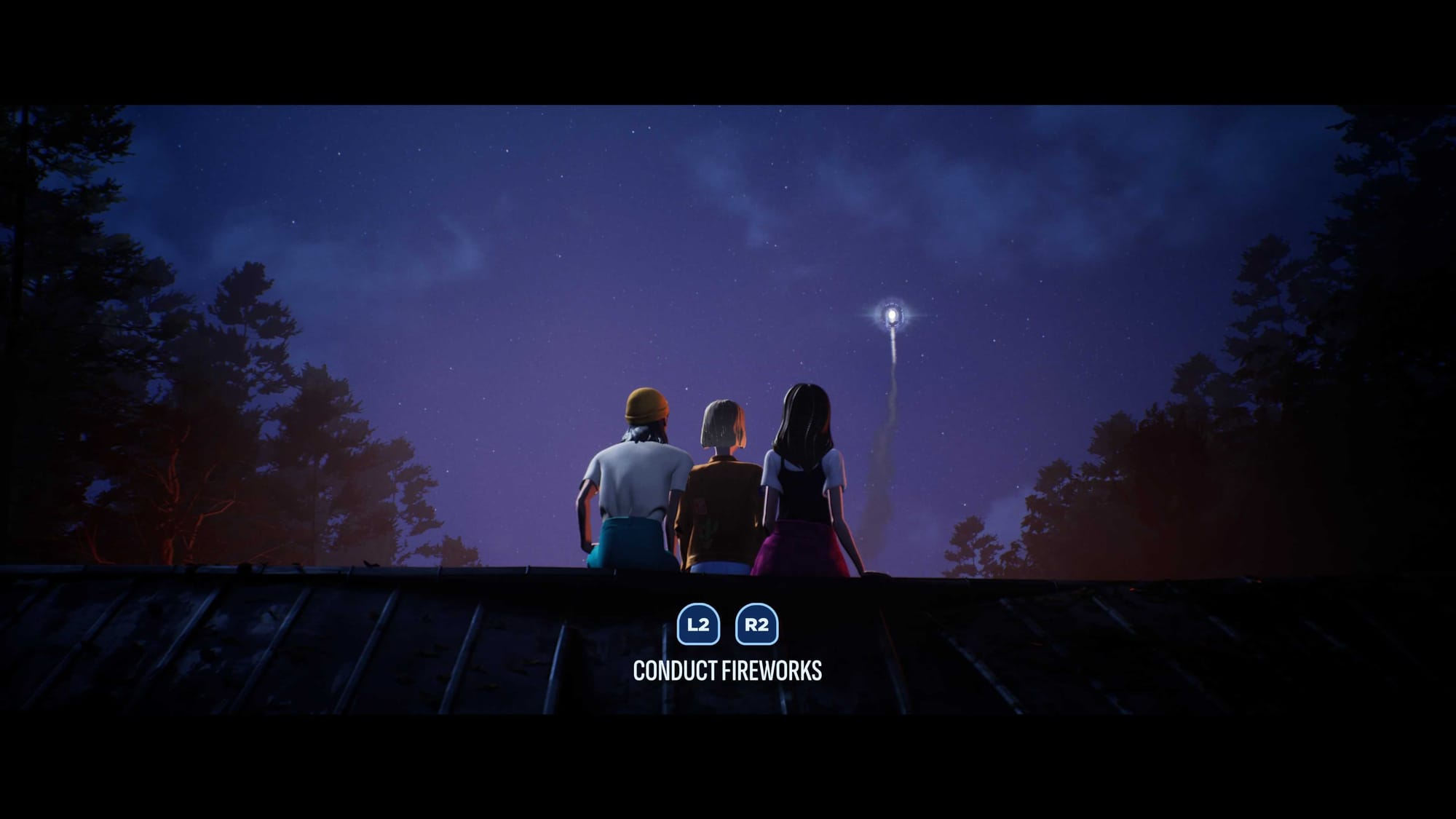
Growing up isn't a singular, linear path from childhood to adulthood. Mixtape's dynamic, romantic approach to the tedious normalcy of everyday life is what brings art to the form. Even if Mixtape had fallen flat for me, we must continue to admire the intense labor, ambitious creativity, and team effort required to bring these experiences to life (denigrating everything to "slop" is not only trite, it's dull). As the video game medium is flooded year by year with new games, gamers must continually choose between the played, the unplayed, and the terminally backlogged. Short, punchy, transformative adventures have forever been the backbone of gaming's most dynamic presentations.
Whether you're invading an alien planet or skateboarding down a hill, video games allow us to leave the real and become comfortable in the fantasy.
Nostalgia or Niche
Nostalgia is an oft-criticized catch-all trap, potentially and routinely utilized to soften the unstoppable lows of aging and capitalism. However, nostalgia can also be used protectively and intelligently, calling back to different eras of comfort, or softening the edges of memories that we often return to. Not everything is baited by the intents of nostalgia, and the recreation of art and the timelessness of pop culture can often be reformed through a more eclectic, powerful lens. Maybe you grew up listening to John Paul Young and Devo, Mondo Rock and Smashing Pumpkins, Silverchair and Iggy Pop. Maybe you came late to these icons. Nostalgia—or the feeling of comfort it exudes—can be reached through the expertly crafted designs of the artist, calling us back to a place we never lived, reaching out to our communal desire to return to the "good times."
None of us is the person we imagined we would be as teenagers. Video games are a powerful, all-encompassing medium, and an amalgamation of dozens of different art forms banded with interactivity. Games like Mixtape allow us to jump into foreign or familiar roles, evoking an emotional resonance undisputed by other media. Thomas Was Alone had me empathize with basic shapes. Kingdom Hearts added layers to well-known animated Disney characters. In Ghost of Yotei, I truly would've done anything to avenge my Japanese family from the Edo period. Video games transcend time, space, and personhood. Mixtape's familiarity is a trick, and a good one.
Video games are art. Mixtape is a video game. These are undisputable, objectionable facts. Maybe this ride isn't for you. Maybe the next one will be.
Join the conversation
What do you think? Reply below to share your perspective.