Now Playing at SUPERJUMP: Issue 38
What are you playing?









We're back with a brand-new Now Playing! As usual, our team has been playing a wide variety of games, from 20-year-old online RPGs to newly released remakes of beloved classics. No matter what we're playing, we want to share with you and maybe send you down the path to try something new. Let us know in the comments what you're playing and what news has you excited for the future!
James Burns (SUPERJUMP Editor-in-Chief)
Guild Wars
Much to my surprise, I'm playing Guild Wars again after (almost?) 20 years or so. I have such fond memories of the original game. It's the first (and so far, really the only) MMORPG I've played for any length of time. The original game was just so engaging (easy to play, tough to master), and it has a truly wonderful, non-toxic community.
Recently, I started playing Guild Wars Reforged with my sister. I've started a new character, and I'm playing on Steam Deck. Honestly, I'm blown away by the experience; the entire game has been customised to work flawlessly with the Steam Deck interface. Even if you don't change any settings, everything is remarkably intuitive right out of the box. But with the ability to set per-game profiles on Steam Deck, it's possible to really dial in the experience to your precise comfort level.
It's also truly lovely to be able to play this game on max graphics settings on a handheld machine. The game still looks gorgeous; it's a testament to the timelessness of great art design. Even better, it's wonderful to return to old towns like Ascalon and see them full of life again! Better yet, the Reforged community is really living up to the spirit of the game; everyone has been so welcoming and friendly. I feel that there's a real commitment on the part of the player base to revive that atmosphere of a truly inclusive online gaming community. And, in 2026, when there's so much cynicism and hatred floating around, that simple idea feels utterly revolutionary. I highly recommend this experience for both old and new players alike. Come and join me!
Rachel Alm
Granblue Fantasy Relink
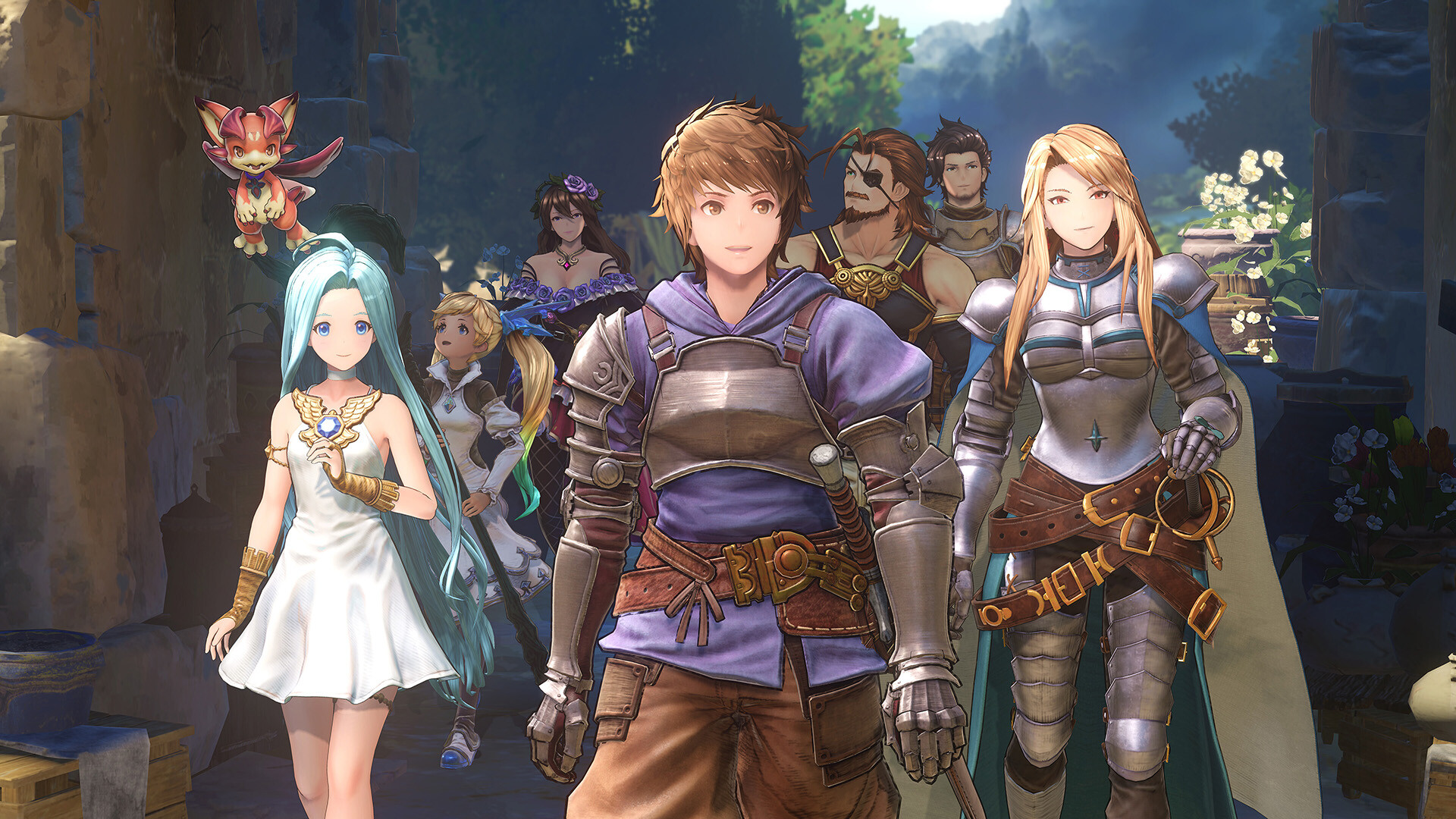
I’m playing Granblue Fantasy Relink right now. It’s got a sweet enough story (although it’s pretty much “so-and-so’s been taken, we must get them back!” for each arc climax), but I’m loving the combat. It’s frantic and can be trying depending on who you pick for fights. There are some fun boss set pieces that remind me a teeny bit of FFXVI (my current favorite when it comes to boss fights), and you can play as a ton of different characters with unique mechanics. I’m genuinely looking forward to all the endgame stuff! You can unlock new “crew” members for your team, and I plan on getting them all (there are some online components here, so I’m hoping it’s all free) and trying out their fighting styles. It’s very Genshin-like by way of character collecting, although you can pick who you want to add, and when. I don’t do endgame stuff all that often, but I’m pumped for this one.
I’ve also started again with Elden Ring, which I forever pick up and, frustrated, end up putting down. I would like to give it a genuine shot, though, and I'm enjoying it more this go around, with my fiancé and I occasionally playing together. I know I’d like it if I could nail down some spare patience and purposefully focus on its intricacies and lore. It’s like Baldur’s Gate III for me — I love it now, but man, did I have to pretty much be dragged to the title screen by my well-intentioned friends for that to happen (and they were right in their recommendations, as per usual)!
Matthew Lawrence
Powerwash Simulator 2
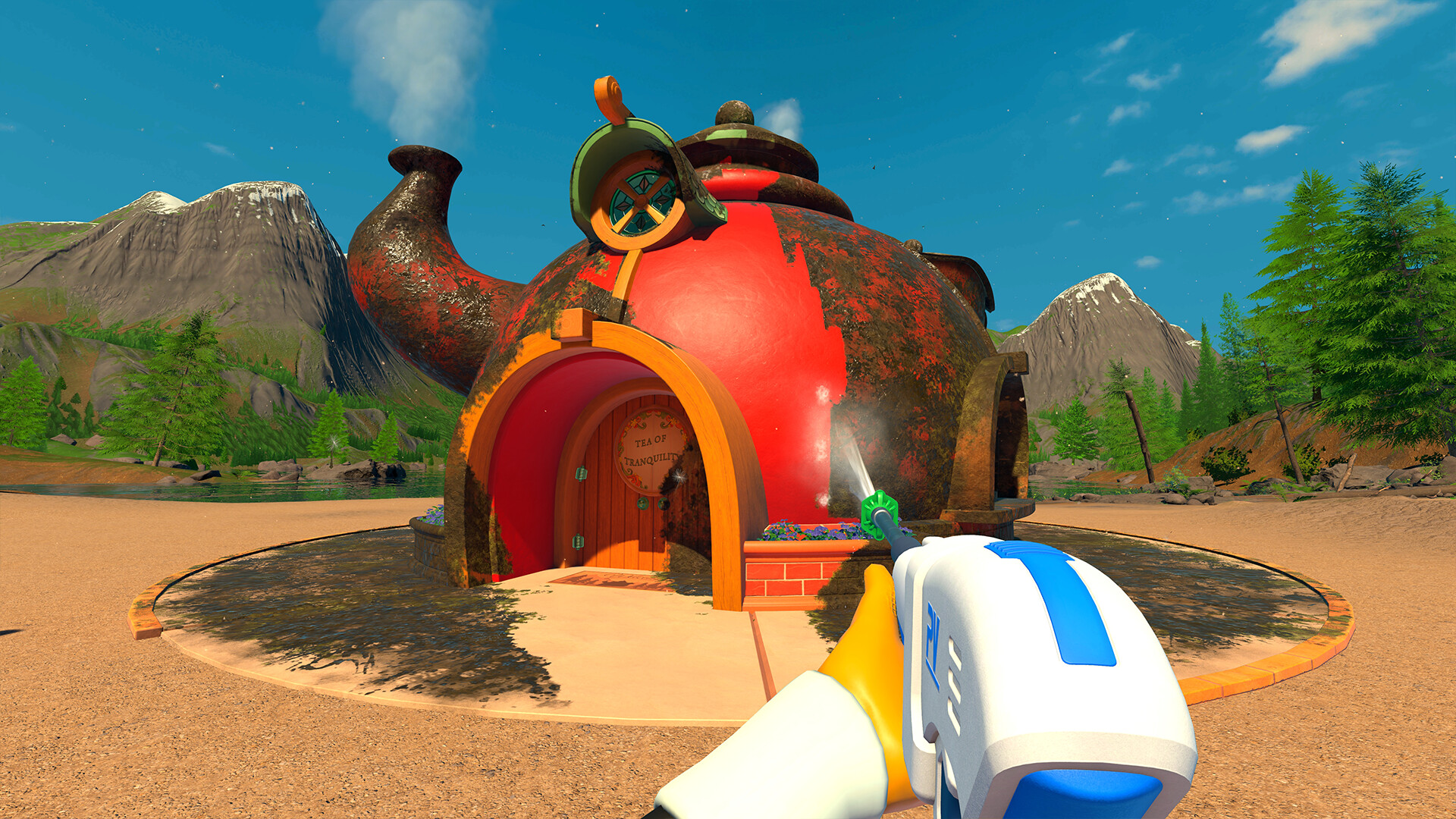
For the last month, my wife and I have been playing couch co-op in Powerwash Simulator 2 (PwS2). We both played the first game in single-player mode, giving us a good idea of what we were getting into.
PwS2 carries on the same gameplay formula as the first game, but introduces some new gadgets and improvements to the core gameplay, making the game feel more well-rounded and user-friendly. I thoroughly enjoyed the first game and have poured over 40 hours into it, but I can confidently say there were times where the gameplay felt like it crossed the line from satisfying to tedious. That being said, the nice thing with PwS2 is that there is enough variety with the gadgets and mission types that the levels never overstay their welcome. The player can easily go from multi-hour-long cleaning operations of buildings to fifteen-minute-long jaunts cleaning vehicles.
Much like the first game, PwS2 carries itself with an air of lighthearted playfulness, helping to elevate it above other job simulators. Even if you aren’t completely sold on the idea of playing a game where you are tasked with spraying off dirt and grime, the comedy and overall story are well-written. Both PwS2 and the original are available on Game Pass for PC and Xbox and are certainly worth a try.
Jahanzeb Khan
Animal Crossing: New Horizons - Switch 2 Edition
When New Horizons first launched back in 2020, it became the perfect pandemic game. Most of my time with the game was during the lockdowns, and while I definitely appreciated the distraction and escapism the cosy experience provided during that difficult period, it's not the association I want anymore.
Animal Crossing games are engrossing in their own right, and so New Horizons deserves a legacy that isn't tied to one of the worst periods in our history.
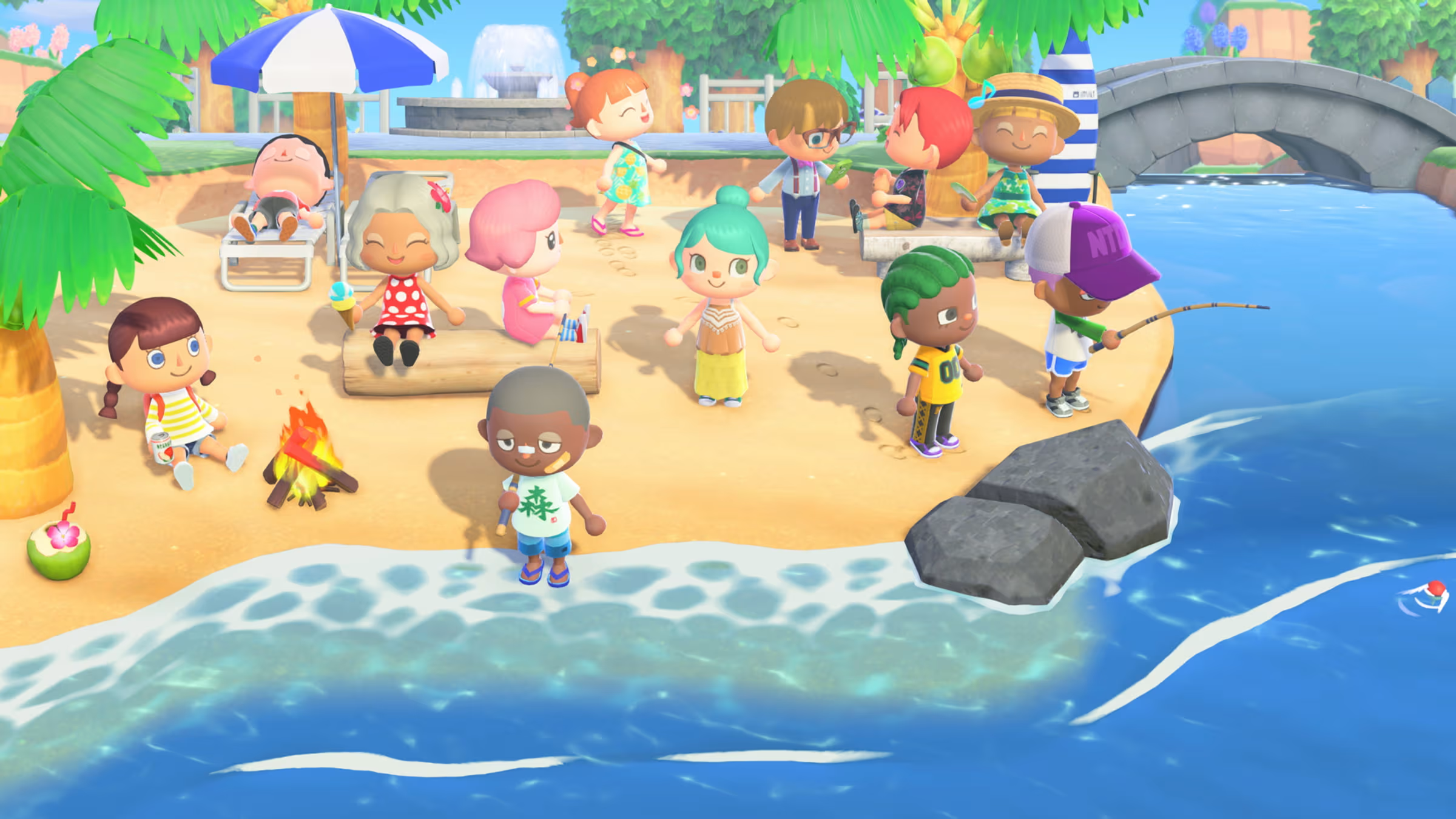
Revisiting the game at the start of the New Year via the Switch 2 Edition with the major Version 3 update has been a delight. The game feels so much fuller than what it was during launch, with no shortage of activities and side hustles. The cast of villagers has grown to Pokédex levels, and now there are more opportunities to Meet 'Em All: cafés, hotels, island retreats, camping sites, you name it.
Animal Crossing: New Horizons - Nintendo Switch 2 Edition marks the return of the OG cosy video game.
Nathan Kelly
Final Fantasy 6 Pixel Remaster
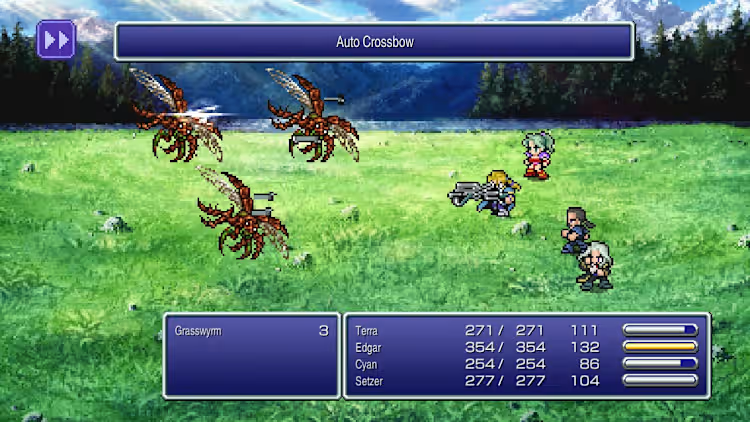
The newest venture in my quest to play through each Final Fantasy is the epic finale of the Super Nintendo trilogy. I’m nearing the halfway point, having gone through tons of incredible set pieces, including the famous opera scene.
What I didn’t expect this time was to become so heavily invested in the stories of these characters. People recommended online that you just leave Locke behind as much as possible. While this does seem advantageous in a battle, I have to take him with me everywhere because I’ve become so enthralled with his backstory. He’s the most emotionally and expertly written character in the last 6 games, and I’ve grown attached. I’m in the process of transforming him into the ultimate healer so that I can continue to drag him everywhere.
Final Fantasy NES
Here’s a blast from the past: I’ve gone back to an NES version of the very first Final Fantasy. This is because I’ve discovered the Archipelago multi-world randomizer which might be the coolest thing to ever exist, a randomizer that hides the items from your game in different games, possibly even controlled by other players. Sadly, the NES version of Final Fantasy is the only one compatible at this time (groan).
So with the help of the Final Fantasy Randomizer (check it out here), I was able to turn the dated and broken first draft of Final Fantasy into the version as depicted in the game’s manual.
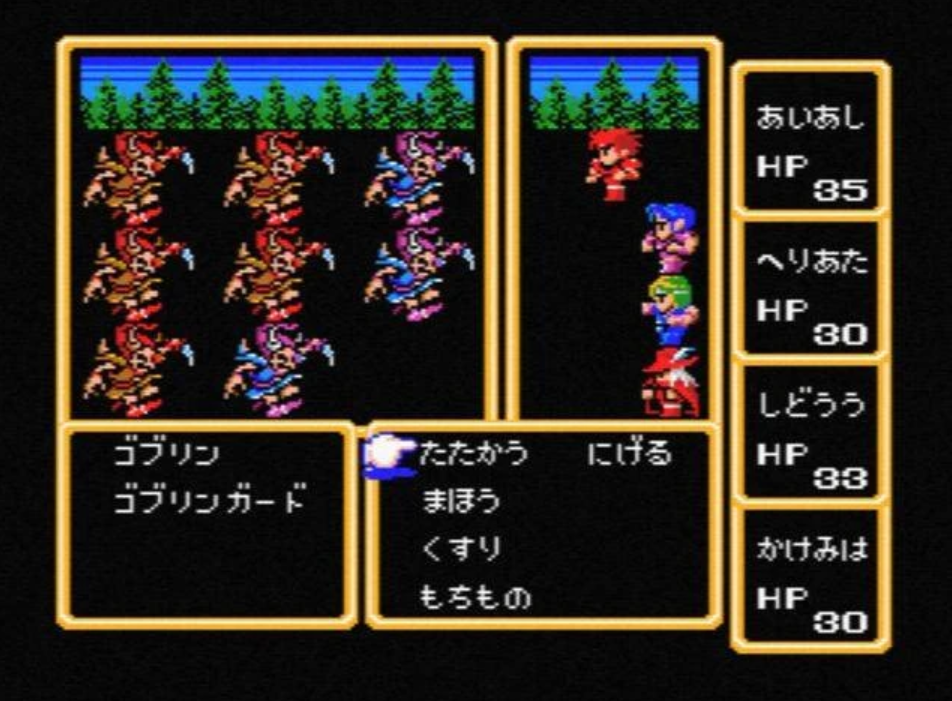
This play-through of the first game highlights how replayable this game is to me. The perilous dungeon-crawling and light story lend itself to the possibility of infinite adventures.
So far, I’m still getting my ass handed to me by that first dreadful cave, but the literal light at the end of the tunnel is that the game is an enjoyable fantasy romp once the Marsh Cave has been conquered. I’m doing this run without the random elements, but once I'm familiar with this version, I’ll go back and mix all the treasures and enemies around. Lali-ho!
Vitor Costa
Dragon Quest VII Reimagined
This week, I finished the Dragon Quest VII Reimagined demo on Steam. Although the demo lasts about three hours, it took me five to complete because I explored it thoroughly. While shorter than the Dragon Quest XI demo, it is still generous and leaves a strong impression.
Dragon Warrior VII was visually innovative, setting the visual standard for the first 3D Dragon Quest games, and it features a standout narrative among PS1 JRPGs. However, its gameplay was unfriendly; The opening is excessively slow, with several hours passing before meaningful combat begins, and its long story (the longest in the main series), combining naval exploration and time travel, relies on fragmented progression as well as trial and error. Although this seventh adventure is one of Yuji Horii’s most ambitious works, its narrative demands too much patience.
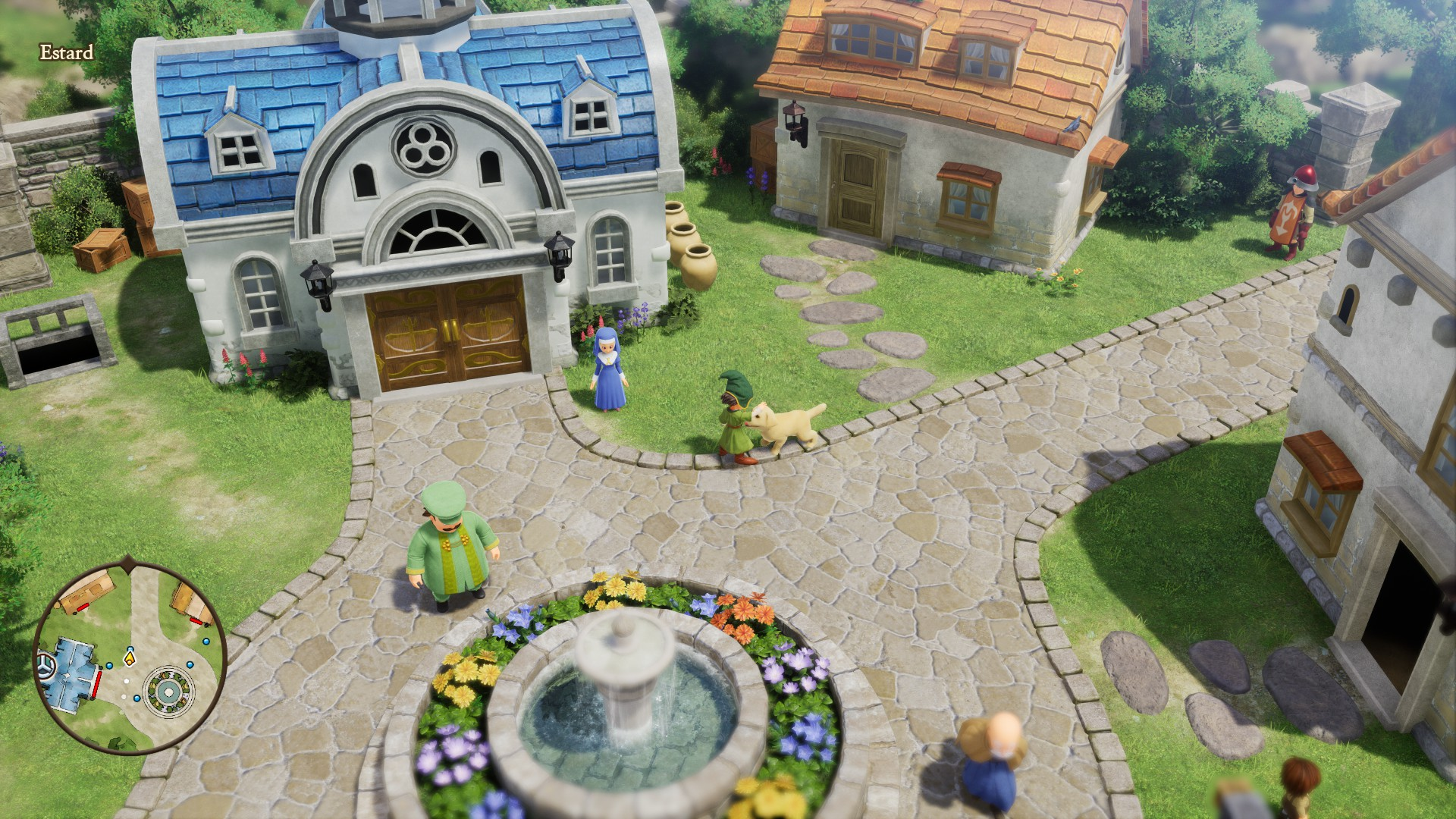
The Dragon Quest VII remake for 3DS laid the groundwork by improving pacing, maps, and the early hours, but it remained constrained by handheld hardware. Environments were compressed, the world was reduced in scale, and the visual style was less expressive. Furthermore, the vocation system remained relatively uninviting to newcomers.
Dragon Quest VII Reimagined preserves the episodic structure while presenting it in a more guided and engaging way. Its turn-based combat is straightforward, the level design is easy to read, and random encounters are removed, with weaker enemies fleeing or being defeated instantly. Finally, customization feels more flexible through equippable monster hearts as accessories.
This is the first version of Dragon Quest VII to feature orchestral arrangements of Koichi Sugiyama’s music, which complement the fairytale tone and diorama-like environments. While not all characters and monsters are equally striking, they remain faithful to Akira Toriyama’s concept art. Even alongside excellent remakes in the series, Reimagined stands out as its most beautiful and ambitious Dragon Quest reinterpretation.
Ben Rowan
Turbo Overkill
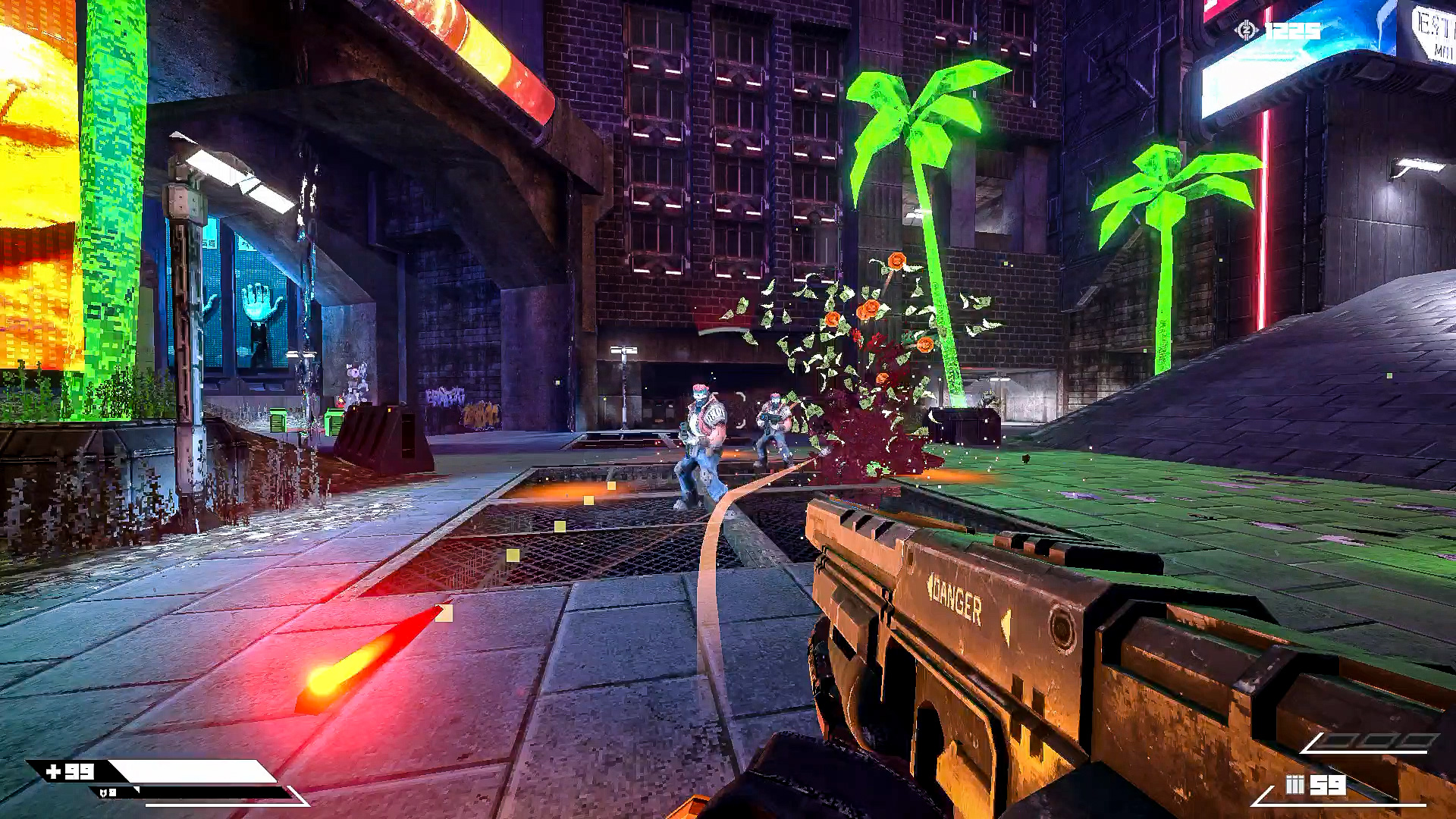
I’m currently playing Turbo Overkill, and it’s exactly the kind of game my teenage self would’ve probably called “too much,” which, in boomer shooter terms, is basically a five-star review. I grew up on Doom, Quake, and Half-Life, games that defined '90s PC shooters: big guns, action-packed arenas, secrets tucked behind suspicious walls, and a single-player campaign that was the whole point, not an optional extra.
When the Doom reboot came along in 2016, it reminded everyone that momentum isn’t just a mechanic, it’s a design philosophy. It’s been refreshing to watch those old-school ideas creep back over the past decade, giving rise to the boomer shooter, like an entire genre collectively remembering what made it great in the first place. So when I spotted Turbo Overkill, a hectic cyberpunk splatfest that looked like it drank a few too many Red Bulls and picked a fight in a neon-lit nightclub, I was immediately intrigued.
Moment to moment, the combat sits in a similar neighbourhood to Doom Eternal. It’s not as heavy on the “combat chess” layers, but it’s still punchy, in-your-face, and obsessed with keeping you moving forward. Wide FOV, chunky shotguns, enemies popping into gore confetti - all the good stuff. You’ve got a very effective air dash too, and it gives you even more aerial control than Eternal does. A lot of the fights have you strafing above the fray like an armed mosquito, raining down bullets on anything that moves.
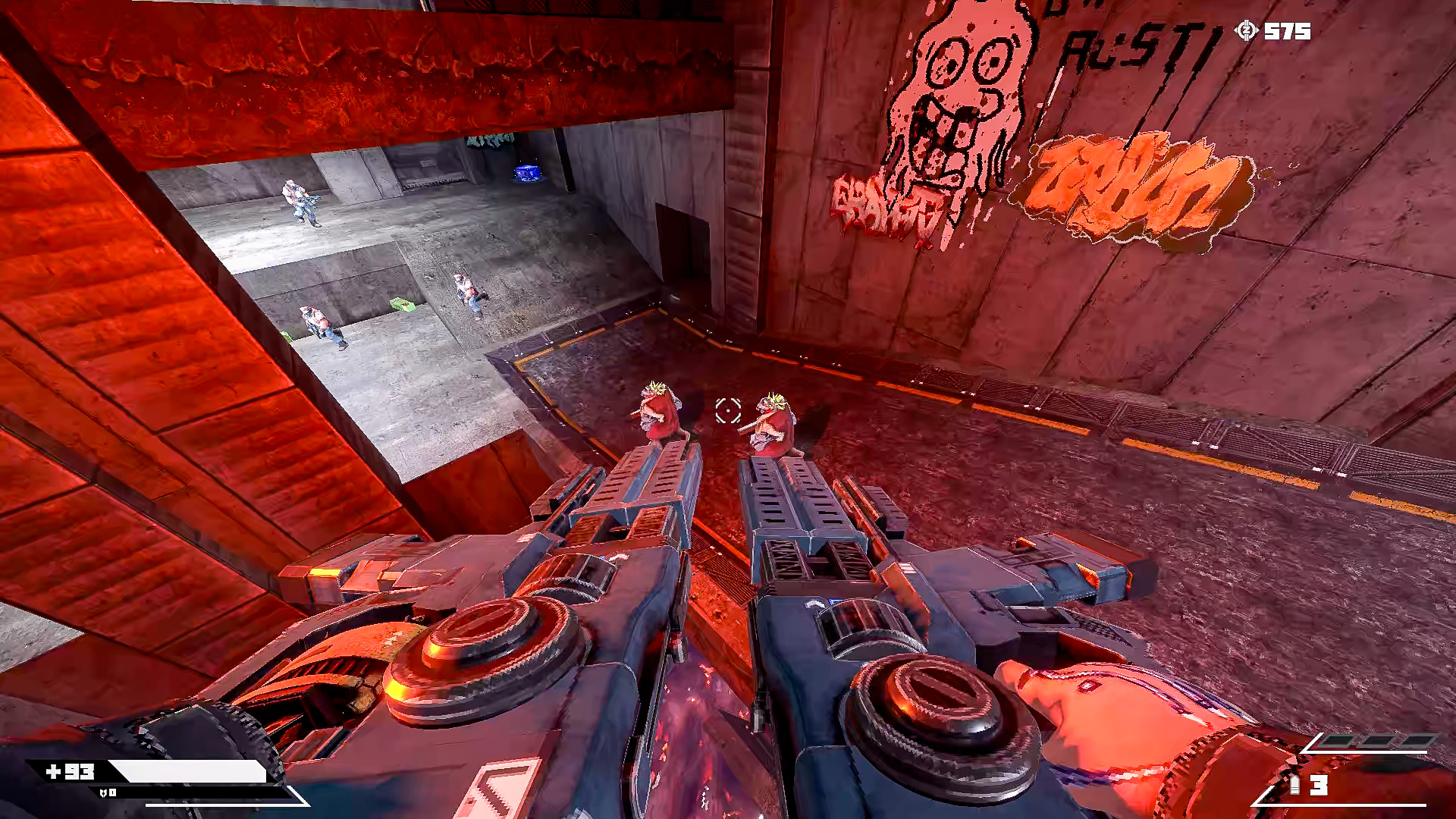
And there’s a new word the game introduces us to: chegging. Early on, you get one of the most ridiculous weapons in the genre, a cybernetic chainsaw bolted to your leg, known as the “Chegg.” Sliding through enemies becomes a brutal, momentum-fuelled lawnmower attack. At first, you’ll use it as a finisher, then for crowd control, then simply because it’s so satisfying to carve a room clean with a single glide. Before long, it’s obvious the levels are built around it. It’s perfect for mowing down the first wave of grunts and saving your shotgun shells for the bigger nasties lurking in the back.
The levels have a classic feel too: big spaces, key hunting, doors unlocking into new areas, and boss rooms that turn into multi-wave survival pits, with enemies warping in constantly until you’re low on health, ammo, and basically surviving on adrenaline alone. There are secrets everywhere, plus light Metroidvania flourishes, like grabbing wall-running boots halfway through a level and realising half the map was quietly off-limits.
I’m playing on console, and the aim assist is super spicy. It’s less a gentle nudge and more like a soft lock-on, letting you circle-strafe and keep the tempo without fighting the sticks. Purists will want to tone it down or switch it off, but for me, it adds to the flow and feel, and enhances the fun of playing on a controller. Turbo Overkill is a frantic, frag-filled reminder that sometimes the smartest design choice is simply ‘go harder’.
A big thank you to our writers for dropping by and to all our loyal fans for being here to check it out! Be sure to tell us what you're playing in the comments, and check back next month for more of what our team is getting into.