OPUS and the Story of Earth
What if the very idea of Earth itself was a myth?


Earth is ordinary to us, and we are far more interested in knowing if there is anything else out there, but it's worth stopping for a moment to realise how the very reality of our planet's existence is utterly unfathomable. Just the idea of Earth itself sounds like something out of a Mesopotamian creation. Whether it’s religion or science, there’s no denying that Earth is a miracle in both the spiritual sense and the mathematical sense. It is fair for us to take it all for granted and not be in awe of it, but imagine for a second if the minuscule probability tipped the other way and none of us ended up on this blue planet at all.
The story of Earth, and its scientific and metaphysical marvel, is the subject matter and fascination of the video games which make up the OPUS series. These are sci-fi epics developed by the independent studio SIGONO.
The Day We Found Earth
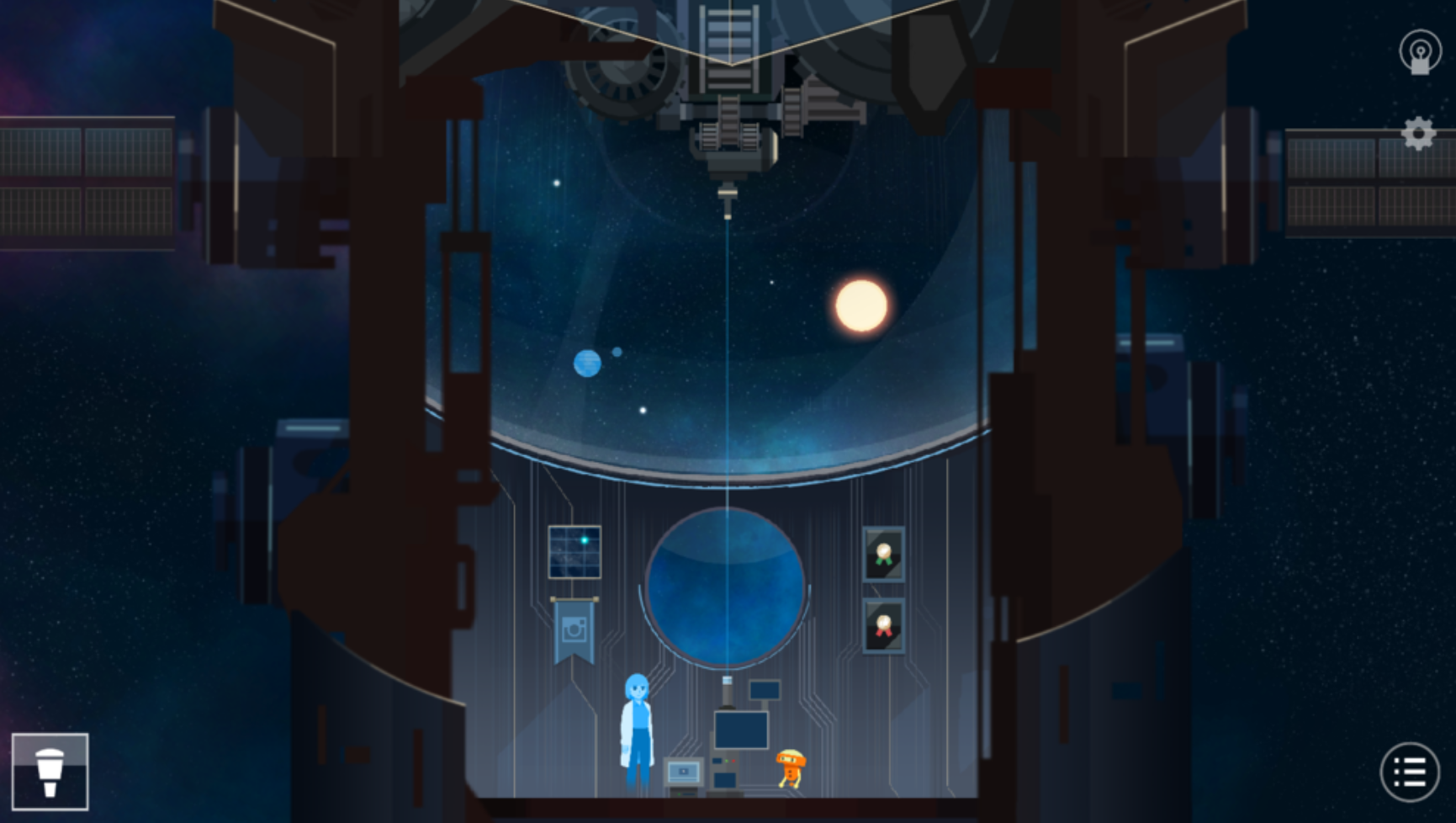
In OPUS: The Day We Found Earth, a little robot named Emeth (which means 'truth' in its Hebrew root) scans the galaxy using the most powerful telescope imaginable to detect some sign of Earth or even something like it within the vast cosmos. This is a mission he carries on for his long-departed scientist friend, Lisa. It's a fascinating idea for sure; when humanity and science are so hellbent on finding some shred of life existing somewhere other than our planet, what if someone out there were relentlessly searching for a planet like ours? Even as an ordinary Earthling, you can't help but admire the sense of awe and wonder, and perhaps even appreciate just how good we have it.
One of the things we learn from Emeth's research, as he scans and documents one celestial body after the next, is how the conditions which miraculously came together to make up planet Earth were really a one in a [insert some obscenely large number] chance. As Emeth discovers planets highly similar to Earth, it becomes clear how, in meeting the criteria for an ideal planet able to sustain indefinite life, close enough is simply not good enough.
Sure, some of these planets may have water, and some may support life in the short term, but even one deviation from Earth's optimum conditions can throw the whole balance off. This could be something as simple as having one moon too many, or just not being the exact right distance from a burning Sun-like star. As planets are discovered and named by Emeth, the eventual buildup to the finale is both touching and harrowing. As a gaming experience, it's really just about tuning into a sense of discovery and wonder, and being able to name the planets lets players have the same fun as NASA scientists do.
With Earth being a myth in the world of OPUS, the humans of this unique setting have gone as far as to take their beliefs to the extent of forming the religion of Earthology. This faith helps them foster their hope of one day returning home to this perfect planet of their ancestors. Despite having the technology to traverse space, they barely make ends meet in less-than-ideal home worlds. Even in planets that somewhat have the conditions matching those of Earth, their capacity to sustain human life for the long term is always in question.
Rocket of Whispers
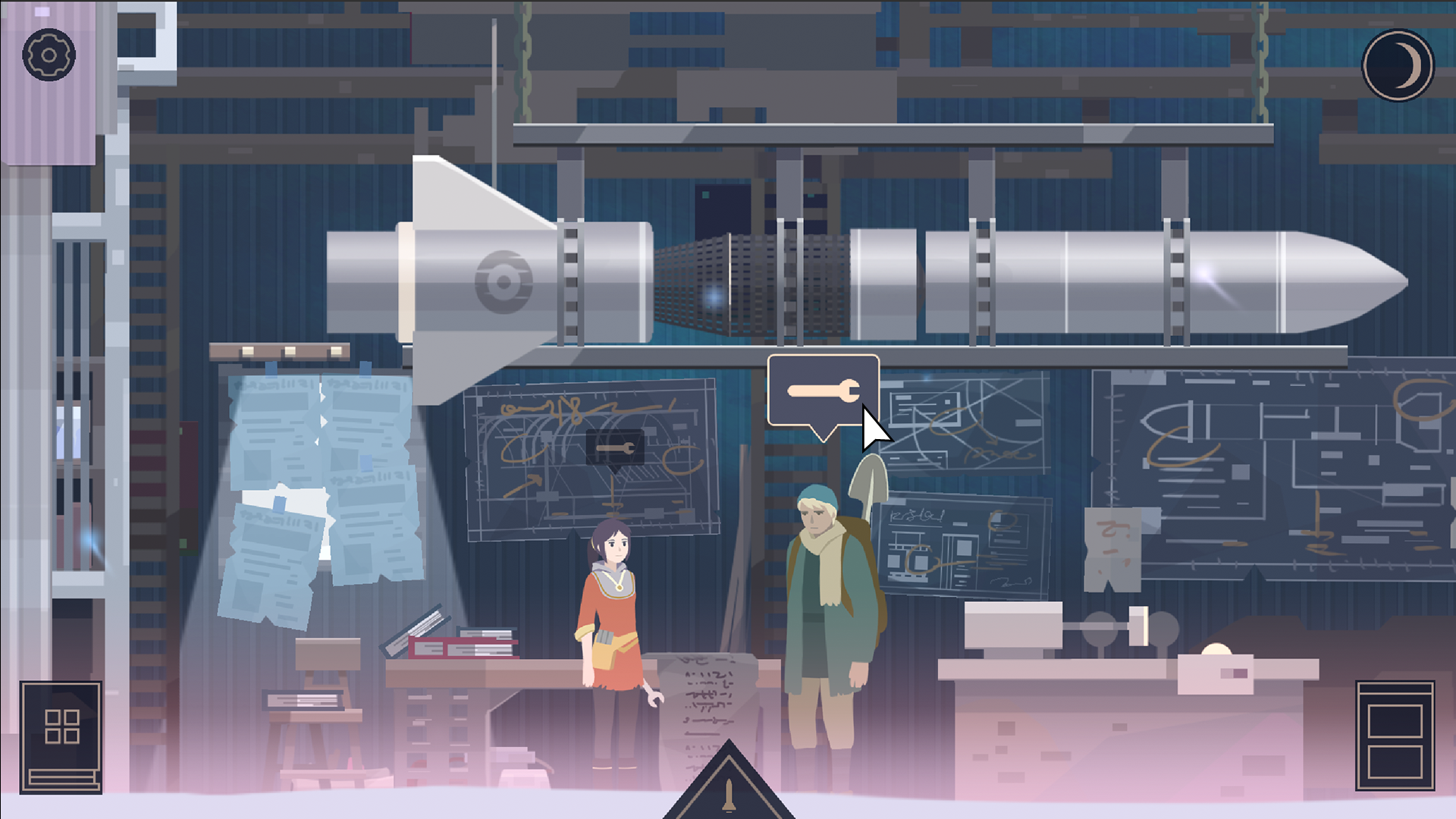
In the next game of the series, OPUS: Rocket of Whispers, Fei and John are two lone survivors on their dying planet that is now filled with ghosts of a long-gone human race. Where OPUS: The Day We Found Earth was more about space-age tech and researching planets, the religion of Earthology becomes the focus of OPUS: Rocket of Whispers as the main characters try to hold on to life in a lonely cosmos. One of the religion's lifecycle rituals is the space burial, which basically involves sending a rocket into space. This is an act symbolising a send-off to the restless ghosts and spirits as they go on to become one with the cosmos. John, being a cynical and weary survivor, harbors deep resentment toward the ghosts that persistently haunt his every waking moment. Fei is a Witch, and in the context of Earthology, this is essentially a saint who brings peace to departed souls. In this role, she serves both as a priest and one hell of a rocket engineer, too. 'The Rocket Nun'... now there's an idea for a movie.
Where The Day We Found Earth followed the lonely journey of a robot as he tries to complete the mission of his late mentor, Rocket of Whispers is a spiritual journey of two unlikely companions as they preserve the traditions of their faith, persevering in a harsh, dying world. The connection between John and Fei avoids common tropes, and the nature of their relationship is left to the player's interpretation. Some may see the atypical romance, some a platonic friendship, and others may find a deeper, more nurturing relationship that is almost paternal in nature. Whatever the interpretation, seeing Fei and John navigate their circumstances and make sense of their purpose is an emotional ride. When their purpose and relationship intertwine towards a resolution, it is a moment of intimate absolution.
John must traverse the treacherous landscape, long destroyed by disasters and plagues, as he gathers materials Fei needs to construct rockets for space burials. As John makes his way through the remnants of the human race, he finds many worn-out objects, things like books, badges, watches, and toys, but these abandoned belongings carry the memories of their respective owners, and it is these discoveries which are both harrowing and sentimental. Those objects end up being the only surviving witnesses to the humanity that once was.
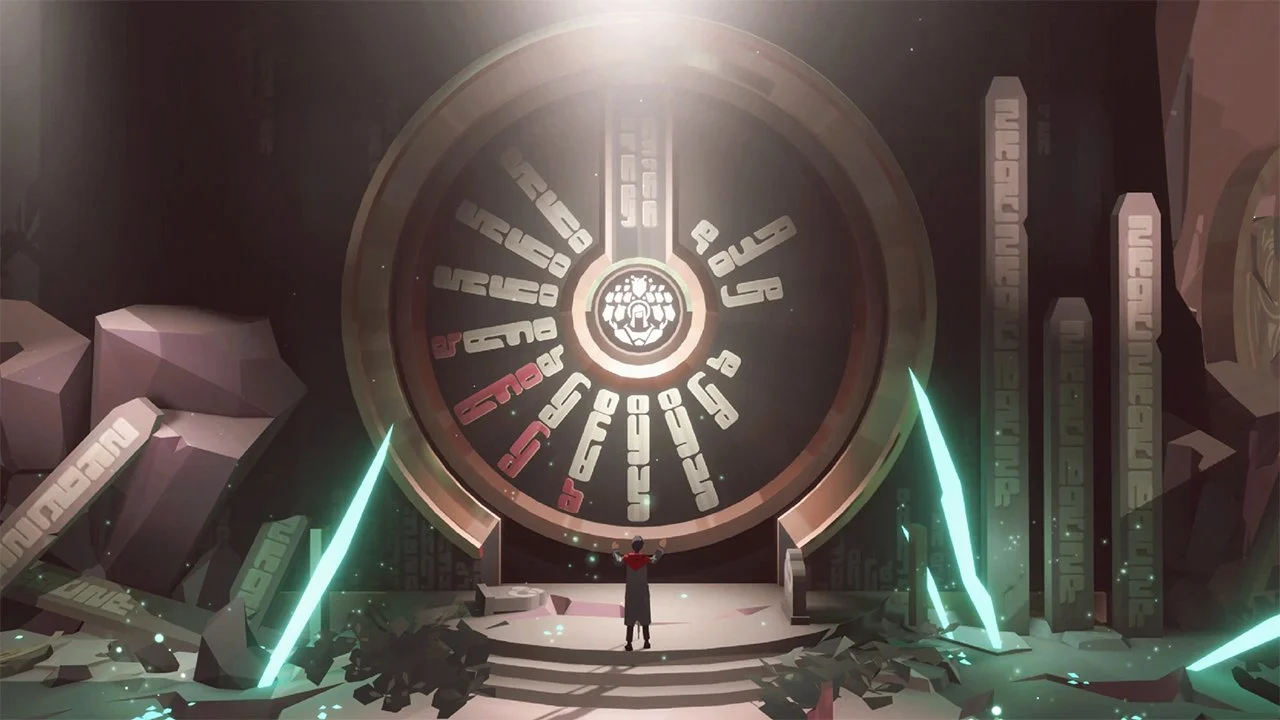
The Day We Found Earth and Rocket of Whispers are completely different gameplay experiences, and yet share a cohesive spiritual sentiment. Here, the desire to venture into space is both a technological sci-fi marvel and an existential fantasy ideal all wrapped in one. OPUS melds sci-fi narrative devices with spirituality, certainly an uncommon feat in video game storytelling, the closest examples being Star Ocean and Phantasy Star.
Echo of Starsong
The next game is OPUS: Echo of Starsong, and while maintaining the same thematic tones and metaphors, it is a completely different style of game from its two predecessors. For developer SIGONO to create such unique designs for each of the OPUS games is a feat that shouldn't go unnoticed.
The Day We Found Earth was a passive experience where a robot scanned planets across galaxies; Rocket of Whispers had an element of survival on a dying planet with the power of faith and companionship. Echo of Starsong ups the ante tenfold, yet incorporates design conventions and themes from its aforementioned predecessors. It has the galaxy exploration from the first game, and the character-driven exploration from the second game, integrating both ideas into something entirely new, and situating it in a far more immersive context.
Where the prior games were largely intimate and mysterious in their world-building approach, Echo of Starsong literally shoots for the stars with its grandiose setup. Here we have lore and scale akin to Star Wars/Star Trek, along with multiple populated planetary bodies, warring empires, and all sorts of lore details to really build up an intergalactic landscape. Matching this ambition are revamped visual and graphical styles, making use of 3D alongside the signature OPUS artwork. It all comes together marvellously.
The thematic tones are drastically different, too, with exploration, puzzle solving, and even an intense hostage situation. Despite these ambitions, Echo of Starsong retains the spirit of the series, with its heartfelt, emotionally charged characters. One of the main characters is Eda, a Witch with mystical powers and singing abilities. They portray a headstrong personality, a stark but welcome contrast to the timid, kind Fei from Rocket of Whispers. Its ambitious game design involving tactical strategy segments and action-focused exploration, bolstered by a revamped visual style. There’s expansive world-building, stunning music, and a unique presentation to bring it all together. Echo of Starsong feels like both a culmination and a dramatic evolution.
Prism Peak
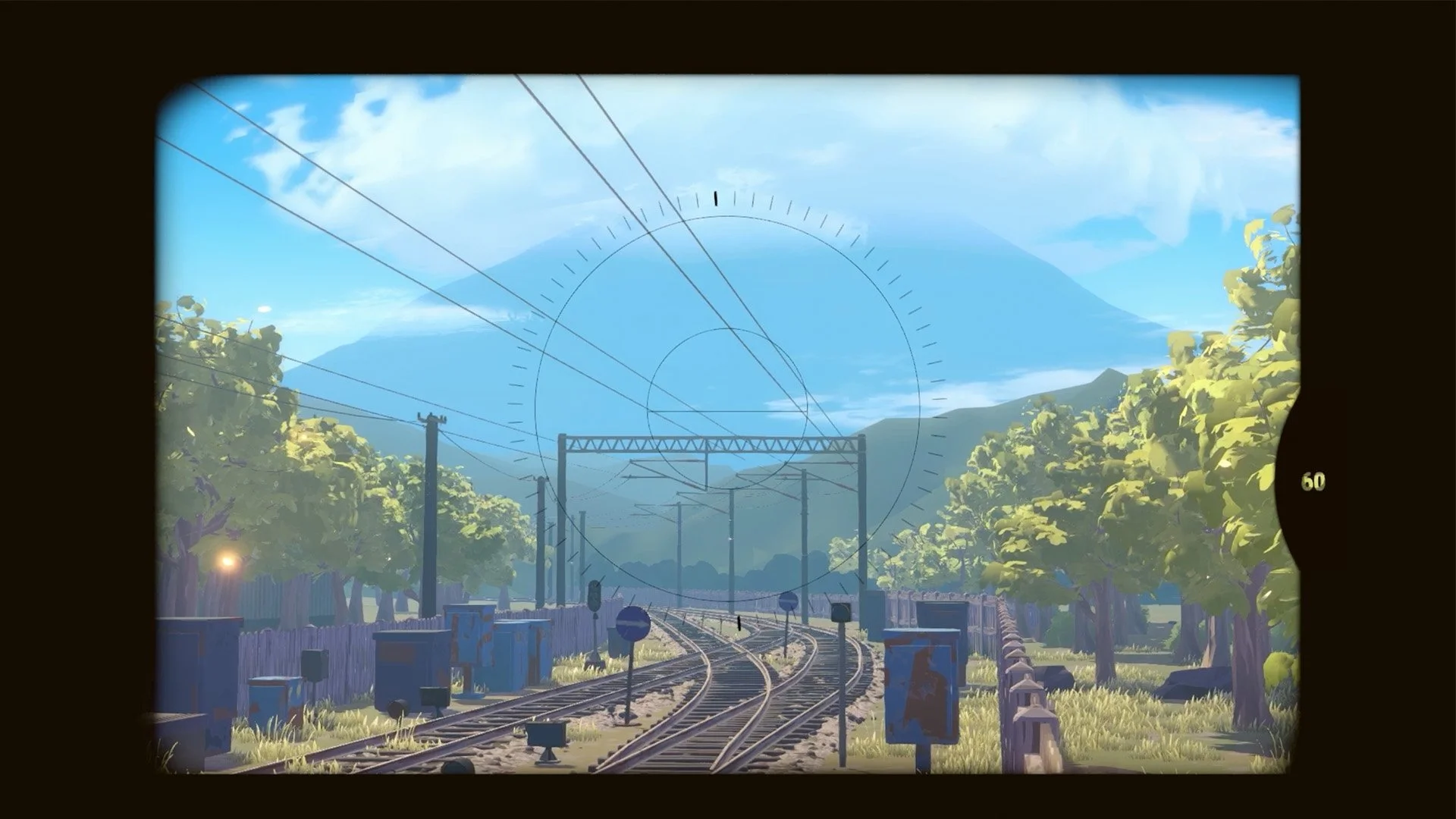
The latest entry is OPUS: Prism Peak, and once again, developer SIGONO has decided to completely reinvent the wheel with their flagship series, and yet somehow still retain the core spirit of it. Prism Peak is less about the galaxies and all about its protagonist, Eugene. The game opens with his childhood as he spends quality time with his grandfather, learning the basics of photography, which essentially is the main gameplay mechanic.
In Prism Peak, players see the world through the lens of Eugene's camera, a passion he chases most of his life, even when this passion doesn't love him back. His childhood was largely spent with his grandfather as his parents navigated a turbulent marriage and uncertain career paths; as time goes on, Eugene doesn't fare much better either, as he loses his career as a full-time photographer, followed by a cafe business that went bust, and a divorce to add further salt to these setbacks. The game picks up when he's 40 years old, having just attended his grandfather's funeral, with not much going on in his life.
After barely surviving a fateful car accident, Eugene finds himself in an unfamiliar place where he meets a mysterious young woman who just so happens to be an amnesiac. Together, they embark on an adventure to seek out something that neither person is sure about. Along the way, Eugene uses his camera to help make sense of his surroundings, in particular the mysterious creatures and hauntingly serene backdrops. The game describes itself as a photo adventure with an emphasis on world-building by capturing and studying moments with a camera.
Each game in this enigmatic sci-fi series is a stark departure from the others, and this speaks volumes about developer SIGONO and their willingness to embark into uncharted corners of their created universe.
The OPUS series is a remarkably poignant insight into the complicated nature of human existence, and the very idea of Earth being the sole haven for humanity to sustain and even exist at all. Seeing the human race stranded from Earth to the point where the very idea of it is akin to having blind faith in a god is a motif these games deliver in a profoundly provoking way. The gameplay design is simple but achieves its intended purpose, and the presentation shines through with warm, comforting visuals and heart-wrenching music. As an experience, these games collectively build a world as large as the cosmos itself, one in which players can lose themselves in a metaphysical gaze.