Playing with Fear: What Hollowbody Taught Me About Survival Horror
Be afraid, very afraid

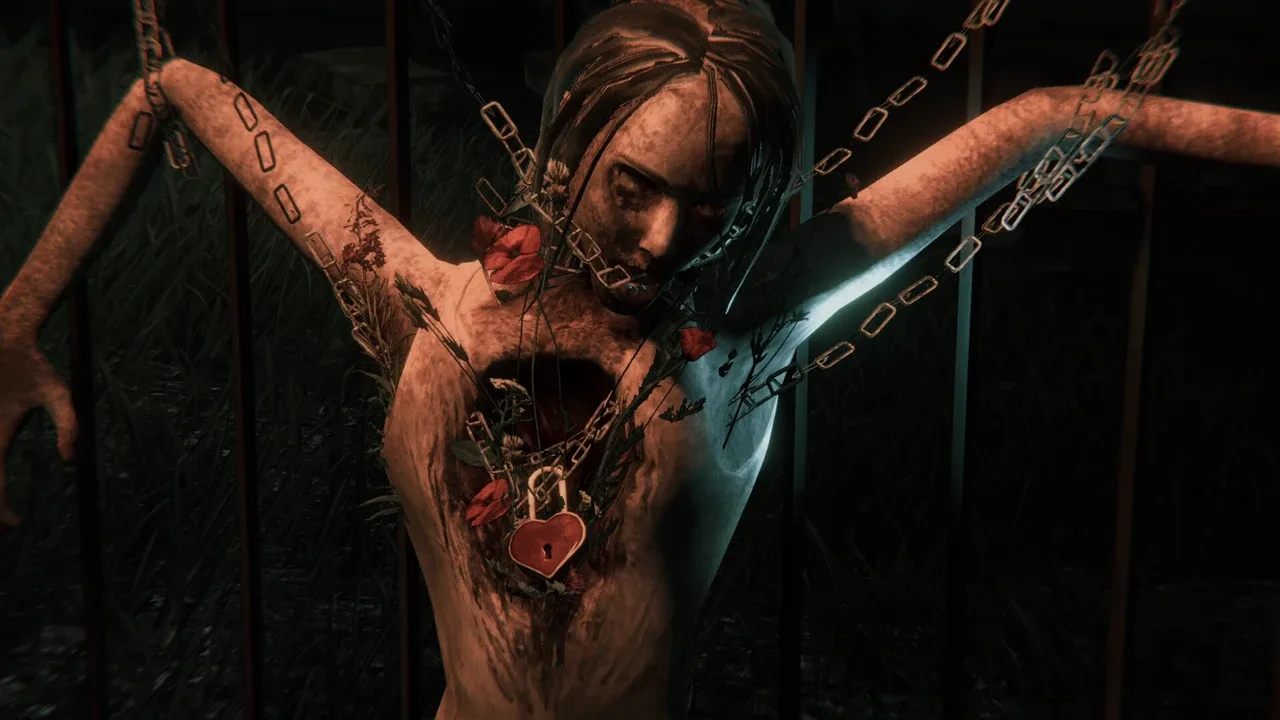
Everyone is afraid. We’re born afraid, we die afraid, and we spend much of our time in between struggling in vain to overlook those fears – with one crucial fictive exception: horror.
Whether it’s books, movies, or games, we love a bit of horror, and why wouldn’t we? The genre serves as a protective frame, a safe space to explore and experience fear without the threat of real-world consequence. It’s a psychological staging ground, one which hints at our capacity to cope and triumph under pressure. It’s a socially acceptable means of exploring the macabre.
Where things like humour differ from country to country, horror remains strangely universal, unifying. It’s the global language that speaks directly to what it means to be human – afraid. All it took for me to realise this was a sojourn down the blasted, desolate British coastline which opens Hollowbody.
Evil Residents
Before we get to that though, let’s talk about the medium that does horror better than any other. Spoiler: it’s videogames.
Where books and movies can only present horror passively, games make you an active participant. You’re no longer observing the terror; you’re experiencing it first-hand alongside the protagonist. It’s hard to believe now, but there was a time when this latent promise had yet to be conceived, let alone delivered. It would take the invention of a subgenre in the 1990s to bring about what today seems so normal.
When Resident Evil was released in 1996, it turned the spotlight upon horror in gaming. We’d had scary games before, sure, but this was different. Capcom had distilled the genre into a compelling, endlessly replicable formula. That formula - which de-emphasised combat and put shambling, zombified enemies at centre stage - came to be known as survival horror.
The subgenre exploded outwards from this inflection point, evolving through decades of reinterpretation. Games like Outlast, Amnesia, and Alien Isolation became cult classics overnight, and whether they were pitting the player against inmates, monsters, or aliens, each played deftly with the formula established by Resident Evil. Yet one title remained the genre's defining achievement: Silent Hill 2.
In My Restless Dreams, I See That Town…
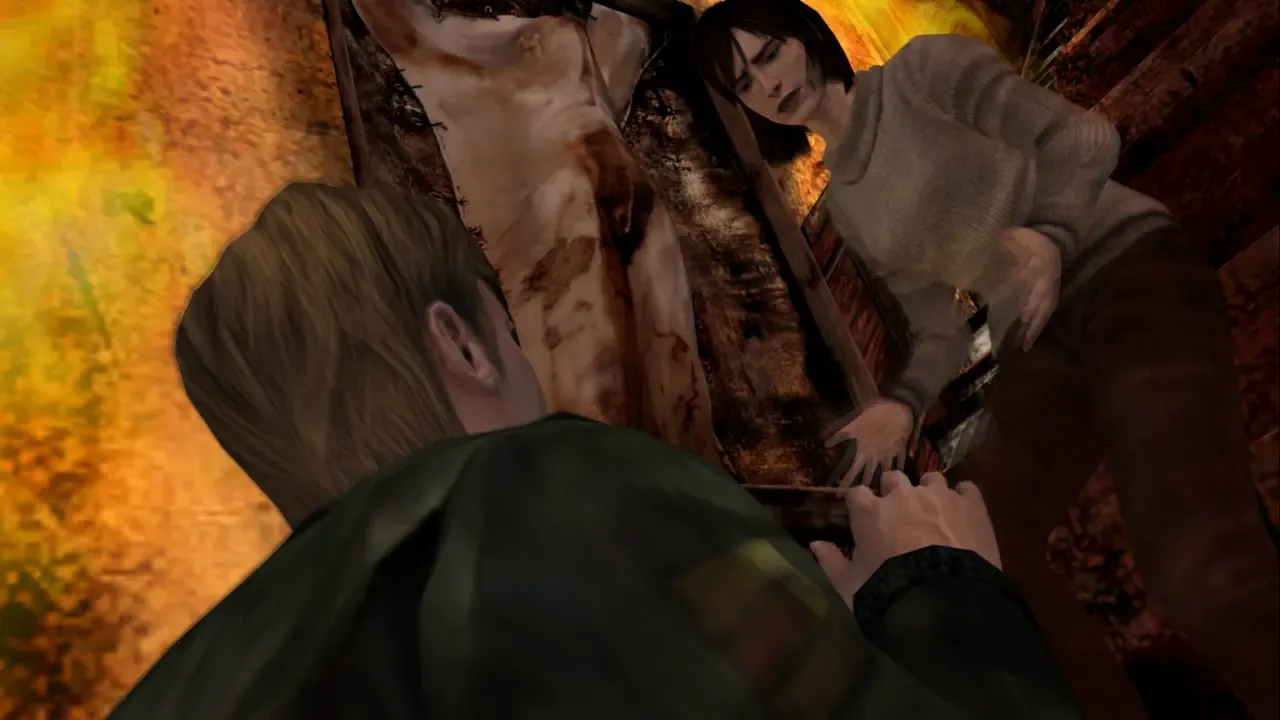
Following the commercial success of 1999's Silent Hill, Team Silent moved almost immediately into development on a sequel. The sophomore effort would retain the psychological‑horror foundations of its predecessor. However, this time around you’d step into the shoes of James Sunderland, a man bereaved but still drawn back to the town of Silent Hill in search of his wife.
The town itself is oppressive, otherworldly and ethereal, never giving the player a chance to settle into any real sense of place. Instead, it operates on a kind of dream logic that resists classification, mirrored in the fog-choked, half-remembered haze of its small‑town American setting. Your foes reinforce this discomfiting tone by representing different facets of James' ever-fracturing psyche — Pyramid Head embodies guilt, while the nurses reflect his sexual desire. In this way, both the town and its foes echo his deepest fears back onto him, forcing him deeper and deeper into a personal hell.
Also instrumental in establishing the game’s oppressive atmosphere is Akira Yamaoka’s soundtrack, which blends trip-hop, industrial noise, and ambient arrangements to keep the audience in a kind of aural border world, which again mirrors Sunderland’s descent into madness.
Now, I say all of this because I recently played a game which sought, by design, to replicate these strengths. What results is one of the more intriguing indie horror games I’ve played in recent years.
Fear of the Unknown
Hollowbody is a third-person tech-noir survival horror set in the urban decay of a long-abandoned British city and the quarantined 20-mile exclusion zone surrounding it. The game is a solo project from developer Nathan Hamley of Headware Games, and it serves as a love letter to early-2000s horror titles like the Silent Hill series, among others.
Set 60 years after a biological catastrophe or terrorist incident (it’s not all that clear which), the game opens on the desolate, white cliffs of the British Isles. You're playing as Sasha, dressed head-to-toe in a hazmat suit, talking to a colleague as you pace towards the shoreline of this uncertain world. That's all you know.
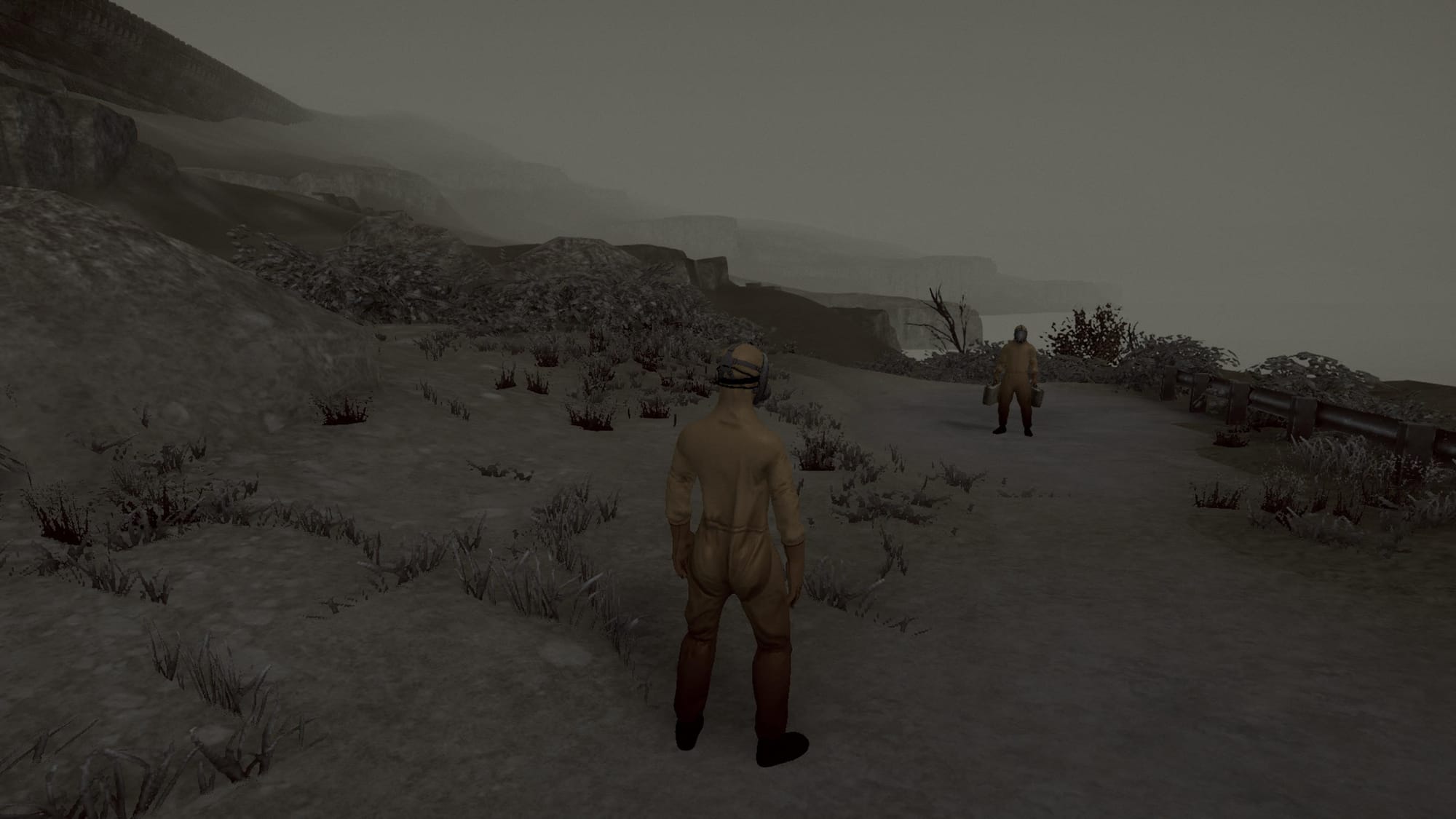
After meeting up with other members of the team, you’re told to go off in search of a missing coworker. From here, you walk down the beach towards an ominous cave entrance, venture inside with a flare in hand, and shortly thereafter you’re met with a vision of a Lovecraftian, otherworldly entity. Then, cut.
It’s a pithy introduction, one which establishes a prevailing uncertainty that lasts throughout the game. From this point you play as Mica – heavily implied to be Sasha’s lover – as she explores the abandoned British city in search of Sasha. Your journey takes you from abandoned tenement housing to sewers to abyssal underground cave systems, all with little connective tissue or story besides.
While this sounds like a criticism, I don’t mean it to be; in fact, I’ve never played a game quite like Hollowbody. Positioned as a short story (the game took me roughly three hours to complete), it’s the first survival horror game of its kind to unsettle me not through terrifying enemies or its stringent, relentless mechanics. It’s unsettling in its vagueness.
Hollowbody scares by neglecting what we usually expect from games, and that's its greatest strength. Puzzles are esoteric and strange, often defying logic or the kind of hand-holding that other mass market games are beholden to. Combat is loose and lacks visual or auditory feedback, which compounds fears that you’re doing little to affect the Silent Hill-like enemies. It’s all just so strange, and it’s buoyed by an excellent Yamaoka-esque soundtrack that slips effortlessly between soundscapes in service of that strangeness.
This is survival horror in the conventional sense; resources are scarce, and enemies are plentiful, and the game even utilises the fixed camera perspective from the early Resident Evil titles. However, this is horror with the creases left in; it’s horror as proof of concept. At some points it’s barely a game, more a tone poem, gesturing toward the deprivation typical of survival horror, just without its polish.
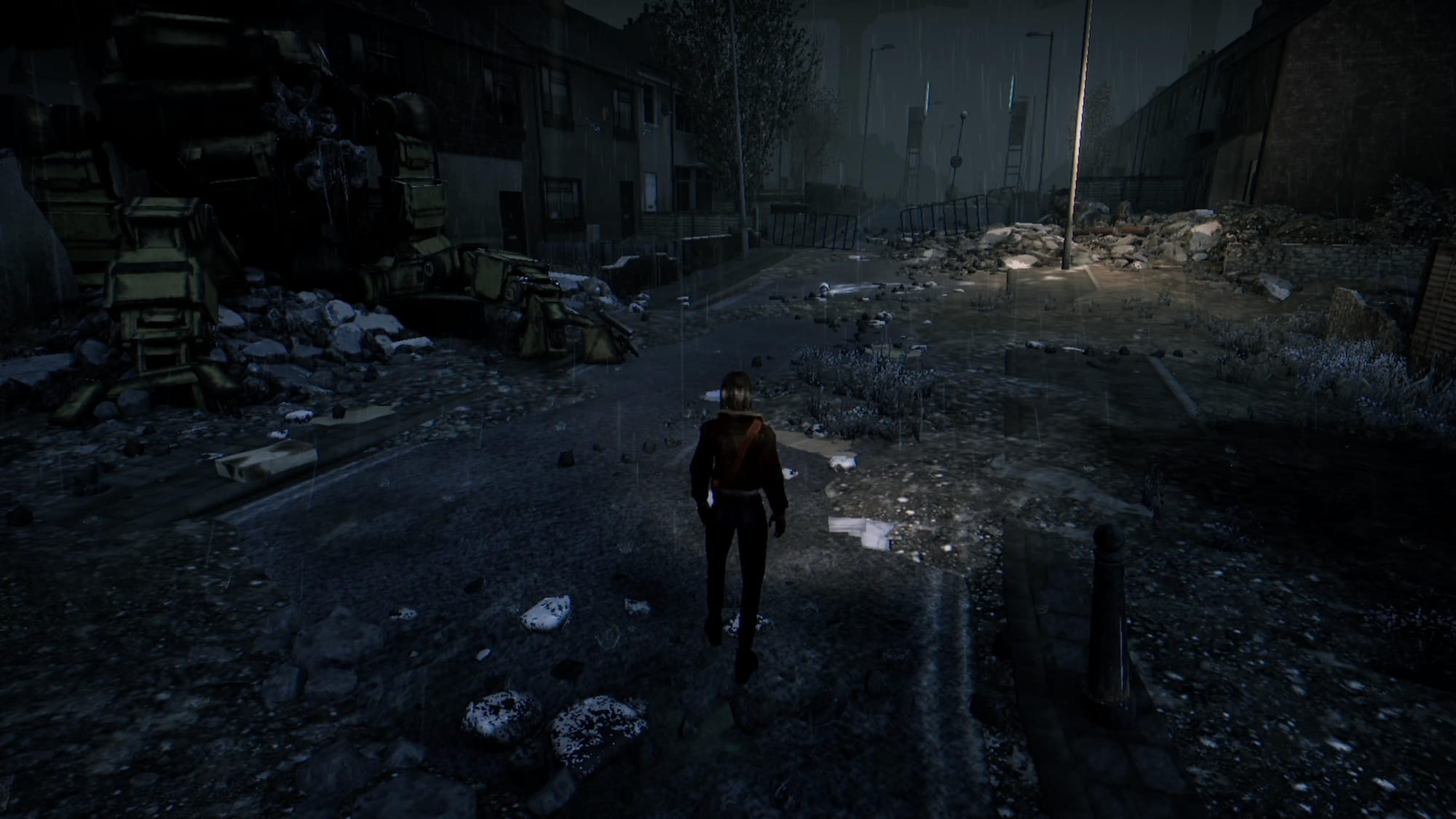
In this way, the world and inhabitants of Hollowbody often left me reaching for conclusions that the game didn’t know or care to answer. I’m still not entirely sure what the game was about or what message it wanted to leave me with, but that’s precisely what made it worth playing; it’s eerie and unknowable in a way that few games are.
Horror, particularly Lovecraftian horror, often provides its scares by setting protagonists against this kind of ambiguity. I mean, what recourse do you have when you’re dealing with an entity that defies description or understanding? In its raw, unpolished imperfection, Hollowbody conferred a kind of ever-present dread that sat with me during and long after my playthrough.
When it comes to writing about games, we often generate arbitrary scores to facilitate conversations online, but to do so in this instance, I think, would let Hollowbody down. Yes, this is an incomplete, strange, often messy title, but it also presents a sequence of vignettes that surprise and scare in a way that felt entirely new. In this way, its roughness is aesthetically productive. Its lack of polish isn't a flaw but one of the reasons it succeeds as horror.
Surviving Horror
Horror has given birth to an international community, who assent, and even pay, to be scared. It’s a genre that lets us swim in the shallows of life’s vicious, swirling sea and surface untouched. It’s a medium that’s as much about what you see as it is about what you take from it. What sits in your mind. What follows you long after the credits roll.
That’s horror. That’s Hollowbody.
Join the conversation
What do you think? Reply below to share your perspective.