The Spectacular FINAL FANTASY VI
The greatest of them all?

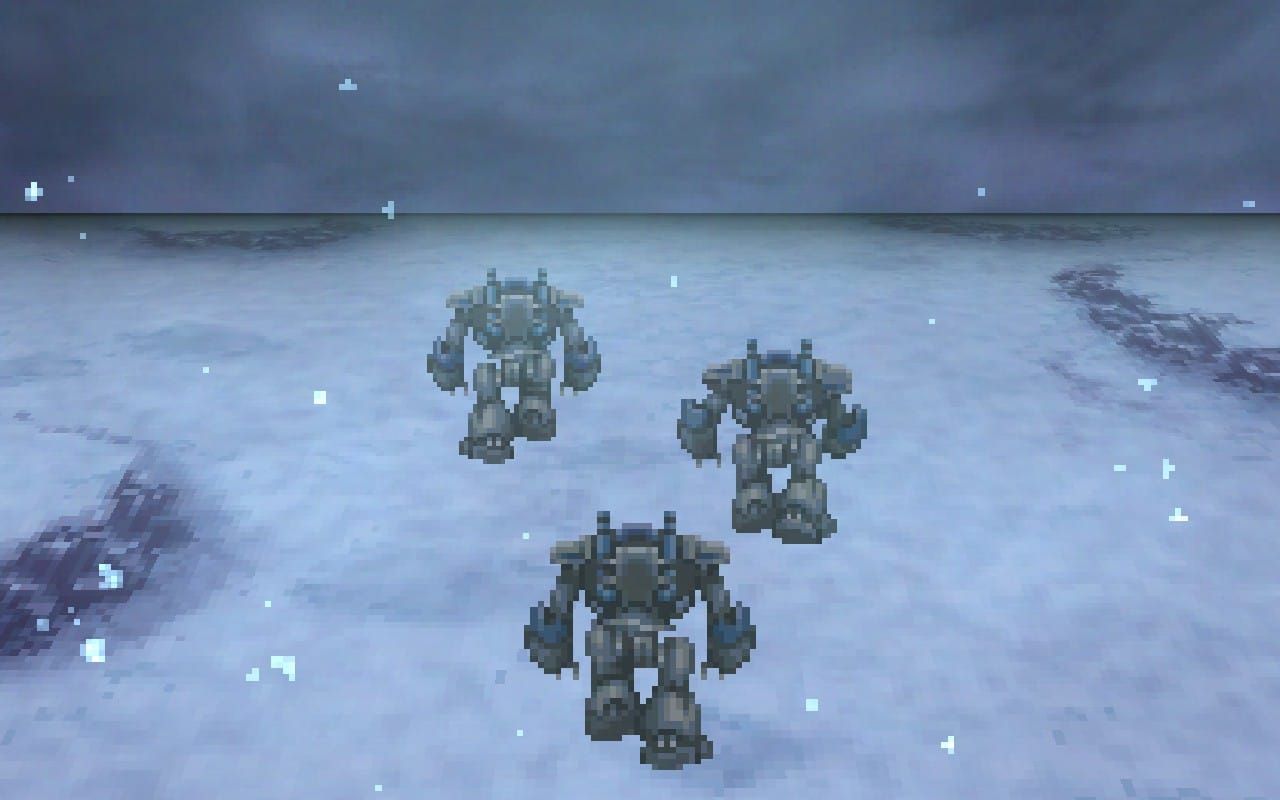
Dark clouds loom over a city of technological marvel. Ancient magics that have lain dormant for over a thousand years begin to stir. Towns of all classes of people desperately repel an imminent imperial occupation. Arcane is grafted to steel war machines. A young woman finds her freedom as a mad jester finally succumbs to total insanity.
This is Final Fantasy VI.
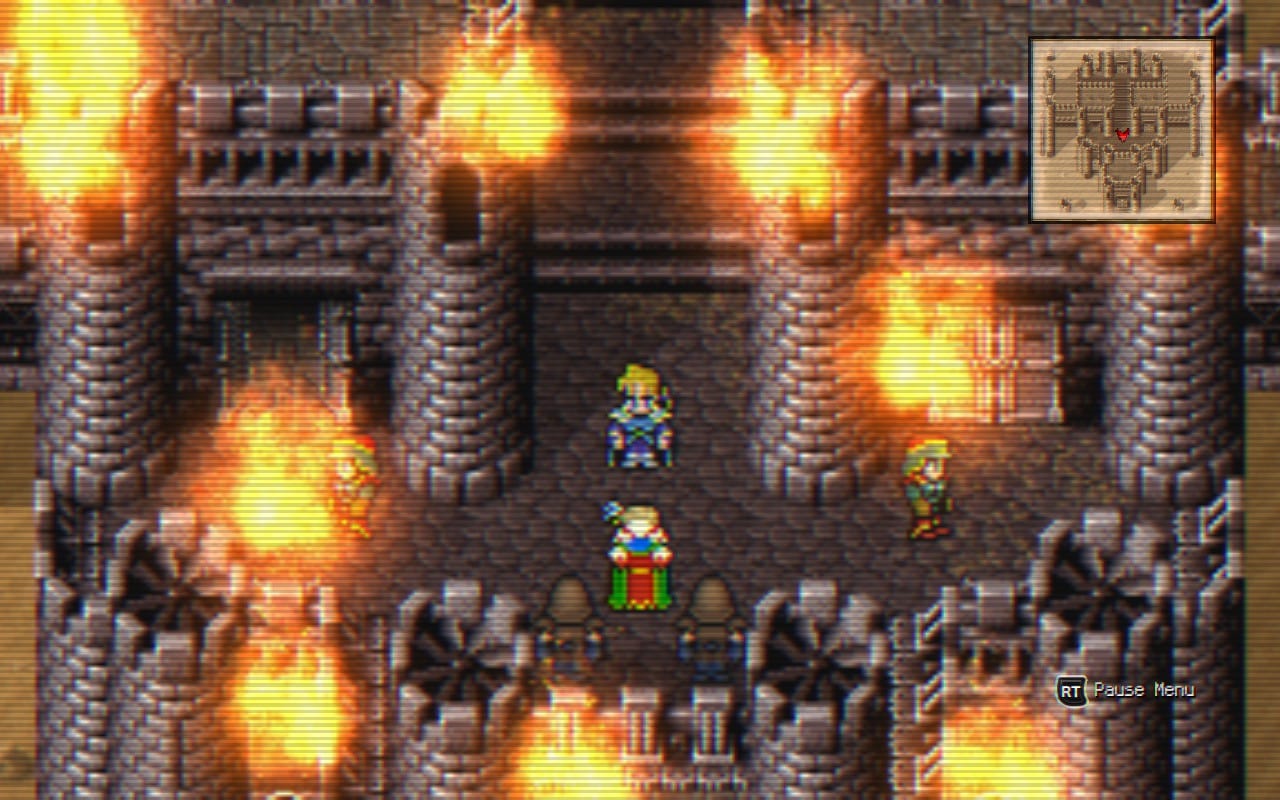
It is a common occurrence amongst spirited JRPG discussions to hear that Final Fantasy VI is someone's favorite game in the series, or even their favorite JRPG in general. While Final Fantasy VII may wear the popularity crown, the sixth installment would stand out as a top favorite in the zeitgeist of the Super Nintendo era for those fans who were either present for the game's release in the mid-90s or were brave enough to play a Super Nintendo game in the age of 3D graphics. When looking back at a game as old as Final Fantasy VI, public perception has become part of the experience as much as the actual game itself. This is especially true when a game is lauded as one of the best RPGs to ever exist. Naturally, I went in expecting nothing less than greatness.
The first half of the game is a non-stop thrill ride. Each game in this series up to this point seems to add a little bit of identity to the franchise. It’s easy to tell that what this game contributes to that legacy is a commitment to pushing technical limitations and creating a carnival of visuals for the player. While Final Fantasy VI has dungeons, the early hours of the game focus more on having the player experience vignettes. These set pieces include fighting monsters while navigating whitewater rapids, escaping a haunted train full of vengeful spirits, and, most famously, becoming understudies in a full-scale opera.
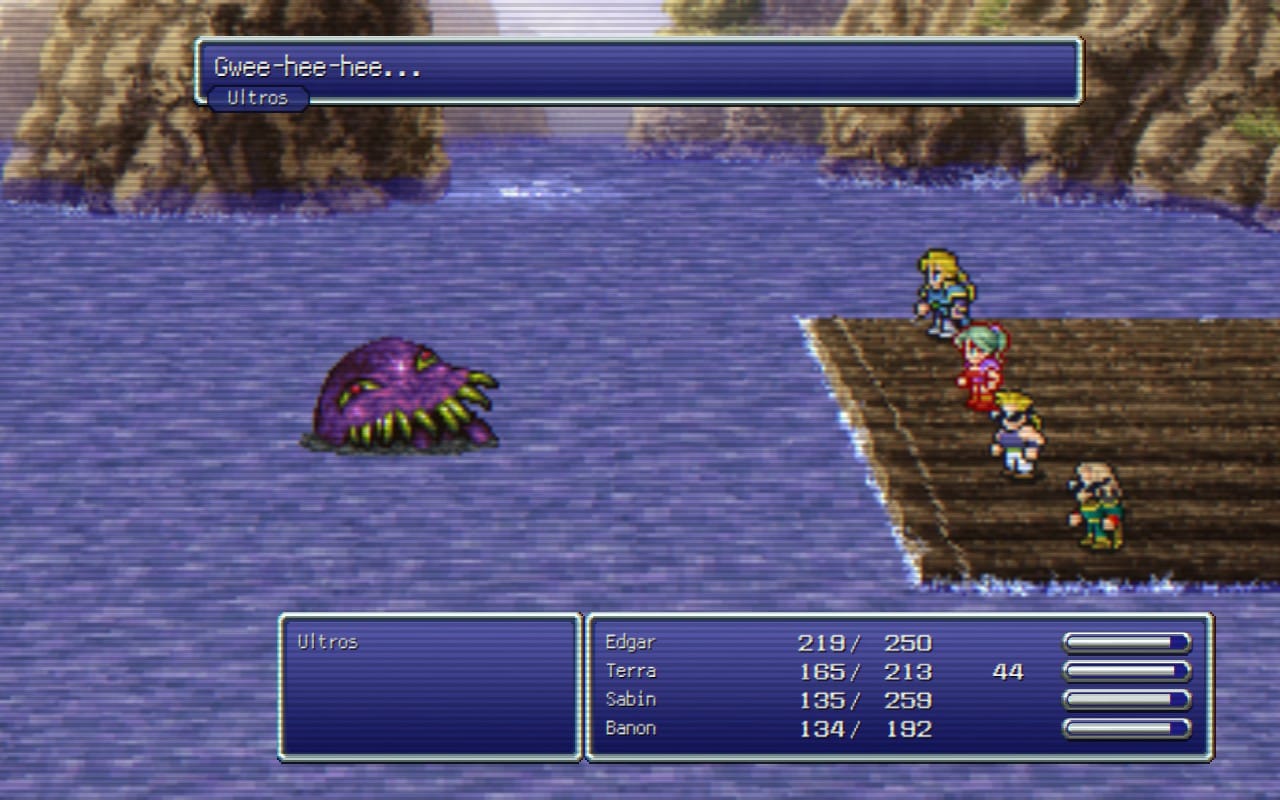
In this segment of the game, I was excited to come back for every session. Experiencing the next chapter in these characters' tale was intriguing and emotional. Here was a complex narrative woven between many different characters in a way that Final Fantasy IV could only attempt. Watching these heroes unite with the Returners and try to overthrow the Empire was the most exciting that a Super Nintendo game has ever been to me. Now, please excuse me while I recount some of my personal favorite segments of the World of Balance.
Best of the Best
Terra finding out that her birth was a product of love is the major plot of the first half. The flashbacks were pretty standard stuff: Terra’s struggles to find out if she could ever love anyone after what the Empire had done to her tug at the heartstrings. That she can find commonality with the other characters that have defected from the Empire adds these layers that you don’t often see in these early JRPG’s, where the struggle typically pits good against bad.
The entire Sabin plot line, which sees him learning that Kefka has wiped out the Doman people by poisoning their water supply, is already a devastating development in the story. But to then see Cyan watch as his family boards the ghost train to the afterlife just cut me down, especially juxtaposed with suplexing a train, an easy highlight of the first half.
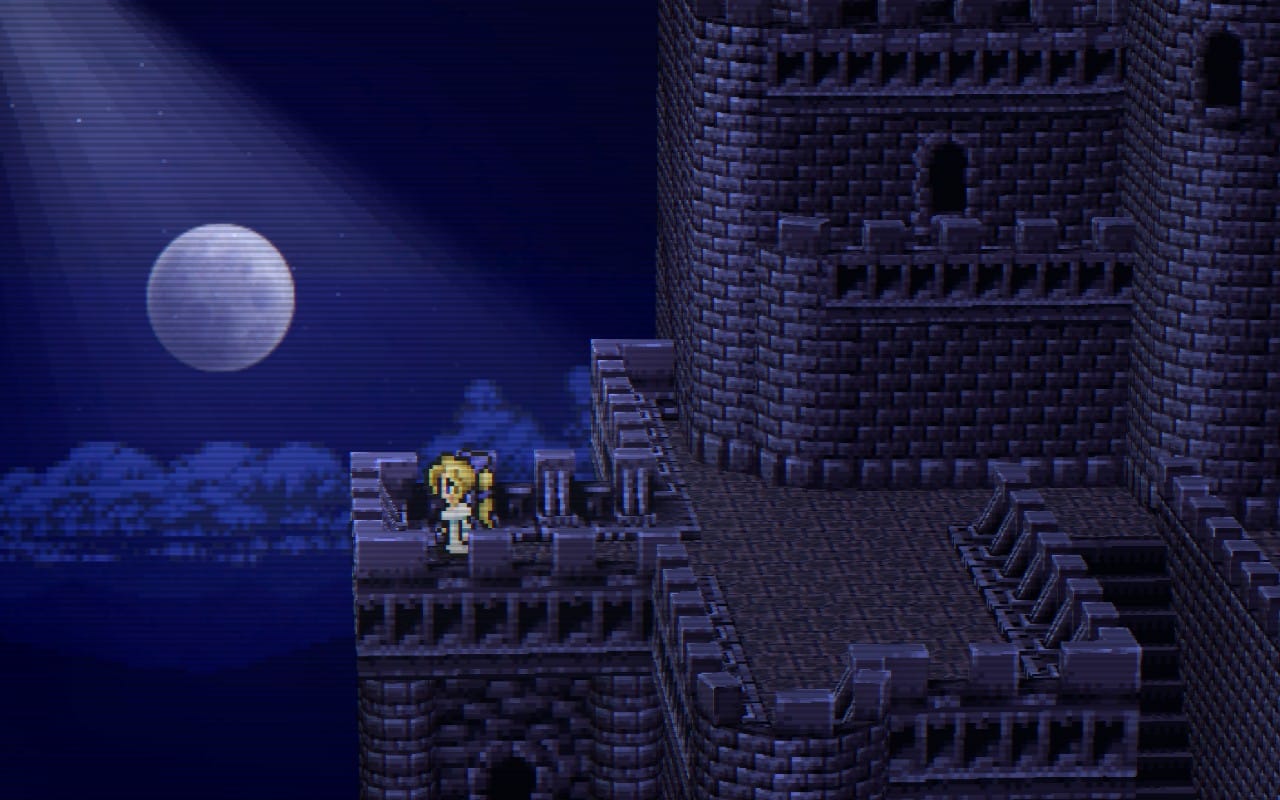
The most complex plot thread throughout the narrative is easily Locke and Celes’ romance. As most of these older titles do, it is largely left to subtext and your imagination whether they actually get together. But in the scene at the opera house, just as Celes is about to go on stage, Locke catches her in her dress and mentions how good she looks. Celes responds with “Am I just a replacement for her?” and boy, can I tell you that I was a mess during that whole opera scene.
All of this is happening on top of a different spectacle: the combat. The unique abilities in Final Fantasy VI steal the show as I forgo most strategy to wail on opponents with Sabin’s fists or knock arrows into enemies with Edgar’s tools. The characters with the coolest abilities got to be in my party as much as possible, and I loved the new archetypes on display.
I was really hesitant about the game using the character-swapping antics of Final Fantasy IV, and I thought it would quickly lead to my stress over leveling different characters and missing unique events. To my surprise, this game managed to neatly separate the characters into chapters so that when the game finally opens up, you feel like each character is at a good starting point if you decide that they get to grace your party. Funnily enough, I think that this pacing of an entire cast is mastered in Final Fantasy XIII, where I rarely felt that a character would be left behind. Final Fantasy VI remedies a lot of its event scripting by substituting some character dialogue with generic words said by someone in the group. This feels really out of place next to the game's typically great characterization.
Not All Roses
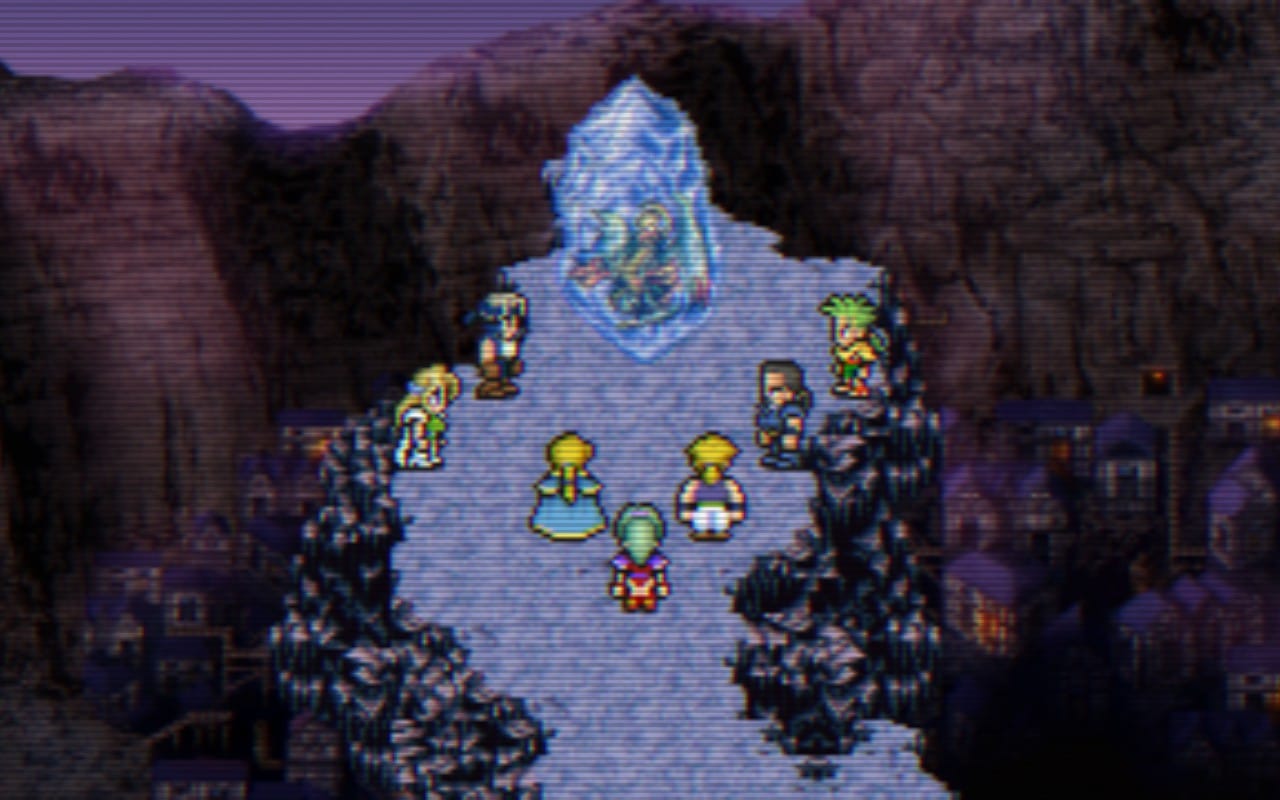
Like all good things, my fun had to end eventually. That may be a bit of an over-dramatization, but let me explain. The difficulty wall I hit when I reached the floating continent should have been a warning that I was meant to stop for just a minute. Final Fantasy VI has a reputation for being fairly easy, so it was surprising to me to discover that the Floating Continent would pose such a brutal challenge. I mean, this is the game with bosses that skip their turn as part of their regular attack pattern; it was supposed to be a walk in the park. I wasn’t skipping battles or running away from a fight, and I’d heard that grinding was entirely optional. But these enemies wiped the floor with me, so much so that I ended up turning on 4X experience on the pixel remaster and pretty much never turned it back off until I hit the credits.
Final Fantasy difficulty spikes often happen in the same types of spots in the first 6 entries. The game finally gives you access to a large section of the open world via some vehicle, or you have just unlocked a new batch of jobs, or you are reunited with a large group of characters for the first time. All of these shifts come with the mindset that a guide is likely not being used, and what the player will have to do from there is explore and experiment. The player who spends time in awe of the new will naturally let their characters grow more than the player who has researched where to go and in what order. So when I made a beeline straight to the floating continent, I arrived woefully unprepared for the challenges ahead, and I really have nobody to blame but myself.
In my time this past year playing 90’s JRPG’s, I’ve noticed that any game with meaningful depth will eventually challenge its player by asking them to learn its systems. This relationship demands respect and patience from the player, but it also requires that the player is having enough fun to give the game that respect. When I played Shin Megami Tensei this year, I hit the first major speed bump and had to admit that I was just not a monster-catching type of gamer. I gave up on that game, fully satisfied that I wasn’t having enough fun to sit and learn its ins and outs. Final Fantasy VI is a whole different type of apocalypse, however.
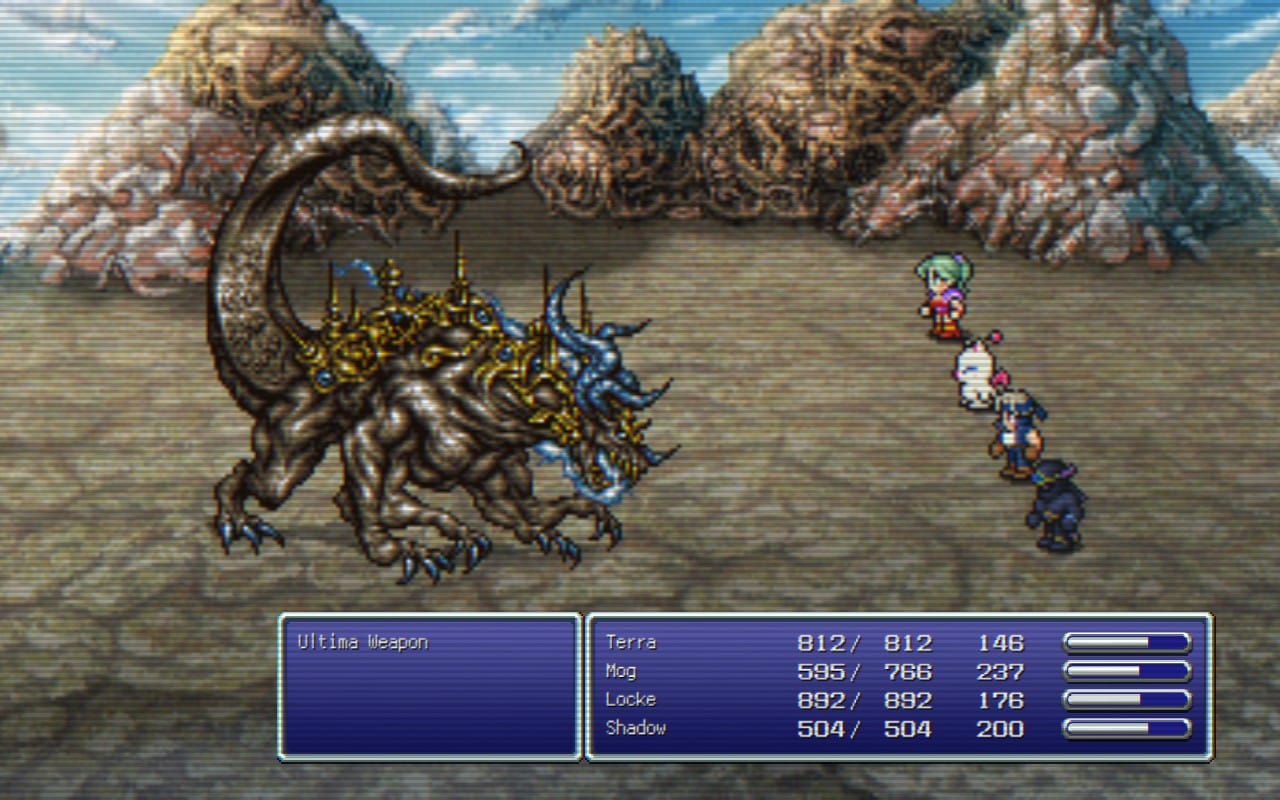
After letting the Ultima Weapon embarrass me on the floating continent, I was determined to make a comeback. I went to the equipment system wiki and learned exactly what equipment I should be prioritizing so I was always prepared. I used every exploit to my advantage and scraped through a win, finally beating the living counterpart to the Ultima Sword. Now I knew what would happen next, but to see it firsthand is a completely different experience.
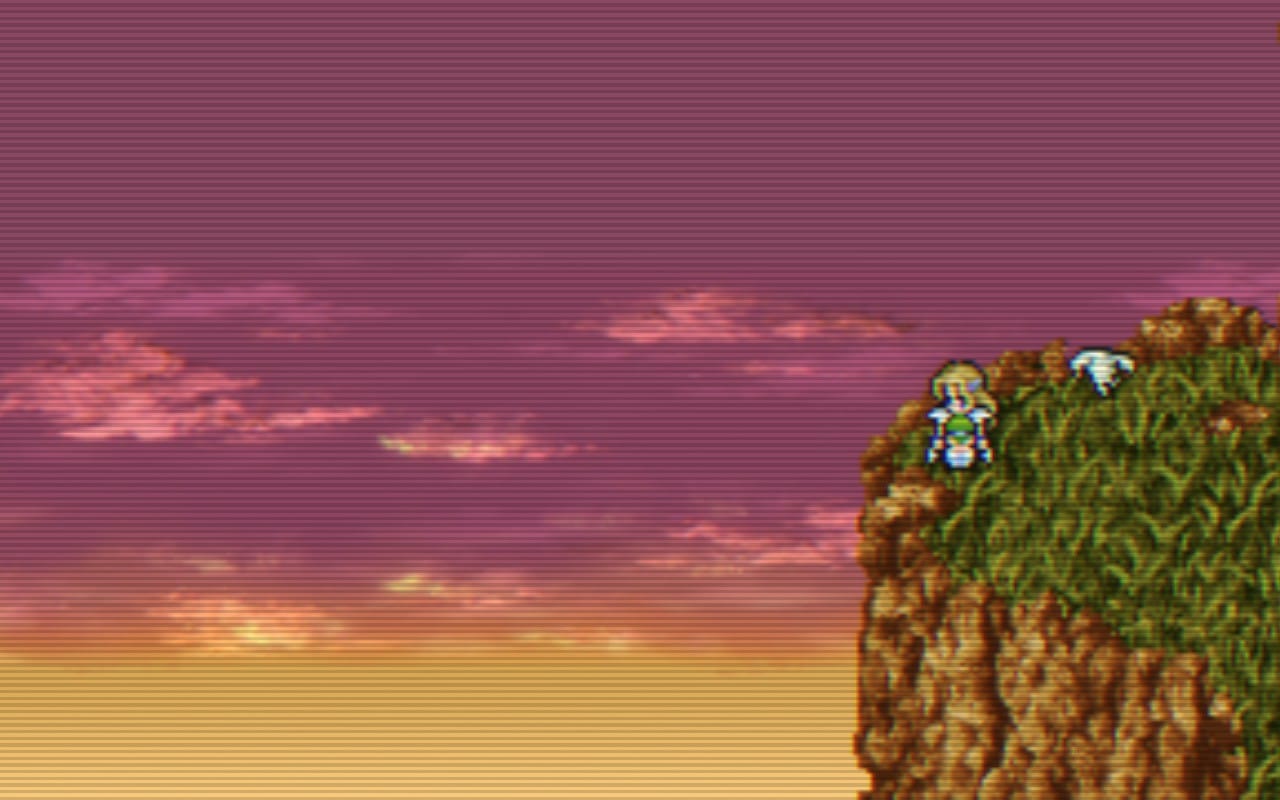
Kefka moves the triad, releasing their bond. The resulting energy causes seismic ruptures across the entire world, causing so much destruction that the game has to show you this scene from space. The gang narrowly escapes on the airship (with Shadow, of course), only for the Blackjack to shatter in its escape, sending our heroes scattered to the wind. We wake up one year later as Celes on a deserted island with only Cid there to take care of us. Cid eventually fades, leaving Celes all alone, and she surrenders to despair as she throws herself off the nearest cliff in one of the most heartbreaking scenes of the entire game.
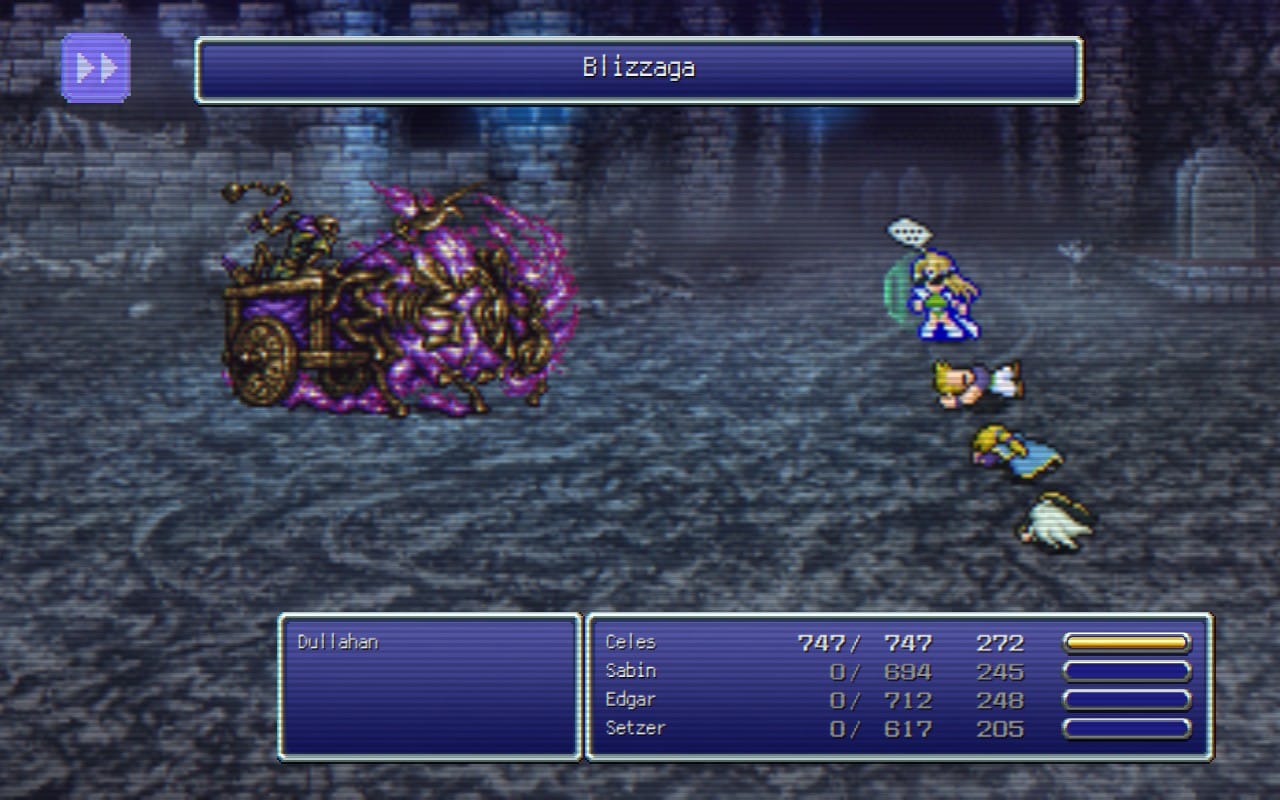
I disliked a lot of the World of Ruin. I feel pretty confident in saying that when I put this section in contrast to the World of Balance. What was a game with steady set-piece pacing and even challenge turned into a disjointed scavenger hunt to find your lost party members. Each challenge to achieve this is not all that difficult (except you, Dullahan), but each is rather cryptic and hidden. I wouldn’t expect anyone to do this without a guide or a lot of patience, and I feel bad for anyone playing blind and scared of missing story beats.
What really dampens this experience is that each of these new chapters is significantly shorter and takes place in the same spots as the original, story beats, which were much more exciting. The way you get a lot of these party members back is really interesting, and I like the story beats that go with them; they just feel a lot like epilogue clean-ups rather than true continuations of the story that we’ve been experiencing so far. Hell, Kefka is hardly even in this section. It is heavily implied that he is using the fear of the giant laser to subjugate the people, but for the most part, everybody is still living their own lives, similar to how you left them last.
FInishing Strong
At this point in the game, I also realized that the Esper system hardly creates coherent builds as you make your way through. My characters are learning magic, but really only a choice few are utilizing it fully, and the others just fight over who gets to learn healing spells next. I like the idea that everybody is now given the opportunity to be a summoner, but I think I only ever used a summon on perhaps one or two bosses and totally forgot about it during every other encounter. It’s an inspired system; if characters were more attached to their espers, this could even be played like a Persona game (if I pick up this game again, that’s probably how I’ll play it too).
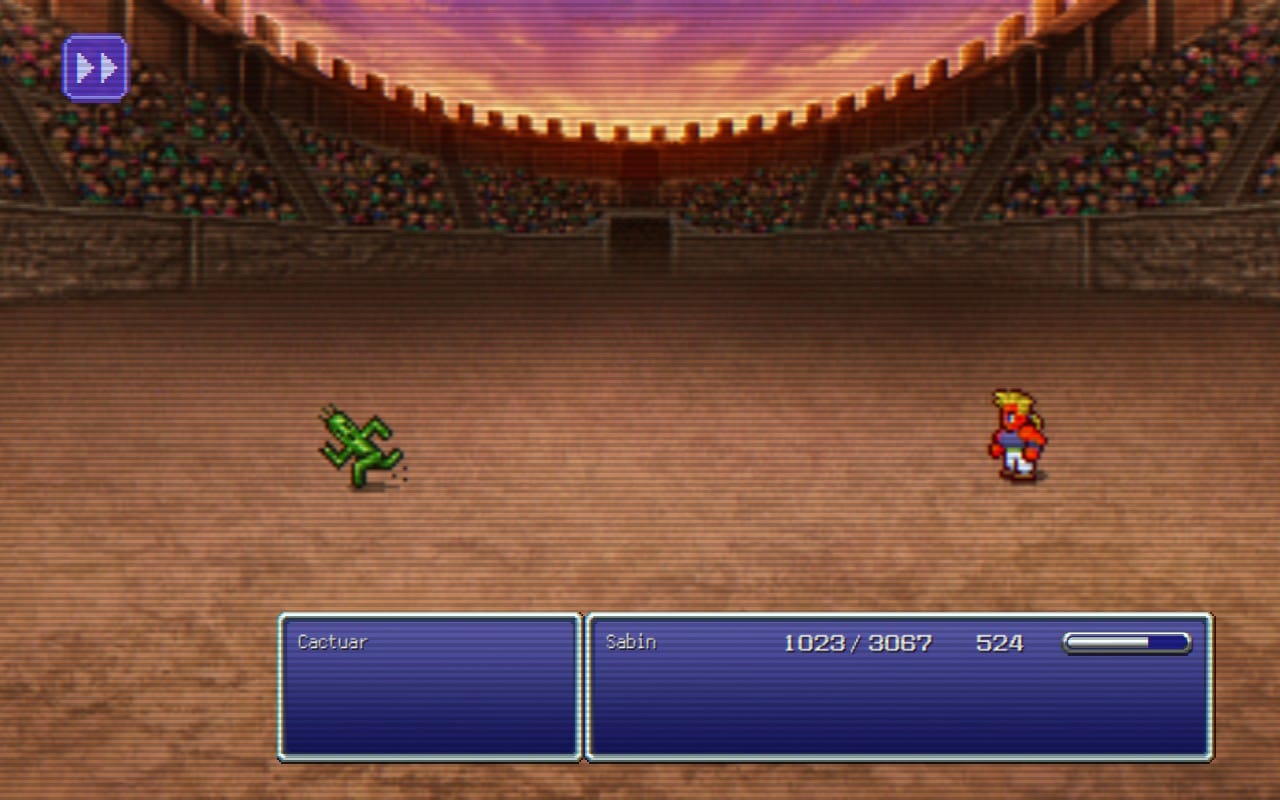
I decided to also do some optional item hunting here for the Genji gear, the Miracle Shoes, and some auction items I was missing. I have never been one for gambling mini-games or game modes reli,nt on random chance; I even steer clear of Dragon Quest casinos. I would have some truly awful things to say about the auction house and the coliseum, but while Mog fought the coliseum dragon on auto-battle for about 2 hours I just set it down and watched Bridgerton season 4, so overall I actually had a pretty nice time.
I ended up fairly whelmed by the final dungeon of Final Fantasy VI. It contains a garbage dump maze, a reskin of a few older boss fights, the Warring Triad, and Kefka himself. I actually liked the 3-party split-up and the tension of hoping that your third-least leveled team will fight the least bosses. The attraction here is definitely Kefka as you climb your way up his mound of imperial junk to the source of the giant laser beam himself.
I felt let down by where Kefka’s character went at this point. He gets a villain monologue where he explains that the despair of seeing the world turn to chaos, with any revolt resulting in destruction, should be enough to depress the characters into giving up in their fight. It’s well said, but we never really see Kefka outright subjugate any of the people outside of pointing the huge magic gun at their towns. I understand that he’s supposed to be a chaotic, evil, insane villain with no real agenda, but even a crazy person like that most assuredly would have found at least one more evil thing to do during the apocalypse. Kefka is a brilliant character earlier in the game; it’s just a shame that he loses steam after he achieves world domination.
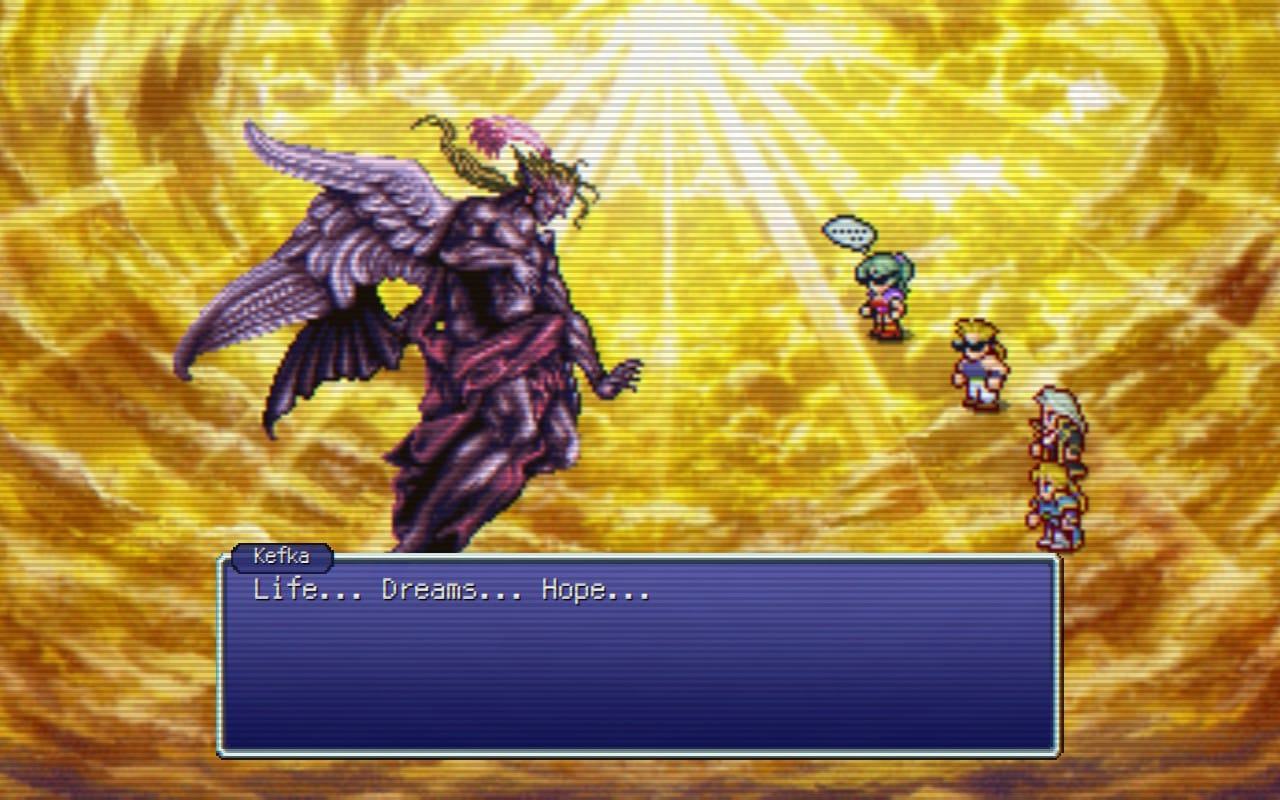
The final fight is an absolute masterpiece. Dancing Mad blares as your party faces a gauntlet of Esper avatars to get to Kefka himself, the clown made divine. I wish that some more of the fights in this game were like this last fight. The multi-phased fight with intro and outro moves for each phase lends nicely into the ATB system and made me consider who was going to attack at each moment more than I normally do. Kefka starts his phase by setting each character's life total to 1 and silencing them. This made me scramble, no matter how prepared I felt I was. It was a great finale to top off a great game.
Final Fantasy VI is not the best JRPG ever made. I find it hard to even say I like it more than Final Fantasy V, mostly due to personal taste. Regardless, the innovation and grand scale of this entry are easy to appreciate. If I had been an English-speaking gamer in the 90s who played this game right after Final Fantasy IV, like so many others had, I would have thought that this was the greatest game ever made. But as a modern-day player having just finished a polished adaptation of Final Fantasy V, it feels like the series has split personalities warring between complex storytelling and deep combat. I love the story Final Fantasy VI tells, and the combat has become faster and flashier, but I can’t help grieve for the tuned challenge and satisfying progression system that we had in Final Fantasy V.
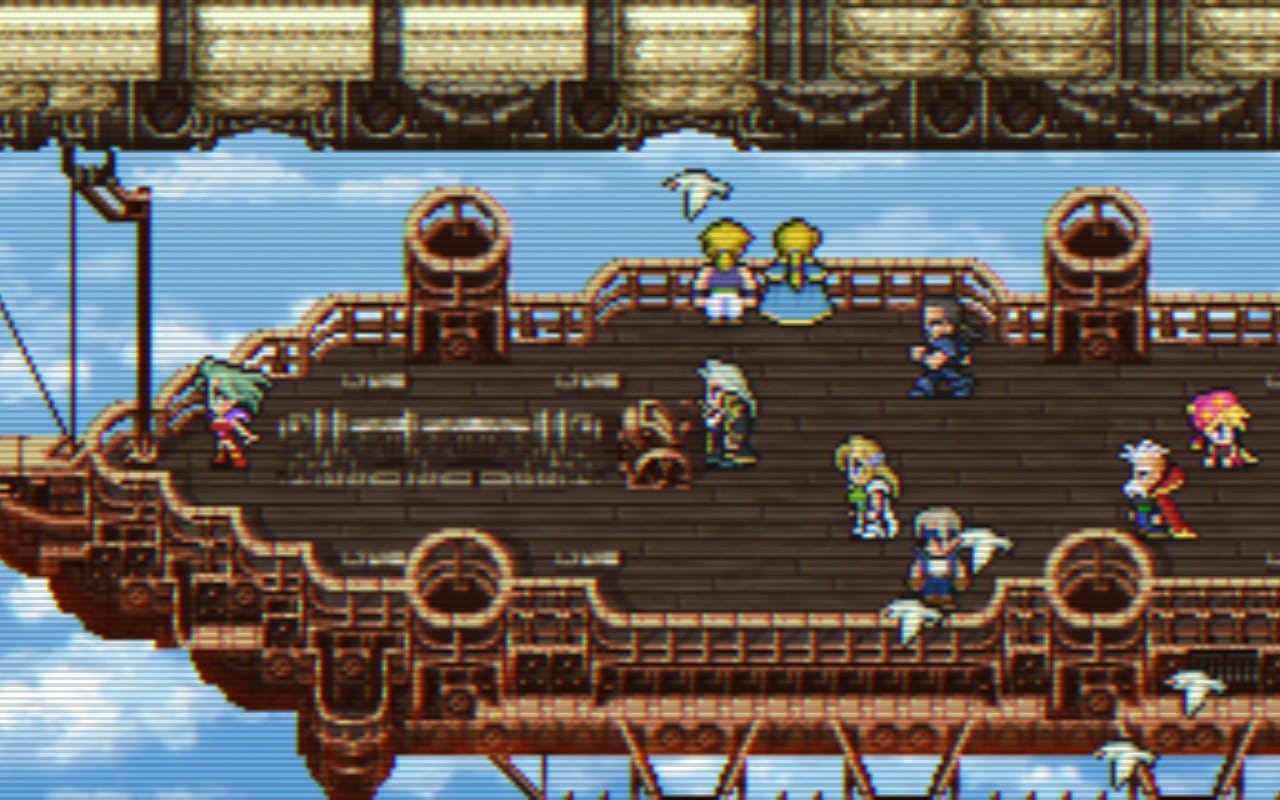
I love Final Fantasy VI; the story of this gang of heroes will stick with me as truly the first group of characters to root themselves into the identity of the series. Knowing a bit of what comes next in the series, it was exciting to see how this game re-invented JRPG storytelling and created a new standard in the genre. I’m not entirely sure if this game will warrant a replay, but the memories of the fantastical opera and Sabin suplexing a train will live with me for a long time.