Tomy's Innovation Led the Early Handheld Gaming Market
A Japanese company with a rich history in gaming

_rear.jpg)
Nowadays, Nintendo is synonymous with handheld gaming; the Game Boy, DS, and Switch boast long lineages and millions of sales. The company often faced fierce competition, though. These rivalries bred innovation, and one rival proved to be more innovative than most: Tomy. A toymaker, it knew what could entertain players, and in its quest to create fun, it would push what was possible with the technology of the time through 3D games.
The start of a dance
Tomy began its life as Tomiyama Toy Seisakusho, back when Eiichiro Tomiyama founded it in 1924. At first, it focused on manufacturing toy airplanes, like the wind-up Looping Plane toy. Eiichiro Tomiyama wasn’t content with doing things his competitors’ way. It was his different approach, such as in the way he created assembly lines in his factories, that set Tomiyama Toy Seisakusho apart from many others.
Eiichiro Tomiyama also created a toy research department, that his company could stay ahead of the newest trends and find novel ways to entertain customers. As the decades passed, Tomy continued to adapt and grow, eventually starting overseas operations in the 1960s.
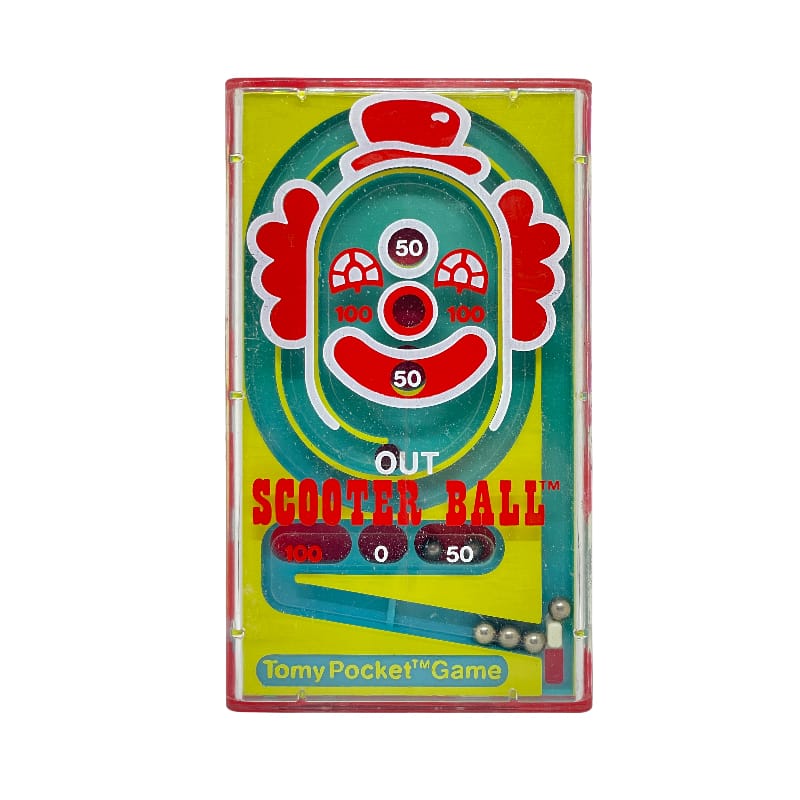
In 1975, Tomy released the Pocket Mate, a series of mechanical games that are easy to understand but hard to master. Some might remember encountering their variants during their childhood years — I sure do. In the UK, they would be known as Pocketeers, and in the USA, they were called Pocket Games.
The genius of its design lies, among other things, in its robustness and the way the games could be picked up by anyone, regardless of what language they spoke, and then played without batteries or power sockets. Levers, springs, and switches were often the only mechanisms contained in these handhelds.
In its launch year, there were six titles available: Pocket Basketball, Pocket Pinball, Pocket Raceway, Pocket Basketball, Pocket Pachinko, and Pocket Soccer. The encouraging sales convinced Tomy to design various versions, ultimately leading to the creation of over 70 different games. Certain versions became electro-mechanical, with batteries powering their lights and speakers.
_angled_(edited,_no_BG).jpg)
As a side note: Tomy also created the Waterful Ring-Toss in 1976. Essentially a small tank full of water, the object of the game was for the player to launch a couple of rings onto a spike, although they risked dislodging the rings they had already caught, too. It was very aggravating, but also strangely addictive. I can remember struggling with one of them during car rides and camping trips, and it definitely taught me lessons about anger management at a young age.
Dancing on a screen
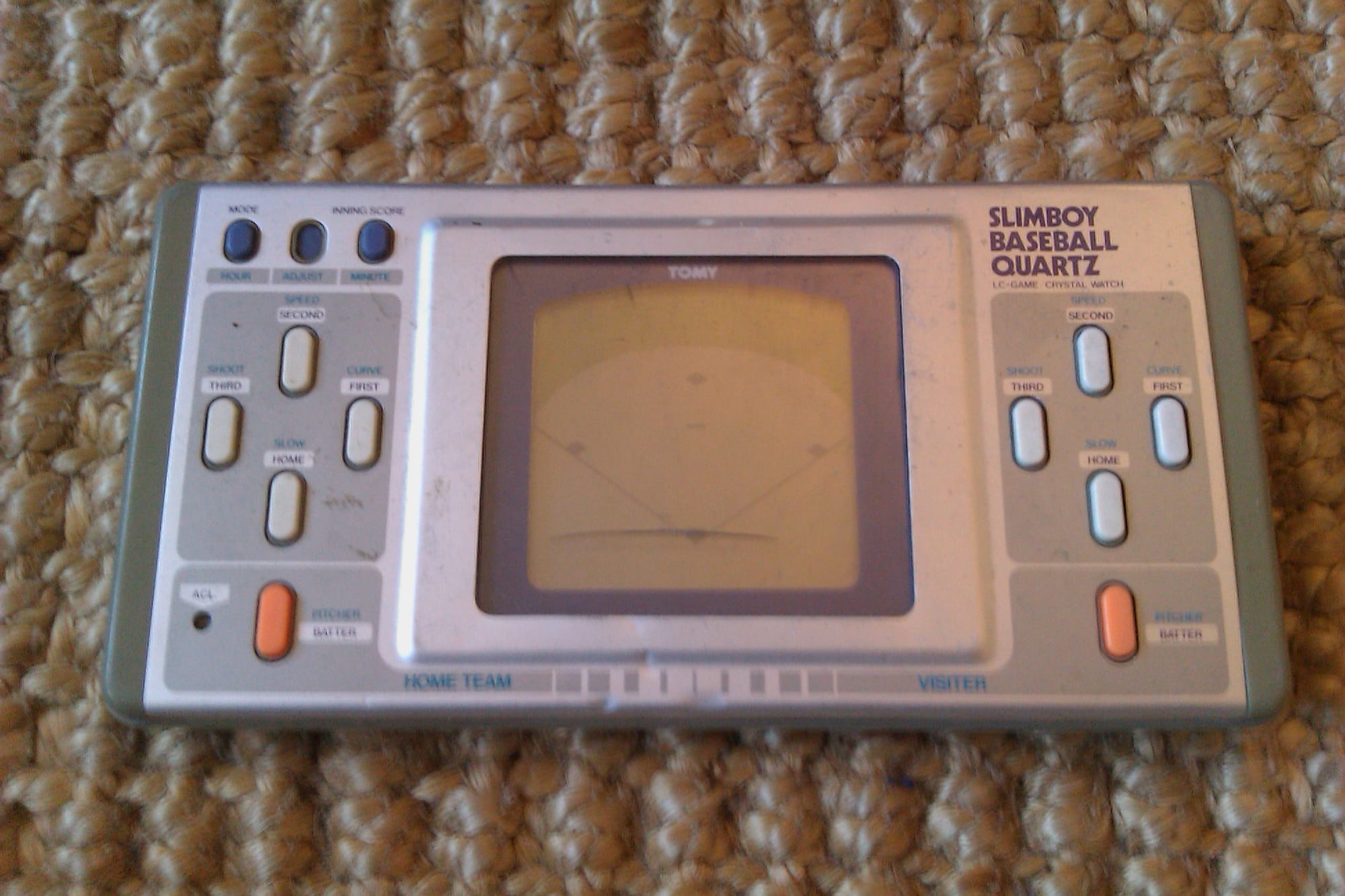
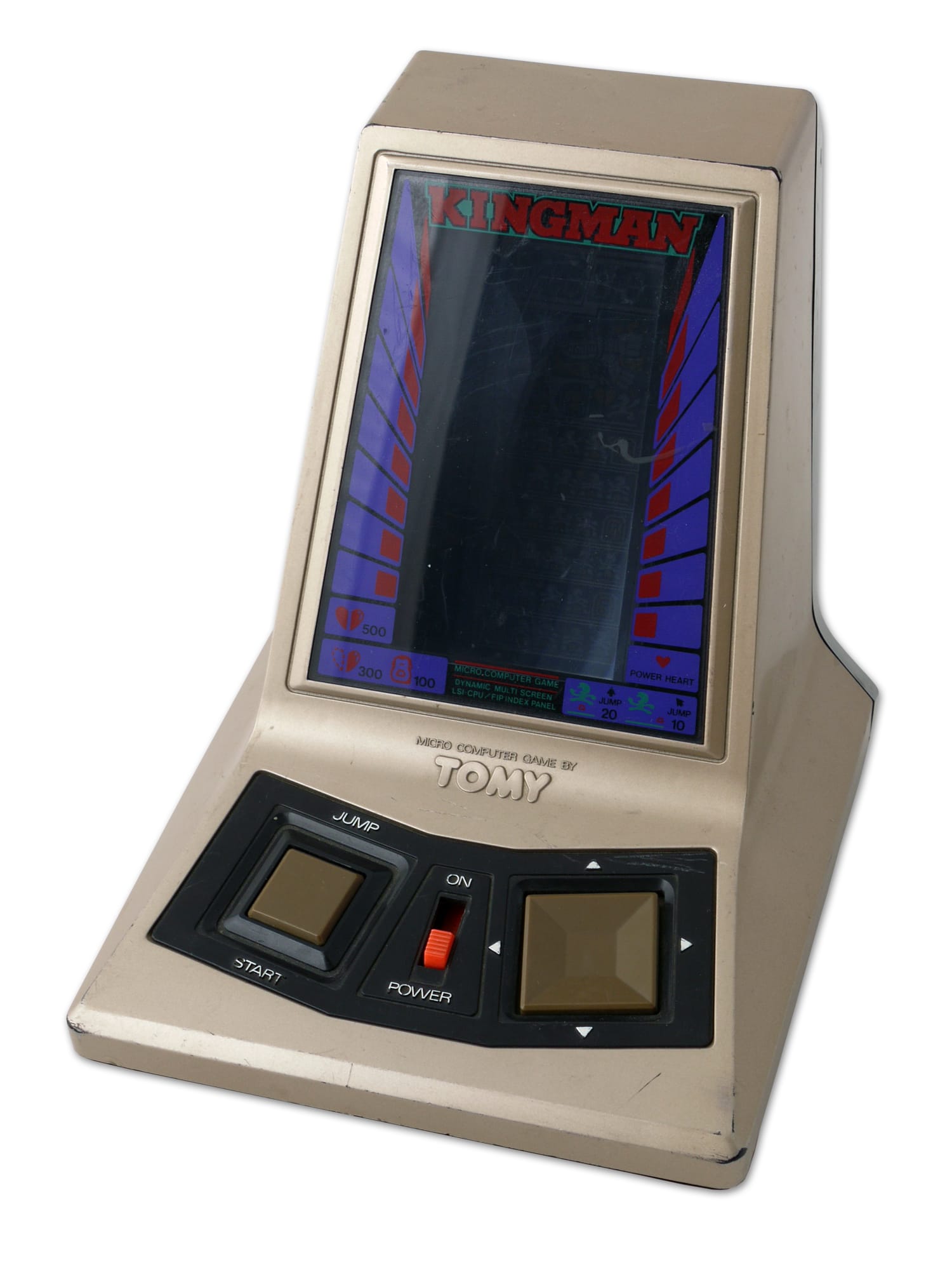
The hybrid electro-mechanical and electronic games must have sparked some ideas at Tomy. In 1980, the same year Nintendo’s first Game & Watch reached store shelves, Tomy released their Slimboy handhelds, which also featured LCD screens and looked like calculators. Coincidence? What is certain is that the competition was fierce in the new market.
.jpg)
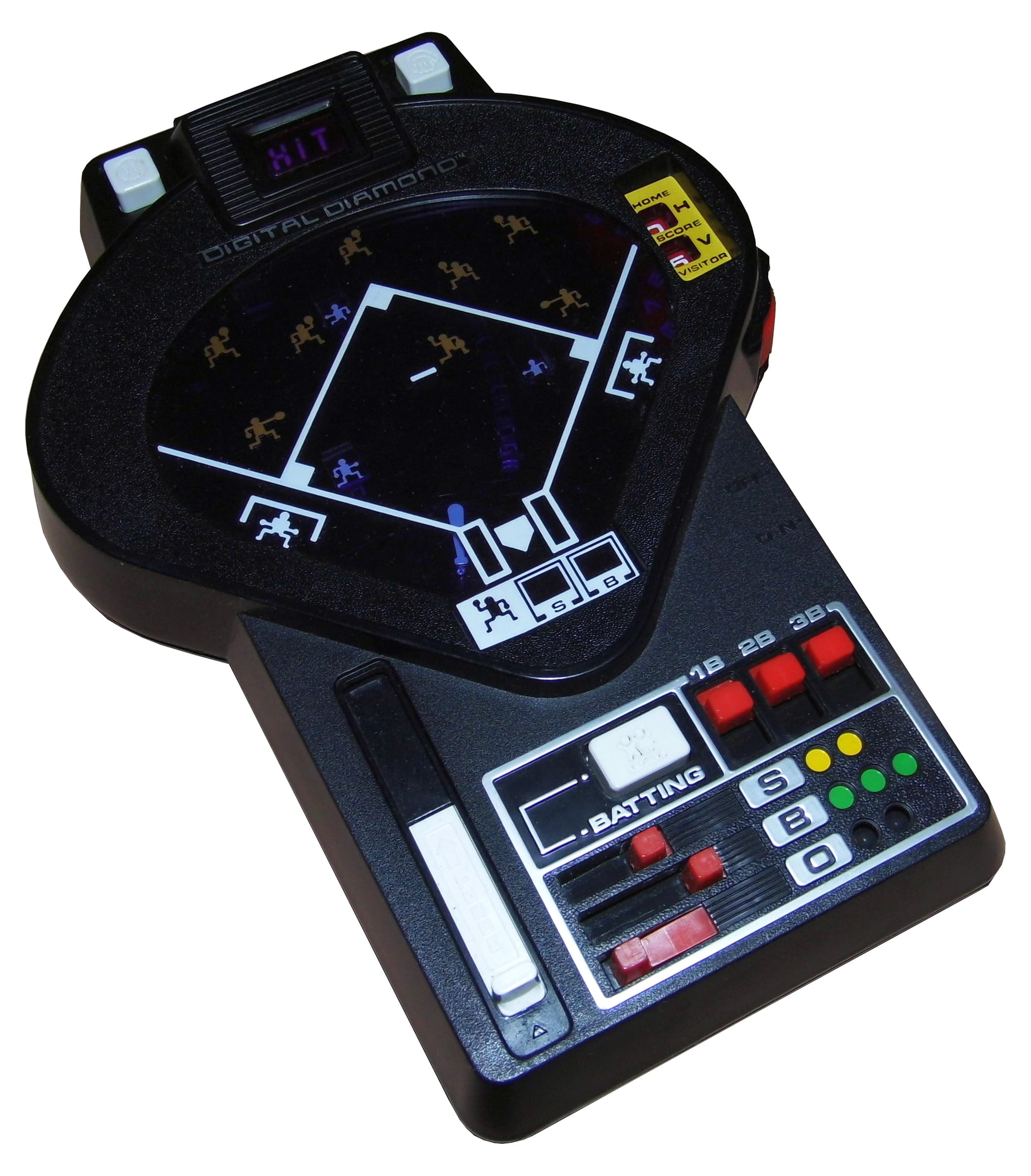
Tomy would also create handheld tie-ins featuring entertainment properties such as Hello Kitty and Mickey Mouse. In fact, the variety of systems was quite dizzying, and it shows the Tomy R&D department remained busy during these years. One interesting model they released in 1982 was a small arcade machine featuring a VFD screen, the type of screen you would often see on VCRs. American readers might remember they were sold under the Tandy brand, and — this being the 1980s after all — they even released a Tron game version.

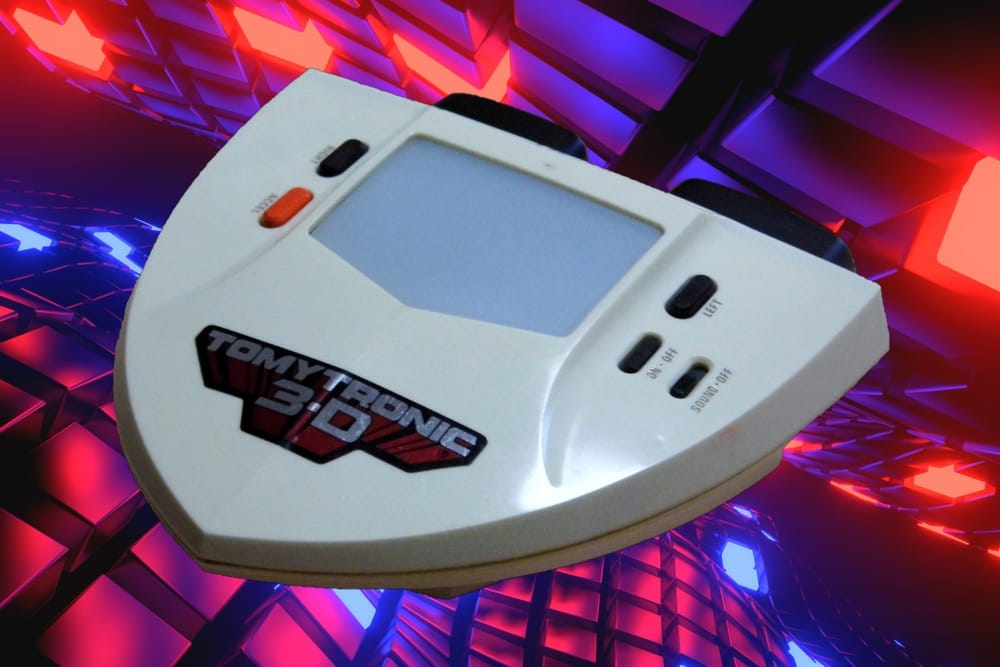
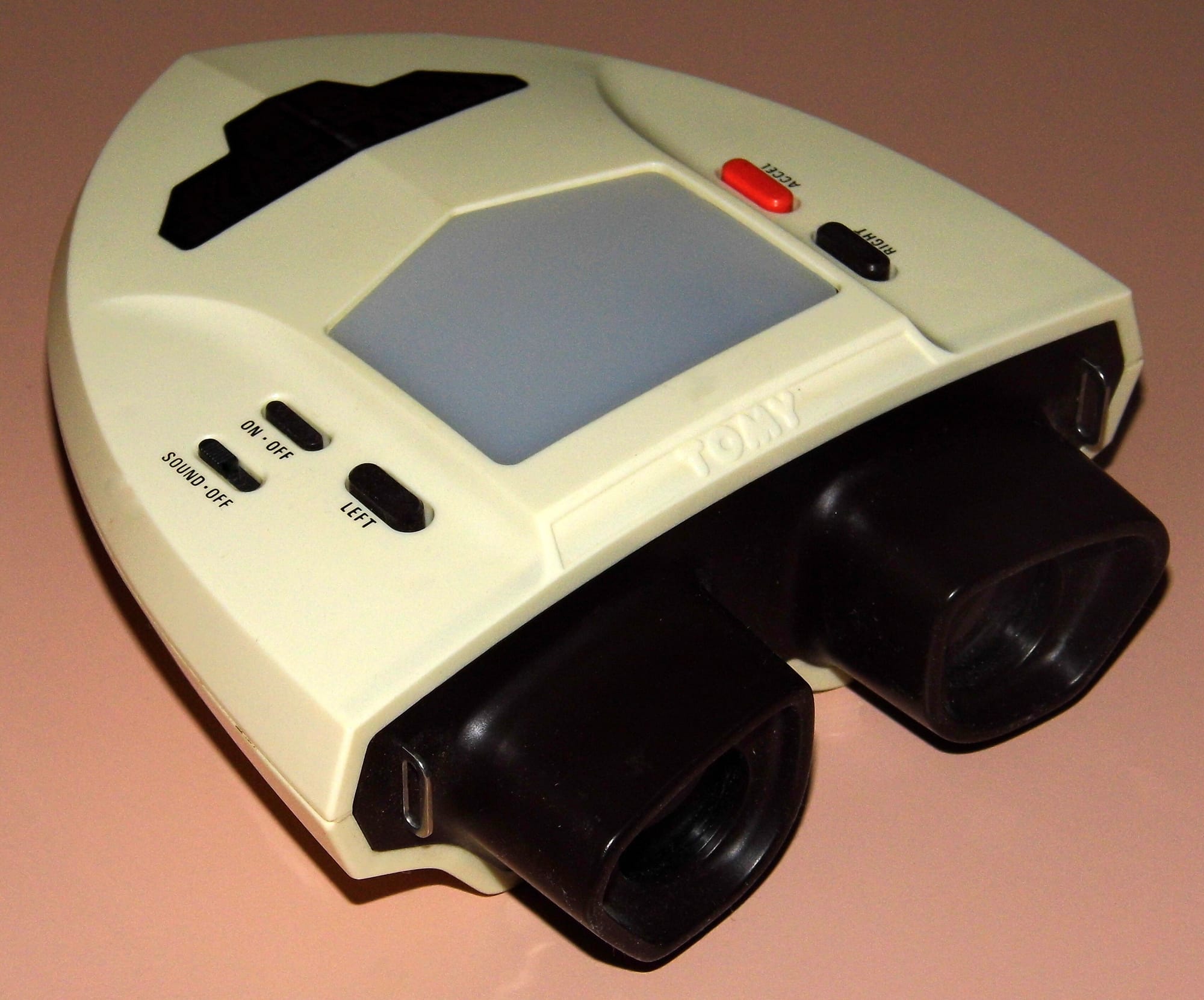
In 1983, Tomy travelled to a new frontier with their Tomytronic 3D. When it reached store shelves, it broke ground as the first 3D handheld gaming device — this fact alone made quite a splash. Players pressed their eyes up against its viewing slots, like with binoculars, and they would see a colourful 3D environment, although the characters’ movements did not have a wide range of movement, in part due to the technological constraints of the time.
In all, Tomy released 7 different Tomytronic 3D variants: Planet Zeon, Jungle Fighter, Shark Attack, Sherman Attack, Sky Attack, Skyfighters, and Thundering Turbo. Skyfighters (an aerial dogfighting game) and Sherman Attack (a tank battle game) were models that featured stereo sound. With games built into the console, you couldn’t switch between titles by changing cartridges, unfortunately. It also depended on external sources of light for the action to be visible.
_stereo_viewer.jpg)
The two inventors who created the Tomytronic 3D are listed as Nobuo Hamano and Kazumi Matsumoto. A few years prior, Nobuo Hamano had also invented a digital tennis handheld game, while Kazumi Matsumoto would go on to design the housing for a soccer game. Both inventors brought a keen understanding of the hardware and software needed to make such a system a reality.
Flutters of a wing
In 1985, economic shocks in Japan threw Tomy into turmoil, and it downsized to survive. They released the last new variant of the venerable Pocket Mate about a year later. The economic circumstances, along with Nintendo’s growing market domination, led Tomy to largely withdraw from the video gaming hardware market in the mid-'80s, even discontinuing their computer system, the Tomy Tutor. Some of their talented employees moved to work for Matsushita Electric Industrial Co., which would later become Panasonic.
Tomy released the last new variant of the venerable Pocket Mate in 1986. They redoubled their focus on physical toys, such as the Palm Pets series, which married animal plush toys with electronics. During the next decade, when Japan was experiencing further economic shocks, Tomy found an unlikely lifeline.
Other toymakers ignored Pokémon, an odd creature-catching franchise, but Tomy saw its potential and secured the merchandising rights in 1997, just before it started to climb even further in popularity. That move saw the company expand again, merging with a competitor, Takara, in 2006, forming the present-day Takara-Tomy entity.
.jpg)
In an odd twist, Takara-Tomy created officially licensed keychains for the Nintendo Game & Watch, its old handheld nemesis, in 2010. These keychains played snippets of some famous Game & Watch games and looked like miniature versions of the real thing, but they weren’t truly playable. Fate can be funny.
From its intricate physical Pocket Mate games to its surreal Tomytronic 3D, Tomy left a big mark in handheld gaming history. When video gaming itself was still a new medium, Tomy dared to dream big. Sometimes the risks didn’t pay off, but even when they didn’t, they created some interesting stories and inspired a new generation to also add more fun into the world.