Trust, Tension, and Touch: The Tactile Terror of Little Nightmares III
Some games get under your skin through story. Little Nightmares III uses something far closer to the bone.

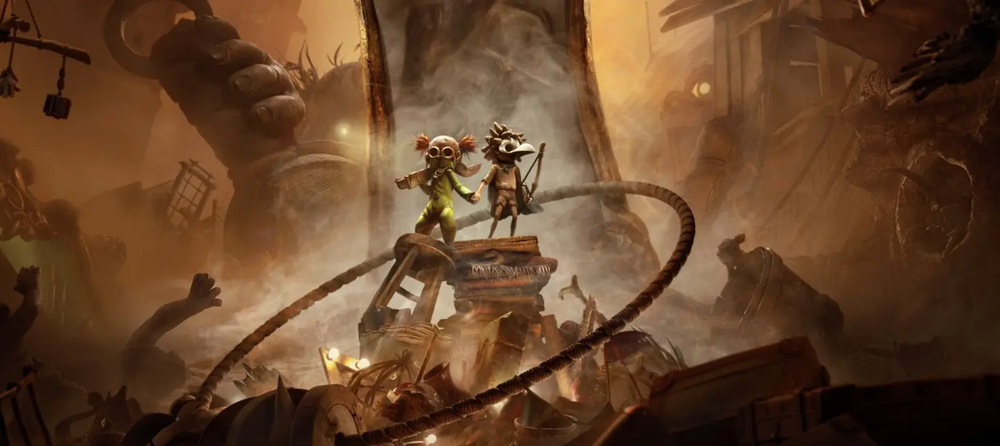
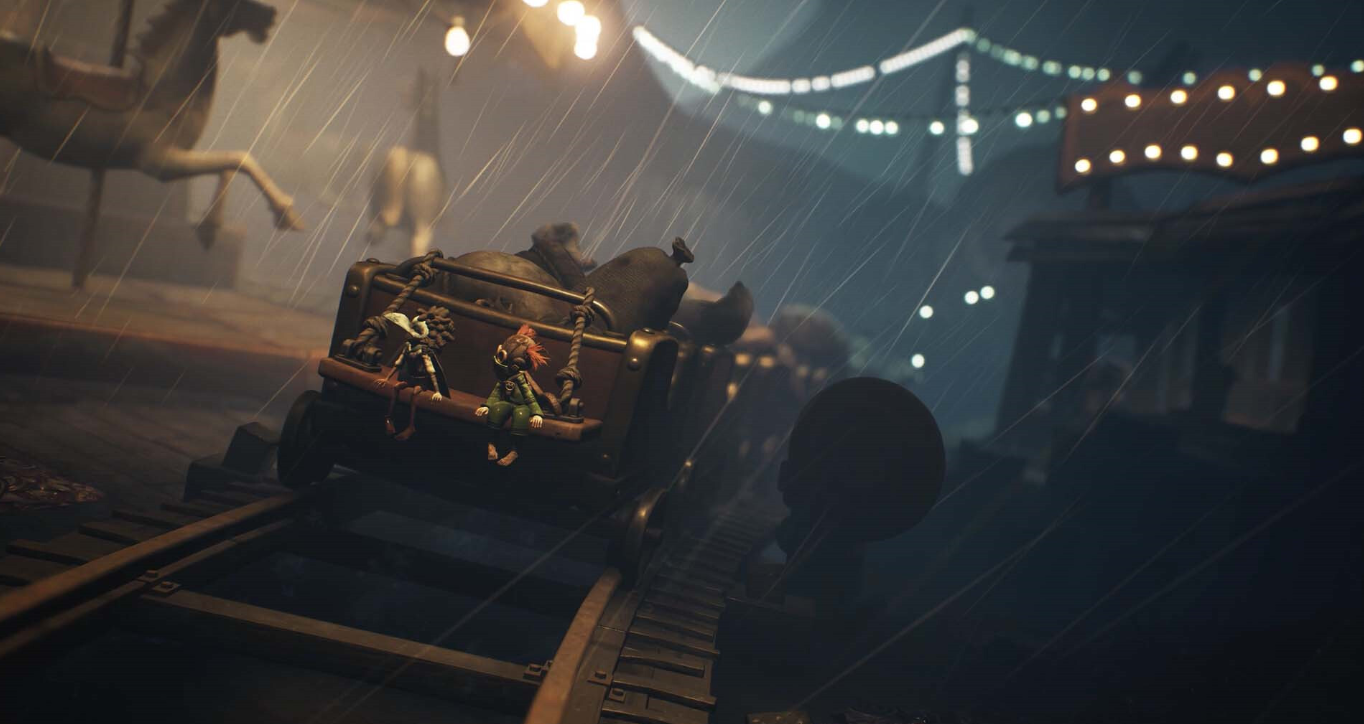
The third instalment in the celebrated horror puzzle-platformer series, Little Nightmares III, follows best friends Low and Alone as they navigate the shifting dangers of The Nowhere. While this piece focuses on gameplay—especially the haptics design—I’ll touch lightly on a few non-story spoilers from my time with Low.
The Tactile Heart of Little Nightmares III
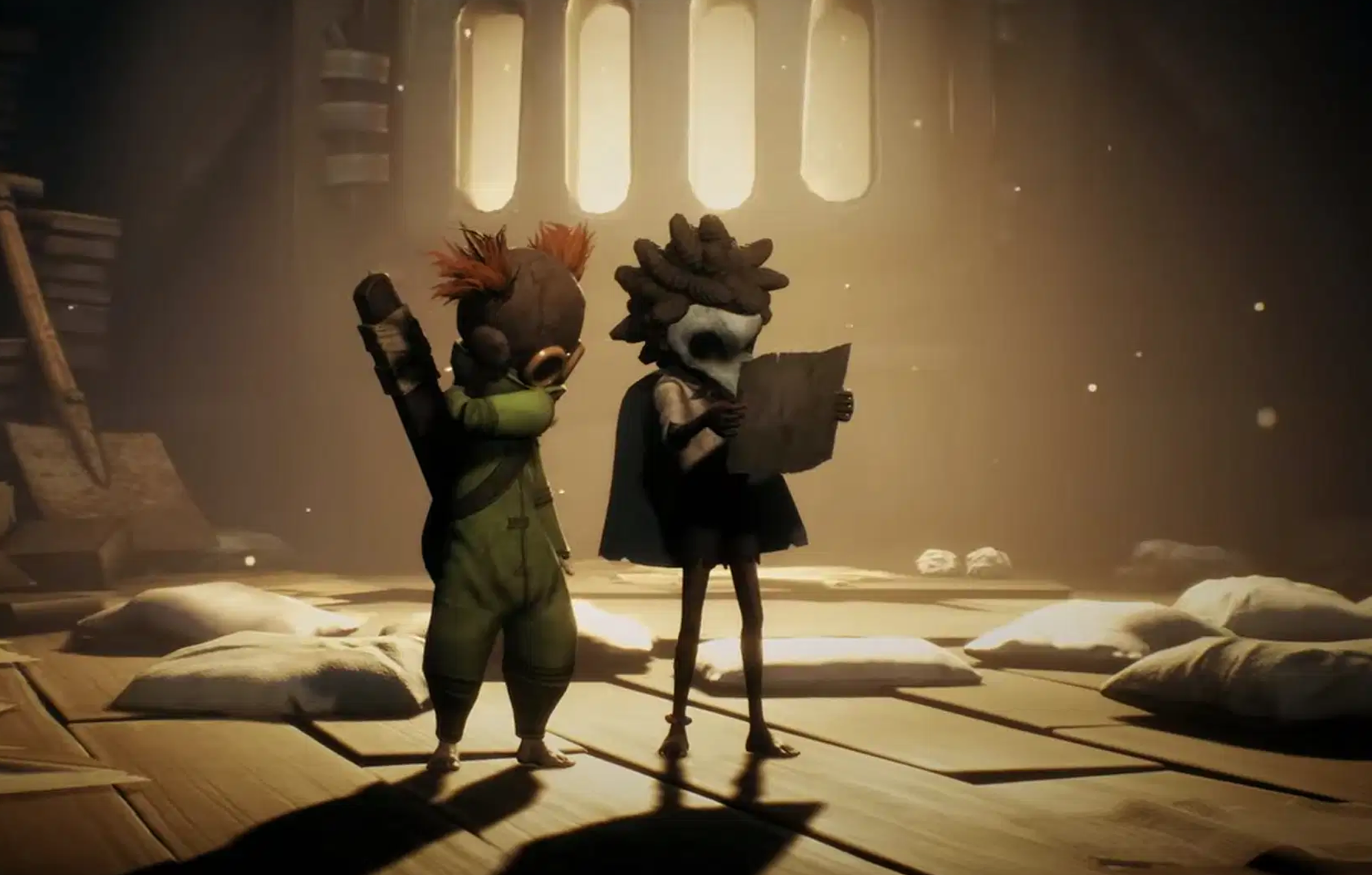
Little Nightmares III is, above all else, a tactile game — one that insists you pay attention to the smallest physical details. From the opening moments, the controller stops functioning as a mere input device and becomes the medium through which Low’s body speaks. The haptics heighten this effect, stitching your tension to his with every subtle pulse and shiver.
This begins with the simplest actions. Holding RT to grip a ladder while nudging the left stick upwards doesn’t feel like a standard command — it feels like bracing yourself, hauling weight rung by rung. Many games automatically secure you to ladders, smoothing away resistance. Little Nightmares III refuses that ease; It wants every grip to matter. I learned this immediately when I relaxed the trigger and tumbled off my first ladder. I had treated the game like any other, but it politely corrected me.
This deliberate resistance isn’t clumsy design; it’s the point of the entire experience. Smooth, forgiving controls create confidence. These nuanced, sometimes stubborn mechanics create unease, and unease is the emotional core of Little Nightmares. Flipping a lever, turning a gear, edging along a collapsing platform: each action demands precision that mirrors the real-world gestures they mimic. Turn too far, and a mechanism overshoots. Misjudge a ledge and Low slips. These moments aren’t failures so much as beats in an ongoing conversation between you and the world, a negotiation of weight, pressure, and intent.
The game asks your body to participate long before your mind has time to analyze. Through constant gripping, crouching, adjusting, and scrambling, you don’t just control Low—you inhabit him. It’s a quiet example of ludonarrative harmony, where mechanics carry the emotional story as surely as any cutscene.
Dystopic, Delightful Design
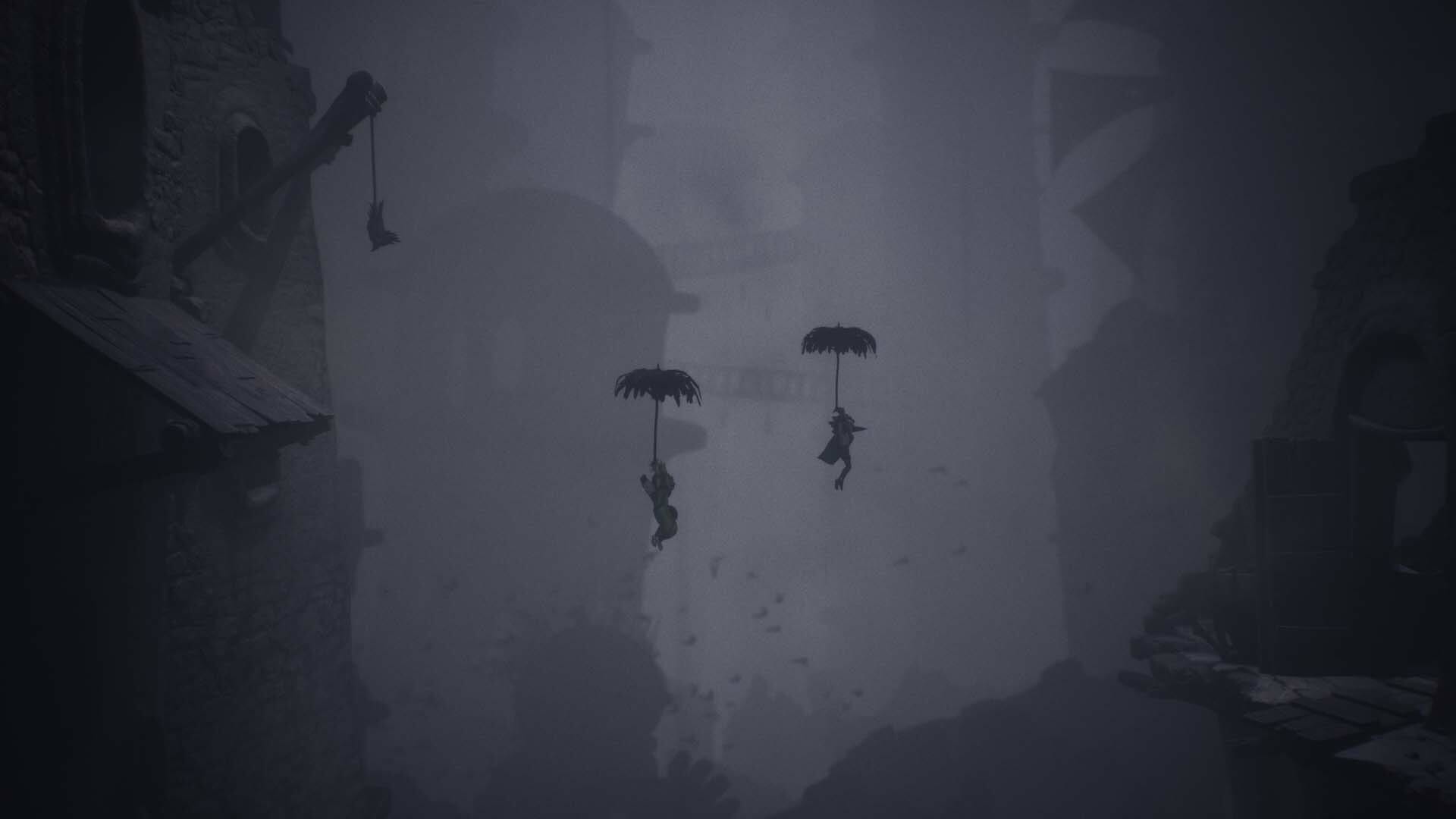
Ludonarrative refers to the relationship between gameplay (“ludo”) and story (“narrative”). When the two align, you get ludonarrative harmony; when they clash, dissonance. Little Nightmares III leans strongly toward harmony. Even before I understood the specifics of the plot — truthfully, I didn’t grasp the full narrative until later, and even then, only after reading more about the game —the feeling of the world was unmistakable. The mechanics and the atmosphere were telling the same story.
This isn’t a horror game built on shock or gore, though it certainly offers a few grotesque images and the occasional combat encounter. Its real power lies in how it positions you. The game wants you to feel small and endangered in a world that dwarfs you. Every narrow squeeze, precise jump, or careful shuffle reinforces that imbalance. You’re not told Low is scared; his fear is performed through your cautious inputs, the slight hesitation before a drop, the careful adjustment before a jump.
What surprised me most wasn’t any singular scare, but how ordinary actions carried so much weight. Because the controls require steady, deliberate motion, even simple interactions become sources of tension. A climb, a hop across a gap, even shifting a crate—each one is a quiet gamble between you, the controller, and the world’s indifference to Low’s survival.
On paper, these interactions are simple. In play, they become stories.
Turning a rusty crank feels agonizingly slow when you suspect something is watching. Edging along a narrow beam becomes a minor crisis when your thumb drifts a millimetre too far. The game amplifies these moments by refusing to tidy them up. It doesn’t auto-correct your footing or polish out mistakes.

One of the most difficult challenges in a particular boss sequence wasn’t combat or stealth—it was pressing jump at the correct time. Jumping, a foundational action in most platformers, becomes charged with uncertainty because you know a mistimed release might send Low peeling backwards into darkness. Each jump becomes a small spike of anxiety, giving weight to the action. After many (many) failed attempts, jumping became a source of fear, frustration, and even a bit of anger.
That tension sharpens whenever danger creeps into the frame. Threats aren’t only visible or audible, they’re physical. In tense sequences, the controller thumps with a slow pulse that seems to settle in your chest. A distant footstep or slamming door reaches your palms a fraction of a second before you register it on-screen. The world doesn’t simply show you fear — it transmits that feeling to you. The controller’s heartbeat grows heavier, more insistent, as if Low's terror is vibrating straight into your hands. You begin to recognize those thumps the way you would musical cues in a horror film — not as a flourish, but as a warning. Something is approaching. Move carefully. Keep your grip. Don’t let go.
And once the game has built this steady rhythm of stakes — this constant physical vigilance — it becomes impossible not to grow protective of Low. That heightened awareness, that embodied caution, lays the groundwork for connection. Tension becomes the first thread of attachment, one that naturally extends toward your companion. It makes the presence of Alone feel like more than a mechanic. It feels like relief, like someone sharing the weight you’ve been carrying in your own hands.
Two-Character Tactility (Even in Single-Player)
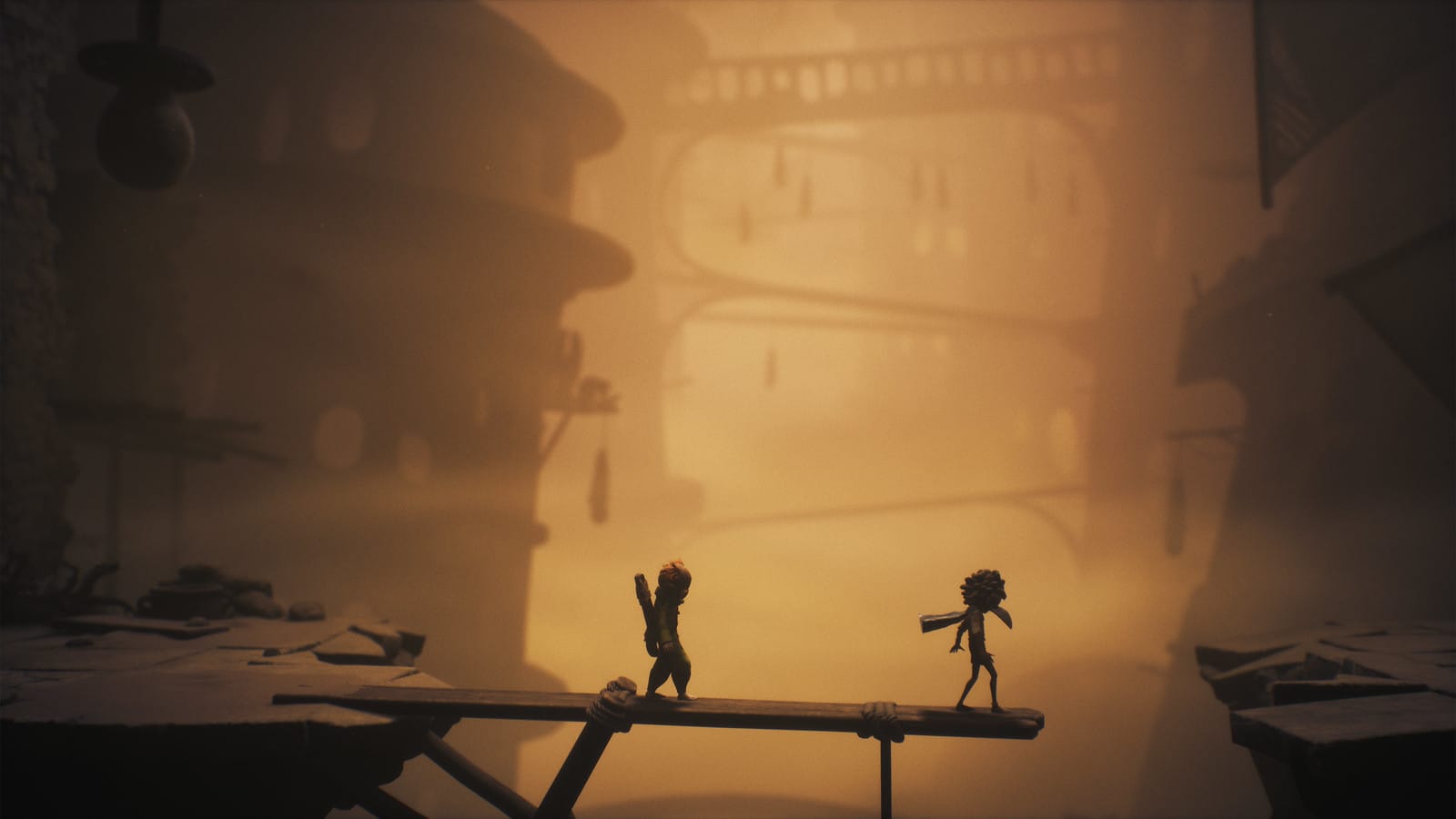
The tactile design doesn’t stay confined to Low—it extends, almost unexpectedly, to Alone. Even in single-player, where she is AI-controlled, the game frames your partnership through shared physical cooperation rather than exposition. You don’t bond through dialogue, you bond through motion.
Many of Little Nightmares III’s puzzles rely on synchronized actions: pulling levers together, boosting each other to higher platforms, matching timing across a collapsing structure, coordinating jumps on a trapdoor. In these moments, the controller becomes a conduit for collaboration. You press, hold, and adjust your movements knowing that Alone must respond—and she does.
Sometimes I moved to support Low; sometimes I moved with Alone. The boundary between those states blurred so effectively that Alone's presence felt physical, not just programmed. There’s a subtle but important difference between moving for Low and moving with Alone. The former is simple input; the latter begins to feel like choreography. Haul a lever, and she braces beside you. Leap for a distant edge and she catches the opposite side a heartbeat later. These exchanges create a kind of dual-tactile awareness. I feel my character, and I feel the presence of the other.
That awareness deepens through Alone’s responsiveness. She positions herself exactly where—and when—you need her. When she clasps your hand and pulls you through a tightening doorway, you feel the jolt of shared momentum. When she darts ahead to finish off one of the game’s unsettling puppets (arguably the most disturbing enemy you’ll meet), you tense instinctively, trusting her to defend Low in the split second you cannot. When she steps beneath a ledge without prompting so you can reach safety, the sensation of collaboration is unmistakable. The game conveys something wordless but clear: you are not alone, even when you’re technically playing alone.
Over time, these rhythms settle into your muscle memory. You begin to anticipate Alone’s movements the same way you anticipate Low's. The trust you build isn’t abstract or even story-driven — it’s embodied. It grows out of the same gripping, bracing, and balancing that have defined your entire journey. And once the game has woven that sense of shared physicality into its moment-to-moment play, the emotional connection feels natural; you've internalized the partnership between Low and Alone.
Conclusion
What Little Nightmares III demonstrates, more than anything, is that tactile design can be emotional design. The haptics, the grip mechanics, the small negotiations of pressure and timing — these aren’t embellishments. They’re the means by which the player, the character, and the companion become intertwined. Alone doesn’t need dialogue to feel significant. The game’s physical vocabulary does the work for her: your grip, her answer; your hesitation, her support.
It’s rare for a game to make trust something you feel rather than something you’re told. Rarer still for that trust to emerge from actions as tiny as holding a trigger or matching a partner’s step. But that’s Little Nightmares III’s quiet triumph. It demands your attention, it borrows your body, and in return, it offers a connection that feels earned, corporeal, and strangely tender amid the dark.