WordPlayer: Paranormasight: The Mermaid's Curse Understands That Reading Can Be Gameplay
Let the words flow


There are a lot of games that ask you to engage with them primarily through reading text on the screen. In fact, there's an entire genre - the visual novel - where the main progression model is reading all the text, pressing a button to progress each line. Eventually, depending on the flavour of the visual novel, you might jump into something that could be thought of as more "traditional" gameplay: making dialogue choices, solving puzzles, absolving your clients in the courtroom, pixel-hunting through detailed screens, or trying to ignite a romance. This is me being somewhat reductive, as there are a lot of different visual novels doing many different things, but in many cases, the main mode of play involves a lot of clicking through lengthy dialogue exchanges.
This article is free of story spoilers
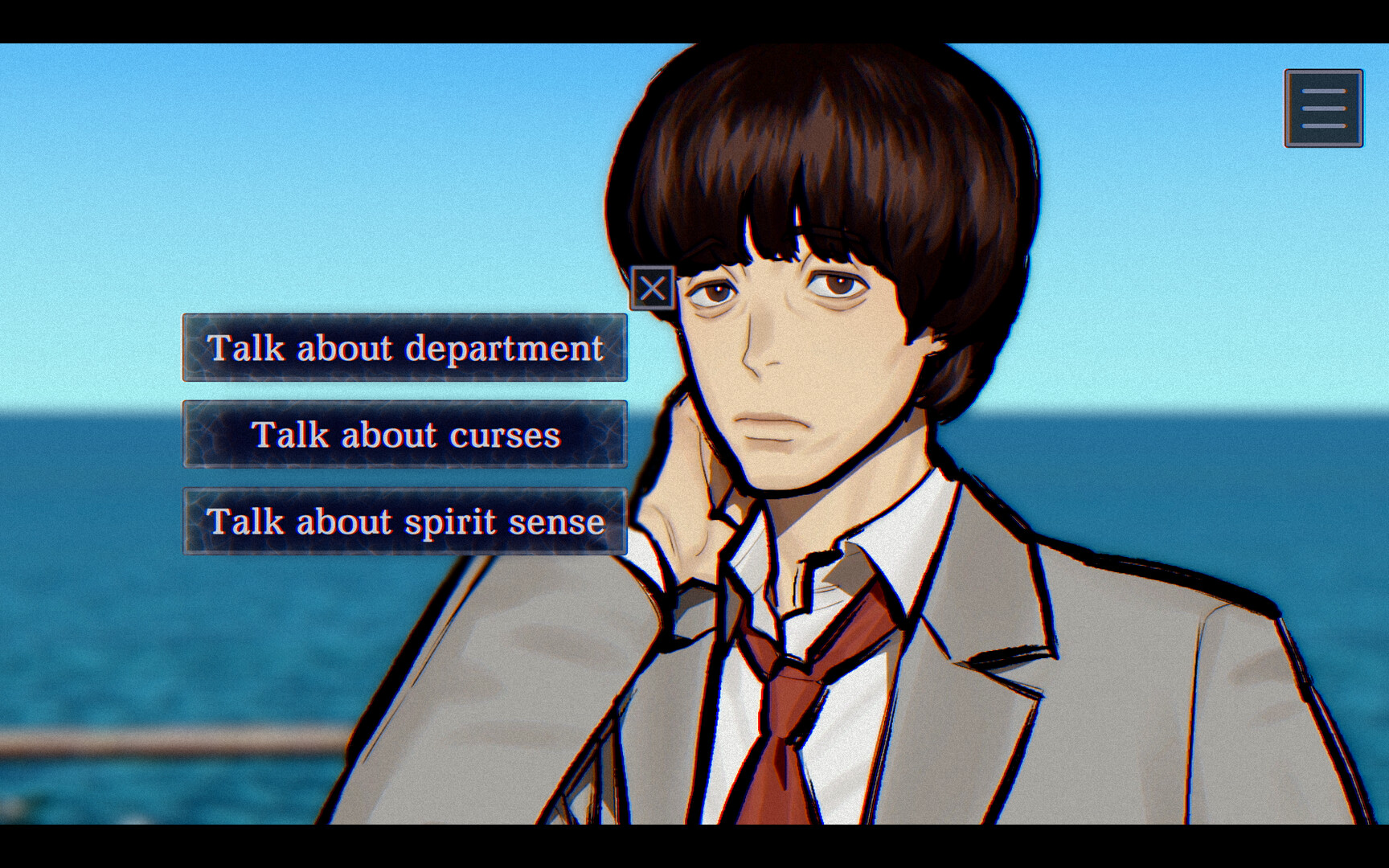
Paranormasight: The Mermaid's Curse, the excellent second game in the titular series that started with 2023's The Seven Mysteries of Honjo, is a visual novel of sorts. Throughout the game, you play as four different characters - or, perhaps more accurately, omnisciently inhabit four different perspectives on the same story (you'll understand if you play it). Most of the action outside of dialogue cutscenes is presented from a first-person perspective, where you can control the camera to look around, inspect objects, choose who to talk to next, or just admire the scenery.
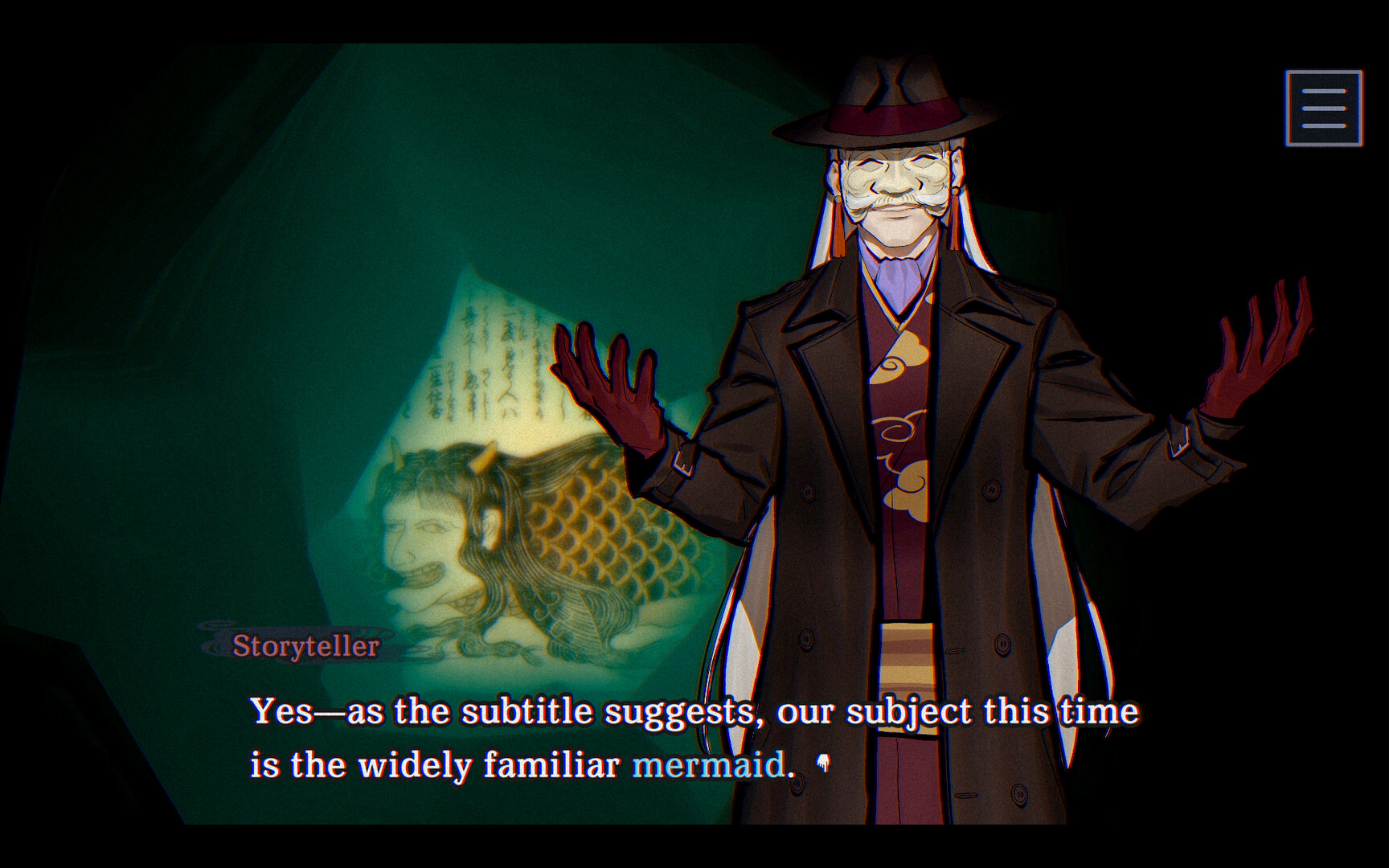
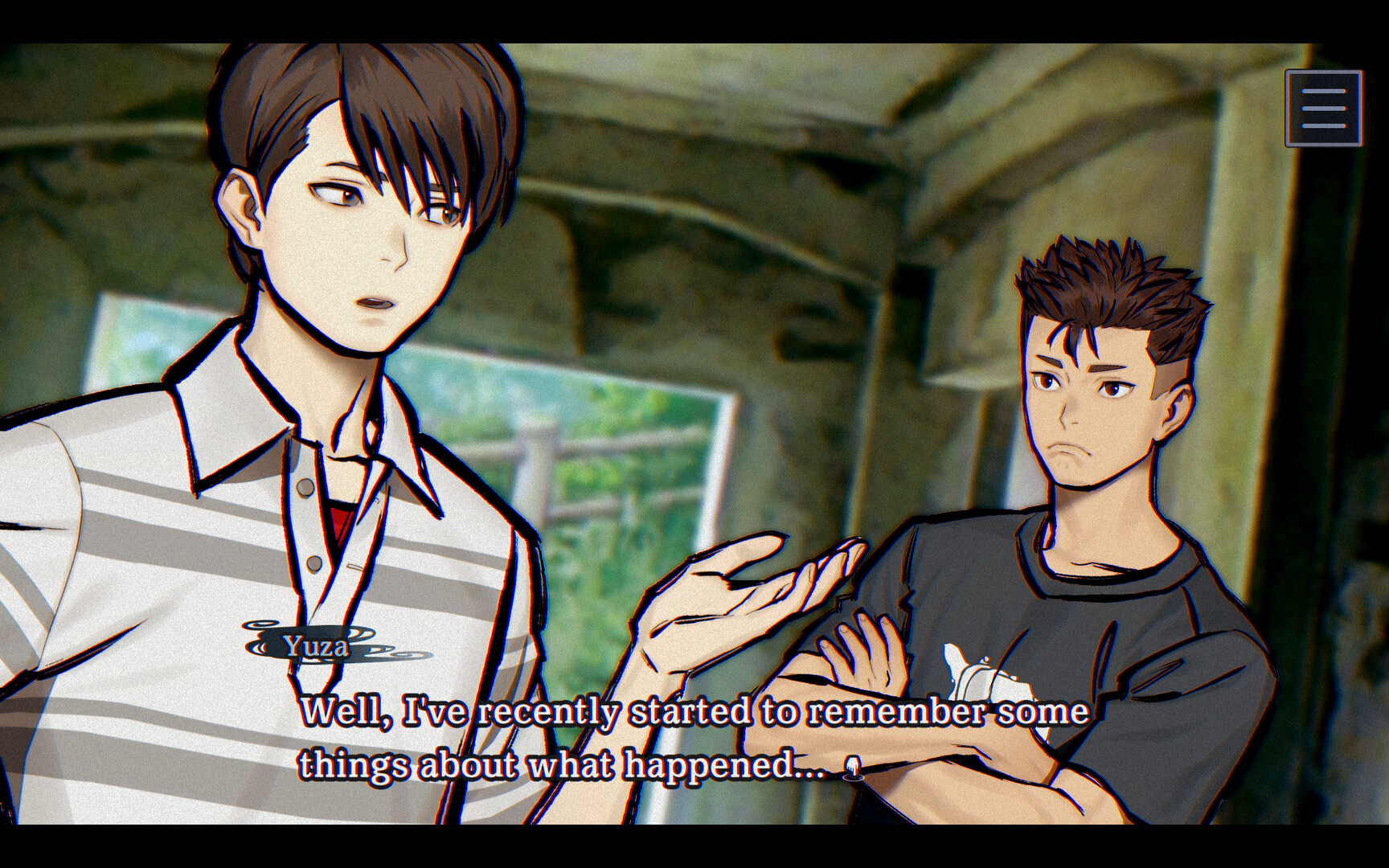
The game is set in the 1980s across multiple small towns and islands in the Mie Prefecture of Japan, and concerns a young aspiring diver - Yuza - whose family was lost in a terrible storm five years prior. Yuza has recently returned to the island of Kameshima and set his sights on a mysterious goal. In the game's opening moments, he encounters something otherworldly - a tomokazuki, a spirit that takes on the image of its own target before dragging them into the deep. There's a lot more to it than that, but it's best to discover it all at your own pace.
What pans out over the next 15-odd hours of story - across multiple fractured timelines, with curses, spirits, and a lot of local history being shared - is a surprisingly sweet game, one that carries a little less of a horror tinge than its predecessor despite dealing with some heavy themes. Occasionally, the game will check in with the Storyteller, the burgeoning franchise's closest analog to a mascot, who will gently, mysteriously guide you through the game's supernatural connective tissue.
There's a fantastic story here, but when I think about what this game does well narratively, I'm thinking about the play experience as much as the dialogue or characters. Paranormasight: The Mermaid's Curse is a visual novel that very effectively pushes reading not just as a model for advancement, but as a complex gameplay mechanic. This isn't a novel in the guise of a game; it's very much a game, one in which reading through long passages of text and soaking in the information, then thinking about what it means both in relation to the story and your own progress through the experience, is the primary way of progressing. This means paying attention and being diligent are important - when the game tells you that a detail has been recorded in your files, it's worth opening them up and having a look.
I'm so used to collecting information in games that I know I'm never going to look at. As a writer myself, it pains me when I know that effort has been poured into the in-game book or optional audio log or piece of lore I've just logged in my inventory. If I'm going to read something hidden away in a menu, I need an incentive. I want it to fill in a gap, or reveal an answer, or deepen my understanding of something important. A long letter might be a good showcase for a writer's talent, but if it's not adding anything to my understanding of the game I'm playing, I find it very hard to invest myself.
The first Paranormasight similarly built up an extensive list of files as you played, which helped to flesh out the world and the complex tangle of spiritual influences over the game. The files in The Mermaid's Curse serve a similar purpose, and also serve as the game's primary skill checks - the only way to proceed is to really understand the game's story and all the characters involved. At times, the game will stop for a moment and ask you to answer a question to progress, and knowing the correct answer will, almost always, rely on you having kept up with these files. It's like studying for a test, except the test is always about something interesting, spooky, and fun. Keeping on top of everything you collect in The Mermaid's Curse isn't just going to help you clear the game; keeping on top of those files fundamentally is the game. That information is what you're playing for, and because of that, getting a new long page of text is always exciting.
Paranormasight: The Mermaid's Curse makes full use of the fact that it's a game, that it has a UI and menus, and that you can pause, save, reload, and reflect. By the time you've reached the game's best ending, it has used some of those tools in astonishing ways, which I will not spoil here. But what really impressed me about The Mermaid's Curse is how effectively it primed me for its later puzzles, how deeply the game ingrained in me that I need to pay attention not just to the words on the screen, but the systems underpinning everything.
The Paranormasight games could be thought of as part of a subgenre of "cursed" software, games like Immortality and Doki Doki Literature Club! that make their interactivity part of the diegetic experience of the narrative. But there's a tonal difference here - this is a game that presents a challenge that wants to be overcome. Every part of the game is working with you.
I was recently revisiting an interview I had with an indie developer I admire, for my upcoming project. We were talking about user interfaces in the context of their own very popular, narrative-driven project, and they said something that I've been thinking about for a while now. "With our games, you can really tell they're games, and you can see the game design happening," they said. "Lots of modern games turn off the HUD when you're standing still, so you can't see what you've got equipped. But I always go to the options and set them to 'make the HUD appear at all times'. Because I always want to see the game systems."
Paranormasight: The Mermaid's Curse embodies a similar philosophy; It never shies away from what it means to be a game. There are even some interface choices that annoyed me at first, but which reveal themselves, eventually, to have a deeper purpose. It has been so carefully designed to consider all aspects of what a game is - how the user interface matters, what it means to be able to control your view of a 3D space, how to branch your story effectively, and what mechanics, tools, and assist functions are so ubiquitous that we take them for granted. It's exciting to see a game in a genre that people so often dismiss as simplistic being so formally experimental - and it makes me very hopeful that the Paranormasight series will continue.