Yakuza Needs to Let Players Scrap with Women, Too
Equal rights, equal fights — unironically

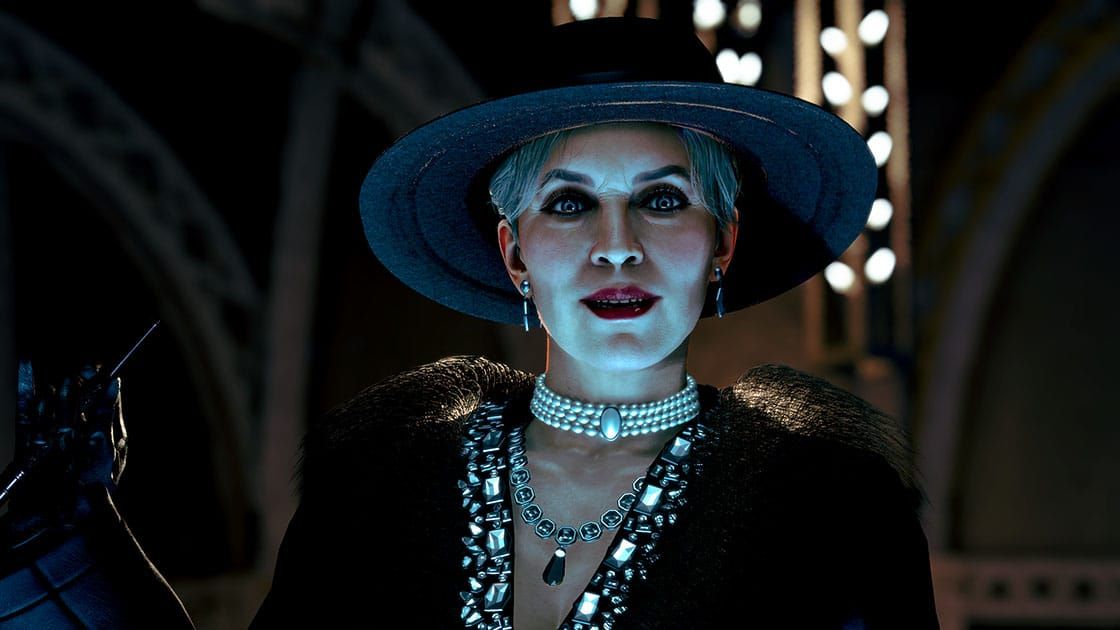
Like most expressions of the hypermasculine crime genre, from song to film, the Yakuza series’ relationship to its women is often patronising at best and hostile at worst. Its most recent release at the time of writing, the tepid Yakuza Kiwami 3 (along with the bundled campaign Dark Ties), is the very picture of this. The hiring of confessed sex pest Teruyuki Kagawa for one of the most involved likeness character roles in the entire series (he’s the first actor to do his own mocap for the game) is the immediate example.
Fellow game journalist Ashley Schofield writes for Skybox that, despite having always depicted unambiguously misogynistic predators as bad guys, the series really isn’t so much at odds with itself in Kagawa’s presence as it is following its hypocritical treatment of women to its conclusion. From iron-hearted acting Tojo chairwoman Yayoi Dojima becoming a damsel in distress in Yakuza 2, all the way to Chitose Fujinomiya’s arc in Like a Dragon: Infinite Wealth, stripping all agency from her unsavoury deeds, female characters are at once deified and treated as tools for the development of their male counterparts.
There is nothing in the franchise that shows this quite as well as creator Toshihiro Nagoshi’s philosophy, kept alive by his close collaborator and now leader of RGG Studio, Masayoshi Yokoyama: with a few exceptions (namely Tanimura’s female instructor in Yakuza 4, the 9-year-old Haruka Sawamura, and a couple of trans women - I wonder why), Kazuma Kiryu and friends are forbidden from ever raising a hand against a woman. Every time a villain hits one during a cutscene, too, she always falls to the ground and stays there, no matter her level of fighting skill; a grand show of just how despicable the action is.
As the years have gone by, the series has made several attempts at grappling with the idea of fighting female characters. Like a Dragon: Pirate Yakuza in Hawaii promised a lady main villain with a swordswoman for a retainer — yet refused to let you actually punch either of them. Instead, the game only allows a ship battle against the big baddie’s pirate crew, never mind the fact that Goro Majima doesn’t seem that averse to hitting women (he’s slapped his forgotten ex-wife at least once, for one).
Even the otherwise pro-woman Yakuza: Like a Dragon balks at the concept of fighting crime leader Seonhee, instead making her sic her male second-in-command, Joongi Han, on Ichiban Kasuga and company. Lost Judgment’s biker gang racing mode may be the closest we get; there is an all-girls crew whom the player must knock off their rides to gain politicking leverage, led by goth rocker badass Rina Minagawa (whose main contribution still is just having been in love with the leader of the gang to which hers is a subgroup... baby steps).
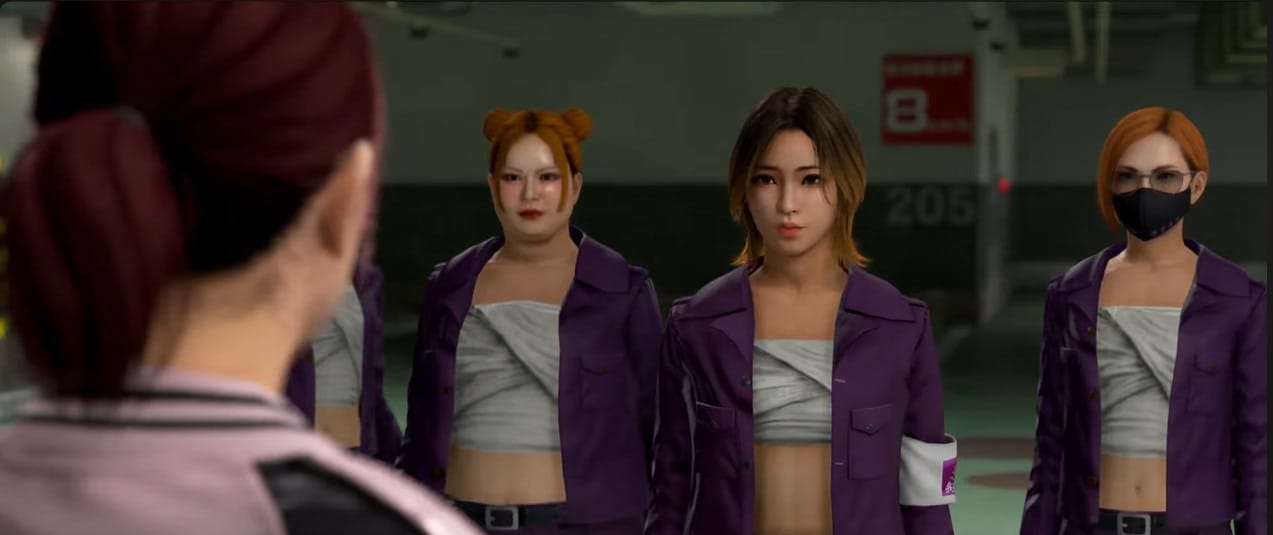
It is thus remarkable that Kiwami 3 returns to that setting for the Ryukyu Gal Gang, a side mode retconned to be part of the original Yakuza 3, which sees Kiryu advising the Haisai Girls, another girl biker gang led by young and spunky Tsubasa Miyazato. When you first meet Tsubasa, she and her gals are getting attacked by the Tokyo Night Terrors, an all-male group from Tokyo that wants to take over Okinawa’s biking scene by force. Kiryu comes to their aid, but not before proselytising to the jerks about how hitting a woman is a coward’s practice — no matter if they’re rival gang members fighting you on those grounds. The “fairer sex”, as the series believes them, is untouchable due to some sort of inherent weakness.
While the game tries to dress up Kiryu’s newfound advisor position as some sort of bid for gender inclusivity, there’s no other way to put it but the cliché one: it’s a man barging into a woman’s space. Player agency here translates to the quiet implication that these clueless, overconfident little girls need a big, strong guy to guide them in finding their truest selves, and there is no amount of “she found herself on her own” insistences from the Dragon of Dojima that can handwave this.
To that end, it’s very notable that the menacing cutscenes of the storyline villains debating their next moves don’t say “we’re going to crush Tsubasa and her gang” or anything of the sort. They’re all eager to fight Kiryu, the true threat in their eyes (and of the narrative’s), because aww, look how cool you are shepherding these idiots to their coming of age.
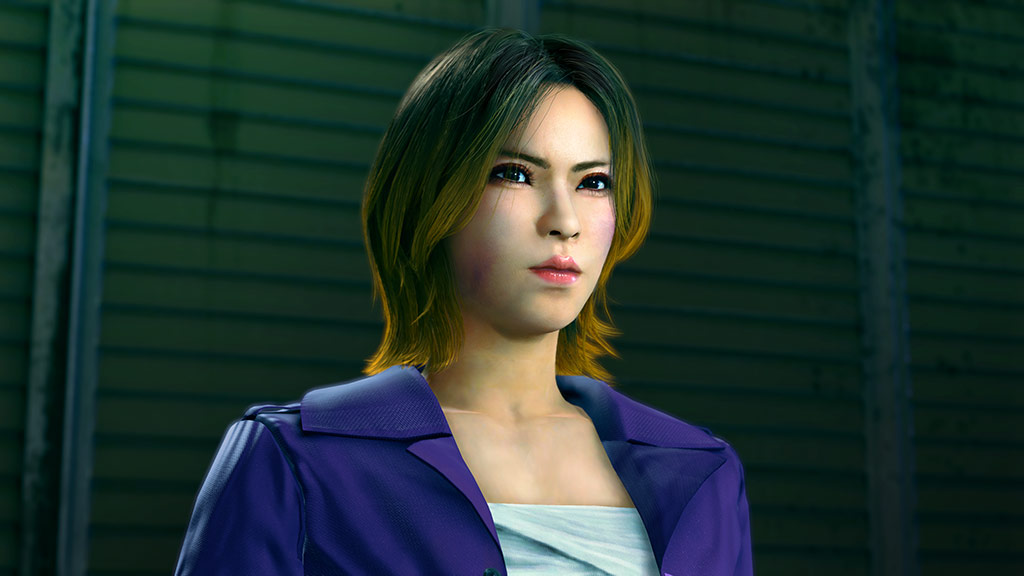
This disingenuous heralding of “girl power,” which is really just thinly veiled misogyny, further extends to the storyline involving Tsubasa’s rival, Sakura, the leader of the supposedly uber-powerful Ryukyu Venus. Because Kiwami 3 has no concept of what the “side” in “side mode” means, all players are forced to see the way this plot beat develops: Sakura is touted as the first one up to bat out of the three arch-villain groups, but when her time to shine arrives, she and her (again, extremely powerful) group are instead overpowered with ease by the “real” bad guys and become a gaggle of damsels in distress.
This is just more fuel to the malice of your opponents, as if “unsubtle allegory for colonialism, being a Tokyo group looking to conquer Okinawa and all” wasn’t strong enough motivation for the audience’s hatred already. What untold horrors would happen if Kazuma Kiryu (and his female companions, but who gives a rip about them, right?) had to take women seriously as opponents?
Well, perhaps the next step in the series’ evolution is to discover just what might happen if women were taken seriously. RGG Studio has tried to play both sides before: their best effort in the “strong female character” field has been Saeko Mukoda from Yakuza: Like a Dragon, a character who explicitly draws her power from womanhood instead of being, like Kaoru Sayama had been in Yakuza 2, just “strong for a woman”, which usually didn’t mean much in the face of men.
Sure, it comes in the form of the kinda-sexist trope of using feminine signifiers as weapons — your clutch bag whacks and makeup poison and seduction techniques and what have you — but one finds it’s quite forgivable in a game whose entire class system relies on common-ish jobs overblown to comedic proportions, in the Miitopia vein of humour.
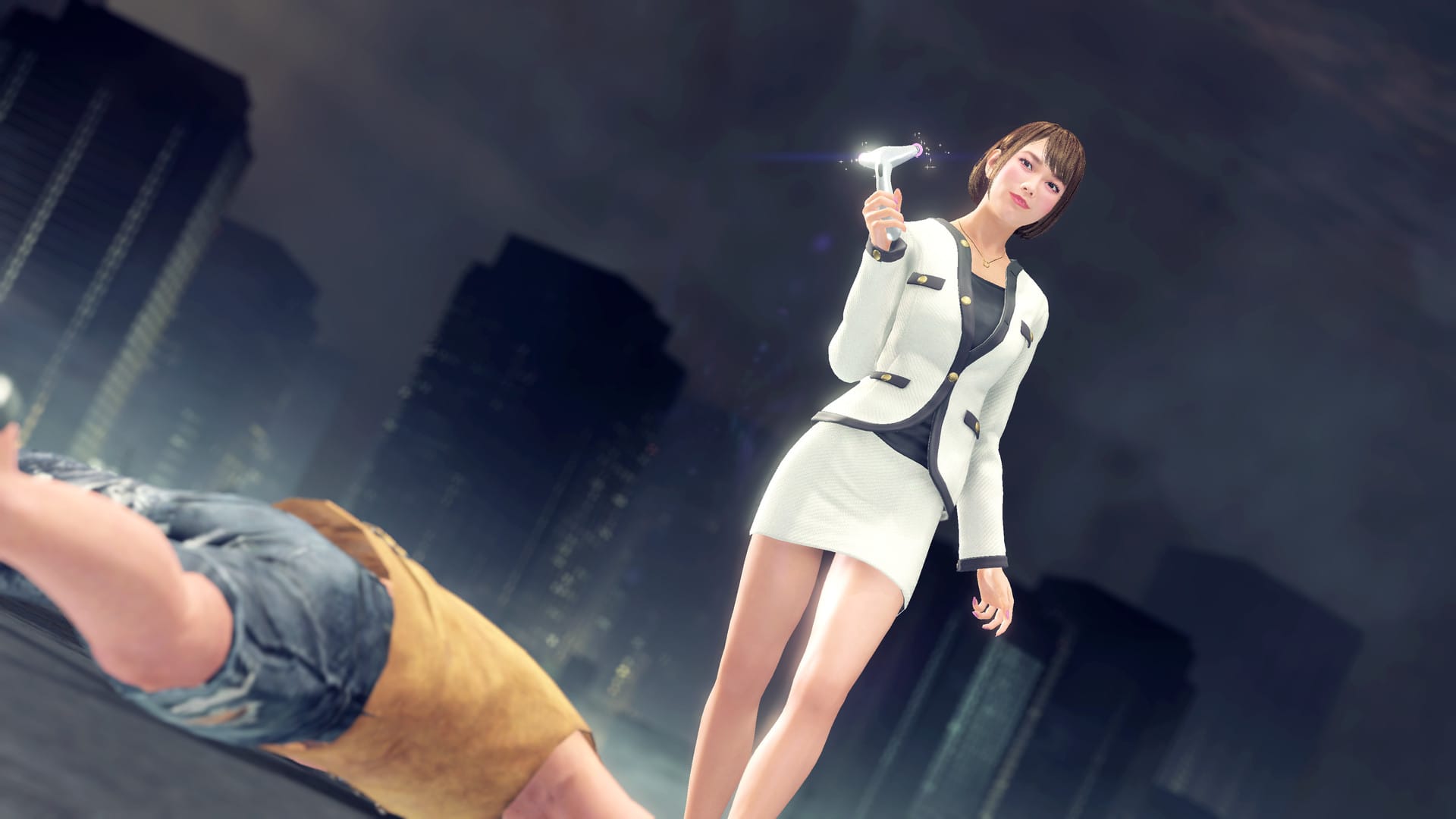
In Like a Dragon (and its sequel Infinite Wealth, though that one has some other problems with misogyny), specifically, this attitude is supported by the use of the Heroine’s Journey, as Niki Fakhoori writes for Stop Caring. By moving away from the classic Hero’s Journey, a mode of narrative that rewards more classically “masculine” traits (such as a “lone wolf” type approach to life, Kiryu’s entire M.O.), Ichiban Kasuga’s turn-based RPG philosophy gives more room to his allies to be treated not as disposable plot devices, but as people in their own right. This is why, when the group has to help Saeko deal with a sexual harasser during an undercover mission, it comes off less “defend the poor woman who can’t do that for herself” and more “get a friend out of a pinch”. Even through the usual Yakuza series plot beats, there is room for a more humanised treatment of women — the games have already done the work to show that themselves, see?
It is thus high time to take down that sacred cow. Despite RGG Studio’s best efforts to dance around it, relegating conflict with women to non-punching side modes and the like, there can be no true gender equality if we keep framing one side as fundamentally incapable of doing something. There is so much work on the narrative side to avoid the simplest solution; it has frankly become ridiculous over the years. It seems all we will ever get is a collage of examples — a motorcycling rival we don’t meet in classic combat, a female fighting style master who just gives you objects to wreck, a Yakuza chairwoman used as a prop, a coach you actually do get to spar with but who disappears from the series forever after that — and never the fully realised thing.
As Yakuza refuses to let go of the legacy of the Kiryu Saga, its women are the most immediate victims. Committing fully to the idea that gender is irrelevant to strength requires actually making it so that lady villains get to exist in all of the same modes as men, which does include getting their faces caved in just like them. The current approach of pretending as though the issue doesn't exist, while mostly treating female characters in patronising ways, truly does nothing for anyone. What's a Dragon that doesn't respect his adversary?
Join the conversation
What do you think? Reply below to share your perspective.