Indie Monthly: March 2026
Slaying the spire once again

March saw the long-awaited release of Slay the Spire II. Doing a conventional review of this game seems a pointless endeavor, as anyone who's even considered buying it already has. This is something I learned (as did many of you, I'm guessing) when consumers overloaded Steam for several hours, making it a struggle to purchase or download the game.
To be honest, I had a lot of reservations about this one. The deckbuilder has evolved enormously since the release of the first game. There are the obvious changes - the introduction of dice and other card alternatives, the shift toward alternative genres - but there are also less obvious tweaks in some of the more recent titles. Even by roguelike standards, Slay the Spire could be a punishing game, with a huge element of luck in the early game that put some people off. More recent games have dialed back on the difficulty in an effort to be more accessible.
Slay the Spire II is still a punishing game, but one that has certainly changed for the better. As with most sequels, the marketing focuses on "more" - new characters, new cards, new enemies, and the increasingly obligatory co-op mode. What's more interesting are the subtle changes, the tiny but detectable alterations to the overall design principles. It's a game where the player feels more in control of decision-making, a game with fewer unfair surprises and more avenues for discovery.
The game is likely to remain in Early Access for a good long while, with plenty of room to sand down the remaining rough spots. I can only hope that Mega Crit listens to everyone's feedback, not just the comments from the people who've spent the past month running calculations and making spreadsheets detailing optimal runs.
I could, of course, go on at length about the cultural niche that this game occupies, the life cycle that has seen Slay the Spire go from the young punk with an idea no one believed in to the veteran everyone is trying to imitate and then outmaneuver. I could ramble on about the China connection, the evidence of the game's dominant success in mainland Asia, and the ensuing vote brigading that has become standard for any indie game that succeeds there.
However, other games came out this month. With so many people focused in one direction, they might not have noticed these.
Homura Hime
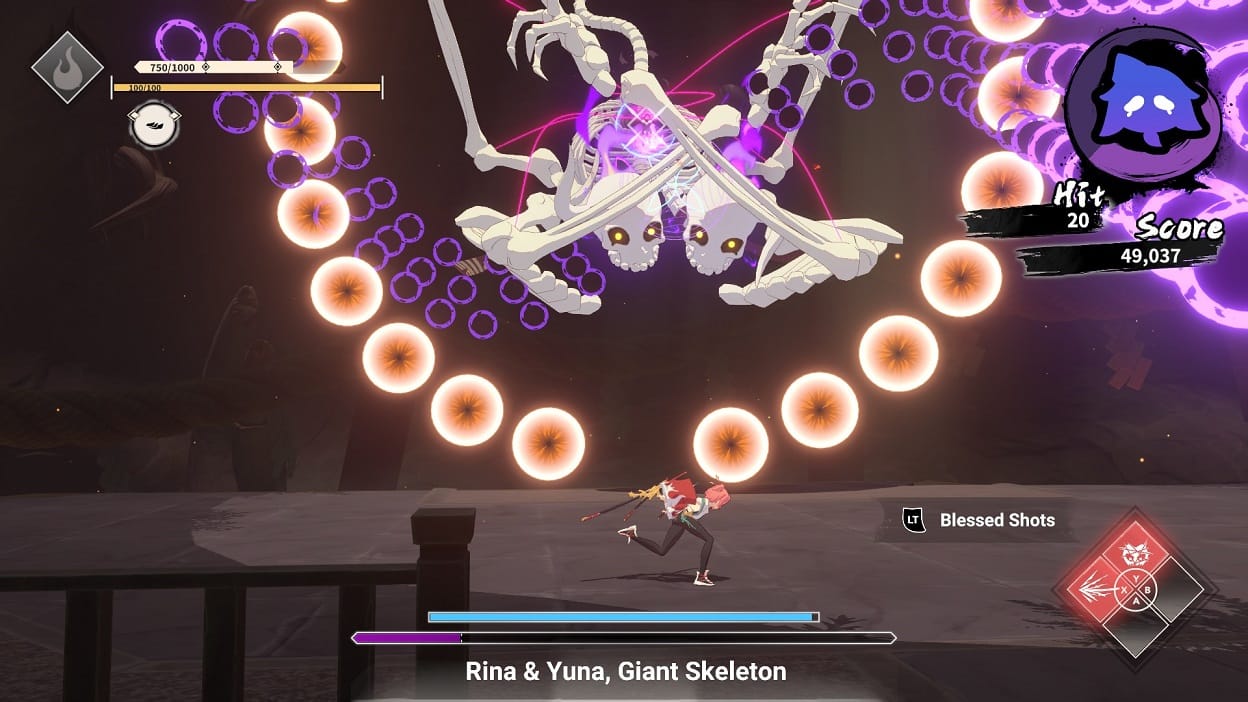
Homura Hime is an anime-inspired action RPG centered on a sword-wielding exorcist's quest to purify Japan of archdemons. It mixes up the usual ARPG formula by adding elements from other genres, most notably shooters.
The game progresses through a series of mostly linear levels featuring a mix of gameplay types. There are a few parkour-style platforming sections and a handful of puzzles, but the bulk of each level is centered on combat. The system is parry-based, with the usual collection of combos based around light and heavy attacks, as well as a low-power ranged attack needed to break the shields used by some enemies. Homura also gains a few special attacks that are powered by landing hits and parrying attacks.
Homura is relatively fragile, going down in a few hits against most enemies, but the parry window is very forgiving. That's appreciated when fighting bosses, which need to be finished with a series of consecutive, well-timed parries. In general, a player who can keep a simple rhythm can consistently avoid most regular attacks.
The most distinctive feature of combat is the barrages, a special attack mode used by some regular enemies and all bosses. A barrage consists of waves of spheres that can't be parried, only dodged. Barrage spheres do less damage than other attacks, but the enemies compensate by firing lots of them. Against bosses that unleash screen-filling waves of barrage spheres alternating with regular attacks, this can turn the game into a 3D bullet-hell shooter.
As you might imagine, barrages - specifically those massive boss versions - are the game's hardest sequences. What stops them from being frustrating is the low damage and lack of stun, which makes mistakes less devastating.
While it's by no means an easy game, Homura Hime is designed to be gentler on less experienced players. Aside from the large parry window, the game is also generous with checkpoints, even including them between phases of a major boss fight. A player who inches through the regular combat section only to make a mistake during a barrage or parry sequence won't have to play through the entire fight all over again.
Overall, Homura Hime has enough variety in its gameplay to make it stand out from the usual suspects in the ARPG space, and the difficulty curve is fair enough to appeal to a wide range of players.
Genome Guardian 2
Genome Guardian 2 is a twin-stick shooter in the ACGT series of games. We've previously featured a related game, Cell Command, and while the genre is completely different, both share the same aesthetic and a similar focus on customization.
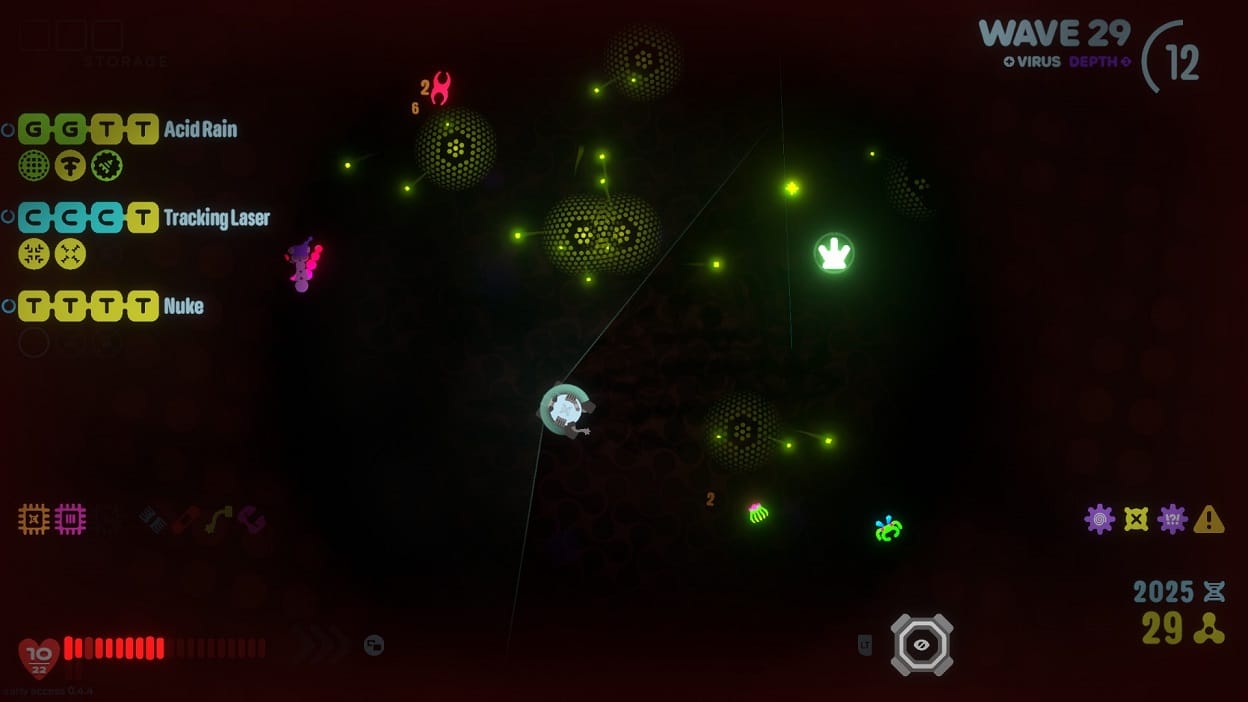
The core game mode is a standard shooter. The player controls a main unit - either a fixed turret or a mobile tank-like machine - with the goal of surviving against enemies that come in 30-second waves. Between waves, the player has the opportunity to purchase new weapons, weapon upgrades, or more general boosts.
The main distinguishing feature is the weapon customization. Depending on the starting loadout, the player has up to four weapon slots, each of which can accept up to four weapon types and four mods. By default, all of the weapons fire at once, and there's never a need to switch between them.
Weapon types are named after nucleotides and carry basic attributes. For example, cytosine grants a weapon with long range, high accuracy, and a slow fire rate. Adding additional weapon types to the same slot will mix their traits. Putting a cytosine in the same slot as the shotgun-like guanine will yield a spread blast with a tighter choke and longer range. Three- and four-nucleotide combinations begin to yield more unusual weapons with variant firing modes and effects, while mods can further tweak stats or add even more effects.
As with Cell Command, the striking variety in the weapon customization system is both a plus and a minus. The end of any run is a mad spectacle with the player unloading on enemies with a baffling array of overpowered weapons - but that's if everything ends well. Adding a new nucleotide to a weapon can have unpredictable effects, potentially turning a powerful attack into a strange gimmick weapon. The game tracks all discovered combinations, but until the player has seen every combo, upgrades can be a serious crapshoot.
Unpredictability aside, Genome Guardian 2 offers a lot to a player willing to learn the ins and outs. There are copious unlockables, including variant gameplay modes. The challenge level is also fair, and it never feels like the player is a victim of bad luck.
Overall, Genome Guardian 2 is a solid shooter with a lot of depth, but the learning curve might take a while to overcome.
RUBATO
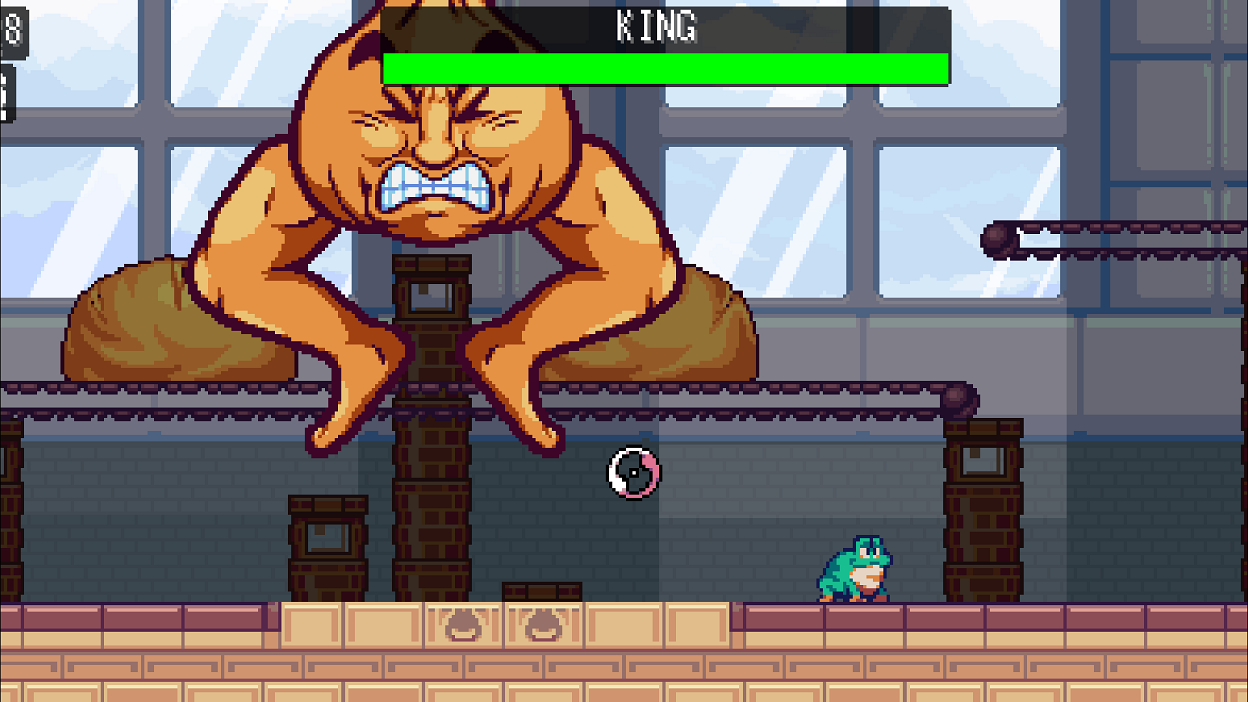
RUBATO is a physics-based 2D puzzle platformer with a surreal story and aesthetic. Despite its early '90s appearance, the design is rooted more in the collectathons of the fifth generation.
The game follows a group of cosmic corporate lackeys who, after a tragic mishap involving a giant cue ball, have to reconstruct the shattered planets of the Solar System. Rubato, the frog with the miracle tongue, is tasked with recovering the planetary fragments. It's a task made harder by the mysterious villain who's protecting the pieces - a villain whose presence suggests that the destruction of the Solar System may not have been an accident.
RUBATO is divided into a series of themed worlds, which are subdivided into several discrete rooms. Each room contains a certain number of planetary fragments, some of which are out in the open, while others need to be revealed by completing an objective. Collecting fragments permanently increases Rubato's health and also reveals and unlocks the boss door.
Aside from the usual platformer abilities, Rubato can also use his tongue to manipulate the world. Markers on certain physics objects indicate that Rubato can attach his tongue to them. Depending on the object, this will either let the player move it around or cause the object to propel Rubato through the air. The tongue isn't Rubato's only tool - beating bosses unlocks additional weapons and devices.
While there are a few minigames to add variety, the core gameplay of Rubato is pretty barebones, and the game isn't all that difficult. The puzzles are very straightforward and there aren't too many technical jumping challenges. It's much more exploration-driven, truly following in the collectathon spirit. The game is at least generous enough with the planetary fragments that the player won't have to resort to desperately scraping through old levels trying to advance.
Overall, RUBATO is a solid nostalgia title for fans of '90s platformers, but there isn't a lot that really stands out.
That wraps up our look at the indie games that caught our attention in March! As always, be sure to come back each month for more of those sweet, sweet indie games you need to know about!