Looking Back (and Forward) at the Success of Vampire Survivors
Exploring bullet heaven's beginnings and future with a hit indie four years later


It has been about four years since the release of Vampire Survivors (VS) blew up the indie space and created the “bullet-heaven” genre. Developers have been chasing after the game's success ever since. With the latest DLC inspired by Castlevania, I jumped back into the game to see if the gameplay still works today in light of the many games I’ve played since. Surprisingly, it does, and has lessons to teach the games that are trying to vie for the crown.
At this point, I don’t think I need to explain what Vampire Survivors is, and I want to skip to where it is today.
More Survivors, Fewer Vampires
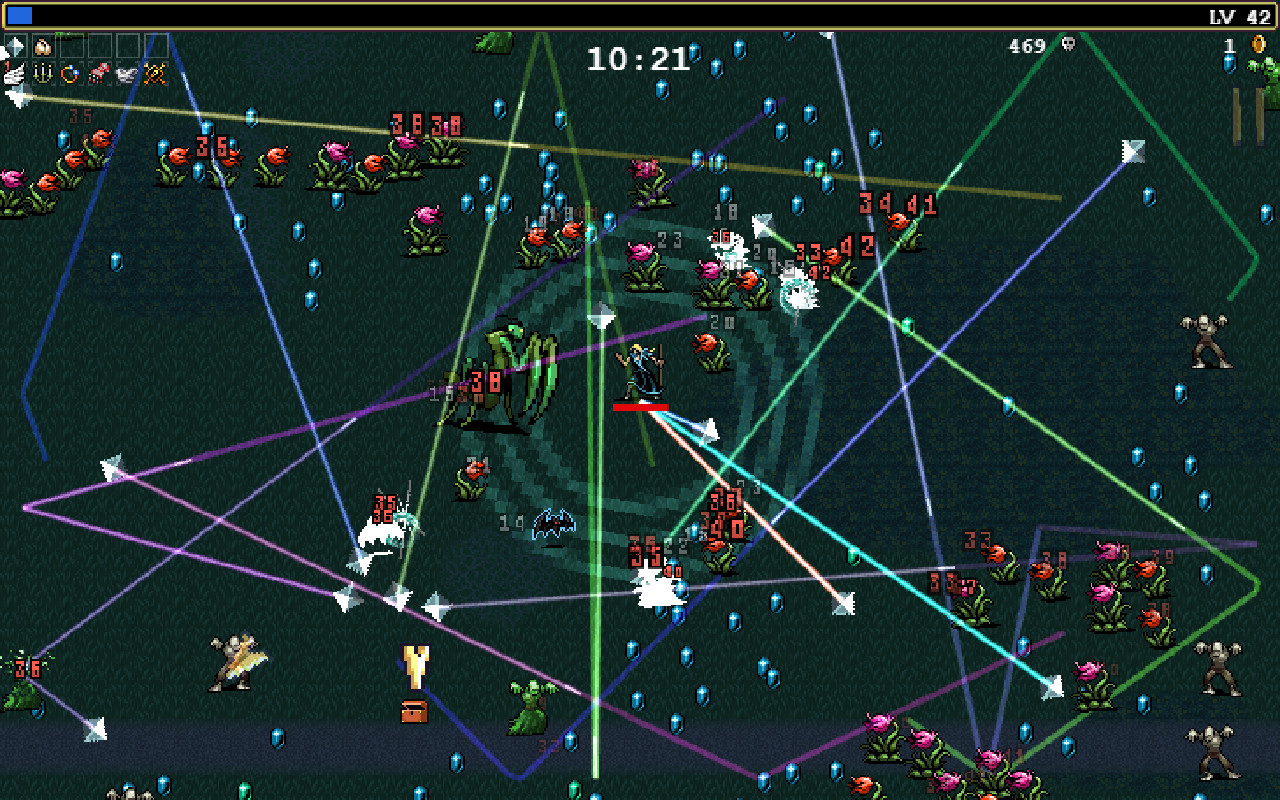
Vampire Survivors has come a long way in terms of its design. The original map was simply an empty field that stretched on infinitely. Now there are multiple maps, multiple characters, secrets, additional systems, and this doesn’t even include the latest map.
Perhaps the most surprising thing about going back to VS today is that it still plays as one of the faster bullet heaven games on the market. When I last played, it had the option to increase the in-game speed so that 30 minutes became 20. Now you can do it even faster, going down to 15 minutes — allowing someone to experience a full run quicker than any other bullet heaven out there.
This gets at one of the biggest issues I have with a lot of other games: the developers keep messing up the speed. I’ve lost count of the number of these games where the very first run is slooooow — your character is slow, bullets are slow, enemies are slow; the entire game feels slow. I’ve had to institute a new rule — if I’m falling asleep before ten minutes are up in your game, I will end the run early.
For the games in which I do manage to get to the end of a run, through death or completion, I’m surprised to find that I’ve unlocked nothing at all. If you’re going to do a game like this, there must be consistent upgrades to drip-feed progression. I’ve lost count of the number of games where the first upgrade takes multiple winning runs to unlock.
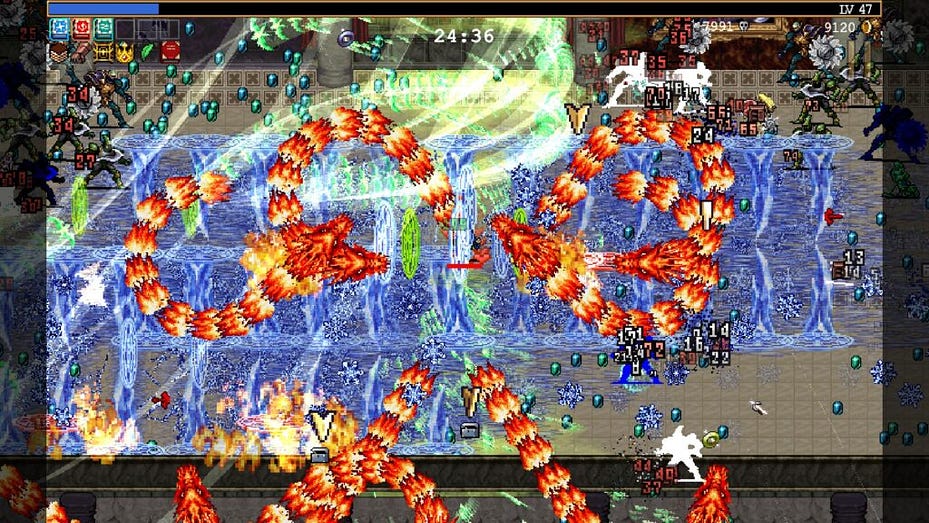
It’s this slowness that betrays a lot of the bullet heavens compared to Vampire Survivors. I'm willing to bet that these games have nowhere near the amount of content that VS has at this point, so slowing down progression keeps them from running out of things for the player to do. However, it’s that amount of content and the consistent rewards that keep someone engaged with VS. If I want to make progress in the game, I can go after a character challenge, weapon unlock, map unlock, or just go for gold that I’m going to be using for more meta unlocks.
There is a puzzle to playing and mastering the many different items, tarot cards, and characters that isn’t present in the other games. It’s that next level of understanding that provides a lot of the replayability in Vampire Survivors — yes, you survived a run, now how do you break it?
Vampire-Vania
To that point, let’s talk about the newest map. The Castlevania/Symphony of the Night DLC is the closest fans have gotten to a celebration of the series in a long time, and definitely not from Konami themselves. Featuring remixed versions of popular songs, a buffet of characters from the series, the largest map to date in the game, and many different secrets to find.
Each “adventure” map adds more features and elevates the original formula, but this one is the most expansive to date. It contains a lot more unlockable characters, bonus areas, and more nods to the entire Castlevania franchise.
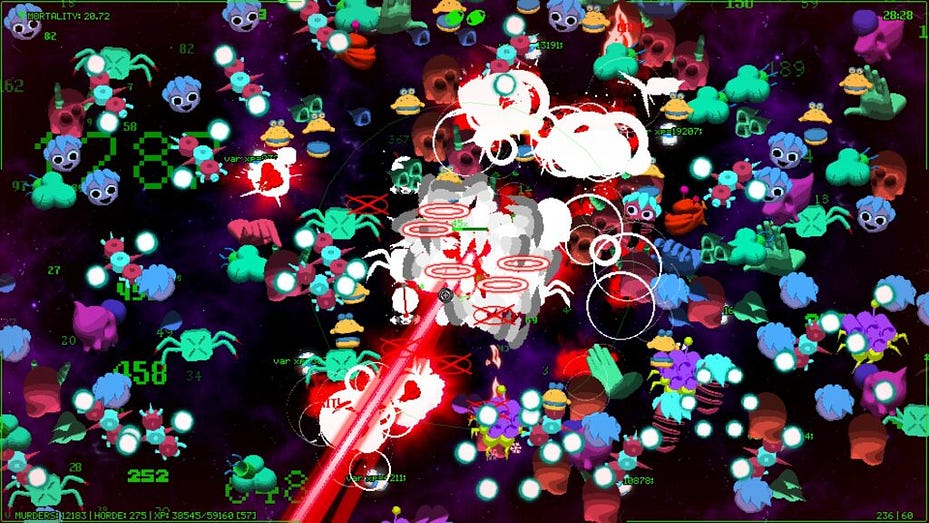
What makes this one of the best bullet heaven experiences is the sheer number of secrets and places to explore, which does something I haven’t seen in any other bullet heaven to date — it makes me want more time to explore.
There are so many new weapons, combinations, and permanent upgrades that you can unlock on the map that, despite Vampire Survivors being the first bullet heaven game to blow up, it still feels like one of the most progressive takes on the genre. It’s those details that keep Vampire Survivors on top of the subgenre and is the bar that other games must clear if they want to have any chance at exceeding the standard set by the king of the genre.
Based Bullet-Heaven
What continues to make Vampire Survivors the undisputed king is that it gets at what makes this kind of content so engaging. It’s not just about providing “things” blowing up on-screen, but letting the player have 15–30 minutes of rapid progression. The constant rewards and goals to go after provide a structure for players beyond just repeating for a high score or an unlock after hours of play.
While the game does not have the more technical aspects of newer bullet heavens like Death Must Die, or the RPG aspects of Halls of Torment, it makes up for that with the sheer number of items and evolutions, allowing multiple play styles on a run-by-run basis.
This is not a game that “hides the fun;” it only gets better the more you put into it. It is going to take something spectacular from a developer to beat Vampire Survivors at their own game.