The 100-Yen Democracy Part II: The Hero with a Thousand Faces
On Mario as everyman, the "It's You" philosophy at the heart of Nintendo, and a warning about the gradual passing of gaming democracy


"Video games are just toys."
This sentiment may seem lighthearted and simplistic, but there is a fundamental nobility and even a form of democracy at the heart of this idea that I believe we must protect.
In Part I, we discussed the relationship between video game hardware and software (the plate and the soup) and the democracy at the heart of the medium, especially in its early days where a simple ¥100 coin brought gamers of all backgrounds together on an equal footing.
CHAPTER 3
"It's You": Why Mario Is the Hero with a Thousand Faces
When we insert a ¥100 coin, the curtain rises, revealing an expansive world of equality beyond. A single figure appears before us; he's a humble, moustached plumber with a distinct red hat and his name is Mario (originally known as "Jumpman").
But here, we're struck by a curious question: Why do people from all over the world – different nationalities, ages, and genders – feel such a strong connection to this chubby little guy who looks nothing like them? Why are they able to see themselves in him? The answer can be found in the Super Mario Bros. 40th Anniversary commercial, which is itself rooted in a core philosophy that Nintendo has upheld for over forty years: "It's You."
At this point, I turn to mythologist Joseph Campbell. He studied myths from around the world and identified a common structure followed by all heroes: "The Hero's Journey". It is a cycle in which a protagonist living an ordinary life receives a call, overcomes trials in an unknown world, and eventually returns with treasure (which can also be interpreted as growth). This structure – known for serving as the framework for many stories, including the iconic Star Wars films for example – aligns perfectly (perhaps sometimes to a cruel degree) with video game experiences.
"Why do people from all over the world – different nationalities, ages, and genders – feel such a strong connection to this chubby little guy who looks nothing like them? Why are they able to see themselves in him?"

This is because video games are, in essence, the democratisation of the Hero’s Journey.
Mario answers the call to rescue Princess Peach and heads to the otherworld of Bowser's Castle. Link obtains the mystical aid of the Master Sword and confronts the shadow known as Ganon. Monster Hunter, Dragon Quest, and Pokémon follow the same process, in which the player steps into uncharted territory and, through their own power, overcomes the environment — tracing the archetypes of myth that Campbell described.
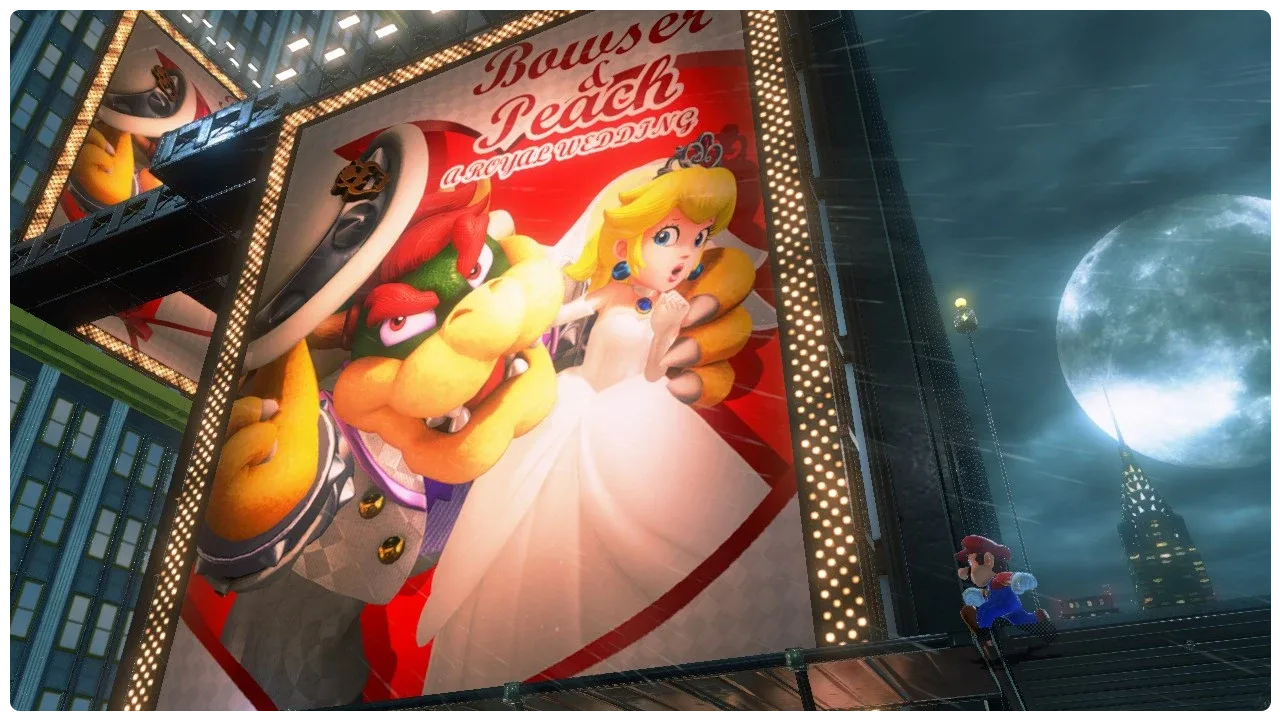
Campbell expounded on the universality inherent in myth: the human soul, he argued, requires a shared narrative that transcends time and place. What I wish to assert is that the equality video games bring lies in making this universal mythic experience accessible not to a select few, but to anyone holding a ¥100 coin. Where myth was once the preserve of storytellers and the privileged classes, the video game — as a vessel — now lets anyone, regardless of nationality or wealth, begin their own Hero's Journey from the same starting line.
This hero is not a specific individual, but a symbol of the spirit of every human being who faces adversity. Mario and Link are not characters with vivid personalities or detailed backgrounds; they are intricately crafted giant vessels of nothingness, designed to house the player's soul. The right for everyone, equally, to become the protagonist of their own myth — is this not the very essence of the noblest form of democracy, the one pioneers like Nintendo imbued within the box of hardware?
And when you wish to leap over a high wall, Mario jumps in your place. When you face a formidable foe, he summons the courage on your behalf. As long as you hold the controller, Mario's heart beats through your fingertips, and his adventure becomes part of your own life. He did not become the world's most famous character because he possessed special powers; it's because he was the one who accepted you the most, and affirmed your challenges just as much as his own.
"It wasn’t Mario who saved the world. It was you who faced adversity through the vessel of Mario."
Generally, the protagonist of a story is given a personality built from a detailed profile, a backstory, and unwavering convictions. But Mario is different; he is surprisingly taciturn, and his background is simple. That's because the final piece of the Mario character isn't filled in by the developers, but by you — the person sitting in front of the screen.
When you control Mario and jump over a Goomba, it is not Mario who feels the exhilaration, but you, the player. When you fall into a deep pit, it is you who bites your lip in frustration. Mario's growth is not a matter of rising stats, but of your own fingers becoming more skilled and your heart gaining the strength to face challenges without breaking. This is the transfer of sovereignty the video game medium has achieved — a feat no other medium can replicate.
In movies and novels, the Hero's Journey remains vicarious: the audience follows in the hero's footsteps. In video games, it is a journey taken as a participant, where the story advances as the player makes decisions, presses buttons, and takes risks. We perform Campbell's "Descent into the Abyss" with our own fingertips, and it is this active commitment that fully synchronises the player's soul with the vessel that is Mario.
Mario is the world's most accessible mask. You grasp the controller, and in that instant he sheds his identity as a plumber and becomes one of Campbell's "Heroes with a Thousand Faces," embodying your will. The concept refers to a single universal heroic spirit that manifests in different forms across eras and cultures — and from a cultural-anthropological perspective, it is highly significant that the newest mask chosen to embody that spirit in the latter half of the 20th century was a moustached plumber born in Kyoto. Through digital technology, he took the privileged narrative of myth and, under the guise of the entertainment we call games, redistributed its hidden interactive experiences equally to all of humanity.
The phrase "It's You," adopted by Nintendo for its 40th anniversary, is not merely a catchphrase. It is an expression of the utmost gratitude and respect for the players who have supported this culture for 40 years.
From this perspective, it becomes clear that the equality of the bowl (hardware) discussed in Chapter 1 and the democracy of the ¥100 coin in Chapter 2 existed for this single purpose: to make everyone a hero, the entry point set "equally" at ¥100, and the bowl that receives it fair to all.
It's You.
As long as this philosophy endures, video games can never be mere consumer goods. They are modern myths that let us rediscover our own potential by becoming someone other than ourselves and overcoming what stands in the way.

Becoming Human: A Heroic Image Perfected Over 40 Years
Precisely because Mario carries so little specific background, people all over the world have been able to accept him as a neighbour, or even as themselves. And now this "It's You" philosophy has reached a culmination.
Shigeru Miyamoto has remarked on Mario's evolution in recent games that "Mario has finally become a human being." The character born 40 years ago as a collection of pixels has, over the long years, gained the texture of a human being like us. This does not mean he has drifted out of the player's grasp into a distant figure — quite the opposite. Now that his hardships, his feelings for his family, and his gritty courage to get back up after failing resonate more vividly, the cycle of imperfection and retrying comes alive: he takes damage and shrinks, falls into holes and fails, yet keeps running. That frailty echoes our own daily lives as we hit walls in the real world — and the Famicom-era slogan from Chapter 2, "It's so frustrating, but I can't stop!" The more human he becomes, the more deeply players can project their own setbacks onto him, engraving each hard-won victory as a personal one.
"It's You" has thus evolved beyond the act of controlling Mario into a deeper affirmation of the soul, in which his humanity resonates with your own.

A Mere Toy Affirms Humanity
What Nintendo and Mario's creators have consistently upheld is an unwavering trust in the player's agency. No matter how realistically Mario is now depicted, the energy that drives him is always entrusted to your will as you hold the controller. This reversal of the master-servant relationship is the ultimate affirmation of humanity the medium possesses: "It's You" becomes a kind of timeless prayer — that you, too, though imperfect, are a hero who rises to the challenge just like him.
The reason this toy and its creator, Shigeru Miyamoto, command such respect — to the point of receiving medals from nations around the world — is that they have transcended the realm of mere entertainment. Mario has continued to affirm the pride of being human that lies dormant in everyone, leaving no one behind. An entry point open to all (a ¥100 coin), and a vessel into which one can project oneself (It's You) that has matured over 40 years into a single human being: this perfect triangle has sustained the golden age of video game culture.
However, this harmony is now threatened by a new wave of efficiency and consumption. How is the weight of experiencing a story as a single hero changing amid the tide of digitalisation? It is the precariousness of modern sales models — a reality we must confront to preserve this culture for the next generation — that I turn to now.
Chapter 4
A Wake-Up Call for Modern Business Models
The trust between soup and bowl, the democracy protected by a ¥100 coin, and the philosophy of turning players into heroes — these three pillars are what allowed video games to evolve beyond mere consumer goods and take root as a culture. Today, the gaming scene faces a turning point that shakes all three to their core: a shift towards sales models that, chasing efficiency and maximum profit, sell off the dignity of the experience we have long cherished.
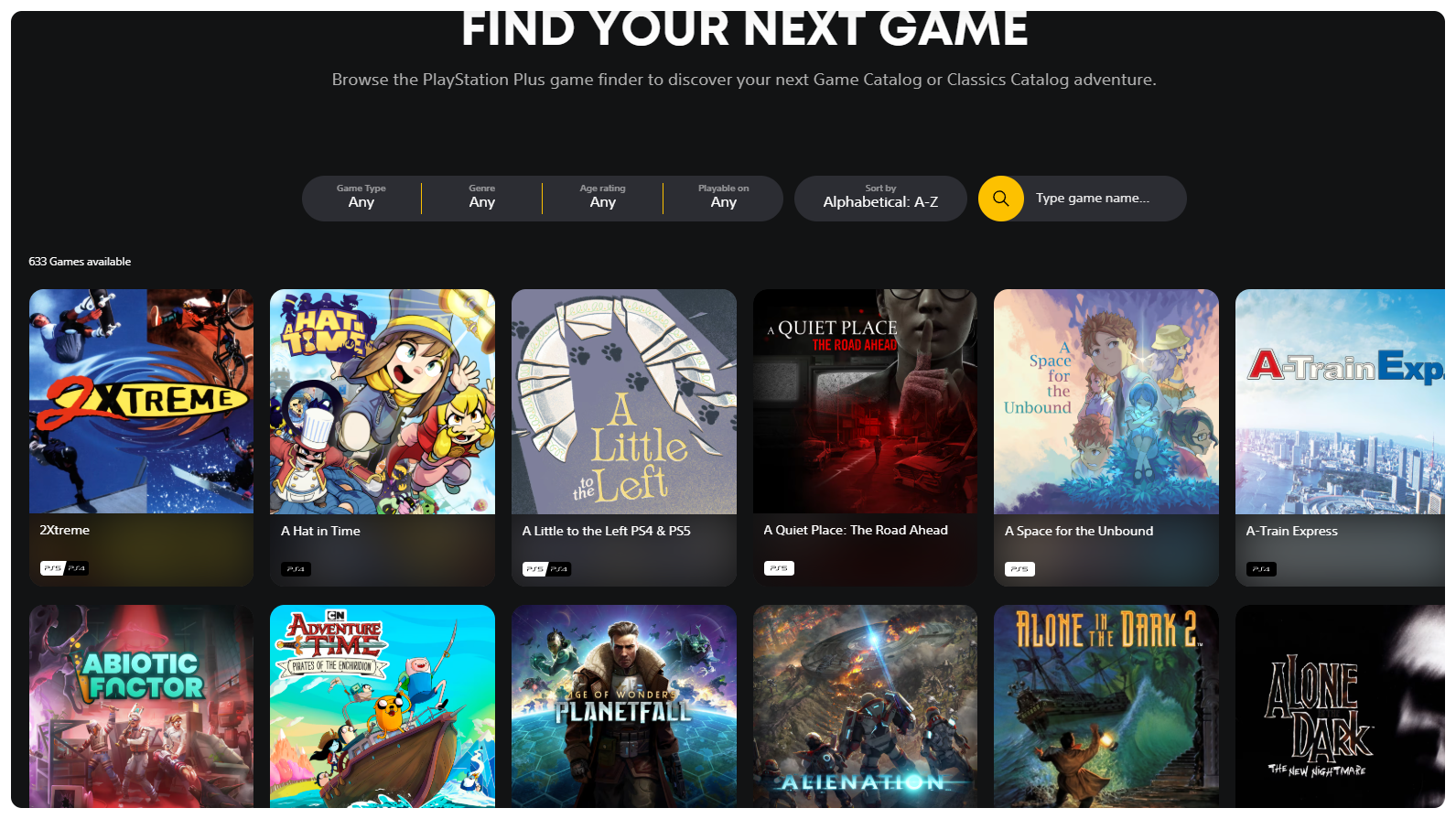
Once, buying a game was a contract between user and creator — a pact to savour every last drop of soup. Yet with subscription services offering thousands of titles for a few hundred yen a month, or models that open the door for free only to demand endless payments once inside, that contract has become all too tenuous. Are we, in exchange for convenience and affordability, losing something far more precious?
The subscription and free-to-play (F2P) models now becoming mainstream appear, at first glance, to advance the democratisation of entertainment. In reality, they move in the exact opposite direction of the equality and dignity we have defended with a single ¥100 coin.
When the Value of Soup Is Lost
The moment a single piece of software is thrown into the vast pool of a subscription service, it transforms from a dish that leaves a lasting memory into a disposable item on an endless list. In a monthly model, a creator's revenue is governed not by how deeply a game is played but by how often it is played or clicked — much like YouTube Shorts. The risk is that content gets mass-produced: not a rich soup to be savoured slowly, but watered-down fare designed to grab attention with fleeting thrills. While we enjoy cheap and plentiful offerings, we should take a hard look at how the creator's soul poured into each dish, and the player's commitment to receiving it, are both being diluted.
Real-World Inequality Brought Into Gaming
Even more serious is the rise of the Pay-to-Win model, in which the amount you spend and the specs of your device decide victory or defeat. This is a clear rejection of the ¥100 democracy described in Chapter 2. Games were once a sanctuary where players could forget real-world wealth and status and stand together as equals; now these models pipe economic disparity straight into gameplay, reproducing the cruellest inequality of all — a system where those with money win.
Here, "It's You" is no longer the gospel that anyone can be a hero. It curdles into a privilege: only those who pay get to play the hero. Where "It's You" once meant the player's own dedication and growth, a model that lets you buy your way past difficulty robs you of the trials themselves — the most crucial stretch of the Hero's Journey, and the very source of the self-affirmation that comes from overcoming an obstacle under your own power.
The deeper problem is that the industry has abandoned the equal experience that is the essence of entertainment, prioritising corporate profit and self-satisfaction instead. Developers and publishers have used the business model as a get-out-of-jail-free card to justify their betrayal of users, resorting to efficiency and calculation and ceasing to engage with players as equals. This abandonment of critical thinking, this flight from failure and originality, is becoming the norm — and it amounts to one of the cardinal sins of the entertainment industry.
A Future Where Soup Consistency Collapses
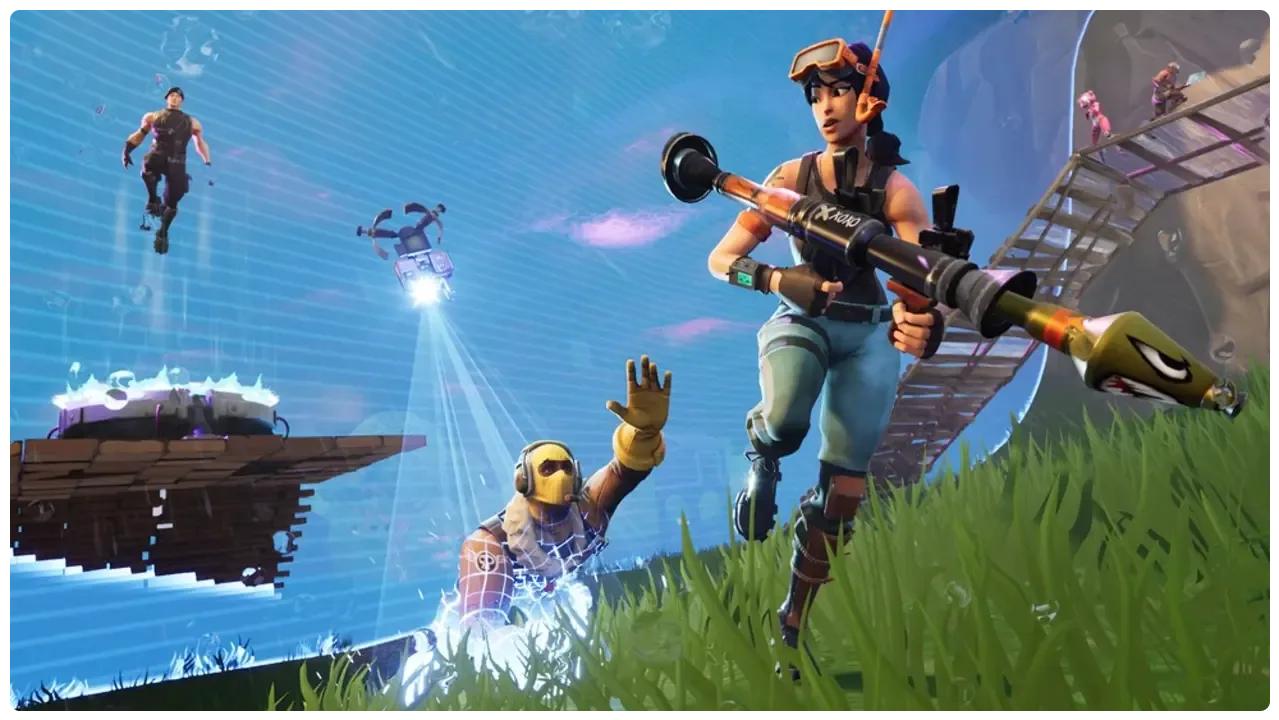
The relationship between soup and bowl described in Chapter 1 is also in crisis. With the acceleration of cloud gaming and multiplatform releases, we have gained the convenience of playing in any environment — but this also means creators are abandoning their promise to serve the best flavour, an optimised experience, on this particular bowl (hardware). By chasing hardware with ever-escalating specs, such as PCs, developers thin out the soup's ingredients so a game will run on weaker devices, while reserving lavish toppings for specific platforms. When such unequal experiences become the norm, video games lose their power as a common language.
The Equality and Resilience of Entertainment Guaranteed by Mature Technology
Here we need to redefine Gunpei Yokoi's philosophy of "lateral thinking with mature technology" for the present day. Many people misunderstand it as a method for making things cheaply with old technology, but its true value lies elsewhere.
Mature technology is technology that has been thoroughly tested for defects and is now available worldwide at low cost and with stable supply. Its great advantage is stability: the ability to offer new forms of wonder, on the same dependable hardware, to anyone in the world at the lowest possible price.
"In today’s world, where developers are protected by the safety net of subscriptions and games are tolerated simply because they appear in the catalog - even if they aren’t fun - the life-or-death dialogue between creator and audience that Yamauchi valued cannot exist."
Rely instead on cutting-edge, expensive components, and hardware prices skyrocket, supply turns unstable, and video games degenerate into a privileged pastime for the wealthy. What Yokoi sought was not a parade of the latest specs, but robust, democratic tools every child could afford — tools that wouldn't break even when dropped on the ground. The modern cycle that pushes people to replace expensive devices every few years is a clear betrayal of this "Yokoism." Rather than stacking technology vertically and leaving some users behind, it spreads even well-worn technology horizontally, so that everyone, regardless of disparity, is guaranteed equal access to the same smiles and surprises. This is the spirit that lifted video games from a hobby for a handful of otaku into human infrastructure.
The "Box People Buy Out of Necessity"
Hiroshi Yamauchi's almost ruthless line — that "hardware is a box people buy out of necessity" — is packed with the sincerity towards entertainment that modern platform holders have lost. Behind it includes a strong admonition: do not impose unnecessary burdens on users. From Yamauchi's perspective, the modern model — selling the box and then milking users through online fees and service charges — must look like the ultimate reversal of priorities, where shifting the box itself has become the goal.
Yamauchi-san saw games as a high-stakes gamble: you bet everything on a single title, and if it wasn't fun, the whole box ended up in the bin. It was that tension — that skin in the game — that drove creators to refine every drop of soup. In a world where developers are now shielded by subscriptions, and a game is tolerated simply for appearing in the catalogue even if it isn't fun, the life-or-death dialogue between creator and audience that Yamauchi valued cannot exist.
The Reality of Human Life Illuminated by Mature Technology
Yokoi's emphasis on mature technology was never only about cost; behind it lay a starkly realistic conviction that entertainment must be rooted in human physicality. The latest VR and ultra-high-definition graphics can rob players of their imagination, making the senses subordinate to the technology. A world abstracted by mature technology — Mario running through pixel art — does the opposite: it asks players to fill the gaps themselves. Draw an apple on a blank sheet of paper and show the rough sketch to someone; they will recognise it instantly. Appealing to that unconscious filling-in is the crucial ingredient that lifts games to the highest form of entertainment. It is this active omission that becomes the blank space in which play turns into one's own story. In a world where technology evolves vertically to hand us everything turnkey, we risk losing — in the name of convenience — the very chance to exercise our imagination, to feel a game's world more deeply, and so to stand on our own as heroes.
The Sanctuary Called Irrationality Left Behind by Hiroshi Yamauchi
What Hiroshi Yamauchi upheld throughout his life was not efficient business judgement, but irrational intuition. Where many modern companies build games on big data, market research, and the probability of sales, Yamauchi flatly declared that "market research is meaningless" and even insisted, "Nintendo creates the market." He understood that entertainment is a gamble delivering surprises no one has seen before — and that such surprises are born not from a cold computer, but from the lateral thinking of a single genius and the tip of a single pen.
The great trap of the subscription model is the complacency it breeds in publishers and developers — a complacency born of an excessive fear of failure, of refusing the gamble altogether. The lists fill with safe, average, lowest-common-denominator soup, with no trace of the thrilling, once-in-a-lifetime essence Yamauchi-san loved. What remains is "Object X": a collection of average pleasures calculated by data and algorithms, with no room for the absurd surprise born of originality. Data-driven optimisation keeps failure at bay, but it also trims away the encounters with the unknown that truly shake our souls — all in the name of efficiency.
The fact that Nintendo continues to sell hardware and software as a single package, holding its ground in the wilderness of uncertain play, is the sanctuary's final defence against being swallowed by streamlined capitalism.
Join the conversation
What do you think? Reply below to share your perspective.