The Village of Dali and Loss of Innocence
My memories will be part of the sky


There is a moment in every JRPG that's intrinsic to the pacing and plot. A calm narrative break, a storytelling technique that slows momentum, forcing the player to rest, reflect, and reduce tension, all within a cozy atmosphere designed to enhance emotional depth.
These saccharine moments can often be more impactful than their story-heavy, action-driven counterparts. The necessity of balanced pacing is what creates memorable experiences in digital literature, giving the player time to see the characters as fleshed-out personages with agency. It might look like the party sharing a moment before a bonfire, or reconvening in a motel room, or sharing intimate words in a crumbling ruin. Even when these moments are exposition-heavy, they are irreplaceable boons to character and story.
Final Fantasy IX takes this a step further by combining its moment of narrative repose with underpinnings of ludonarrative momentum. It creates one of the most memorable sequences in the series' history, setting the stage for every story beat that will unfold throughout the rest of the game.

The Village of Dali
Final Fantasy IX begins like a stage play. Perilous circumstances entwine Zidane and company, their agencies speared as purpose is interplayed against intent. Zidane is a thief, and Princess Garnet wishes to be stolen. Steiner is tasked with protecting the princess, but the princess no longer wishes to be barred behind the walls of her childhood. Vivi's desire to see I Want To Be Your Canary is his gateway into the wider world and the beginning of the rest of his life.
Calamity befalls them. Down on their luck, the party must survive dark forests, freezing caverns, imperial plans, and wrathful monsters before they end up on a plateau overlooking the seemingly peaceful village of Dali, just a few miles by airship from the cogwork metropolis of Lindblum.
As the party emerges from the chill of the caverns and into the fresh mountain air, Princess Garnet remarks on the picturesque quality of the scene, but also the bountiful nature of the world, so different and so far from the palace.
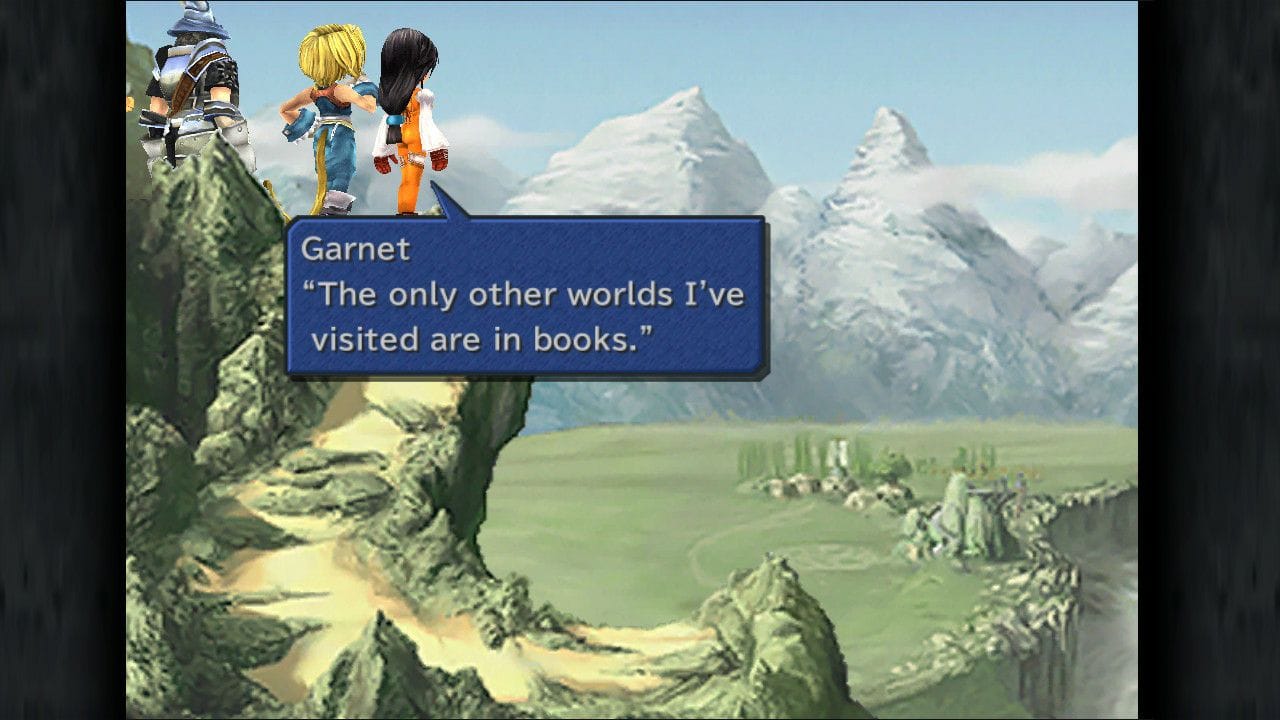
The player is, intentionally, granted a moment of reprieve. We've made it through the danger. We look out across a verdant landscape of forests and farms, and peace is attained through the presence of relative safety. Even the cadence of the party changes for a moment, and during their juncture, Princess Garnet decides on a new moniker to separate herself from her imperial status: Dagger.
The village of Dali presents itself as idyllic, yet another JRPG hamlet, a place of rest and recuperation between the adventure's larger and more important setpieces.
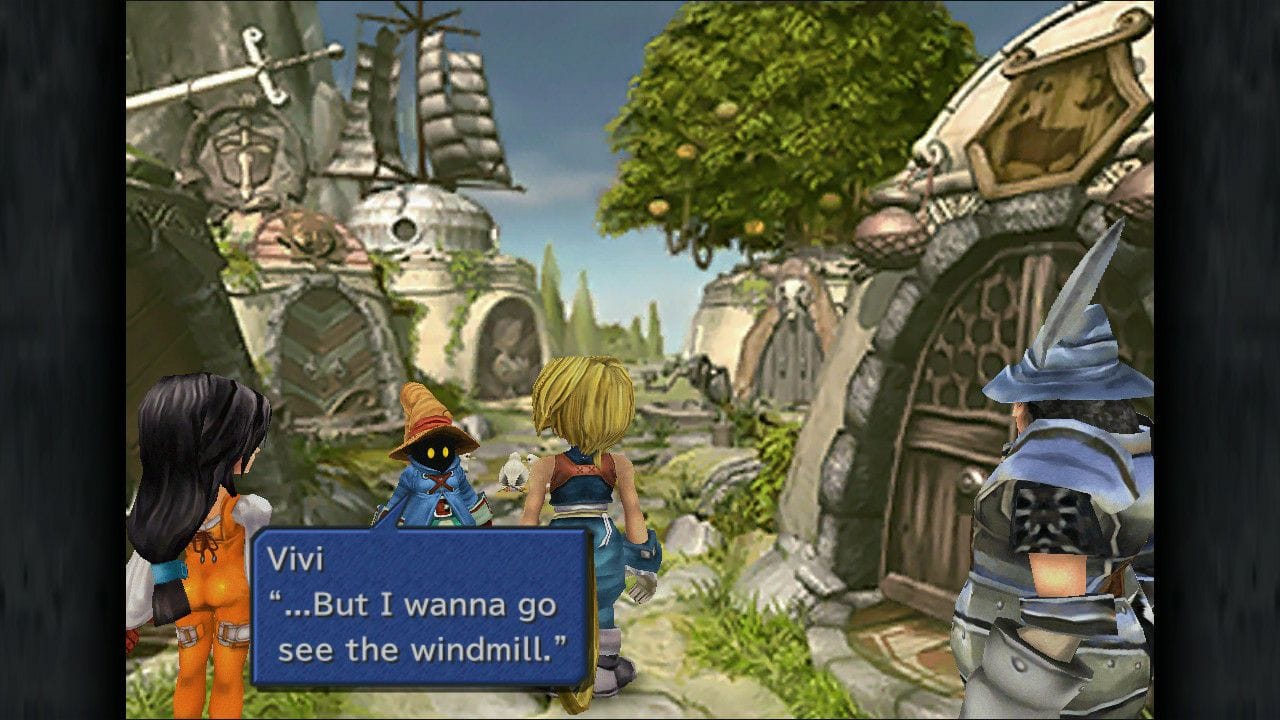
Vivi: "Gee whiz, a windmill!"
Zidane: "Vivi, the inn is this way!"
Vivi: "Aw, do we have to? ...But I wanna go see the windmill."
Zidane: "I know. But let's get some rest first. We also need to decide what to do next."
It is a sharp, sudden contrast to the previous hour's boss fights, frightening monsters, and personal loss. The loss of innocence to come is wreathed in a saccharine familiarity, but small-town life has its own morays and schemes, which Zidane and company are ready to receive.
Vivi's passing innocence is the most endearing. It is neither a play nor a trick, but the truth of his newness at life. Fans of Final Fantasy IX know Vivi's tragedy intimately, how he, as a prototype of Alexandria's Kuja-created Black Mage dolls, is made special by the unique circumstances of his adventure both before and during the game.
Loss of Innocence
Dali's dreamlike presentation is quickly undone for the player by the townsfolk's suspicious natures. There are a few visible adults in the town (an older woman on the outskirts of the farm, the mayor, and the sleepy innkeeper), and the remaining children seem unbothered by the fact that they are alone.
JRPGs often define themselves by their approaches to coming-of-age narratives. The Persona series centers on tackling personal change and confronting uncomfortable or difficult subject matter at pivotal moments. Final Fantasy's characters must deal with inner personal turmoil while saving the world. This is a period of transformation; the character must segue from naivety to understanding, from ignorance to knowledge. Setpieces like the Village of Dali allow characters to confront themselves with lower stakes, creating a friction with less heat but no less growth.
The player is lulled into a temporary calm. In true Final Fantasy style, the writing is impeccable, the Uematsu track is languid but somber, and the interplay between the party members feels rich and endearing. It will be shattered in a moment, but for now, the party's penchant for chaos and tragedy is paused, and they are given time to regroup within the confines of this idyllic pre-rendered atmosphere.
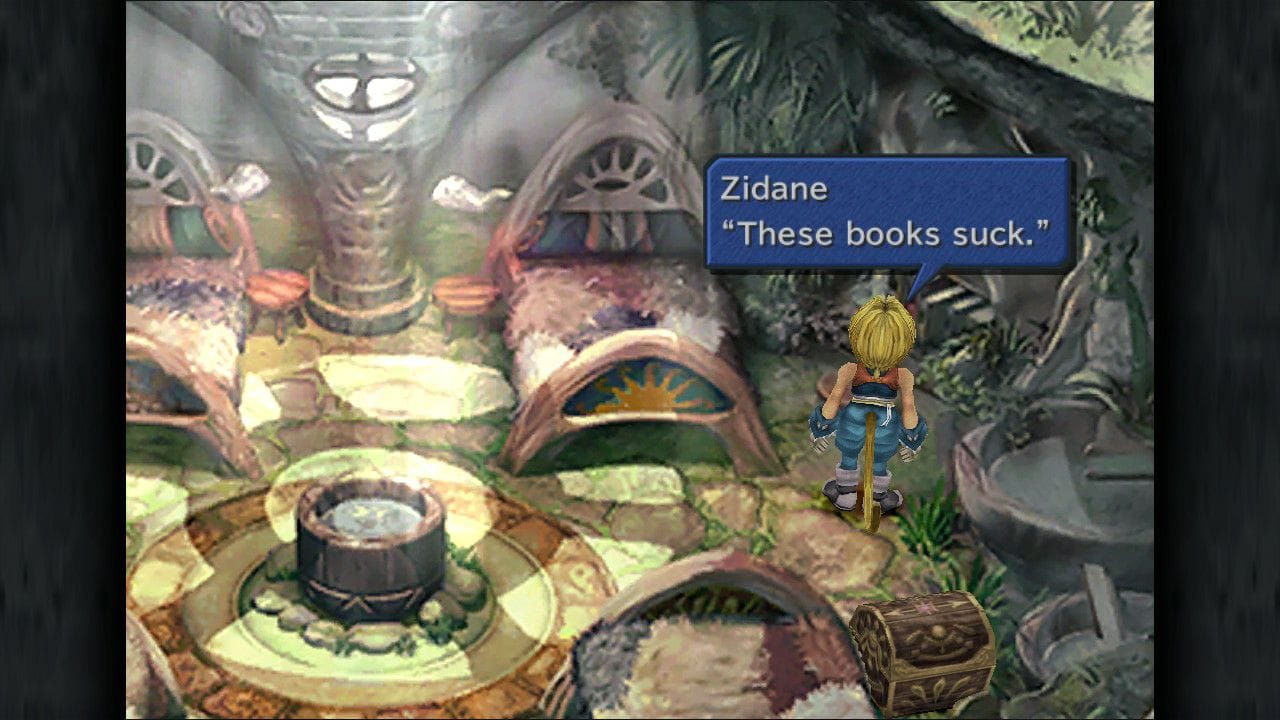
Dali, a fief and local farm adjacent to the Alexandrian provincial kingdom, has become eroded by the demands of war. The player cannot stroll through the blue-toned village and its impeccable PlayStation-era layout without being reminded of its seedier undertones, and how the once-bustling village has been forced into remission by the cruelty of Kuja's Black Mage production. Once discovered, curiosity demands to know how many similar villages along the outskirts of Alexandria have also been repurposed for such nefarious use.
Vivi finds that the mystery behind his parentage is a defining moment in his sense of self. Dali's cult-like transformation is burdened by a discoloration of childhood innocence, accelerating the "natural" maturation and metaphor of puberty.
Vivi: "After you left, some men kidnapped me and brought me here. They told me to stay put. I was so scared... I didn't know what to do. They asked me, 'Why were you outside?'
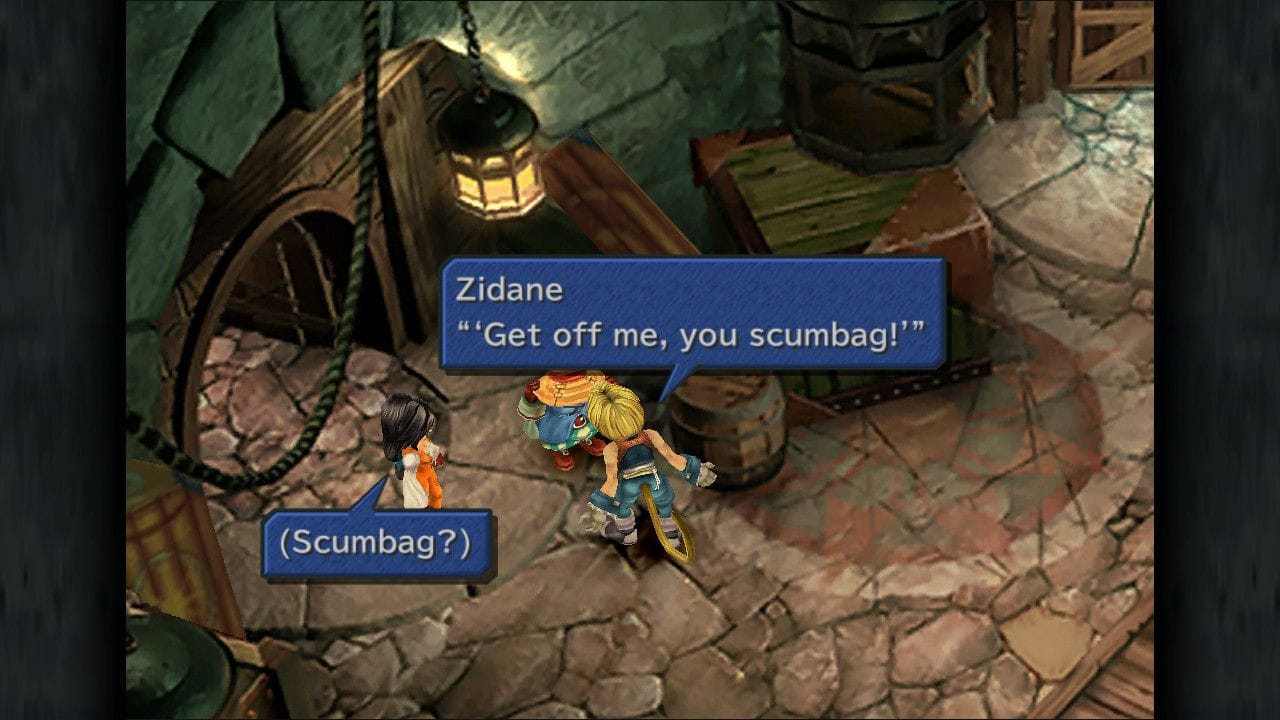
Get Off Me, You Scumbag
Loss of innocence narratives rely on seismic shifts in a young person's life, often related to trauma or major physical/emotional changes. One of the most celebrated examples might be Studio Ghibli's Spirited Away, which begins with Chihiro changing schools under protest and ends with her saving her family from grotesque physical transformation. Chihiro's growth involves intense physical and emotional friction, requiring might, ingenuity, and cooperation to resolve.
Vivi is a child who never grows up, a Lost Boy whose Peter Pan is just as lost as he is; who must discover life along the way, and whose story is ultimately tied to the tragedy of limitation. While Vivi might be arguably the most powerful Black Mage in the series' history, Vivi is a candle burning at both ends, a figure forced to tackle Albert Camus' only philosophical problem while at the same time looking for ultimate meaning in his short life. When we get to the Black Mage Village, Vivi's priorities shift again—there is magnificent hope in camaraderie and in family. When you have something to protect, life's meaning becomes abundantly clear.
Vivi's worldliness is earned mostly out of necessity. The discovery made at Dali is earth-shattering because it undoes our earned respite, backhanding this moment of calm. Towns in JRPGs are almost always elements of safety, though Final Fantasy IX doesn't rest on its laurels with Dali. This safety is stripped away by the game's narrative again and again: Cleyra, Lindblum, Alexandria. The lesson is learned again and again, until we no longer feel calm, but anticipatory dread.
A Place to Call Home
JRPGs like Final Fantasy IX are frequently character-driven. Needs, wants, goals, calamities, and subversions are placed at the feet of our cherished party. The discovery that Dali is only a front for Alexandria's war is a betrayal. Now co-opted by Kuja's Black Mage army, the player is shown that the airship-based delivery system now delivers weapons of destruction instead of goods and produce. The small-town feel of Dali is a lie, exacerbated by Dagger's unwitting participation and Vivi's tragic reveal.
While towns may not be characters themselves, the bulk of the story in JRPGs often takes place in metropolitan locales, with the focus on drama often transforming a burg from a basic location into a fleshed-out character. Consider Kingdom Hearts' Traverse Town, Xenoblade's Colony 9, or Persona 3's Tatsumi Port Island. Players spend so much time visiting and revisiting these narrative anchors that they seem as impossible to remove as a party member.
I return to Dali when I think of "cozy" towns in JRPGs because, despite its effect on the characters, the Village of Dali remains a quintessential hamlet. And while this narrative device is not uncommon in the genre (Final Fantasy VIII's Fisherman's Horizon, Xenogears' Lahan Village, Chrono Trigger's Zeal), it works time and again because we want to believe in the safety of idyllic, artisanal places. Despite Dark Souls' Firelink Shrine not being the friendliest of rest spots, seeing its historical ruin in Dark Souls III brings on emotional pangs. Final Fantasy IX reinforces again and again that there is no safety in physical locations; this sort of peace is only found in other people.
Game script referenced here.